Kenna Eco Diving Seahorse Project

Why study seahorses?
Seahorses are strange and mythical creatures that have many unique characteristics. They are classed as “Data Deficient” in CITES (Convention on International Trade in Endangered Species of Wild Fauna and Flora) because they are very challenging to study in the wild and there is much that we do not know about their secretive lives.
Seahorses represent habitats that need protection and help to advance marine conservation, serving as excellent flagship species for a wide range of marine conservation issues.
Threatened by overexploitation
Seahorses are exploited world-wide in their millions for use in Chinese medicine, as curios, snacks, and for the aquarium trade. In Hong Kong they sell for $550 per pound, and the illegal trade is so lucrative that smuggled stashes worth many thousands of dollars on the black market are discovered regularly.
The male brooding that is a unique characteristic of seahorses means that the young depend on parental survival for far longer than in most fish. They are mainly monogamous, at least during a season, and widowed animals don’t reproduce until they find a new partner. Their low population density means that lost partners are not quickly replaced. Seahorses are poor swimmers. Low adult mobility and small home ranges restrict recolonization of depleted areas.
Seahorses comprise one genus (Hippocampus) of the family Syngnathidae, which means “fused jaw”. Pipefish and seahorses diverged during the Late Oligocene. Hippos means “horse” and Campus means “sea-monster.”
Seahorses’ unique characteristics include a horse-like head, independently moving eyes, like a chameleon; a brood pouch, called a marsupium, in which the male nourishes the developing young. With their ability to change colour they are masters of camouflage and have filaments that they can grow and reabsorb that help them to blend into the background. Seahorses have no scales, but bony plates under the skin. The prehensile tail is made up of bony plates that can slide across each other to withstand the crushing force of a bird or turtle beak. This amazing design of nature is now being studied for use in body armour and robotics. In fact, the only similarity to other fish is having gills and fins (which oscillate at 35 to 70 beats per second!).
There are 54 recognised species of seahorses within the genus Hippocampus, mostly in tropical seas. In Europe we have only two species: Hippocampus hippocampus and Hippocampus guttulatus. They are classified as “Near Threatened” on the Mediterranean Red List.

Breeding
Breeding is controlled by several factors, the most obvious being the availability of a mate. Some of the females in the Kenna Eco Diving Seahorse Project study area seem to lack a mate and, due to the monogamy of seahorses, are unlikely to find one. Lone females have been seen to travel a hundred square meters, over the course of a week, in search of a mate.
Males have a home range of just a few square meters and mated females have a larger, overlapping territory.
Seahorses perform a daily greeting ritual that reinforces the pair bond.
The number of hours of daylight controls female egg production and male incubation period, with seawater temperature having a reinforcing effect. Seahorse eggs are 5 times bigger and 10 times heavier than other marine fish eggs.
Captive breeding success
Following a decade of research in Spain and Portugal, the European Spiny seahorse is now being bred in captivity with a 90% survival rate. This is a much higher survival rate than in the wild, and aquarium specimens should now all be captive bred.
However, they cannot be released to repopulate the sea until habitat destruction and illegal fishing is prevented. Seahorses are naturally predated upon by Octopus, Scorpionfish, Turtles and Sea birds. But the greatest predator is man!
Seahorse fry spend their first few weeks as part of the plankton, where they are eaten by pelagic species, until the survivors settle into the safety of the seagrass. Less than 1% live to reach adulthood.
Feeding
The horses head shape evolved for pivot feeding to give greater reach and eliminate wake to catch their tiny but very quick copepod prey unawares. Seahorses have a 1 millisecond strike and a 90% catch rate. The independent eyes allow them to focus on prey whilst also keeping an eye out for predators. Food is sucked in through the snout. They have no teeth or stomach, so food has to be easily digestible. Adults eat 70 copepods (Mysis shrimp) per day. Seahorse fry eat thousands during their pelagic stage.
Kenna Eco Diving Seahorse Project
This project is studying the two European species of seahorses that live in the Mediterranean Sea: Hippocampus hippocampus and Hippocampus guttulatus.
Field research is challenging due to several issues. Seahorses are very hard to spot due to their amazing camouflaging abilities. Finding sparse populations is very difficult. In fact, I spent 15 years searching before finding a pair by accident!
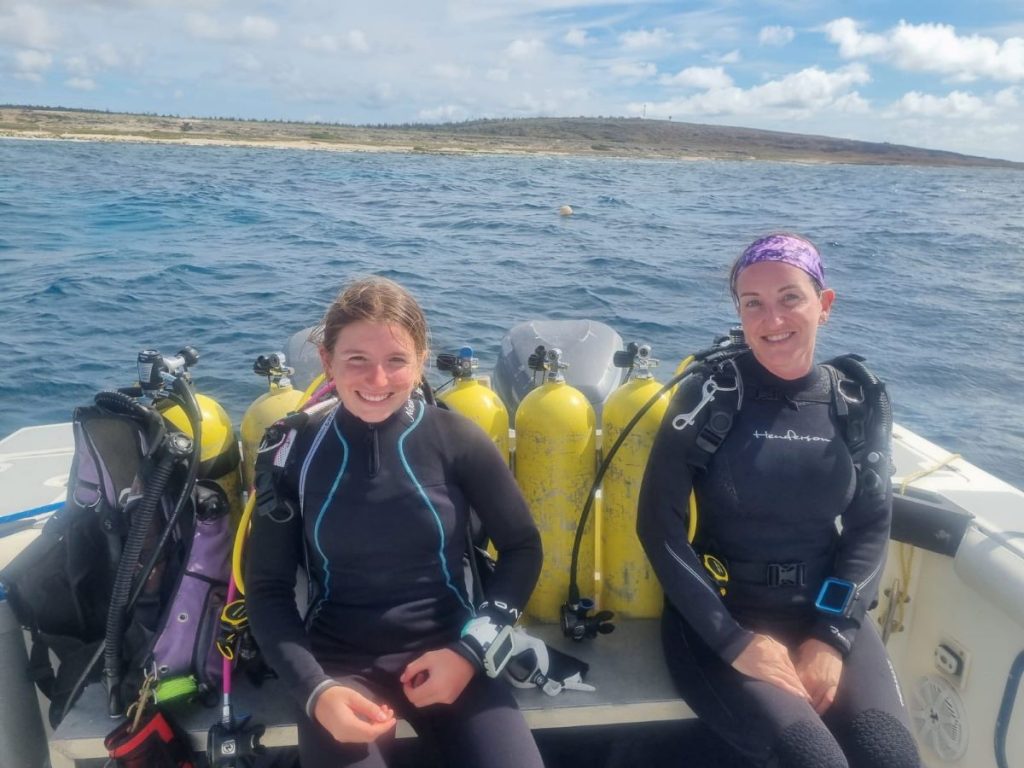
They are shy and easily stressed. Therefore excellent buoyancy control is required to avoid disturbing them. Volunteers with Kenna Eco Diving practice buoyancy exercises before being allowed to visit “Seahorse City”, the nickname given to our study area.
In order to identify and monitor individuals we take macro photos using only ambient light. This is because seahorses are especially sensitive to light. They carry dormant diseases that can take hold if they become stressed. We have to gather data without disturbing them.
During our 2014 research season 28 individuals were catalogued, each with ID photographs and a fitting name. Mr Itchy was christened because of his use of his tail in a strange scratching behaviour*. It was suspected that he was suffering from one of the skin diseases that can cause a rapid death. Fortunately the behaviour ceased after several weeks and he was still around at the end of summer before the group moved off to over-winter deeper in the shelter of the Posidonia oceanica seagrass meadow.
Meet Mr Itchy in this video: