Diving Browns Bay
Shallow crystal clear waters, a scenic wreck site and more marine life than I have had the pleasure to dive with… all in just 8 metres of water. It’s easy to see why Browns Bay is a very popular dive destination in the UK.

Browns Bay on the east coast of Northumberland has always been a popular holiday and seaside location. So much so that on the 23rd of August 1855 the Duke of Northumberland employed a swimming coach to teach the locals how to swim. And then nearly forty years later planning permission was given at a cost of £180.00 to blast a hole in the rocks that would create Whitley Bay’s very first open air pool. Dynamite was used create a 70 foot long and 30 foot wide swimming pool. It’s approximately five feet deep at one end and 3 feet deep at the other. With a continuous supply of fresh seawater at high tide the pool would need little maintenance. Locals and holiday makers would put on their very fetching full length swim suits (which were as thick as a semi dry in the good old days) and jump in for a dip in the cool northeast water. Although popular when it was first built with swimming clubs, holiday makers and fitness fanatics using it whenever the weather permitted, the pool has for sometime now only really been used by scuba diving instructors when they introduce student divers on the open water section of the course, so that they can adjust to the cooler sea temperatures.

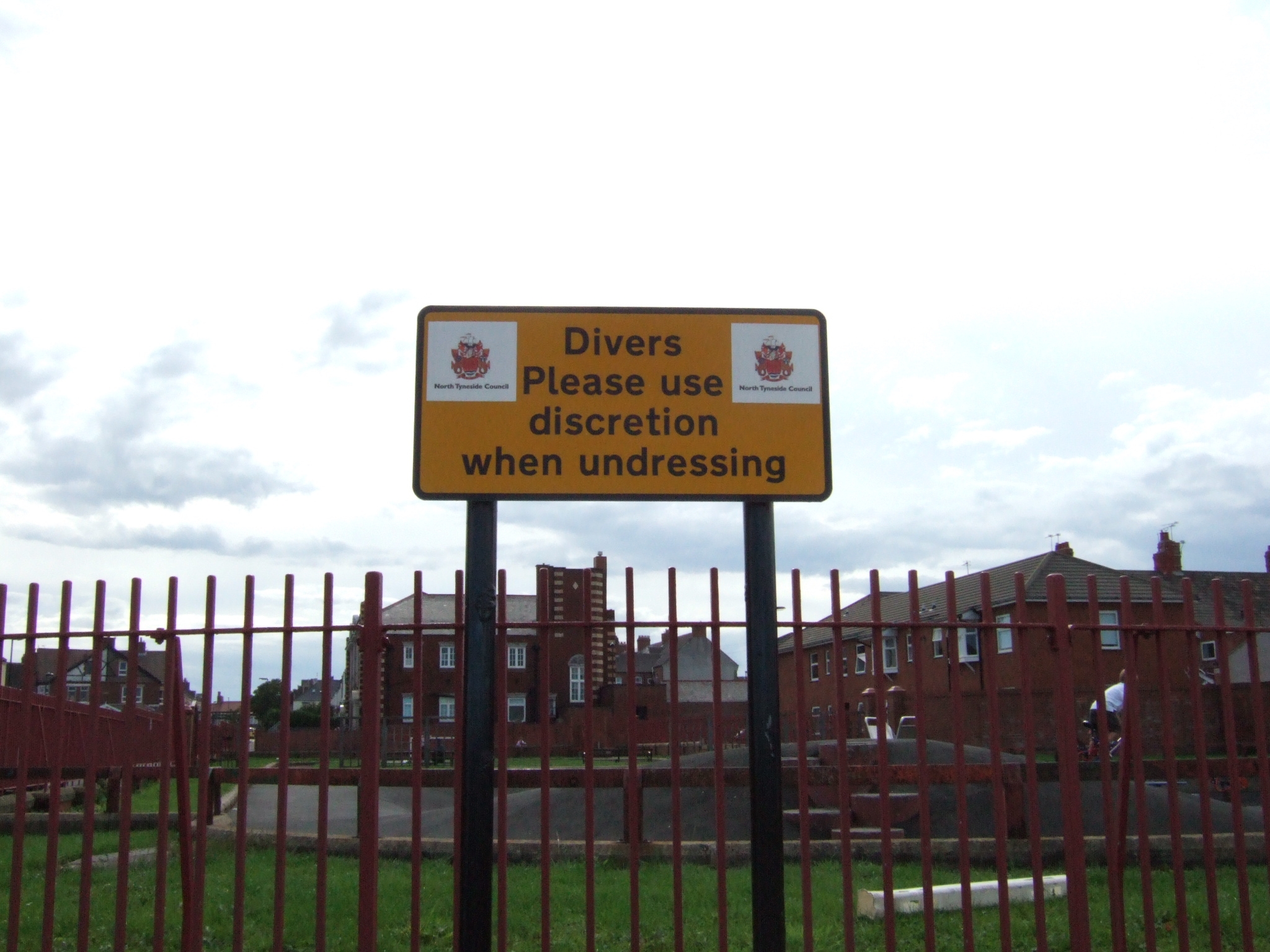
When you get to the dive site and look at the landscape that you have to clamber across with your kit on just getting to the waters edge, you will probably think that I have written this article with people that are built like Arnold Schwarzenegger in mind. But believe me, this little dive is well worth the short trek down the stone steps and across the rocks. The good news is that there is free parking along the road opposite the beach. The bad news, with no facilities here, changing into or out of your dive kit can pose a problem. The local council has found it necessary to put up signs asking divers to be careful when undressing as groups of little old ladies have been seen lurking ready to pounce on unsuspecting near naked divers.

On this particular dive make sure you have surface support, not just for safety reasons but they will be able to help you with your kit and look after the car keys. The usual SMB, Torch and dive knife will be required here. Send up the SMB when you get to the 8 metre section of the dive as boats and Jet Ski’s use the area.

Once kitted up follow the stone steps down to the rocks and carefully make your way to the Victorian swimming pool; it’s a little up and down and can be slippery so take your time. I set my kit down just to the left of the pool and made any last minute adjustments; and then after buddy checks were complete; into the water we went. The maximum depth at this point is no more than 4 metres. My dive guide Michelle Cooper took me towards the small kelp forest which was about 15 metres away from the entry point. Rather than going through it or round it I decided to go over the kelp which rose to about a metre from the surface. Take your time here and as you look down into the kelp you may find the odd pipefish and Nudibranch hiding under the leaves. Moving on, the depth gradually slopes down to around 8 metres. And from here on, it was crustacean city. Squat lobsters, common lobsters, edible crabs and Velvet swimming crabs were here in abundance. Everywhere I looked these big lobbies were looking back at me. And as I got closer to them they arched their back, flexed their muscles and opened their claws ready to defend themselves. In the crevices of the rocks I found squaties hiding along with velvet swimming crabs, and huge edible crabs the size of dinner plates. The visibility here was around 10 metres.

We made our way to an old wreck called the Butetown. This little steamship was loaded with coal when she was grounded at Browns Bay in December 1917. Although she is nearly 100 years old and well broken up, you can still see the outline of this once proud ocean going vessel. There are five specialties that I think may benefit you on this dive; Wreck, Drysuit, Peak Performance Buoyancy, Underwater photography; and this is an ideal site for the National Geographic specialty because you can research the wreck as part of your project. The amount of marine life here will surprise even the most experienced UK diver. Lumpsuckers can be found nesting around the wreck between February and May, with the males remaining with the eggs for up to two months until they hatch.

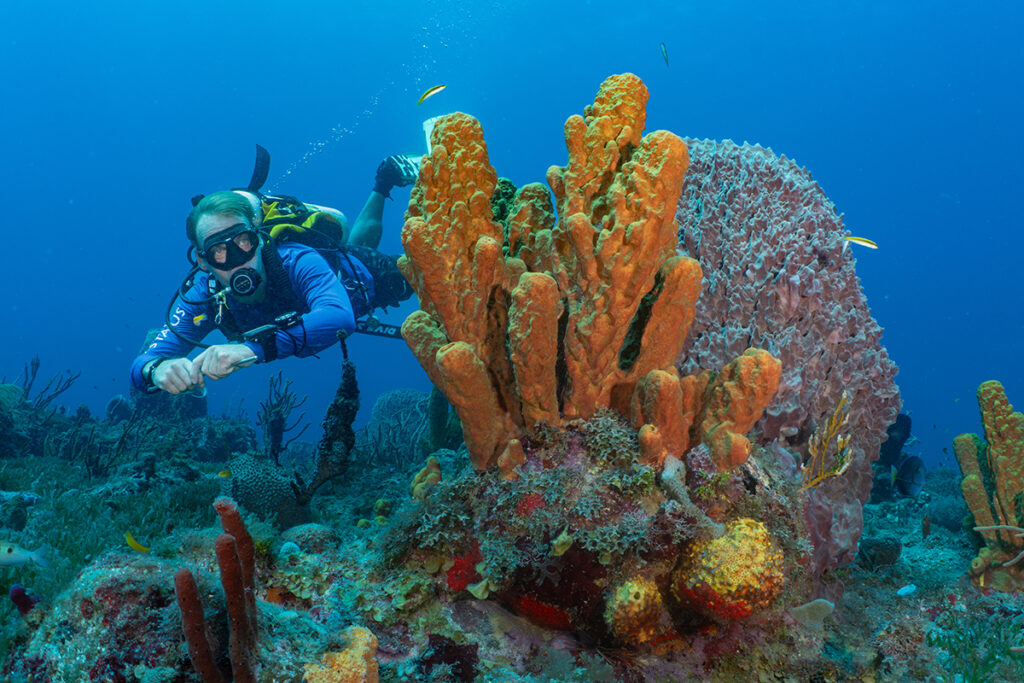
During the summer months Cuttlefish come in close to shore to attach their eggs to the Kelp and seaweed. Every now and then spend a few seconds looking out into the blue; you should catch sight of the many shoals of fish gracefully swimming past. Bib, Pollack and wrasse can be found here; and as this is an area that is popular with anglers care should be taken so as to not become entangled with their lines. The coral encrusted boilers are home to a number of small creatures and its worth taking a torch to look inside as large conger have also been spotted here. My dive guide Michelle and I spent sometime investigating the entire wreck from different angles; from the bow to the boilers we looked under plates and lifted and replaced anything that could be moved. Keep an eye out for flatfish that have camouflaged themselves with sand; and resting dogfish that are lying on the ocean floor against the gentle current. The seabed is also home to a multitude of brightly coloured plants, such as Corallina that densely populates the area and which is then in turn home and protection for smaller creatures such as pipefish, hermit crabs and shrimps. Petalonia can be found growing amongst the ribs of the wreck adding a touch of green to the already colourful scenery, and Dalyell Anemones and sponges decorate the sides of rocks which with the exceptionally good visibility gives an almost tropical feel to the dive. After an hour under the water it was time to end our dive exploring this beautiful site. And although we had gone this way and that, Michelle new exactly where we were, and within no time at all we were back where we started. Now be careful as you exit the water as it will be quite slippery; and be prepared for a slightly longer walk back to the car as it’s an uphill hike with all of your kit on.
Patrick went diving at Browns Bay with Aquanorth Diving Centre. To book a dive at Browns Bay contact the staff at Aquanorth by calling them on +44 (0)191 266 6626 or email them at enquiries@aquanorth.co.uk. You can also visit the Aquanorth website for more information: www.aquanorth.co.uk