Underwater Photography: The Smartphone Revolution
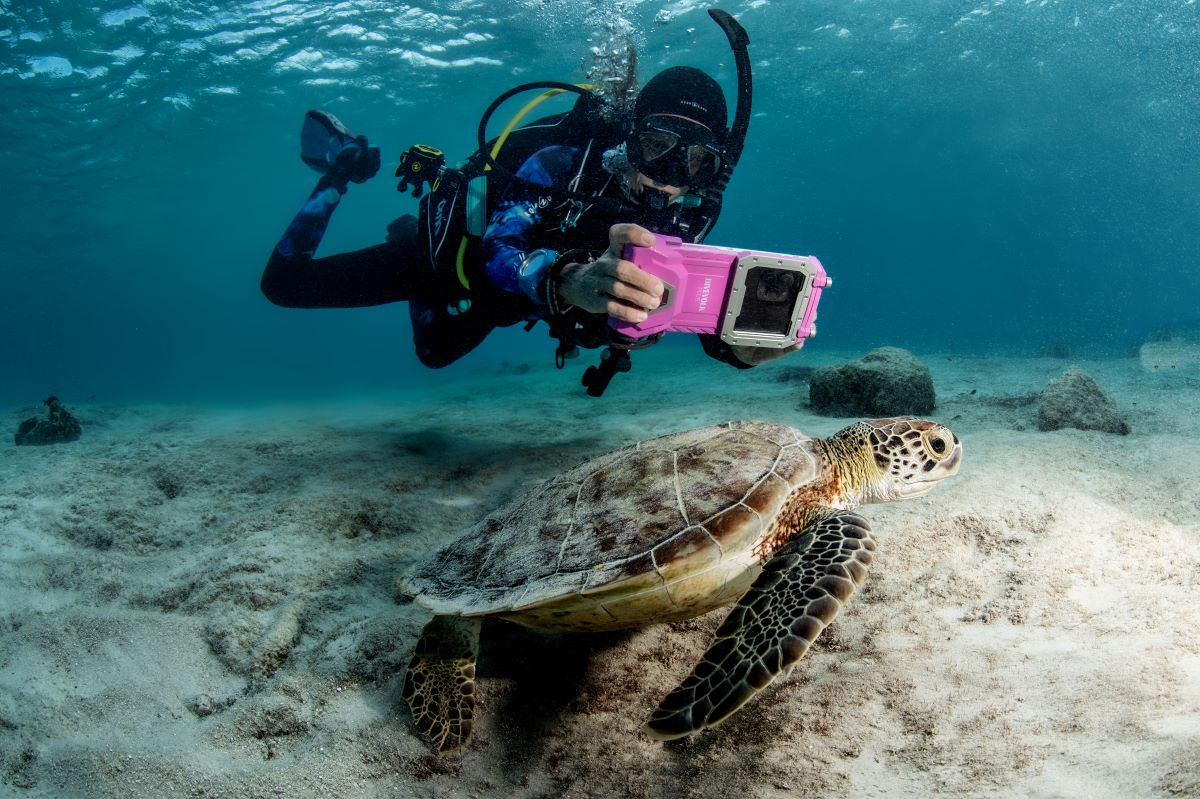
Our lives on land are dominated by those small rectangular devices that never seem to leave our hands – the smartphone – and now they’re coming to take over our underwater world. Or are they?
We already know that smartphones are incredibly useful. I wonder what Steve Jobs would think now? When he launched the iPhone in 2007, he called it a ‘revolutionary and magical product,’ and he wasn’t wrong. In fact, calling them ‘phones’ feels like an anachronism; they are our primary personal assistants, gaming consoles, and professional-grade cameras that just happen to make calls.
We know smartphones have dominated the land photography market for years now, to the point that they have absolutely decimated the compact camera market. The shelves of your local electronics store used to be festooned with dozens and dozens of different compact cameras at every price point. Now there’s just a handful. Although it’s experiencing a slight resurgence at the moment, that’s generally due to high-spec compact cameras that are being used by YouTubers.
We know that we are absolutely obsessed with taking photos. Photutorial reports that, worldwide, we took around 2.1 trillion photos in 2025:
- 61,400 photos per second
- 3.7 million photos per minute
- 221 million photos per hour
- 5.3 billion photos per day
- 175 billion photos per month
We sent over 18 billion photographs just on WhatsApp last year, and we uploaded 95 million photos and videos to Instagram each day. In the United States, the average American takes 20 photos every single day. How many photos did you take yesterday?
By 2023, PetaPixel reported that 92.5% of all photos were taken on a smartphone. Today, that figure is likely north of 95%. The compact camera didn’t just lose the war; it was virtually erased from the map.
Yet, for all their dominance on land, smartphones have hit a literal glass ceiling, or rather, a waterline. While we’ve used them for digital logbooks and dive planning for years, high-end underwater imaging remained the exclusive club of the ‘Big Rig’ owners.
Basic compact cameras don’t really exist anymore. Canon’s G7X is around £900, and the housings are expensive, starting at around £400, going up to almost £2,000, so the investment is huge. Of course, that’s much less than my massive Sony mirrorless housing, but it’s a lot of money to ask the occasional scuba diver to fork out just to take a few photos to show their mates on Instagram.
There are always exceptions to the rules. OM Systems (previously Olympus) have the amazing TG camera, which is a very capable, rugged little device that produces great results at a good price. But even then, you’re still dealing with SD cards, cables, and the “lag” between taking the shot and getting it onto your phone to share. Currently about £450, you can even use it without a housing down to 15m. Although, for any serious shooter, I would still recommend a housing for it. Many divers are also resorting to using action video cameras, which have also come along leaps and bounds in recent years, are relatively inexpensive, and can produce some stunning results for both video and stills.
Some of the big boys of the underwater housing world, such as Nauticam, have toyed around with phone housings, but they were expensive, and I think they were a bit early to the market, so they didn’t really take off. Sealife, who are well known for making underwater photography accessible and user-friendly for divers and snorkellers since the early 90s, found an opening in the market and are now very highly regarded, making a housing that, according to Backscatter, is “versatile, reliable and easy to use” and is being sold for around £320, which is a very good price. I’ve not used the Sealife housing myself, but users tend to like it as it has a vacuum leak-check system that you often see on larger housings, giving you a bit of peace of mind.
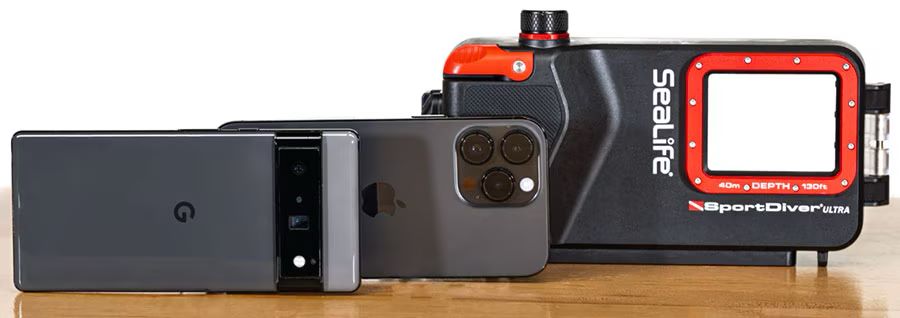
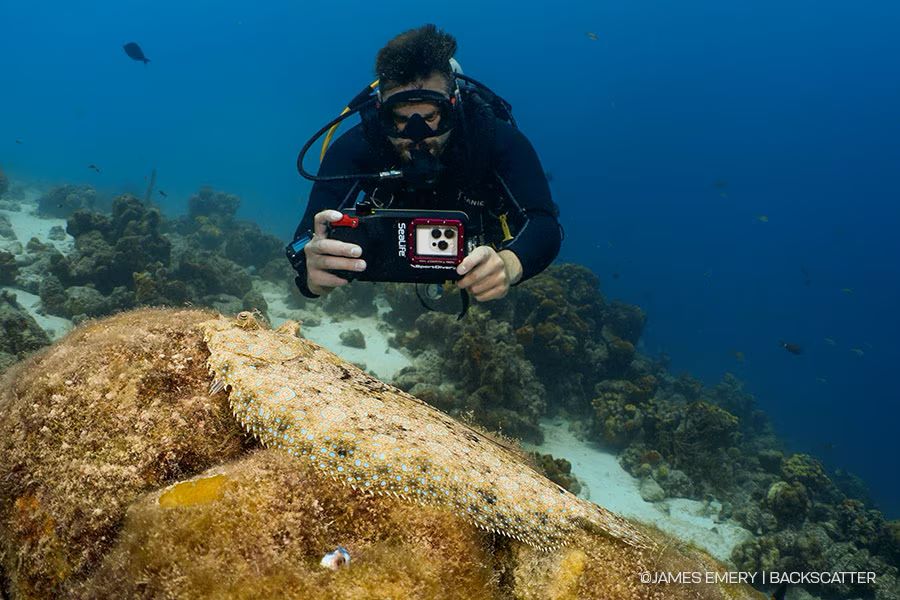
The drawback with traditional camera housings is the fact that you must buy a specific housing for an individual camera, and you can’t swap them around. Although this is true with some phone cases, many of them allow you to change your phone and still use it within your housing. But this isn’t true with all of them, so do check. What is the same for almost all the manufacturers is that you need a unique app to be able to access the phone inside the underwater case.
Some of the apps allow for extra non-photo-related features such as depth, temperature and even full dive computer functionality. But call me old-fashioned, I just want tools to help me craft my image. I have seen that some of the image apps are now including some very clever AI-driven tools that allow for better white balance correction and image sharpening. I’ve not used all of these apps, but some I have tried have been a bit clunky and basic, with controls often hidden deep within the menu. This can make the phone quite difficult to use underwater.
But there are housing manufacturers that buck this trend, such as DiveVolk. Their housing is cheaper, coming in at around £200, and uses a unique membrane system that allows you to operate all the features of your phone. It does take some getting used to, but this means you can use any image creation apps you like, which is fantastic for a photo geek like me. There have been plenty of times that I’ve needed to change the exposure, white balance, shutter speed or focus point to allow me to create the image. The membrane system allows me to go into the app and change these whenever I want.
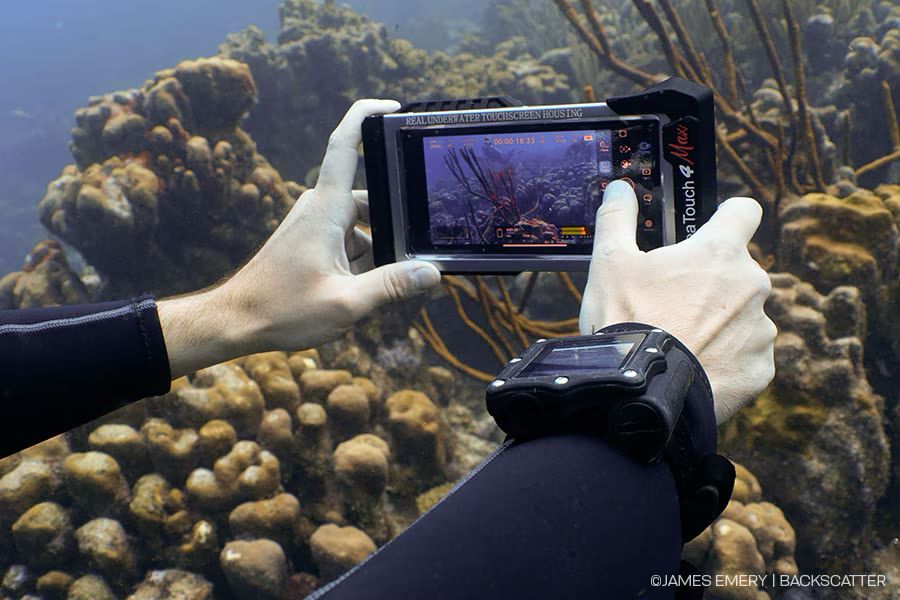
There was something I was really excited about when I first put my phone inside an underwater housing. I wanted to try out its really clever lidar function. For those that don’t know, lidar is a way of using infrared light to produce 3D models, but after trying and failing, I found out that the infrared light cannot penetrate water. This is a shame because it’s a very handy function that I use on land all the time. But using a housing such as the DiveVolk means it could also be possible to access apps that allow you to create photogrammetry images much more easily than traditional methods. This is something I’m very much looking forward to trying on my next underwater trip.
Whether you want to or not, you can also connect to the whole world while you’re underwater. DiveVolk has a housing where you can plug in a surface aerial, allowing you to go “live” underwater. I actually used this in the Maldives last year. I’ve got to say it’s quite incredible; we were 20m down, swimming with tiger sharks while the world watched on. It used to take the whole resources of a blue-chip production company to allow you to show live underwater images; now, just take your phone underwater and stream to your heart’s content.
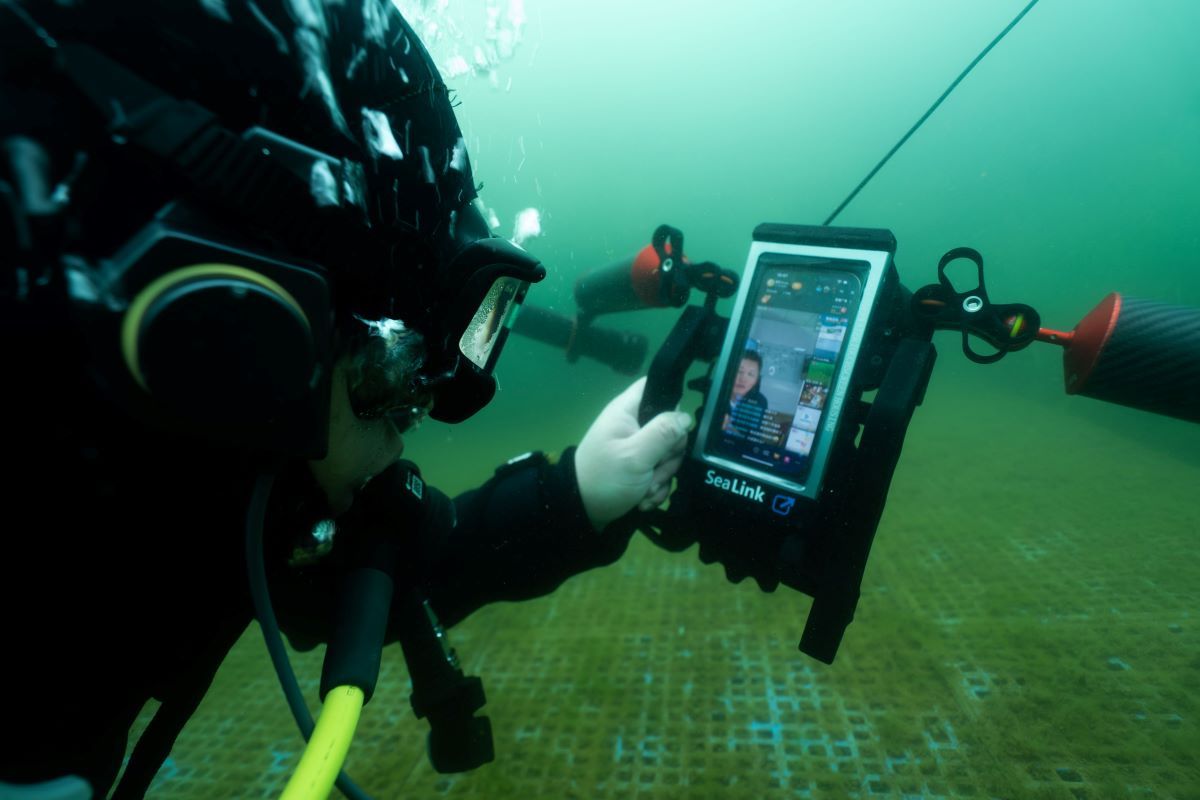
So if your smartphone allows you to stream from underwater, it also makes for a brilliant surface emergency beacon. Maybe carrying a phone replaces an emergency EPIRB? Definitely, if you’re in phone signal range, but possibly going into the future. Apple already allows emergency satellite connectivity, so maybe the rest will make this standard soon, and that will make the smartphone essential for anyone who goes off the beaten track: hikers, mountain climbers, adventurers and, of course, scuba divers.
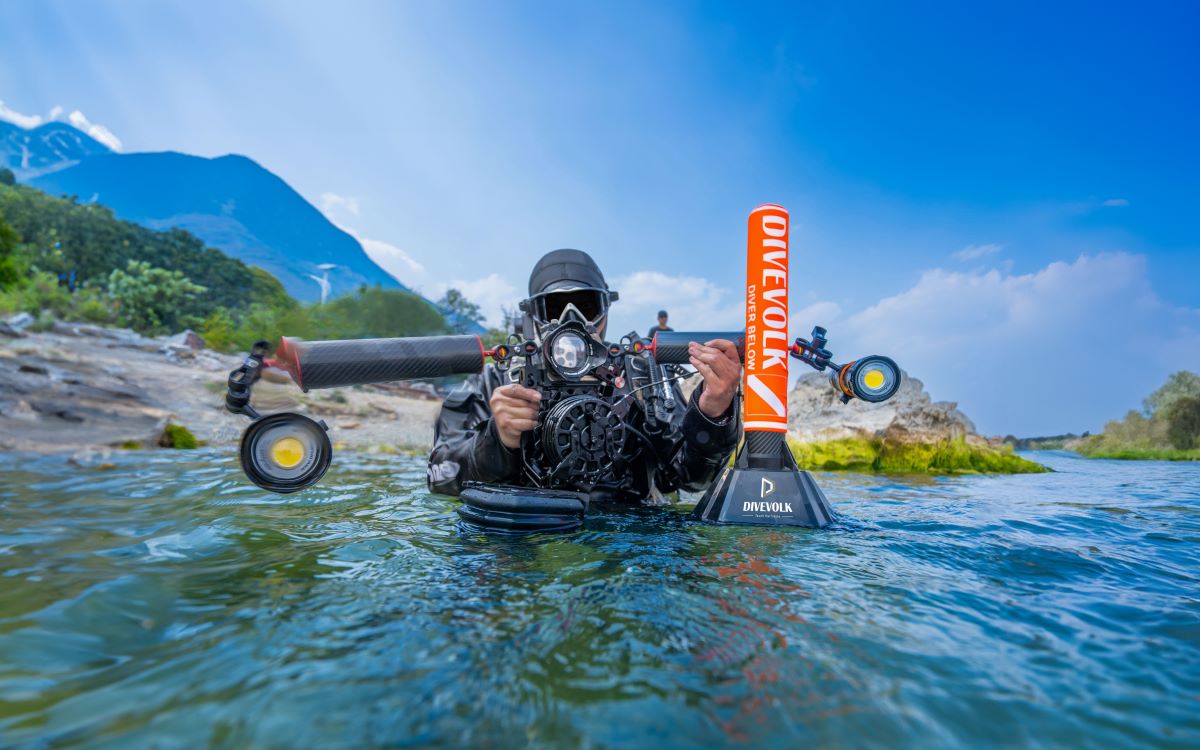
I should say, this is absolutely not a review of different manufacturers; it’s just my opinion and experiences of using phones to capture underwater images.
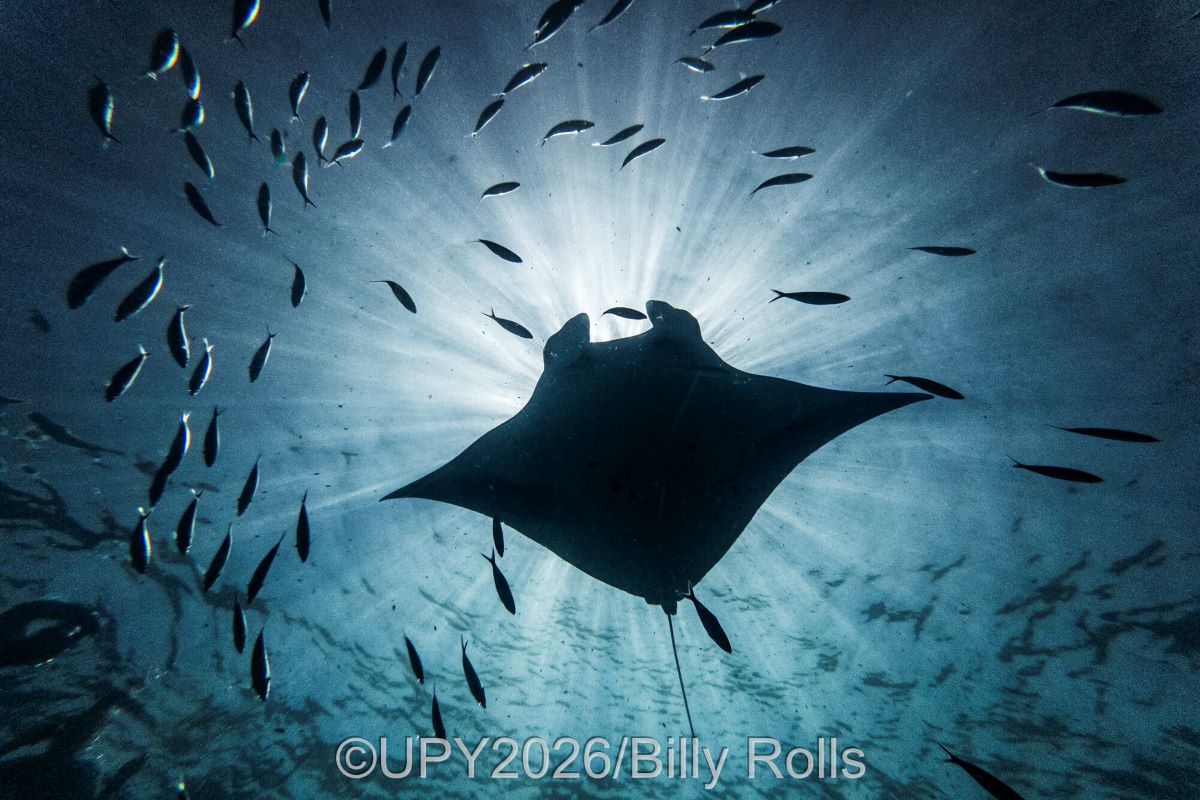
This year, the Underwater Photographer of the Year competition introduced a dedicated Smartphone category, and the images were stunning. Jack Ho from China won with ‘The Roar’, an image of a yawning hairy frogfish. When I first saw this image, I couldn’t believe that a phone took that shot; it’s incredible. But as we have already discussed, they are not really phones anymore, are they?
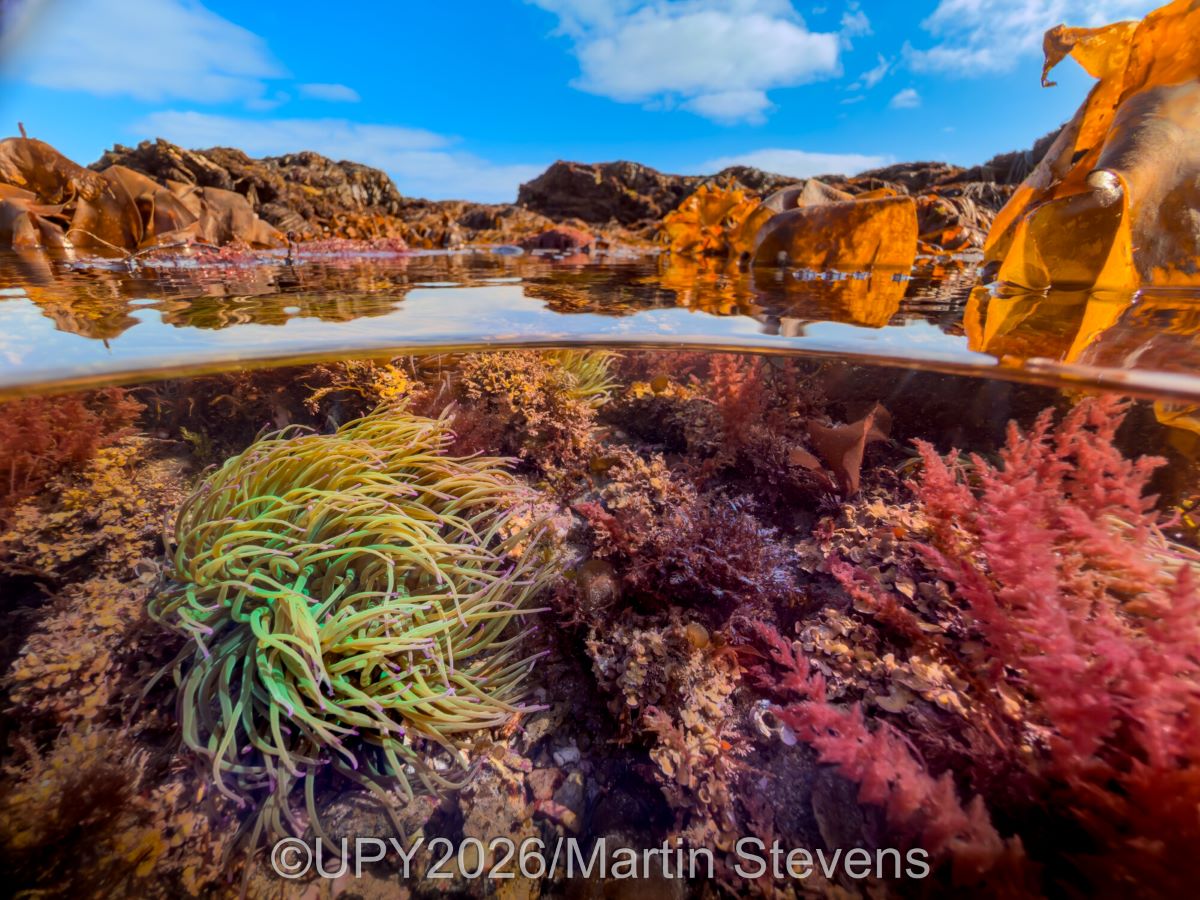
Other images show a sunburst behind a silhouetted manta, which can be difficult enough with a traditional camera, and a split shot of a British rockpool, again, another technically difficult shot. So, it’s clear, people are already pushing this relatively new technology to its limits and producing some great results.
But there are a few drawbacks; most smartphone camera apertures are always set incredibly open, which generally means low depth of field. This is exacerbated when using a macro dioptre, and when using a wide-angle lens can result in very soft and distorted corners.
Lighting can also be problematic. At the moment, there’s no way to use an external flash or strobe with a phone underwater, so we must rely on constant lights. These are very usable for macro; in fact, I love using torches for this kind of photography, but in bright light or wider scenes they struggle, and forget shooting into the sun unless you want silhouettes.
As I write this, I’ve just seen there is a company that is selling Bluetooth flashes for phones, although these are for land use only, so it does mean it’s feasible that this may make its way into our underwater world.
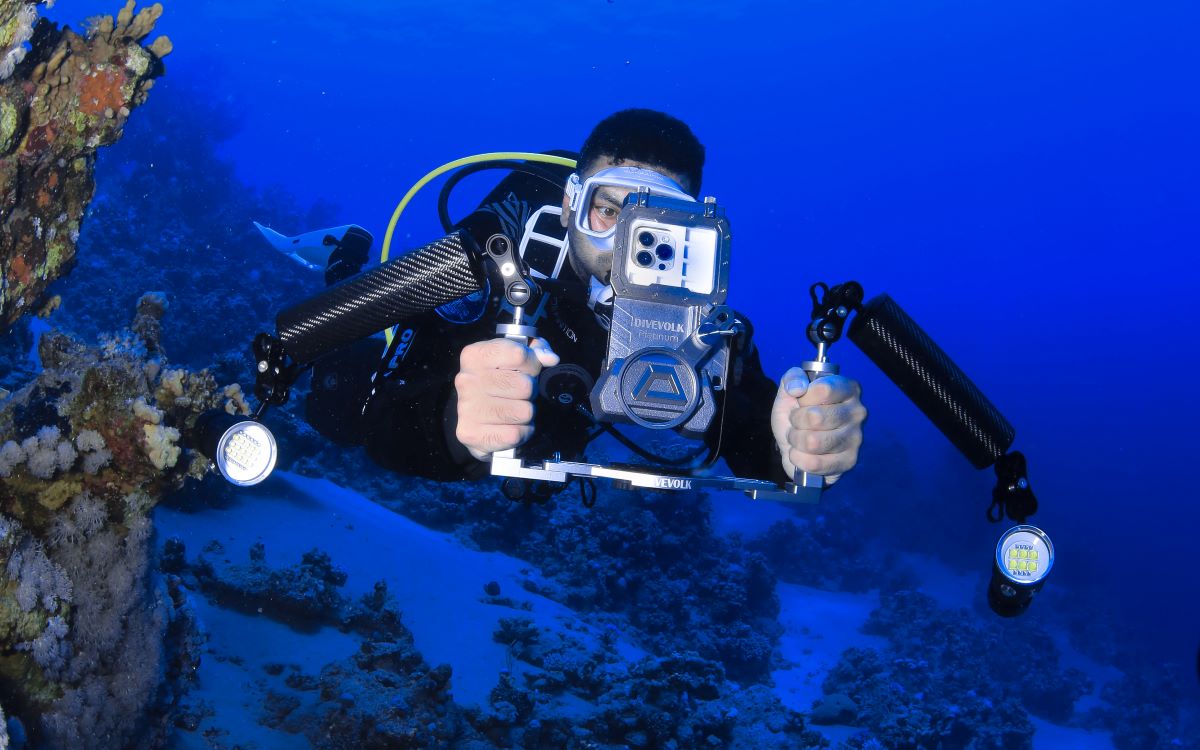
Also, image quality can be a bit hit and miss, and this really depends on the smartphone you use. The photos generally look really good on the device and on social media, but as soon as you go to print them larger, they start to look a little bit ropey. But this is not the case with all manufacturers. I’m an Apple fanboy, but I’m the first person to hold my hands up and say there are other phones out there that handle images much better. So, it’s worth doing some research for your next smartphone, especially if you want to use it predominantly as a camera.
There is also the elephant in the room. Do you really want to put your lifeline to the world in a waterproof box and take it diving? I’m not sure how I would cope if I were halfway round the world and I lost or flooded my smartphone. I literally run my entire life from that little device.
With this in mind, I actually bought a second phone so I can use it underwater. Does this now negate one of the great things about this whole idea? It’s super streamlined, cheap and easy. So, by buying a separate phone, does this make it more costly and a little bit more problematic? I don’t think it necessarily does. I bought a cheap second-hand phone for a couple of hundred pounds, and that device lives inside the housing. I only take it out to charge; all my images are transferred wirelessly. It means it keeps my regular phone completely safe.
So, where are we with using phones to capture underwater scenes? Well, I definitely think they have the capability, and they’re only going to get better.
The financial hurdle has always been the ‘depth charge’ for aspiring underwater photographers. When you’re looking at £900 for a high-end compact and another £600 for a housing, it’s a big ask for someone who just wants a decent shot of a Hawksbill turtle to show their mates on Facebook.
But the tide is turning. We are finally seeing a wave of universal housings and sophisticated apps that allow our ‘land’ phones to survive the pressure of the deep. These devices don’t just protect the hardware; they use the phone’s massive processing power to filter out the ‘blue wash’ of the ocean in real time, something even expensive rigs struggle to do without external strobes.
The smartphone uprising started in our pockets, conquered our social lives, and decimated the camera industry. Now, it’s finally diving into the depths.
By bringing the smartphone revolution beneath the waves, we aren’t just taking better selfies; we’re giving the ocean a digital voice it’s never had before. Like it or not, the revolution won’t be televised; it’ll be Instagrammed from 20m down.
The ocean is the final frontier for smartphones, and judging by the 2.1 trillion photos we took last year, the underwater world is about to get a lot more crowded in our feeds.
I’m often asked whether it is the right time to buy a certain camera; there is never a right time. Just remember the best camera in the world is the one you have with you, and soon that will be true whether you’re standing on a mountain top, sitting in a beer garden or swimming with ocean giants.
So come and join us in the underwater smartphone revolution. I promise it’s just going to get more exciting.