Students’ litter picking data to help clean up UK seas

 The Marine Conservation Society’s Great British Beach Clean invites schools across the country to clean up the UK’s seas, no matter where they are.
The Marine Conservation Society has developed a suite of new educational resources for this year’s Great British Beach Clean, running from 17th to 26th September. There’s plenty of opportunity for students to get involved in a beach clean or inland litter pick and learn about ocean pollution no matter where they are.
The charity has created a pack of lessons and resources for primary and secondary ages focusing on marine litter. Students can explore the plastics problem from their classroom or take part in their own beach, street, park or playground clean.
Jenny Griffiths, Education Manager at the Marine Conservation Society: “The Great British Beach Clean is a fantastic way to bring the issue of ocean pollution to life. Whether you’re by the beach or miles from it, we’ve created a pack of helpful resources to engage young people with the issue of littering and explore the link to beach and ocean pollution. As well as in class and outdoor learning, our resources will help young people to identify practical ways we can all play a part in reducing marine litter and raise awareness of this important issue.”
For schools by the coast, students can take part in a beach clean and help gather data for the Marine Conservation Society using the charity’s survey form. Inland, the charity’s Source to Sea Litter Quest is a great way to illustrate how far pollution travels to make it to the ocean. The Litter Quest form pulls out some of the most common litter items on UK beaches and asks volunteers inland to see how many they can spot.
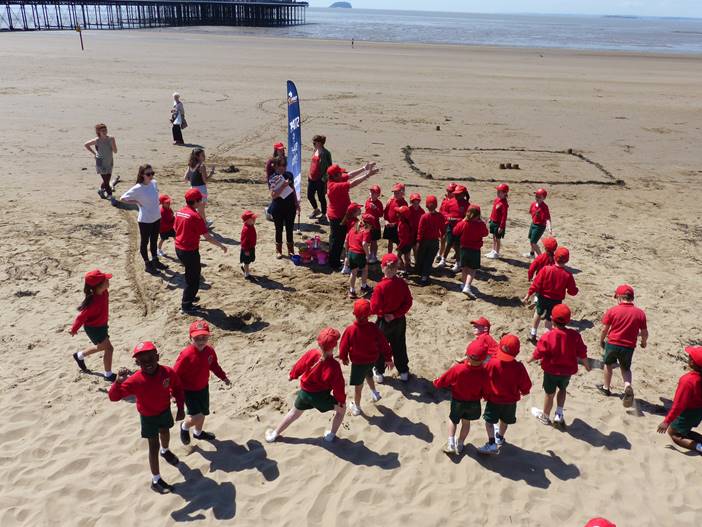
By taking part in the Litter Quest students can help to stop pollution at its source and keep the UK’s beaches clean from miles away.
Last year, Marine Conservation Society volunteers found an average of 425 items of litter for every 100 metres of beach cleaned in the UK. Inland, 70% of litter picks taking place on streets and in parks found PPE litter, 99% found drinks containers.
Dr Laura Foster, Head of Clean Seas at the Marine Conservation Society: “All of the data our volunteers collect on beaches, streets and parks across the country helps to make a real difference. Data collected in previous years has helped us make the case for the 5p carrier bag charges across the UK. We’re now pushing for Deposit Return Schemes for all sizes and types of drinks containers. We hope that a deposit on these will mean that in the future, we won’t be seeing cans and bottles littered and data such as this helps us show just how significant this change can be.”
The data also helps the charity to see the impact of things like the 5p carrier bag charges. Since their introduction from 2011 in Wales the charity has seen a 55% drop in the amount of single-use plastic bags found across UK beaches. The more data volunteers collect, the more policies the charity can push for to make beach and ocean pollution a thing of the past.
Teachers can find all the resources for the Great British Beach Clean, and Litter Quest, on the Marine Conservation Society’s website. Resources are available for primary and secondary ages and are suitable for schools and groups.
Images by Alisdair Naulls