Hidden Worlds: Caves and Mines – Where Light Disappears
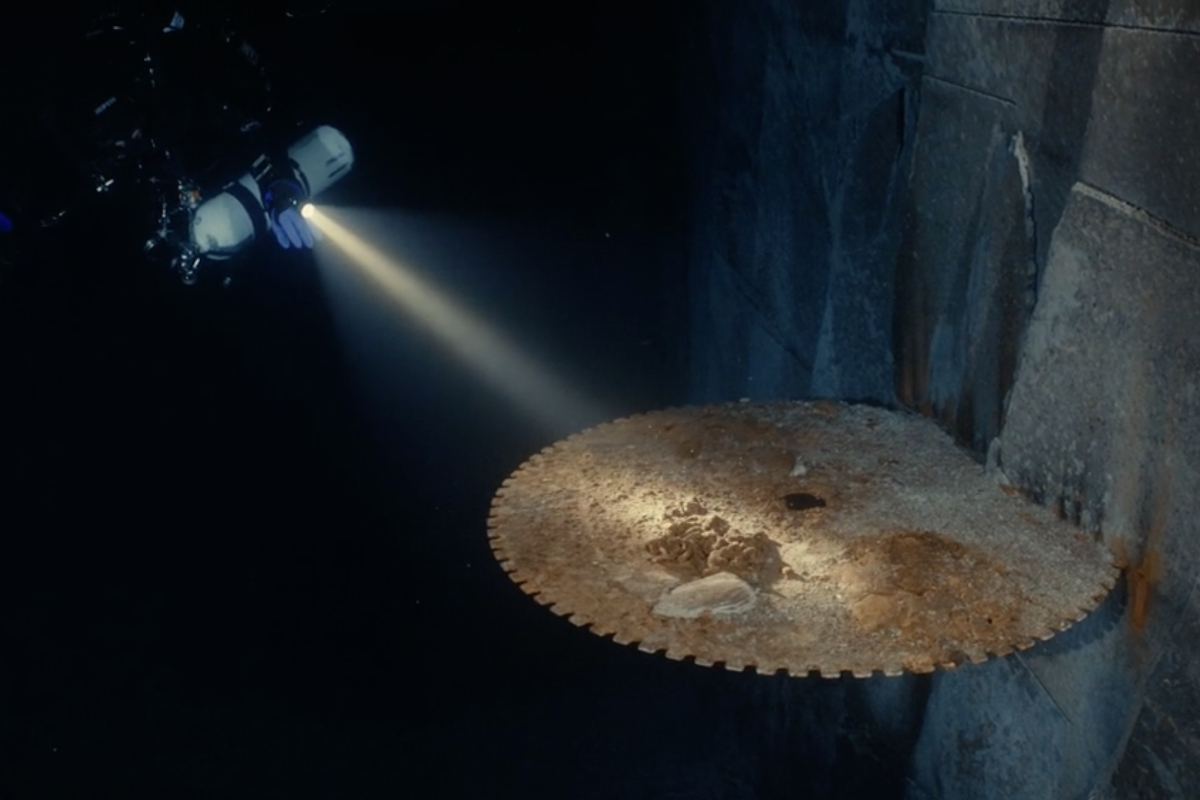
Cave and mine diving occupy a very different space within the world of diving.
Unlike open water, where ascent is always an option, these environments introduce a level of commitment that cannot be reduced once the dive has begun. There is no direct access to the surface, no alternative route, and no possibility of shortening the exit. Every decision made inside has consequences that extend beyond the immediate moment.
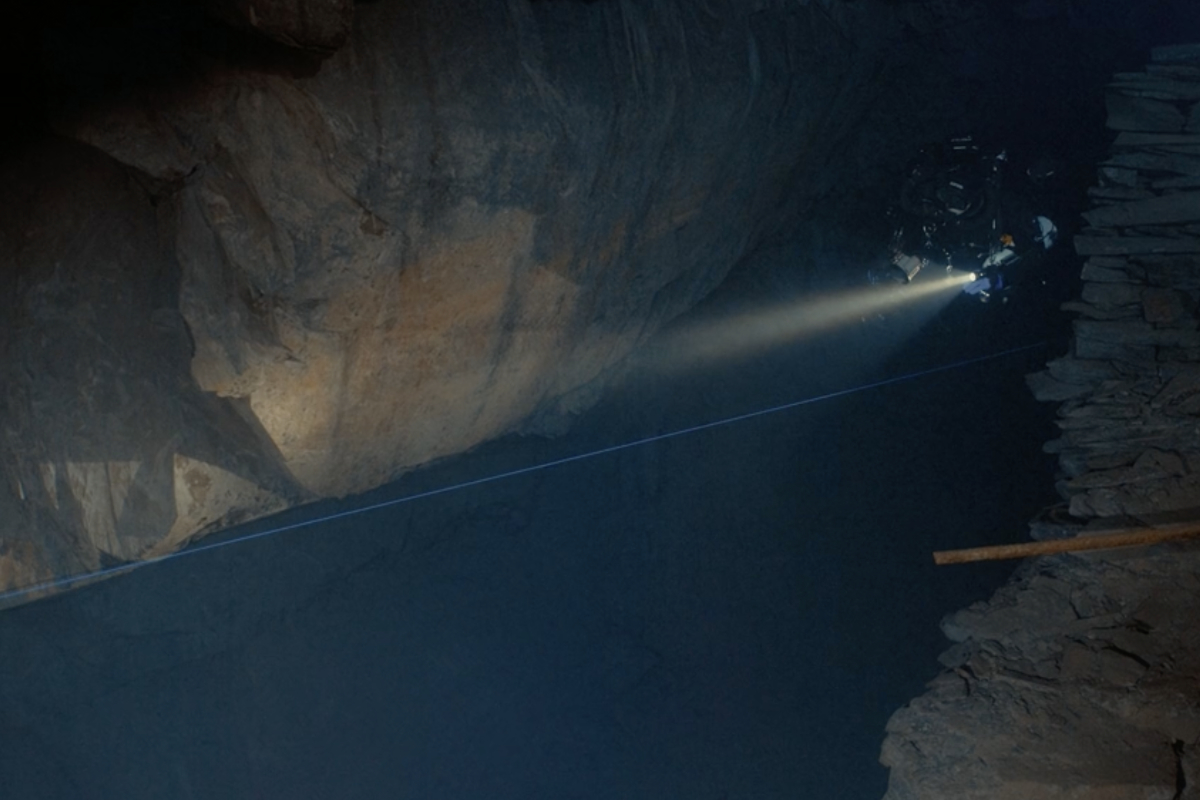
During the filming of Hidden Worlds, some of the most demanding and visually distinctive sequences were captured in exactly these environments — flooded mines in Germany and extensive cave systems such as Molnár János in Budapest. These are places defined not by scale or openness, but by restriction, structure and the absence of natural light.
At first glance, caves and mines can appear calm. The water is often still, undisturbed by current or surface movement. There is no surge, no waves, and no visible instability. However, that sense of calm is deceptive. It exists precisely because the environment is so controlled — and so limited.
Movement is defined by a guideline. Visibility depends on discipline. The exit is fixed from the moment you enter. Unlike open water, where direction is flexible, here the path is predetermined. The only way out is the same way back.
Introducing a camera into this setting adds a further layer of complexity. The task is no longer limited to navigation and awareness; it becomes an attempt to create images in an environment that does not tolerate unnecessary movement or error.
One of the defining characteristics of caves and mines is the complete absence of ambient light. Every image is constructed entirely through artificial illumination. Light placement becomes critical, not only for visibility, but for the structure of the image itself.
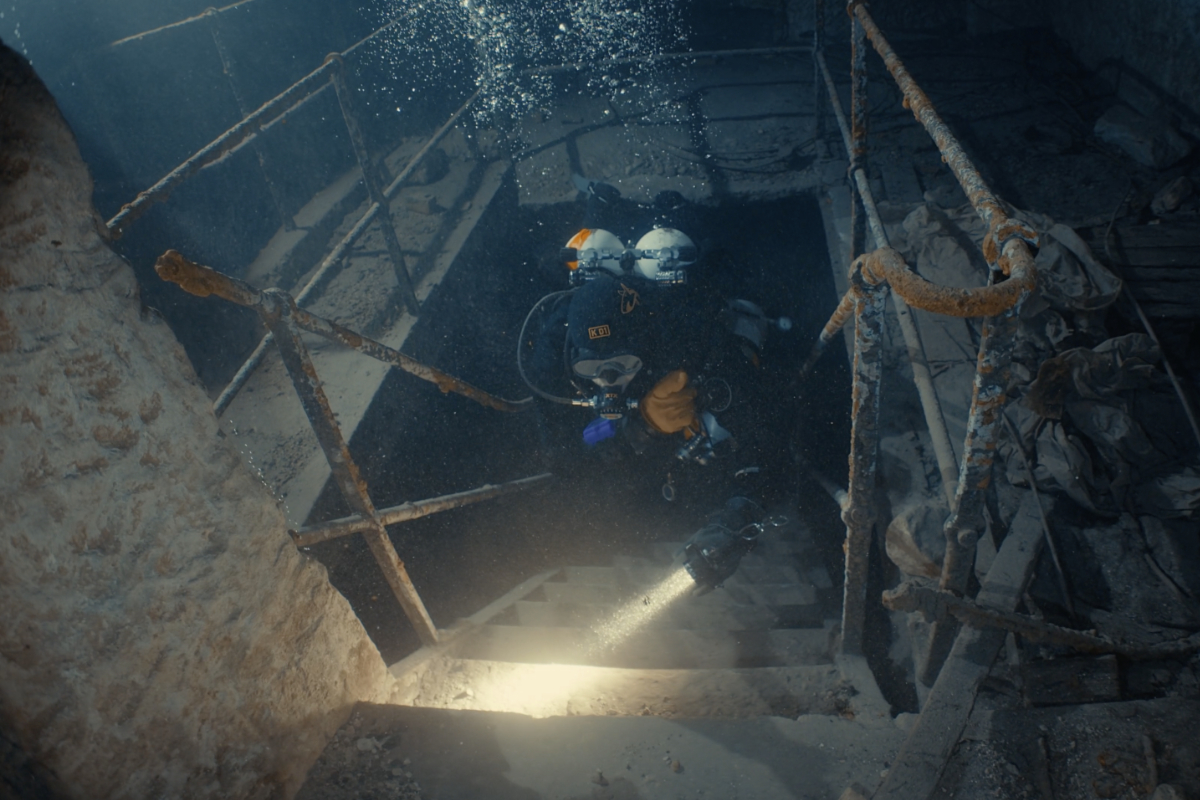
A poorly positioned light can flatten an entire scene, removing depth and contrast. A well-placed beam, on the other hand, can reveal the environment in a way that feels almost architectural — highlighting formations, textures and suspended particles that would otherwise remain invisible.
The result, when executed correctly, is something that differs fundamentally from open water imagery. It is less about capturing a scene, and more about revealing one.
However, these environments can change very quickly.
On one dive in a flooded mine, a small navigation error during the exit resulted in an immediate loss of visibility. Within seconds, the water column turned opaque. There were no visual references, no shapes, and no sense of orientation.
In that moment, the entire context of the dive shifts.
Filming becomes irrelevant. Composition disappears. The only remaining reference is the guideline itself.
For several minutes, I followed it purely by touch, holding a full camera system in one hand. Situations like this reduce everything to fundamental skills: maintaining contact with the line, controlling movement and avoiding unnecessary disturbance.
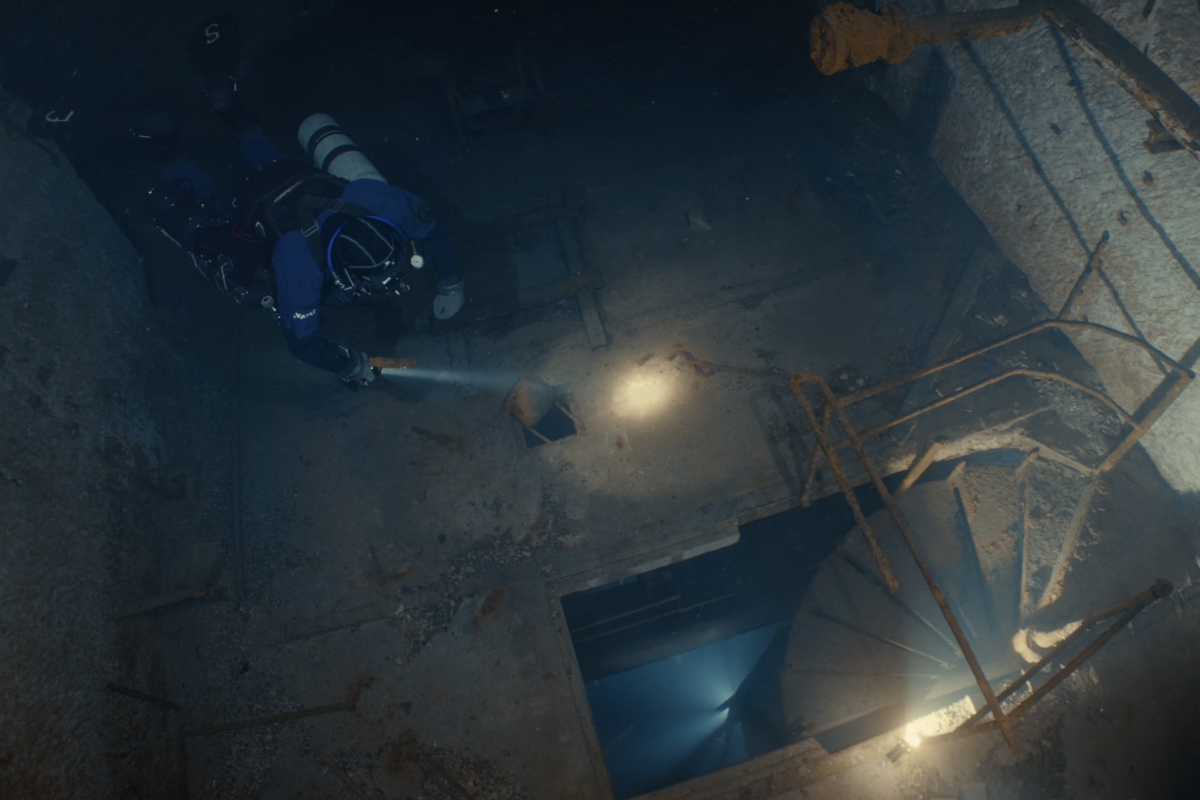
There is no specific training for handling a full camera setup under these conditions. The response relies entirely on diving fundamentals and the ability to remain calm while executing them.
Eventually, visibility improves again, but the experience remains. These are the moments that define cave and mine diving, because they remove all non-essential elements and expose the underlying structure of the dive.
A similar lesson presented itself in Molnár János cave. The original plan was to extend the dive to greater depth, expecting improved visibility and access to new areas. Instead, conditions deteriorated significantly beyond approximately 60 to 70 metres.
Rather than improving, the environment became more restrictive. At that point, continuing deeper would not have added anything meaningful — neither visually nor in terms of exploration.
The decision to turn the dive earlier than planned was straightforward, but it highlights an important aspect of these environments. Planning provides structure, but it cannot override reality. Conditions determine the dive, not expectations.
Caves and mines differ from wrecks in that they are not defined primarily by scale, but by space. The environment is confined, often silent, and highly controlled. Movement becomes slower, more deliberate, and increasingly significant the further one progresses.
Each metre forward increases commitment. Each action has a direct impact on the environment, particularly on visibility. Unlike in open water, where minor disturbances dissipate quickly, here they can persist and affect the remainder of the dive.
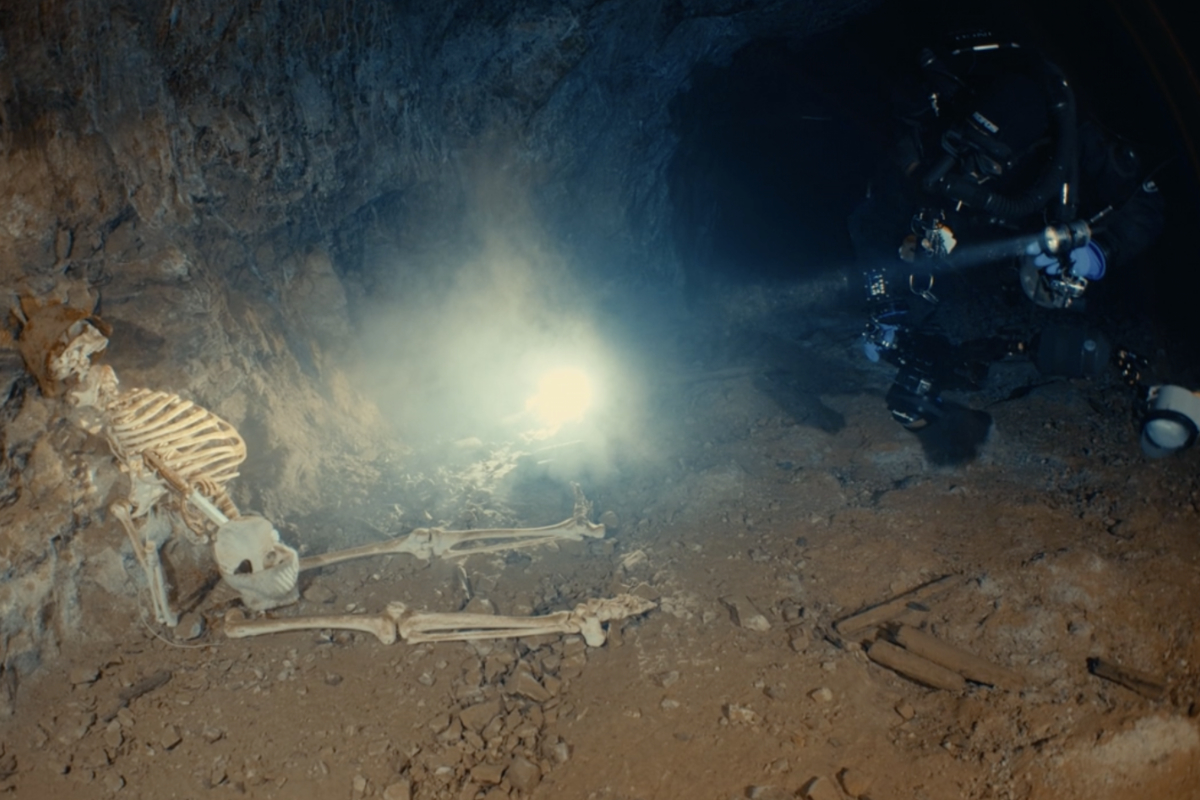
Filming within this context requires constant awareness of two parallel processes. On one side, there is the creative aspect — composition, light and framing. On the other, there is the operational aspect — navigation, control and safety.
The challenge lies not in managing either of these independently, but in maintaining awareness of both simultaneously, and in recognising when one must take priority over the other.
In caves and mines, the margin for error is particularly small. There is no opportunity to reset a scene, no possibility to repeat a sequence under identical conditions. Each decision is final within the context of that dive.
What makes these environments so compelling is not only their visual character, but their nature. They are not easily accessible, not because they are exclusive, but because they require a specific combination of training, preparation and mindset.
They represent a part of diving that is rarely seen — not expansive, but contained; not open, but internal.
Hidden Worlds approaches these locations not as extreme environments, but as quiet ones. Places where movement slows down, where light defines everything, and where the focus shifts from the image itself to the control required to create it.
Because ultimately, the most important aspect of these dives is not what you bring back visually.
It is how you move through them.
Hidden Worlds is currently available on Amazon Prime Video in selected regions, and worldwide via direct streaming in full 4K with extended subtitles.
For Scubaverse readers, the film is also available with a 25% discount via the following link using the code SCUBAVERSE:
https://wehrlefilms.gumroad.com/l/hiddenworlds
Photography: Ingo Leuschner (Including stills from Hidden Worlds)