Lethal Lionfish

One of the more dangerous fish living in our waters, the Lionfish, and sadly not due to being a combination of a south African lion and a small fish, it received its name from its long, flowing colourful dorsal fins atop its body. Although they may look beautiful, these dorsal fins are actual the reason the lionfish is so lethal to some.
This lion (not the four-legged kind) is native to the Indo-pacific region, living from 1 to 300 feet below the surface and, of course, like its land counterpart, the lionfish enjoys the warmth, despite this, they are often known to be an invasive species in the Atlantic Ocean. Growing up to, at largest, 18 inches a year, and laying up to 2 million eggs a year, this impressive species bodes quite well in life, with a very broad range of prey to feed off, Lionfish are generalists and will feed off pretty much anything they can, from small fish to crustaceans and molluscs, they can expand their stomachs up to thirty times its normal size (as most of us can around Christmas, I’m sure).
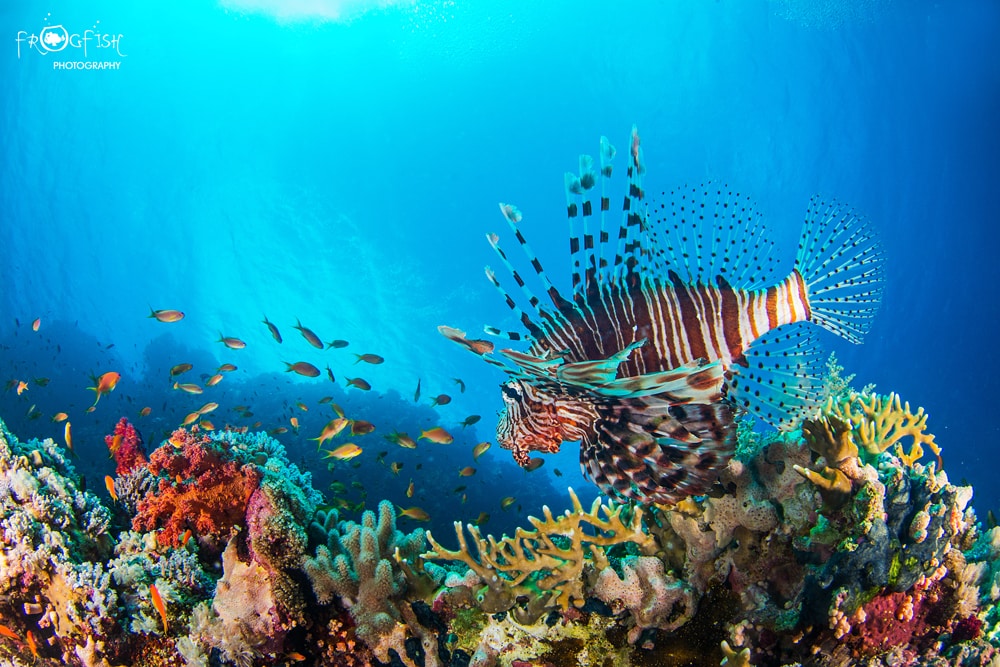
They are nocturnal, so do most of their hunting at night, using those overly large, magnificent looking fins and their bilateral swim bladder muscles to corner their prey, intimidate it and then devour it. All these spines and fins that they carry around to intimidate prey are, sadly, more than just intimidating, they’re quite venomous too, with the interesting ability to poison other marine creatures. Luckily, they are not deadly to humans, but they can cause severe pain, nausea and even paralysis, something I’d strongly recommend you avoiding (because what else am I here for if not to state the obvious!).
They have several venomous spines and non-venomous fins, on the venomous side there’s the Anterior dorsal fin, the anal spines, the pelvic fin and the pectoral fin. As for non-venomous: the posterior dorsal fin, caudal fin and anal fin. The spines they carry not only act as a hunting device but also as a defence mechanism, protecting the lionfish from its own predators.
Although the lionfish may sound completely horrendous in most cases, especially to other marine life, they are quite slow moving, which means they aren’t too much of a threat in comparison to some things below the surface, and usually they’re very uninterested in humans, as we probably don’t taste as good as crab. Being very beautiful creatures, though, means sadly they’re quite popular in the aquarium trade, which, can at times be unethical and therefore harmful; luckily they are not endangered, but pollution does put them at risk.