Future Focus: Joshua Connelly

In each instalment of Future Focus, we speak with past and present students of the Marine & Natural History Photography BA(Hons) course at Falmouth University about their experiences, challenges, and successes on the course.
 Joshua Connelly – Alumni
Gina: What first attracted you to the Marine & Natural History Photography course at Falmouth?
Joshua: I have always loved being in and around the water, as well as photography. I wanted to find a way to combine those two passions into a future career. I first discovered the Marine & Natural History Photography course at Falmouth when I was in Year 9 at school. As soon as I read about the incredible opportunities it offered, including trips to the Red Sea and the Galápagos Islands, I was hooked. From that moment on, everything I did throughout school was focused on achieving my goal of coming to Falmouth to study Marine & Natural History Photography.
Gina: How did the course align with your expectations when you first started?
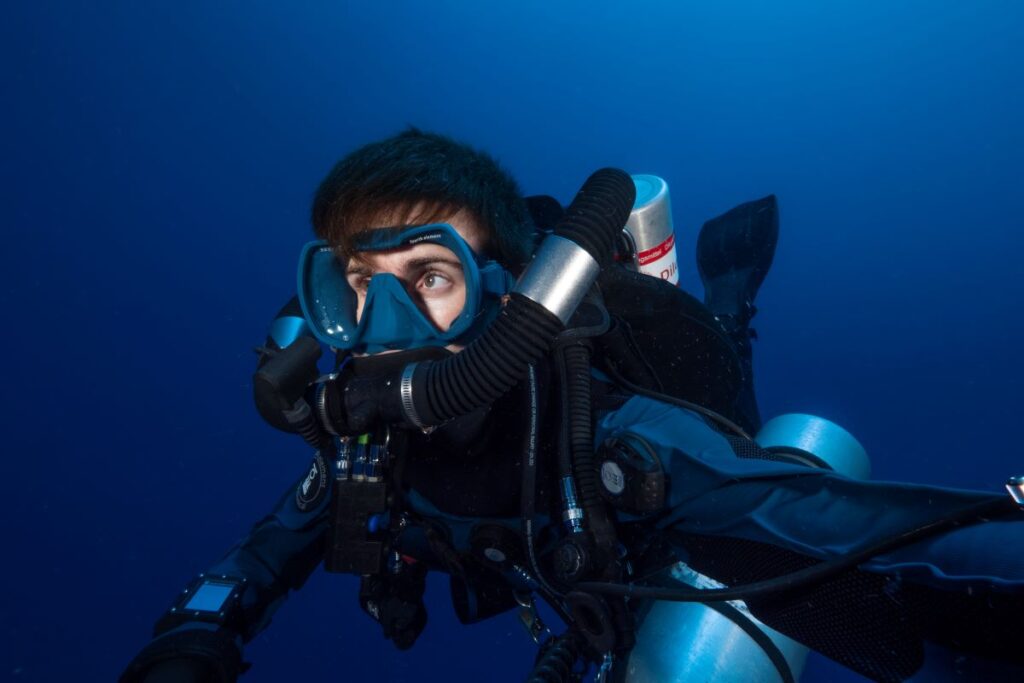
Joshua: Initially, I spent every day wishing we could start the underwater module. It was the part of the course I was most excited about, as it was the perfect opportunity to combine my passion for diving with photography. Once we started the underwater module, it completely lived up to my expectations and gave me the chance to develop my skills in both areas.

Looking back, the course has exceeded what I originally hoped for. It has not only improved my photography and diving abilities but has also given me opportunities to explore new environments and learn alongside people who share the same passion for the marine world.
Gina: Was there a part of the course that surprised you, either in a positive or challenging way?
Joshua: A couple of things surprised me during the course. One was the amount and variety of equipment available through the stores. Whenever I wanted to try something new or experiment with a different style of photography or filmmaking, there was always equipment available for me to use, which really encouraged me to push my skills further.
Another thing that stood out was how collaborative everyone on the course was. We were constantly helping each other to develop ideas, solve problems, and provide feedback on each other’s work. That supportive atmosphere created a really productive environment where everyone was encouraged to learn and improve together.


Gina: Can you describe a typical week as a student on this course, both in and out of the water?
Joshua: A typical week would include a mixture of lectures, seminars, and practical sessions. Outside of university, and when I wasn’t spending time with friends or eating pasties, I would do everything I could to get in the water. Whether it was rock pooling, snorkelling, or scuba diving, I was always looking for opportunities to develop my skills, gain more experience, and explore the incredible marine life around Cornwall. Being able to apply what I was learning on the course to real-world situations made every week both enjoyable and rewarding.
 Gina: How have your photography skills developed since starting the degree?
Joshua: Since starting Marine & Natural History Photography, my photography skills have improved enormously. One of the biggest areas of development has been learning to use external lighting, particularly underwater strobes. I am now confident using strobes in a range of conditions, assessing the results, and making adjustments to achieve better lighting and produce stronger, more balanced images. This has given me much greater confidence in my underwater photography and allowed me to create images that I wouldn’t have been capable of before starting the course.
Gina: What was your first cold-water dive experience like?
Joshua: My first cold-water dive was during the first dive of my Open Water course in a quarry in the middle of November. To make matters worse, the wrist seal on my drysuit split, leaving me with a completely flooded suit, full of 6°C quarry water. It was definitely a memorable introduction to cold-water diving! Despite that experience, it didn’t put me off. Instead, I hired a wetsuit, completed the rest of my Open Water course, and have never looked back.
Gina: What’s the most memorable UK dive you’ve had during your time on the course?
Joshua: One of my most memorable UK dives was off Silver Steps in Falmouth with a couple of course mates. We had already had a fantastic dive and were just about to surface when, out of the corner of my eye, I spotted an enormous barrel jellyfish. It was longer than I am tall, and its bell was so wide that I wouldn’t have been able to wrap my arms around it.
What made the dive truly unforgettable wasn’t just the incredible encounter with such a huge animal, but also seeing the excitement on my friend’s face. We couldn’t stop talking about the dive for days afterwards. Sharing moments like that with friends who are just as passionate about the underwater world is what made it such a special experience for me.
Gina: Has diving in the UK changed the way you think about local marine life and conservation?
Joshua: Diving in the UK has completely changed the way I think about our local marine life and the importance of conservation. Before starting the course, I appreciated the ocean and the wildlife within it, but I didn’t fully understand just how diverse and incredible our own waters are.
Spending more time underwater has shown me that there is an incredible amount of life right on our doorstep, from tiny nudibranchs and juvenile fish to larger species such as catsharks and jellyfish. It has also made me more aware of the threats these habitats face, including pollution, habitat loss, and human disturbance.
Being able to experience these environments first-hand has made conservation feel much more personal. It has reinforced my belief that protecting UK waters is just as important as protecting tropical ecosystems, and that photography can play an important role in helping people appreciate and understand the marine life we have here.

Gina: Have you had a favourite species encounter while diving in the UK?
Joshua: One of my favourite species encounters was with a large-spotted catshark in a deep rock pool just off Gyllyngvase Beach in Falmouth. I hadn’t planned on getting in the water that day—I was simply searching the rock pools for nudibranchs and other small marine life. Then one of the other photographers I was with mentioned that there was a large catshark in one of the deeper pools.
Without a second thought, I walked into the chest-deep water fully clothed, wearing nothing more than a hoodie and a pair of shorts, just for the chance to see it. It was completely worth it. Seeing such a beautiful animal up close in such an unexpected setting was an incredible experience and a reminder that some of the best wildlife encounters happen when you least expect them.
Gina: What has been the most surprising or unusual marine life you’ve photographed here?
Joshua: The most surprising marine life I’ve photographed in the UK was a rainbow sea slug that I found in a rock pool in Falmouth. Before that, I had only ever heard of one rainbow sea slug being recorded in Falmouth, so finding one when I had my camera with me was very special.
It’s a moment I’ll always remember because encounters like that are so rare. It reinforced one of the things I love most about exploring the UK’s coastline: you never know what you might find, and sometimes the most extraordinary wildlife is hiding in the smallest of places.

Gina: Which project or assignment has been the most rewarding for you so far?
Joshua: The most rewarding project for me has been the one I worked on throughout my third year, which focused on the seagrass meadow off Durgan Beach in the Helford Estuary. The project explored the importance of seagrass ecosystems, the incredible biodiversity they support, and the threats they face, while using photography to help raise awareness of a habitat that is often overlooked.
What made the project so rewarding was seeing how my photography could be used to communicate an important conservation message. It allowed me to combine my passion for underwater photography with marine conservation, and it reinforced the kind of work I want to pursue now that I’ve graduated.
 Gina: How do you approach storytelling in your underwater photography?
Joshua: I approach storytelling in my underwater photography by focusing on creating images that do more than simply show a species or environment. I want my photographs to communicate a feeling, tell a story, and help people understand the importance of the marine world.
Before taking an image, I think about what I want the viewer to learn or feel. Whether I am photographing a single animal, a wider habitat, or a conservation issue, I try to capture the relationship between the subject and its environment. I also consider how lighting, composition, and behaviour can be used to create a stronger narrative.
For me, underwater photography is not just about documenting what is beneath the surface; it is about creating a connection between the viewer and the ocean. By telling these stories, I hope to inspire curiosity, appreciation, and a desire to protect the marine environments we still have.
Gina: How have the teaching team and dive team supported your development?
Joshua: The teaching team and dive team have played a huge role in supporting my development throughout the course. Their knowledge, experience, and willingness to share advice have helped me improve both as a photographer and as a diver.
The team have always encouraged me to push my creative ideas further, while providing valuable feedback that has helped me develop my technical skills and approach to storytelling.
What has stood out most is how approachable and supportive everyone has been. Whether I needed advice on camera settings, lighting techniques, dive planning, or overcoming challenges underwater, there was always someone willing to help. Their support has allowed me to grow in confidence and develop the skills needed to pursue a career in marine photography and filmmaking.
Gina: Do you feel the course has prepared you for working professionally as an underwater photographer?
Joshua: The course has prepared me extremely well for working professionally as an underwater photographer. Throughout my time on the degree, I have developed a wide range of skills, from improving my underwater photography techniques and understanding of lighting, to learning how to plan and execute shoots in challenging environments.
The course has also taught me the importance of storytelling, conservation, and creating images with a purpose rather than simply documenting what is underwater. Through practical experience, feedback from tutors, and working on projects with real conservation themes, I have gained a much better understanding of what is required to work professionally.
Beyond the technical skills, the course has helped me build confidence, problem-solving abilities, and connections within the industry. I feel prepared to continue developing as an underwater photographer and pursue a career creating imagery that connects people with the marine environment.

Gina: What role has feedback and peer support played in shaping your work?
Joshua: Feedback and peer support have played a huge role in shaping my work throughout the course. Sharing ideas with my course mates has often helped me see projects from different perspectives and consider new creative approaches that I may not have thought of on my own.
The collaborative environment has also been incredibly valuable when it comes to problem-solving. Whether it was finding solutions to technical challenges, improving image ideas, or overcoming difficulties during shoots, having people around me with different experiences and skills has helped me develop as both a photographer and a filmmaker.
The support from my peers and the feedback from tutors has encouraged me to push my work further, experiment with new approaches, and continually improve my storytelling and technical abilities.
Gina: What’s been your proudest achievement on the course so far?
Joshua: My proudest achievement on the course was receiving the Outstanding Teamwork and Teaching Award following our Red Sea trip. It was especially meaningful because it recognised the support I gave to my course mates, both in photography and diving.
Throughout the trip, I enjoyed helping others improve their photography, answering questions, leading dives, and building people’s confidence underwater. I also helped fellow students develop new diving skills, including DSMB deployment, buoyancy control, and completing deeper dives safely. Receiving the award meant a great deal to me because it reflected not only my own passion for diving and photography, but also my commitment to helping others learn and get the most out of the experience.
Gina: How has the course changed the way you approach diving and photography?
Joshua: Before starting the course, my diving was focused on trying to see as much as possible in the time I had underwater, but I didn’t always take the time to properly observe and appreciate what was around me. Since diving with a camera, my approach has completely changed. I have learned to slow down, look more carefully, and actively search for subjects rather than simply swimming past them.

Whether I am diving through kelp forests or seagrass meadows, I now pay much closer attention to the smaller details and the hidden life within these habitats. From large catsharks to tiny nudibranchs, I have discovered that there is always something fascinating to find. Many of these species are things I would have previously swum straight past without noticing, but photography has taught me to be more patient and observant underwater.
Gina: Have you developed any particular style or technical focus since joining?
Joshua: Since joining the course, I have developed a stronger focus on underwater storytelling and creating images that communicate more than just the appearance of a subject. I have become particularly interested in using photography to highlight marine conservation issues and showcase the incredible biodiversity found within UK waters.
Technically, I have developed a strong focus on underwater lighting, especially the use of strobes to create depth, colour, and atmosphere within my images. I have also become more interested in capturing animal behaviour and the relationship between species and their environments, rather than simply documenting what is there.
Overall, my style has moved towards creating purposeful imagery that combines my passion for diving, marine life, and conservation, with the aim of inspiring people to appreciate and protect the underwater world.

Gina: What skills outside of photography (like dive planning, teamwork, or fieldwork) have you gained?
Joshua: Throughout the course, I have gained many skills outside of photography that have been just as valuable to my development. Dive planning has been a major area of growth, from understanding conditions and planning safe dives to managing equipment and working effectively as part of a team underwater.
I have also developed strong teamwork and communication skills through working with course mates on shoots and projects. Being able to collaborate, share ideas, and solve problems together has been an important part of the course experience.
Fieldwork has also taught me how to adapt to challenging environments, whether that is changing weather conditions, difficult dive sites, or unexpected situations underwater. These skills have helped me become a more confident and capable underwater photographer, while also preparing me for the practical demands of working professionally in the field.
Gina: How do you see this degree helping you in your future career?
Joshua: I see this degree helping my future career in many different ways. Initially, I think the skills I have developed throughout the course will be the most valuable, giving me a strong foundation in photography, filmmaking, diving, and storytelling. Beyond the practical skills, I also believe the connections I have made with staff, visiting professionals, and my course mates will continue to open opportunities in the future.
The experiences, knowledge, and network I have gained during my time at Falmouth University have given me the confidence to pursue a career within marine photography and filmmaking, while also providing me with the tools to continue developing as a visual storyteller.
Gina: What advice would you give to new students thinking about joining the course?
Joshua: My biggest piece of advice for new students thinking about joining the course would be to throw yourself into every opportunity you can. The course offers so many experiences, from developing your photography skills and exploring new environments to working with new equipment, meeting like-minded people, and taking part in exciting projects.
Don’t be afraid to try new things, make mistakes, and push yourself outside of your comfort zone. Some of the most valuable experiences I have had have come from saying yes to opportunities I wasn’t completely sure about. The more you put into the course, the more you will get out of it, and you will leave with not only improved skills but also incredible memories and connections.
23. What would you say to divers who might underestimate UK waters as a photographic subject?
Many people assume that the UK lacks photographic opportunities and that you need to travel somewhere tropical to experience incredible marine life. However, UK waters offer an incredible variety of subjects, from historic wrecks and dramatic rocky structures to the huge diversity of marine species that live around our coastline.
Our waters are home to hundreds of species, including fish, sharks, molluscs, crustaceans, and many more, all providing amazing photographic opportunities. I would encourage anyone who thinks there is nothing to photograph in the UK to simply get in the water and explore. You might be surprised by just how much incredible marine life is waiting to be discovered right on our doorstep.

Click below for more details about Falmouth University’s Marine & Natural History Photography course:
https://www.falmouth.ac.uk/study/undergraduate/marine-natural-history-photography
Meet Gina Goodman and the rest of the team at Falmouth University shaping the next generation of underwater photographers here.