Western Ecology Tour Expedition Report – North Wales

 Whilst in North Wales we were with Project Seagrass, and here we were aiming to shed some light on what is Seagrass, why it’s important and to show the amazing work that Project Seagrass is working on.
In order to help me get this message across in this blog, I collaborated with co-Scubaverse editor and collaborator Jake Davies, who heads Project Seagrass in North Wales, to give you an insight into Project Seagrass and what he did with us during the Expedition. I did this through a series of questions in which Jake has kindly provided the answers.
What is Project Sea Grass?
Project Seagrass was created in 2013 and is an environmental charity devoted to the conservation of seagrass ecosystems through education, influence, research and action. The charities mission is ‘To lead societal change to enable the recognition, recovery and resilience of seagrass ecosystems globally; that provide biodiversity, equitable and sustainable livelihoods, and planetary life support’.
Why is Sea Grass so important?
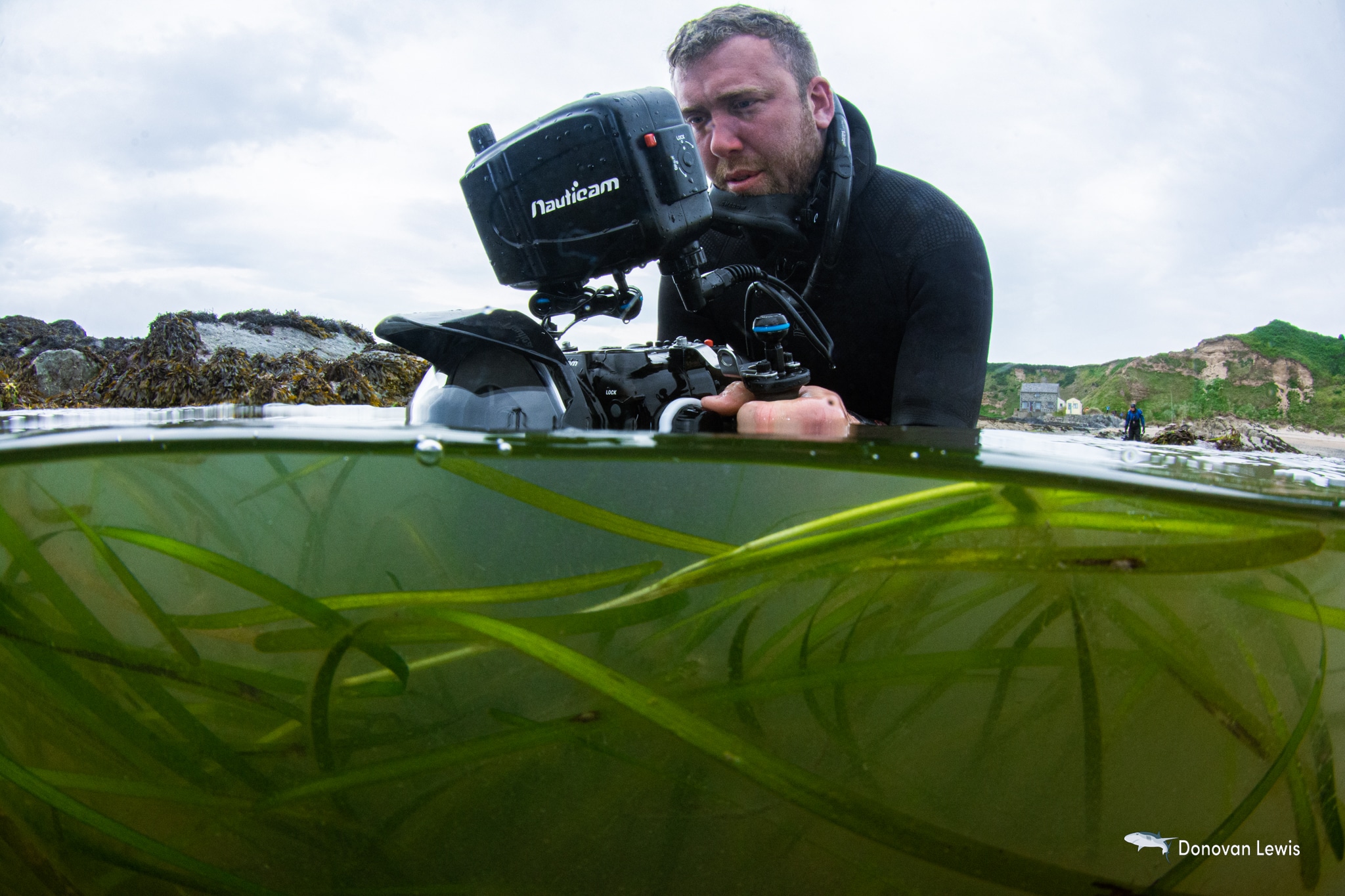
Seagrasses are flowering plants that live in shallow sheltered areas along our coast. These sensitive plants are different from seaweed and form bright green leaves. Similar to grass on land, seagrasses form large, dense meadows under the sea. These habitats provide important roles that include:
- Carbon sequestration: taking carbon dioxide from the atmosphere and storing within the seabed below.
- Production of oxygen
- Increased diversity
- Important nursery areas for a range of species including commercial species such as Cod and plaice
- Coastal protection
What ways can people help Sea Grass?
There are many ways people can help seagrass both directly and indirectly.
People can help seagrass by raising awareness of the habitat through a range of different ways such as social media or attending a variety of different events. There are online tools such as the Seagrass spotter where you can upload your seagrass sighting (from anywhere in the world) to help better understand seagrass distributions. Where possible you can also volunteer with Project Seagrass to directly help with the project when opportunities arise.
Other ways you can help is by donating and purchasing merchandise created by Project Seagrass where money goes directly to seagrass conservation and support the range of projects that are lead by the charity in order to conserving Seagrass.
What did you hope to achieve with the WET Team?
Through the WET expedition I wanted to increase people’s knowledge of Seagrass meadows through taking them to a meadow and experiencing one first hand. Showing the team a meadow first hand was important as it was also the perfect location to show the incredible benefits that they provide. Along with increasing knowledge the expedition also raised funds which help the charity in progressing with its objectives.
With lots of videographers and photographers as part of the team, creating some engaging content was an element that we wanted to achieve during the visit to the meadow. The content could then be shared to provide further information and catch the eyes of social media users in order to engage more people with the importance of Seagrass meadows.
Has Expedition WET helped the project?
Expedition WET has directly helped Project Seagrass by raising funds that can be used to conserve seagrass meadows. Social media around the expedition will have also driven more social media traffic to the Project Seagrass accounts and website where viewers will have increased their knowledge about Seagrasses.
Which sites did you take the WET Team to visit and why?
The WET team had a day at the meadow in Porthdinllaen on the north coast of the Llŷn Peninsula. This meadow is one of the largest and densest off the Welsh coast and is also one of the sites which Project Seagrass monitoring through the Seagrass Watch programme. The meadow has also been a location for seed collections as part of the seagrass restoration project down in dale as part of the Seagrass Ocean Rescue Project.
Do you think the trip was a success and why?
The trip was successful as funds were raised for the Project Seagrass and the day at the meadows was thoroughly enjoyed by all. It was unfortunate the conditions weren’t the best as that would have provided the team with the full experience of a seagrass meadow. However, this is one of the challenges of UK diving/snorkeling conditions aren’t always perfect but you can only make the best of the situation that has been given which we certainly did that day.
Considering the conditions lots of engaging content was created and is continually shared by the expedition team which continues to spread the messaging about the importance of these incredible underwater habitats.
I’d like to thank Jake for collaborating with myself on the second entry of the Expedition WET’s Scubaverse blog and for guiding us when we were with you.
The North Wales leg started with the drive down from the highlands of Scotland, this took us the best part of 12 hours with a few brief stopovers to stretch our legs, the drive was once again beautiful after driving through the valleys. We arrived at the Porthdinllaen campsite at around 7pm, this campsite is located higher up above Porthdinllaen on the north coast of the Llŷn Peninsula, after arriving and familiarising ourselves we set up camp and got our Cameras ready for the days ahead. This is where we met Jake and Giovana who met us at camp to welcome us and tell us what is planned for the next few days. Once we’d been briefed we all ate and had an early night ready for the first day.
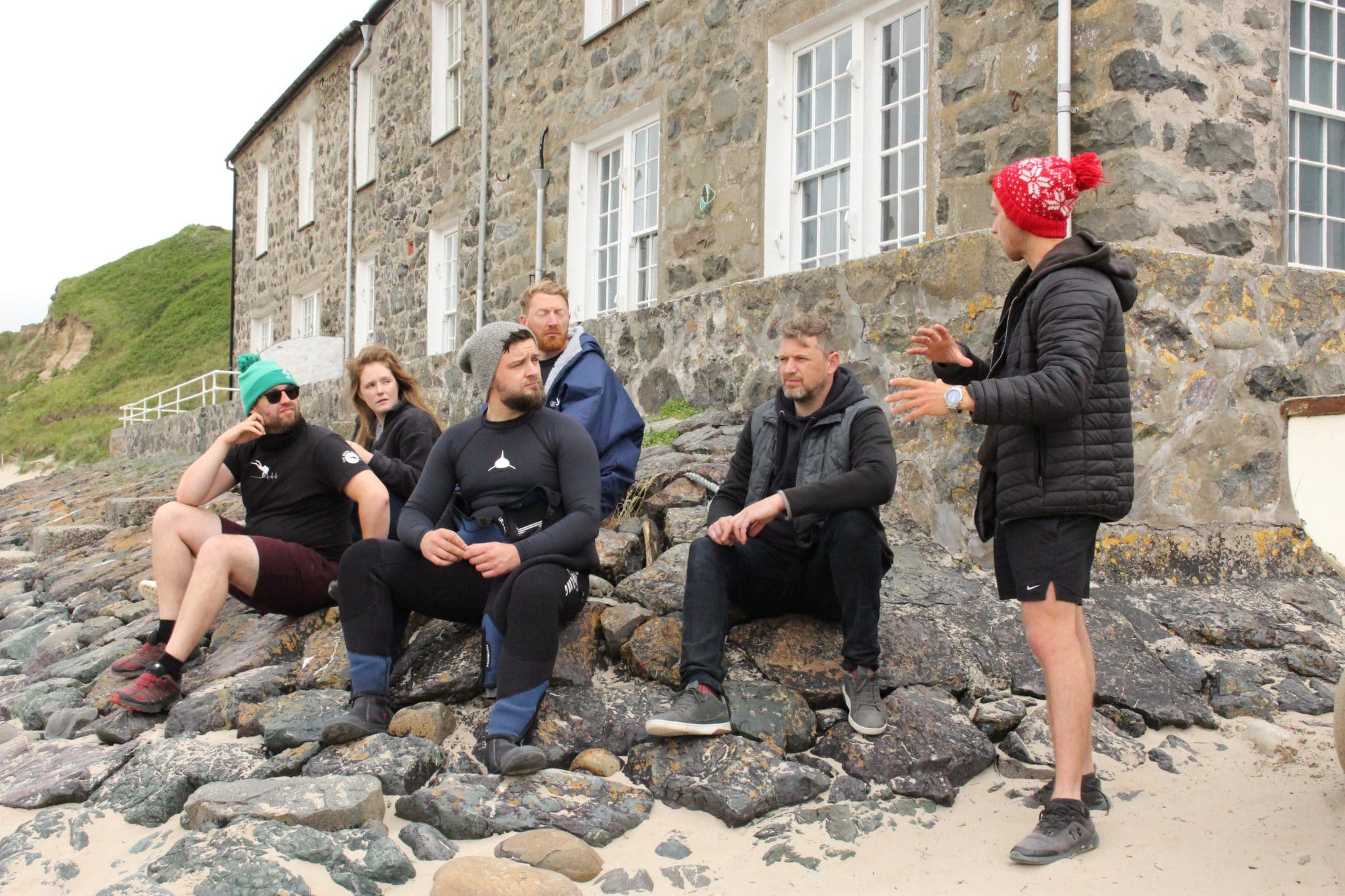
Day one in North Wales started with a mid-morning start after getting equipment together. The first day was a day of no diving but rather Snorkelling, the site down at Porthdinllaen wasn’t far, with it being around a 15-minute walk down the peninsula and over the Clwb Golff Nefyn Golf Club. Once we reached the beach, we had a briefing from Jake who explained why the site is so important to Project Seagrass, he also briefed us on Seagrass snorkeling etiquette and what to look out for amongst the blades of Seagrass. We headed out in two teams so half of the team could watch our equipment, this allowed members such as Felicity to get her drone in the air to take aerial shots of the Wet Team amongst the Seagrass. The visibility was poor but due to this it was decided that taking split shots were probably the best option as it would help show just how close to shore Seagrass can be found. Shots underwater did prove successful but as Jake mentioned earlier in his section of the blog this is one of the challenges of UK Snorkeling/Diving.
After returning from the Seagrass meadows myself and Jake drove over to see Chris Green at Tyn Rhos where we had all our Cylinders filled up.
The second day was spent at a nearby site called Porth Ysgaden, it’s a shallow site and is mentioned in the Top 100 British Shore Dives book by Anita Sherwood. It was decided that would be interesting to do a night dive because as we all know by now, the ocean has a whole new cast of animals and species come out under the cover of darkness. Before the night dive however it was decided that we would all do a daytime dive to survey the site and make ourselves familiar with it.
The first dive I was buddied with Jake who said we’d try and some Catsharks or as there otherwise known Dogfish. Porth Ysgaden isn’t a deep dive with an average depth being between 4-6 metres. And we did both dives during Slack tide where the water was at its highest and stillest. The visibility on the first dive wasn’t perfect but there was still a surplus of life found at the site from Snakelocks Anemones, Shore Crabs, Spider Crabs and Leopard Gobies with a few members of the group coming across a few Catsharks. After getting back to the vehicles we discussed meeting times for that evening as it was around a 10 hour wait for the tide to return to its highest point so that we could do a night dive. The team went back to camp to do some work for the expedition sponsors whilst Jake, Ollie and Andy went back down to Porthdinllaen to film some content for the final film.
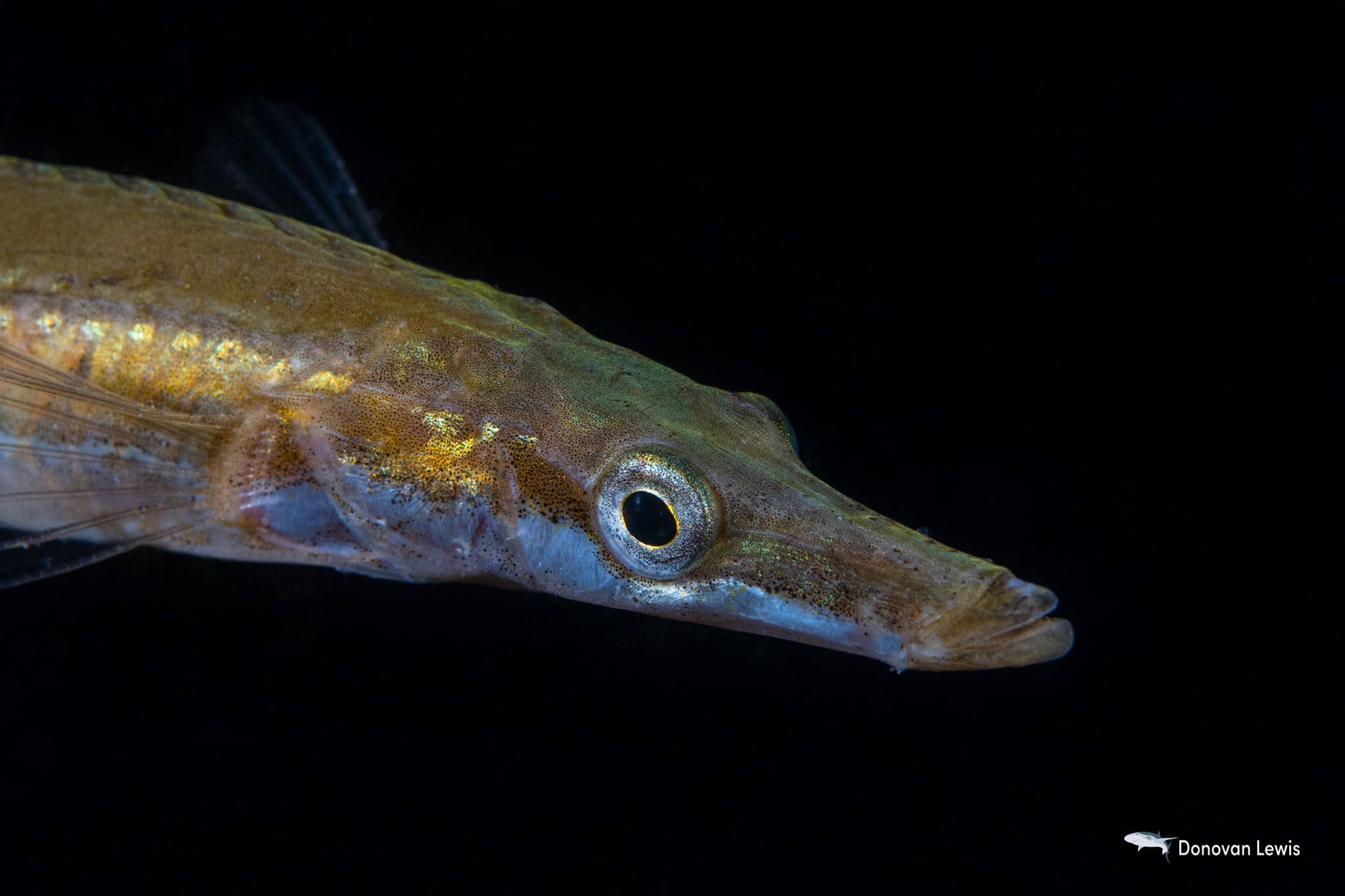
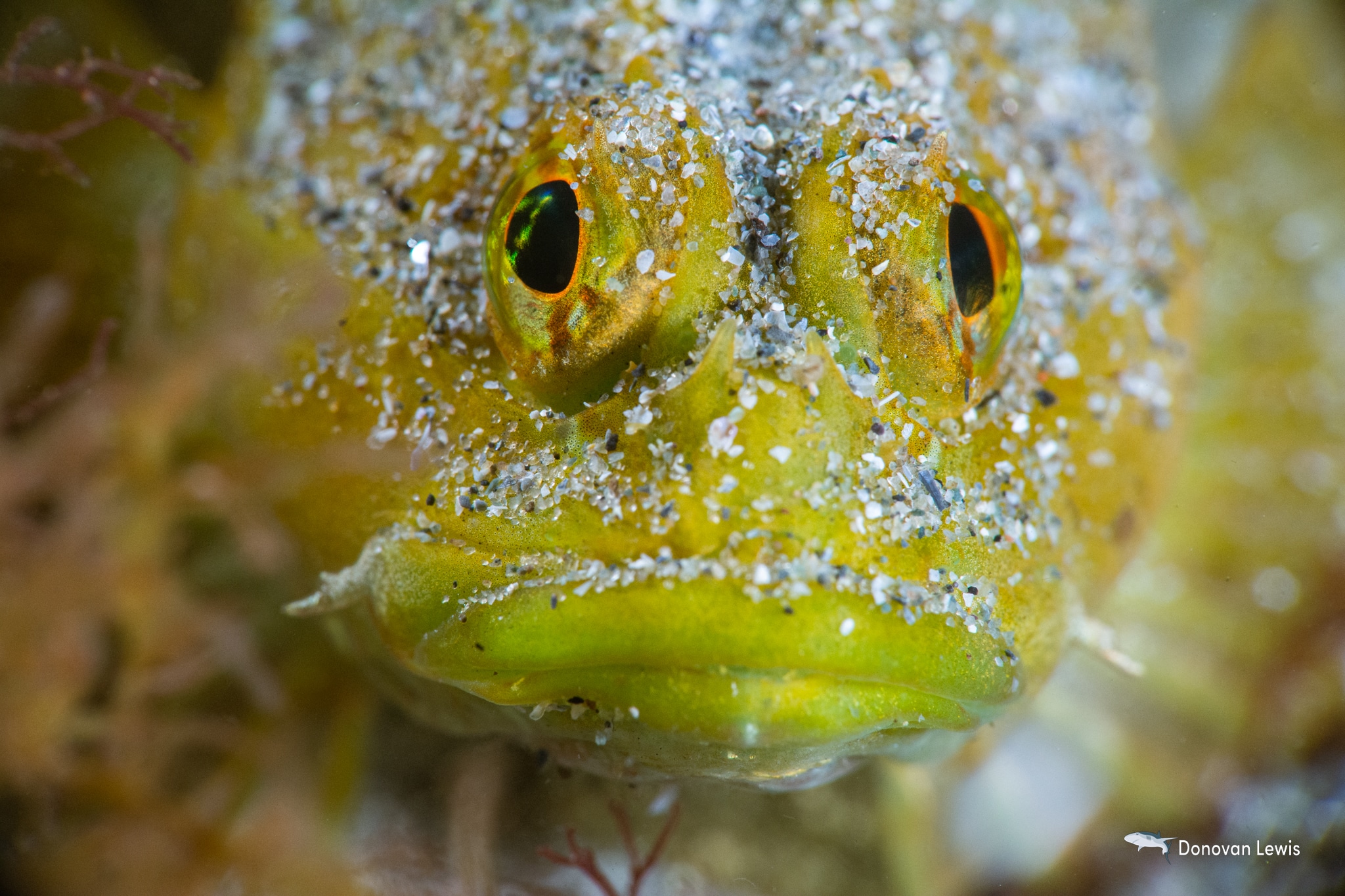
After waiting for the tide to return the team headed back to Porth Ysgaden ready for the night dive, there was however a small delay on getting into the water as we happened to have chosen the day after the longest day of the year to do a night dive, so some members of the team decided to wait a little longer before getting in. Alex and I were buddied for this dive and were the last to get in the water, this site didn’t disappoint and is a truly spectacular night dive. Not only was there a lot of life at this site but in such huge numbers. Me and Alex had our cameras going the whole dive with mating Spider Crabs, Velvet swimming Crabs, marching lobsters, incredibly curious Fifteen-Spined Sticklebacks and a beautiful yellowish-Green Two-spined Scorpionfish who sat perfectly waiting for us to finish taking his photo. Other members of the team saw Catsharks with Ollie capturing some footage of one getting hit in the eye by a Sand Eel. Andy, Jake and Giovana saw what looked to be a European Eel.
After the final dive we ate some Scones under the final fading light as there was still some light in the sky at 11pm and then headed back to camp. We discussed what wed seen here in North Wales and what our move was for the next day to heading down to Pembrokeshire. Tune in next time for the final leg of the Western Ecology Tour and final entry of the Western Ecology Tour Expedition Report.