Peering into the Past: Wrecks, Relics and Reef Life in the Red Sea

Isn’t it wonderful how, just a few days into a liveaboard trip, the crew and fellow passengers start to feel like family? You quickly learn who you love diving with, discover your favourite guide or confidently decide you don’t need one at all. An evening on the beach certainly helped cement the bond; after all, who can resist dancing barefoot in the sand around a firepit? There was only one thing that puzzled me: that old saying about how there’s always one person who doesn’t quite fit in. I wracked my brains trying to figure out who it could be, but came up blank, so I suppose it must have been me 😉 I mean, photographers, right? Always fussing with their cameras and generally being a bit of a nuisance!


The day before, we’d explored the legendary Thistlegorm, taking in her iconic exterior highlights: the locomotive, the anti-aircraft gun, the great sweep of her propeller. But today promised even more: we were peeling back the layers and venturing into the holds themselves, where history lies stacked and shadowed in the dark.
After the thrill of those inky interiors, we planned to ease into something lighter with three more dives on the Kingston and the Barge. The latter is one of my favourite spots for a gentle macro bimble, especially after nightfall, when the reef comes alive with the tiniest, most enchanting creatures.
THISTLEGORM
Let’s face it, this is no ordinary wreck dive. It’s a glimpse into history, a descent into an underwater museum.
Incredibly, I worked out that it was around 25 years ago that I first dived the Thistlegorm, and I still feel the same rush of excitement every time I return. Of course, a few things have changed over the years. Most of the steering wheels have long since disappeared, and the once neatly stacked truckload of Wellington boots is now empty – the wellies scattered throughout the holds. Yet despite the changes, the magic of the dive remains undiminished.


Our briefing was clear. We would descend the shot line, which was secured near the Captain’s cabin, then swim along the exterior of the wreck toward the blast area. There, a large opening provides access to a passageway leading into Hold 3. Dropping down to 25 metres, we would begin our exploration on the lower level, moving anticlockwise through Holds 3, 2 and 1. After completing the lower deck, we would ascend to 20 metres to explore the upper level, continuing in the same direction before exiting near the bow, close to the galley. With our torches fully charged, we descended the shot line and slipped into the darkness below. Inside the shadowed holds, beams of light criss-crossed the gloom, picking out relic after relic from another era. The interplay of darkness and dancing torchlight gave the dive an almost theatrical atmosphere – moody, dramatic and utterly unforgettable. There is something almost surreal about seeing so many trucks, cars and motorcycles resting on the seabed. Perfectly preserved by time and tide, they transform the wreck into something far greater than a dive site as it becomes an unforgettable journey back to 1941.


A very happy group of divers climbed back aboard, ready for lunch and a short six-mile steam to our next wreck: the Kingston.
KINGSTON
Lying on Shag Rock near the Strait of Gubal, the Kingston is a riot of colour and an ideal dive for all experience levels. The boilers sit in just 5 metres of water, while the propeller marks the deepest point at around 15 metres, making it wonderfully accessible.


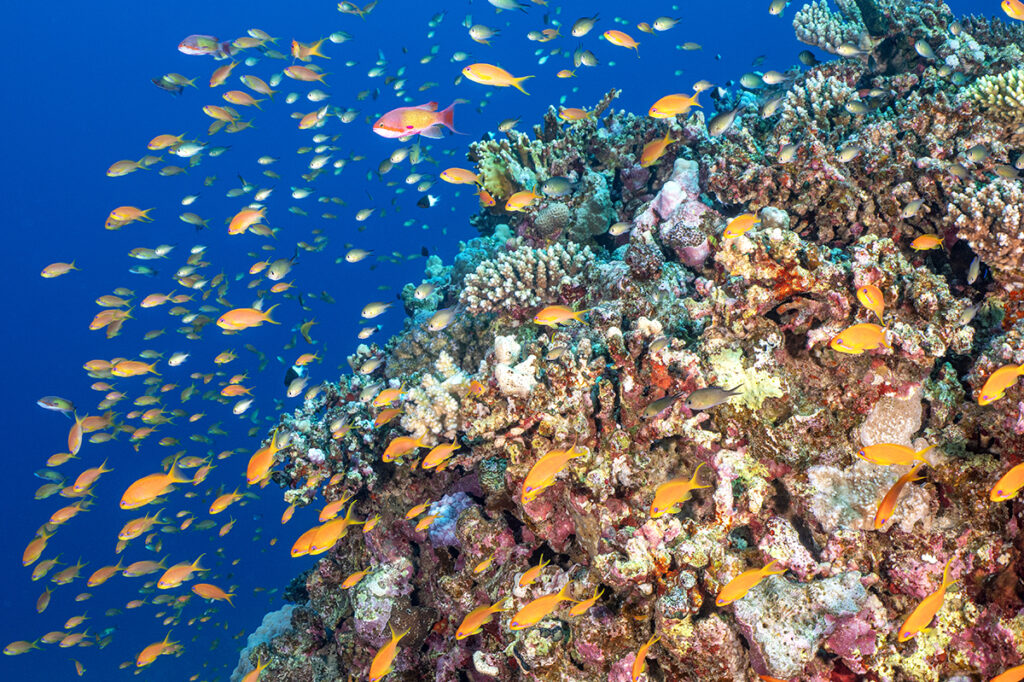
Currents can sweep through the site, but they’re precisely what make it so spectacular. The nutrient-rich water has draped the 78-metre British steamship, sunk in 1881 after striking the corner of Shag Rock, in vibrant hard and soft corals. Resting perfectly upright, her wooden decking long since gone, she’s now a skeletal framework of metal ribs and beams, creating fantastic swim-throughs and endless photographic opportunities.


The vivid coral growth attracts abundant marine life: schooling fish, cruising turtles and a host of tiny critters tucked into every nook and cranny. The clarity, light and colour make this wreck a photographer’s paradise, although the surge and currents certainly made composing a few shots “creatively challenging”!

THE BARGE
As I may have mentioned before, this is one of my favourite critter-hunting sites, excellent by day but truly magical at night.

The barge itself isn’t much to look at; little remains beyond the outer structure protruding from the sand, and it has never even been formally identified. But for macro photographers, it’s pure heaven. Lying off Bluff Point on the east side of Gubal Island at a shallow 14 metres, it too can experience currents that bring in nutrient-rich water, and with it, an explosion of life.


Within the cracks and crevices, you’ll find peppered morays, shrimp, scorpionfish, moray eels and even the occasional octopus. The surrounding sandy seabed is just as productive, with anemonefish and crocodilefish often stealing the show.


One of the joys of this site is its convenience as the liveaboard can moor almost directly above the wreck, allowing you to simply plop in and start exploring. At the far end lies a small, sheltered lagoon dotted with staghorn coral, where elusive lemon gobies dart between the branches. And as you begin your ascent at the end of the dive, it’s not uncommon for a squadron of squid to materialise, escorting you back to the surface.


A perfect finale to a truly brilliant day.
In the next instalment we will be heading to the deepest dive of the trip, The Rosalie Moller, followed by the Ulysses and Chrisoula K.

Book your next diving adventure on Ghazala Adventure with Scuba Travel: www.scubatravel.com
Book your dive insurance with Dive Master Insurance: www.divemasterinsurance.com