Most people unaware of ‘forever chemicals’

A new YouGov survey, commissioned by the UK’s leading ocean membership charity, the Marine Conservation Society, has revealed public concern over the impact of PFAS, commonly known as ‘forever chemicals,’ on both the environment and human health. However, the findings also indicate that awareness of these chemicals remains relatively low among the UK public with 57% of respondents knowing nothing about forever chemicals, and even more (63%) knowing nothing about PFAS.
PFAS (per- and poly-fluoroalkyl substances) are just one group – containing thousands of individual chemicals – of ocean poisons. PFAS make products greaseproof and waterproof, so they are used in items such as cosmetics, non-stick pans, stainproof and waterproof clothing, swimwear, paints, and greaseproof takeaway containers. They are found in every UK home.

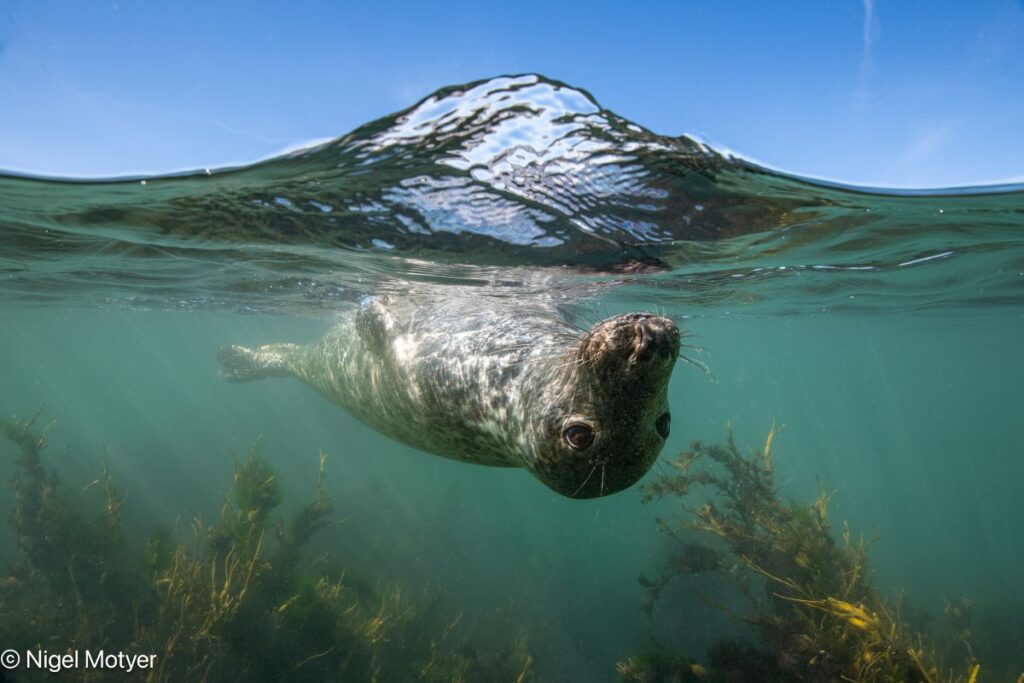
Dr Francesca Ginley, Chemicals Policy and Advocacy Manager at the Marine Conservation Society, said: “I’m concerned by the lack of awareness of forever chemicals. These chemicals impact each and every one of us, every day. They are in our homes, in the sea spray and raindrops, in our favourite wildlife, and they last forever. We know they have immune, hormonal and neurological impacts on marine animals like polar bears, sea otters and harbour porpoises.”
A map of UK PFAS pollution in wildlife was published earlier this year by Watershed Investigations, the Marine Conservation Society and the Guardian, identifying official data on more than 1,000 animals to reveal widespread contamination.
PFAS can enter the environment as a result of manufacturing processes. Discarded products sent to landfill result in leaching chemicals into freshwater systems. Water treatment plants don’t currently remove PFAS, therefore they are released in treated wastewater and can also be captured in sewage sludge used to fertilise farmland. After a period of rain, this PFAS-containing sewage sludge can run off into rivers and streams, as well as entering the food chain. It all ultimately ends up in the ocean, with potentially disastrous effects on marine life.
Respondents to the YouGov survey were asked to identify which items they thought contained PFAS or forever chemicals. Among those who were aware of these chemicals, 30% could not identify any common sources of PFAS from the list provided, including non-stick pans, cosmetics, and firefighting foam. Only 24% identified drinking water as containing forever chemicals, despite a recent study showing PFAS were detected in sources at 17 of England’s 18 water firms. 25% of respondents identified greaseproof paper as containing forever chemicals, whilst the most selected item that participants identified as containing forever chemicals at 55% was non-stick pans.

Overwhelmingly, respondents expressed concern about their impact, with 68% stating they were concerned about the impact of PFAS on the environment, and 60% stating they were concerned about the impact of PFAS on their health.
Dr Francesca Ginley, Chemicals Policy and Advocacy Manager at the Marine Conservation Society, said: “We need people to be aware of these chemicals and understand their impact so that they can add to our outrage and call for better protections. There is an urgent need to ban these chemicals to reduce the burden of their pollution. We are calling for the UK Government to ban all PFAS from all uses where there are alternatives, without delay.”
The survey also revealed strong public backing for tighter regulations on PFAS. 57% of respondents supported a UK Government ban on PFAS where alternatives are available, whilst only 3% opposed this idea.
The Marine Conservation Society is urging the UK Government to take immediate steps to phase out PFAS and prevent further contamination of the marine environment. The charity is launching its Big Give campaign on Earth Day (22nd April) to raise awareness and funds to support their work in campaigning against the use of PFAS.
Find out more about the Marine Conservation Society at www.mcsuk.org.
Main Image: Alex Ford