Mark Milburn’s Cornish Wreck Ramblings, Part 4: HMS Anson, a tragedy & saver of lives

When the HMS Anson hit Loe Bar on Christmas eve in 1807, the conditions and the location made it a certain tragedy. Loe Bar is a shingle bar, that swallows up ships and turns then rapidly into wrecks. There is an unknown number of wrecks along the bar, many were not even witnessed, those that were nearly all ended as a very tragic outcome. The Anson broached to and the ship was to be lost forever, along with a large, but unknown, number of sailors. Two important changes came about because of this tragedy, one of these was the Burial of Drowned Persons Act 1808. The other was a life saving invention by a witness of the wreck, Henry Trengrouse.
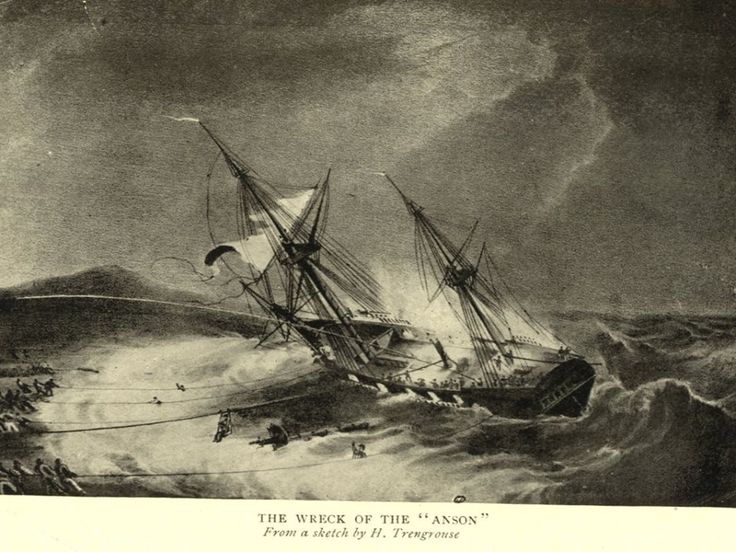
Up until this wrecking, any sailors or persons that perished at sea, would be buried in unconsecrated grounds, usually close to the wreck. The HMS Anson was a British Frigate, yet the sailors who died on her, were still buried on the cliff tops and not within church grounds. A local solicitor drafted a new law, which was presented to parliament by John Tremayne. The law stated any unclaimed bodies of dead persons cast ashore from the sea, should be removed by the church wardens and interred in consecrated grounds. The law was passed in 1808.
The Anson was very close to the shore, yet too far to cast a rope. One of the witnesses to the tragedy, was Henry Trengrouse. He was so upset by the whole event, that he decided to improve the Bell mortar apparatus. His invention was the rocket apparatus, combined with a chair, rather than a cradle. The original design has been upgraded a few times since but it has saved many thousands of lives.
Since the Anson sank, there has been several salvage attempts. Many of the ship’s 24 pounder guns were removed, a few can be seen around the area. Two are at the entrance to Porthleven Harbour, another is outside the Helston Folk Museum and another at RNAS Culdrose. Many more of the guns were recovered but little is known of their whereabouts, if they still exist and have not been scrapped. There is also several artefacts from the Anson inside the Helston Folk Museum, as well as a lot of information about Henry Trengrouse.
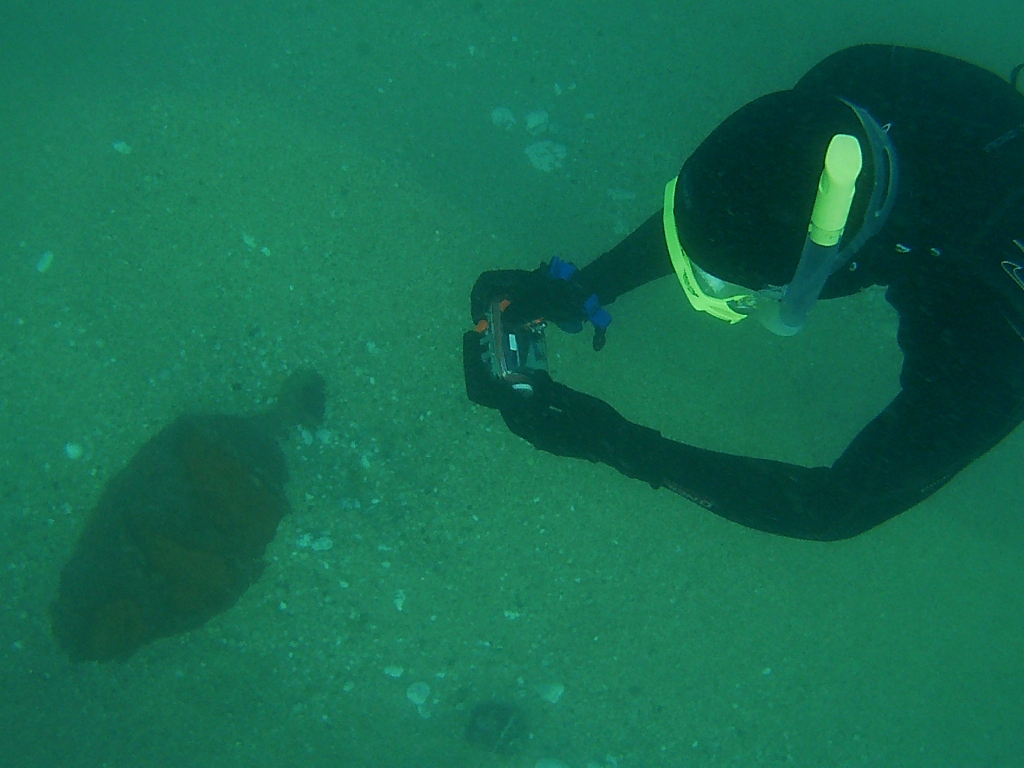
Today, most of the Anson is buried under the forever shifting shingle of Loe Bar. I recently visited the Anson site, to see what was currently exposed. There is believed to be 13 guns left on the site. After freediving the site for 75 minutes, I found one gun, just showing itself. There was nothing else visible on the site, which is only about 30 metres from shore at low water. This is a very fluid location, one I shall visit on a regular basis, hopefully seeing a lot more of this important wreck one day.
Find out more about Mark and Atlantic Scuba at www.atlanticscuba.co.uk