Mark Milburn’s Cornish Wreck Ramblings, Part 2: Shifting Sands

I mentioned the subject of wrecks appearing and disappearing again in Part 1 of Cornish Wreck Ramblings (which you can read here). It can be quite a big problem, but at the same time it can also be a useful aid.
One wreck that is noticeably affected by this is the SS Grip. This late nineteenth century steamship ran aground in thick fog on a sandy beach at Gunwalloe. There was no damage. At the time they decided they would wait until a bigger tide came in a few days later so they could simply float it off.
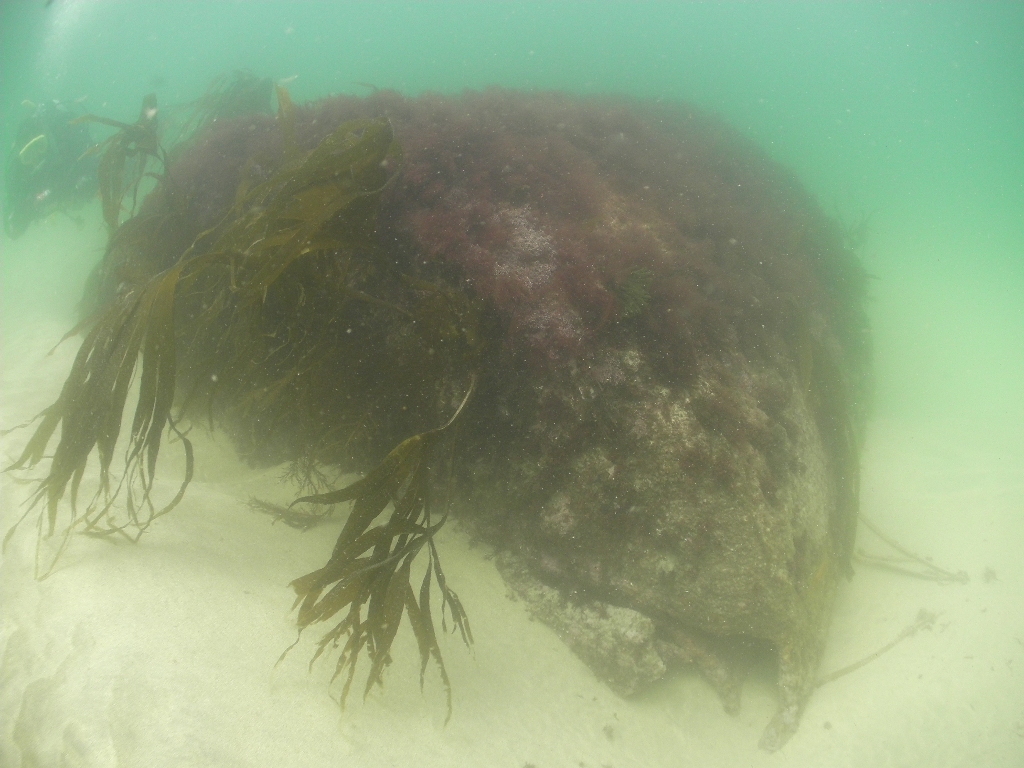
What they hadn’t considered was the fluidity of the sand. Over the next few days it was sucked down into the sand and was stuck fast. For years, all that was seen of it was the top of the boiler. One day I decided I wanted to dive the Grip, but I found a lot more than a top of a boiler….I found a complete wreck on rock! WOW!
However… I went back a couple of months later with a group of divers, and guess what? There was nothing. It had been covered with sand. Since then though the boiler has re-appeared.
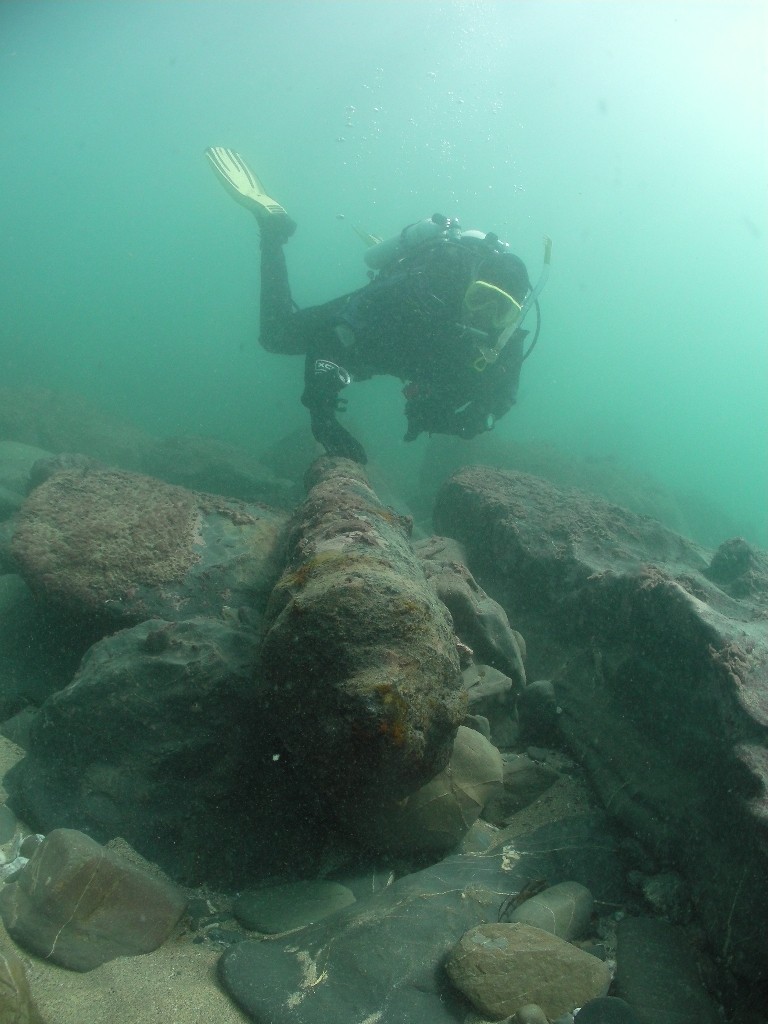 The protected site of the Schiedam is another such site. For five years we looked for it, and found nothing but sand. Then one day, a cannon appeared, then another, and another. Then some other pieces started to show up, like a musket barrel, musket shot and even a grenade. A few weeks later and the sand had buried the grenade and musket barrel. On the day of writing this, I have just got back from the Schiedam site. The waves were crashing in, the in water visibility was zero. Yet, on the beach, was a really old rudder and a dead eye. We had never seen these items underwater…. perhaps the site has been uncovered by the recent storms? It has certainly removed lots of sand from the beach. We will have to wait for the vis to come back before we get back in.
During stormy weather, shallow wrecks come and go, and we can’t visit them all in the small window between the sand going and then coming back. One site we found when the sand went is still not identified. We found an iron cannon sitting on the sea bed, but few weeks later, there was just sand. How can you identify a wreck when it is mainly buried? A few months later all the sand had gone, and we managed to get some photos of the gun but couldn’t find anything else. There is a wreck known to be there, and the cannon is of the right age to suit the wreck. Will we ever work out what it is? If the sand was to move some more, we just might, one day.
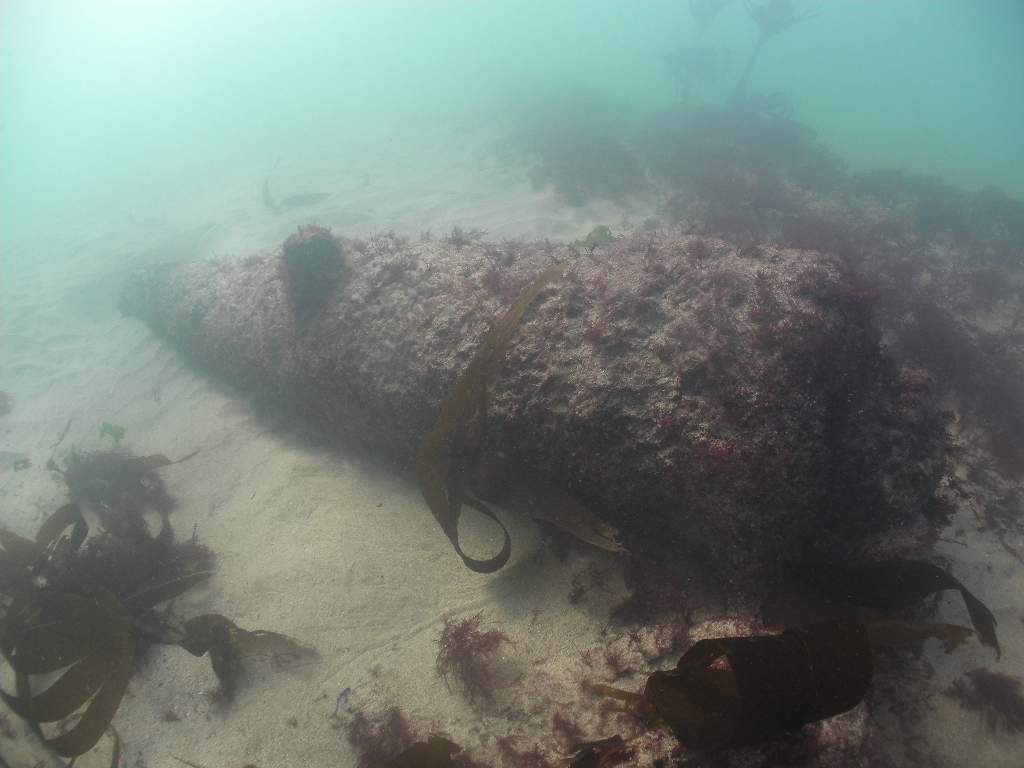
What we have found out, in regards to one section of the Cornish coast, is which direction we need the storms to come from to move sand. We then need the wind to die down and the surf to stop, which will give us a chance to see what is down actually there.
Find out more about Mark and Atlantic Scuba at www.atlanticscuba.co.uk.