Love is in the air at Blue Planet Aquarium

Every year between the end of January and mid-May when the water is at its coldest and begins to warm up for summer, Blue Planet Aquarium has its annual Sand Tiger Shark mating season. During this time of year, the dynamics in the tank completely change, from what are usually slow moving and often sleeping sharks turn into fast moving Sharks who have only one thing on their mind.
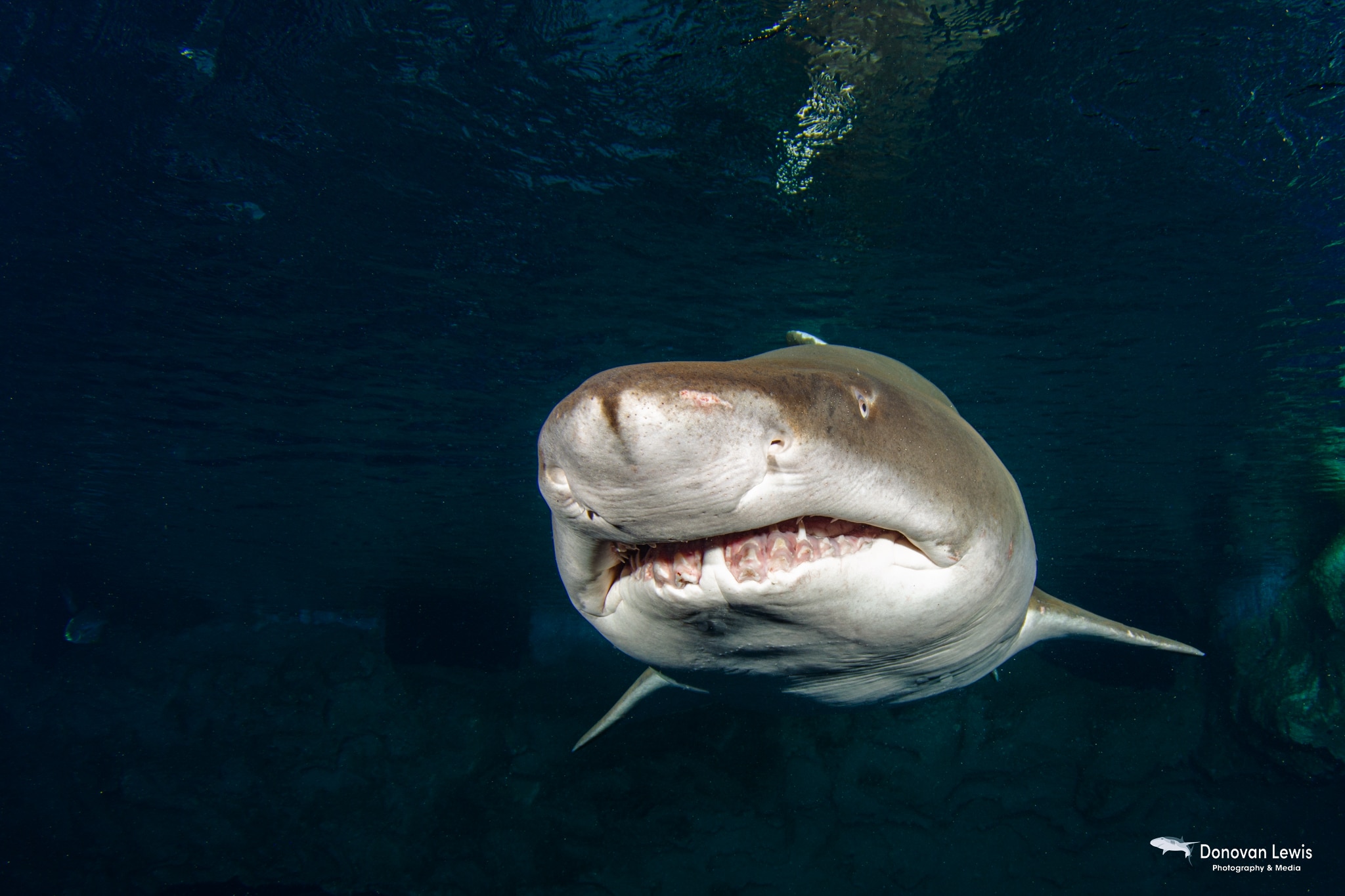
In previous blogs I’ve mentioned how relaxed the Sharks are, but during this time the Sharks are at the complete opposite end of the scale, sometimes seeming oblivious to our presence, they can tend to almost “play chicken” with the divers, swimming very close, which can sometimes make us jump a little. Even with this change in behaviour however the animals are still quite easy to work with and we always respect their boundaries and rules as it is their home at the end of the day.
The changes in behaviour start around mid to late January with a huge reduction in appetite for all our Sand Tigers, they will go down to eating almost nothing throughout the mating season, we even have them spit food out after grabbing it.
The next sign usually starts with the males moving a lot faster and will duck and dive between the different levels in the tank, it can be chaotic one day and then almost nothing the next, on the opposite end the females will slow right down and tend to spend a large amount of time either on or near the bottom.
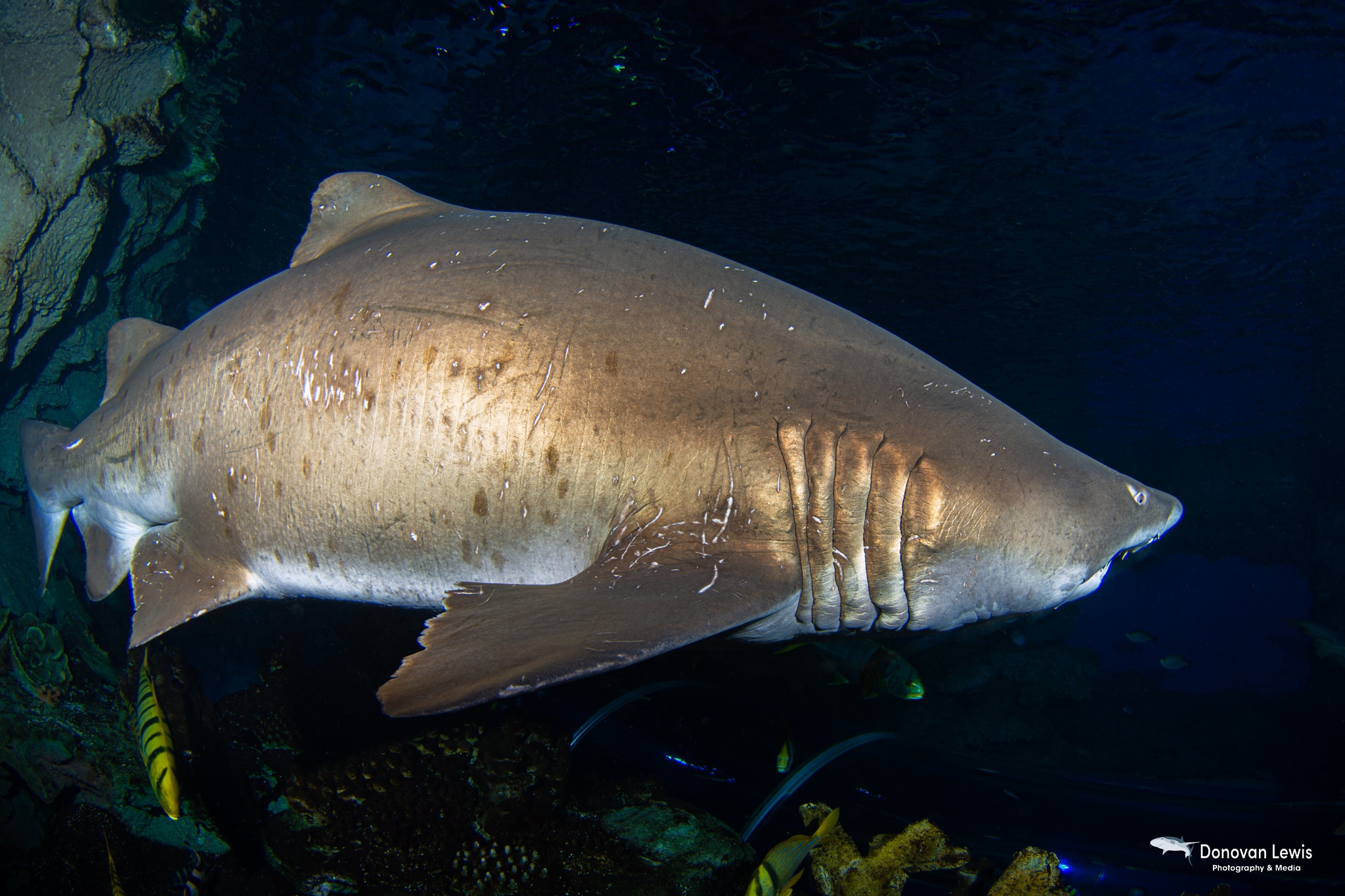
It is like this for about a month before the action really starts, the next sign is what’s known as “tracking”, this is where you will have the female of interest at the front with the alpha male close behind her, with the subordinate males trailing behind him. This happens for a couple of weeks until around March where the height of mating season starts, after a month or so of tracking and a little bit of bickering there will be an “alpha” male who will control mating in the tank. Alpha males will then protect the area where females are congregating and will then force less dominant males out by snapping their jaws at them, snapping tends to be enough to force males out, however seeing bite marks on the males is not uncommon.
When Sharks mate the males tend to bite the females around their pectoral fins or on their sides, this is done to help hold themselves in place during mating and to make it easier to mate by slowing the female down, females will often resist but will concede due to the extra weight, this could be the female testing the male’s fitness, but we honestly don’t know. The male sharks sex organs are known as Claspers, two small appendages that trail behind the Sharks pelvic fins and its these that transfer the Sperm to the female during mating, they have two so that they’re able to effectively mate no matter what side they approach the female on.
When males are finished and let go, they can sometimes leave teeth embedded in the females which will fall out after a few days and don’t affect the female long term, this does often result with toothless males during mating season, and even for a short time after it has finished, which our guests are often surprised to see gummy Sand Tigers in our exhibit. Along with having toothless males the females also become covered from nose to tail in love bites, and during rather amorous seasons the dive team will refer to the females as pin cushion Sharks due to how much they resemble pin cushions, never fear however because mere days after mating season has finished most, if not all, of the wounds on a female would have healed and results in very minor scarring or marks.
Females will mate with numerous males throughout a season, moving between different areas and mating with many alpha males who control those areas, in the case of Blue Planets main tank our males tend to gain and lose alpha status rather regularly, thus allowing them mating rights. Female Sand Tigers have two Uterus’s which can contain up to 5 pups each. After the mating season is over, females become pregnant in a rather remarkable way. Sand Tigers are known as oophagous which is where the developing embryos will feed on undeveloped eggs produced by the mother throughout her 9–12-month pregnancy.
But that’s not all, once an individual or individuals reach a certain size, they will actually turn on their sibling and begin to feed on them, this is called intrauterine cannibalism. This will continue until there is a single fully toothed pup in each uterus, however triplets have been recorded which believed to be two individuals from the same womb who were full sibling who teamed up, and one from the other womb.
This method of eating siblings is believed to be an adaptation by male Sand Tigers with whom who can father the most well-armed, active hunting embryos as described by a scientist called Damian Chapman.
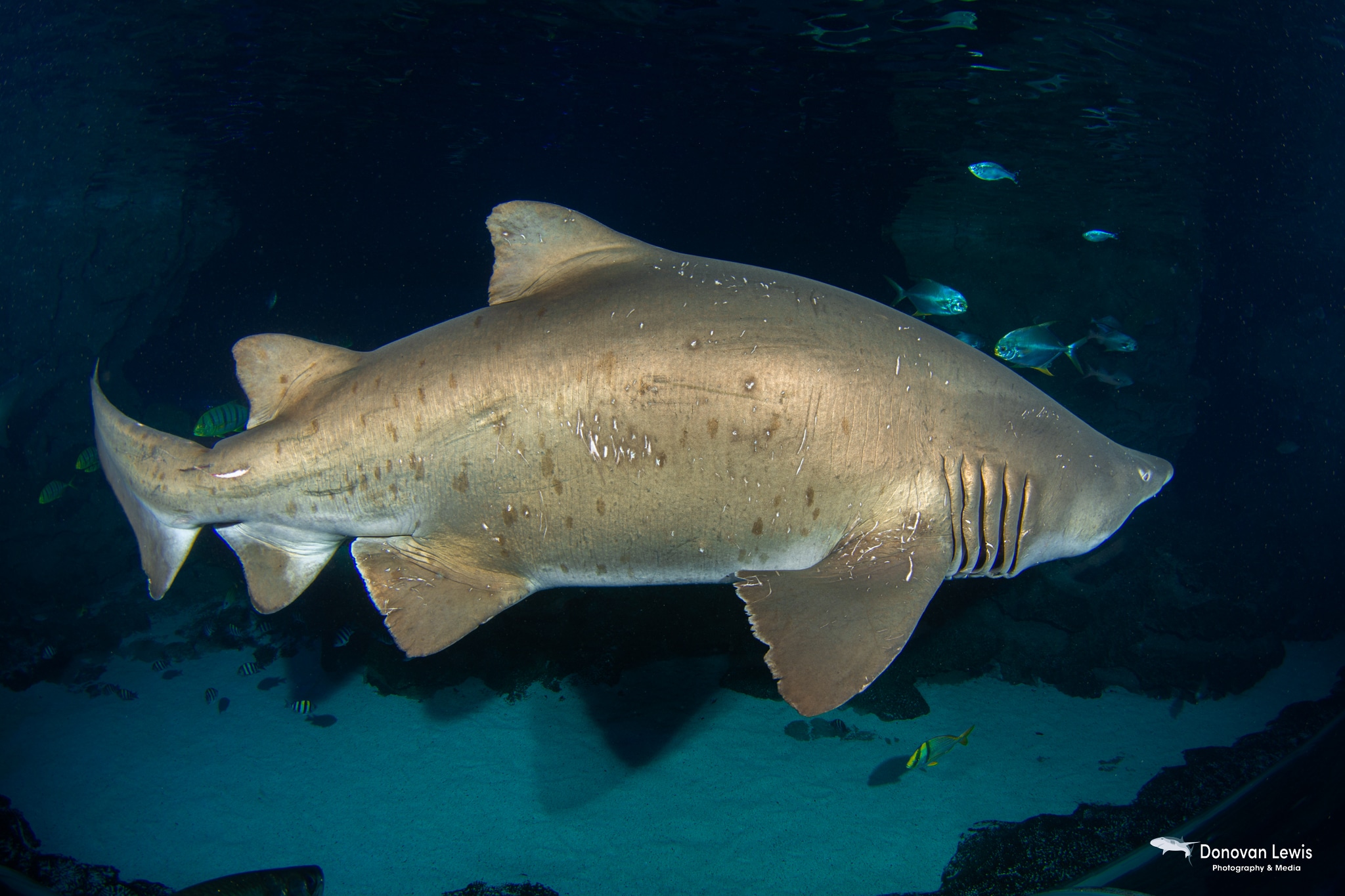
Unfortunately, Blue Planet has never had a captive natural birth in our main exhibit now there could be many reasons as to why this is the case, and we have a few theories amongst the team but unfortunately, we just can’t say for certain what those are. The reasons as to why they aren’t breeding is something that been discussed for many years in aquariums across the globe as unfortunately captive breeding very limited with only a handful of recorded births worldwide.
Sand Tiger Sharks have one of the lowest reproductive rates of any Shark Species giving birth to only two pups every other year as the females take a rest year in between, on top of this Sand Tigers don’t become sexually mature until they’re between 6-7 if they’re a male, females will not become mature until they’re 9-10 this on top of the fact that the maximum lifespan recorded for a Sand Tiger in the wild is 15-17 years means that to be generous, a female may only give birth to a maximum of 16 pups throughout their lifetime. Now these natural adaptations have served them well throughout the last 450 million years but now they are a handicap.
Sand Tigers are unfortunately at threat, with some populations such as those in Europe, the Mediterranean and Eastern Australia classified as Critically Endangered. Sand Tiger Sharks were also the first Shark species to be put on the endangered species list and given full protection which was first done in Australia.
With all the odds stacking against them its now even more imperative that we learn more about these incredible animals and how to breed them effectively to create a captive population as a contingency plan in case things in the wild take a nosedive. Therefore, Zoos and Aquariums are important to the wild members of a species with housed members of the species, helping ensure their survival and as acting as ambassadors to the wild ancestors by educating our guests and the public for many years to come. Now rest assured although we haven’t yet been able to breed Sand Tiger Sharks in our main exhibit, we’re working hard to better understand and figure out how we can in the not-so-distant future.
For more about Blue Planet Aquarium visit their website by click here.