Ghost Nets: Forgotten Killers

‘Ghost Fishing’ is what fishing gear does when it has been lost, dumped or abandoned. Imagine a fishing net that gets snagged on a reef or a wreck and gets detached from the fishing vessel. Nets, long lines, fish traps or any man made contraptions designed to catch fish or marine organisms are considered capable of ghost fishing when unattended, and without anyone profiting from the catches, they are affecting already depleted commercial fish stocks. Caught fish die and in turn attract scavengers which will get caught in that same net, thus creating a vicious circle.
The issue of ghost fishing was first brought to the attention of world at the 16th Session of the FAO Committee on Fisheries in April 1985. Following debate at COFI, the FAO Secretariat published an in-depth study of the problem.
Lost fishing gear, or so called ‘ghost gear’ are among the greatest killers in our oceans, and not only because of their numbers. Literally hundreds of kilometers of nets and lines get lost every year and due to the nature of the materials used to produce these types of gear, they can and will keep fishing for multiple decades, possibly even for several centuries.
“We believe in collaboration, we cannot solve this problem on our own.”
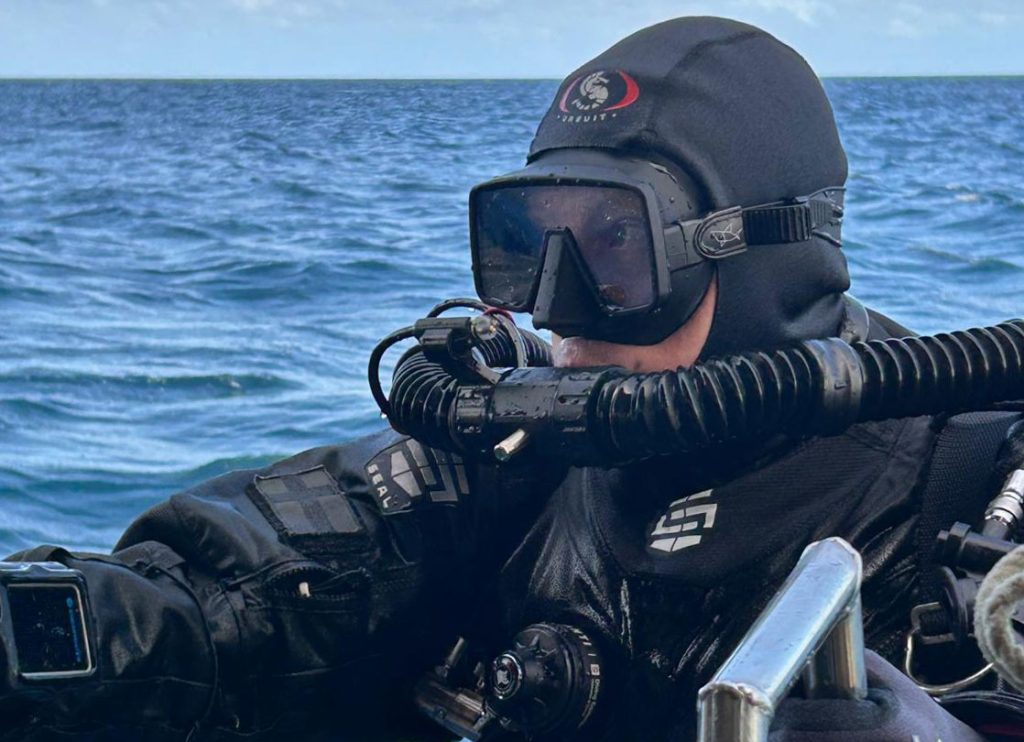
Taking its name from the very problem it was created to fight against, Ghost Fishing is an official registered ANBI approved charity organization; a non-profit driven by technical divers. Ghost Fishing initiates and promotes lost fishing gear removal initiatives worldwide and shows the problem to a wide audience.
The People behind Ghost Fishing are experienced and well-trained divers, who remove marine debris and make the ‘ghost fishing‘ problem visible to a worldwide audience. Ghost Fishing are very interested in worldwide collaboration with other diving teams and like to start or participate in existing projects all over the world.
Here is the charity’s mission statement:

Physically removing nets, fishing gear and other marine debris
In the past 8 years we removed a very large amount of nets, fishing gear and other marine debris from shipwrecks, reefs and the seabed. By doing this we have gathered comprehensive experience and built our own techniques.

Investigating and documenting local situations (photo/video)
“We illustrate this with photos and videos”, the power lies in visualizing the problem. We therefore work with professional underwater photographers and film makers and we always document our actions for evaluation and presentation purposes.

Ensuring diving safety
We stick to standards & procedures to reduce risks to a minimum and will only work with divers who have adequate training and experience.
Disclaimer: It needs to be clear that this work is dangerous. Reading the website or watching the videos in NO way replaces proper training and experience. On request, we can advise you about this topic.

Recycling marine debris
Some types of marine debris such as fishing nets and weights (lead) can be used in recycling processes. We collect these materials and we are interested in cooperation with companies specialized in these processes.
Sharing knowledge and best  practices
We have extensive knowledge of many types of fishing techniques, marine waste and also marine life. We like to share this knowledge and are willing to learn from others.

Education & presentation
We give educational presentations to (diving) clubs and during meetings, (dive) exhibitions and shows.
To find out more about Ghost Fishing, visit www.ghostfishing.org.
Main Photo: Frogfish Photography