From Back Yard to Bucket List: Sarah O’Gorman

Welcome to one of Scubaverse.com’s regular ongoing series, From Back Yard to Bucket List. Each month, we ask an underwater photographer to talk about their dives—local, favourite, and bucket list—and what makes them special. A personal insight into diving with a camera.
This week’s diver traded an oversized childhood wetsuit for a permanent address in the Red Sea. While her day job technically involves wrangling spreadsheets for Red Sea Diving Safari, her true passion lies in squinting at creatures the size of a grain of rice. Meet, Sarah O’Gorman. Someone who loves the joy of finding the unusual and strange in her backyard dive.
Don’t forget, if you would like to feature, then drop me a line at saeed.rashid@scubaverse.com.
Saeed
Sarah O’Gorman
 If you had told eight-year-old me, splashing around in a wetsuit that was three sizes too big, that one day I would end up living in Marsa Alam and diving almost every day for both work and pleasure, I would probably have laughed seawater in your face. Yet here I am, 21 years and a couple of thousand dives later, calling the Red Sea home.
I have lived in Marsa Alam for the past 13 years and work as the Marketing Manager for Red Sea Diving Safari. It sounds glamorous, and sometimes it is, but mostly it means juggling deadlines, spreadsheets, projects, and a constant flow of ideas for how to show the Red Sea at its best.
One of the things I love about diving here is that every so often a nudibranch turns up that doesn’t match anything in the guidebooks, or hasn’t been recorded in this region before. Moments like that genuinely stop me in my tracks. Posting a photo on social media and having an expert reply with something like “wait, that’s new” is so exciting. It still amazes me that such tiny, delicate creatures can hold real scientific surprises, and it makes the whole process of searching for them even more rewarding.
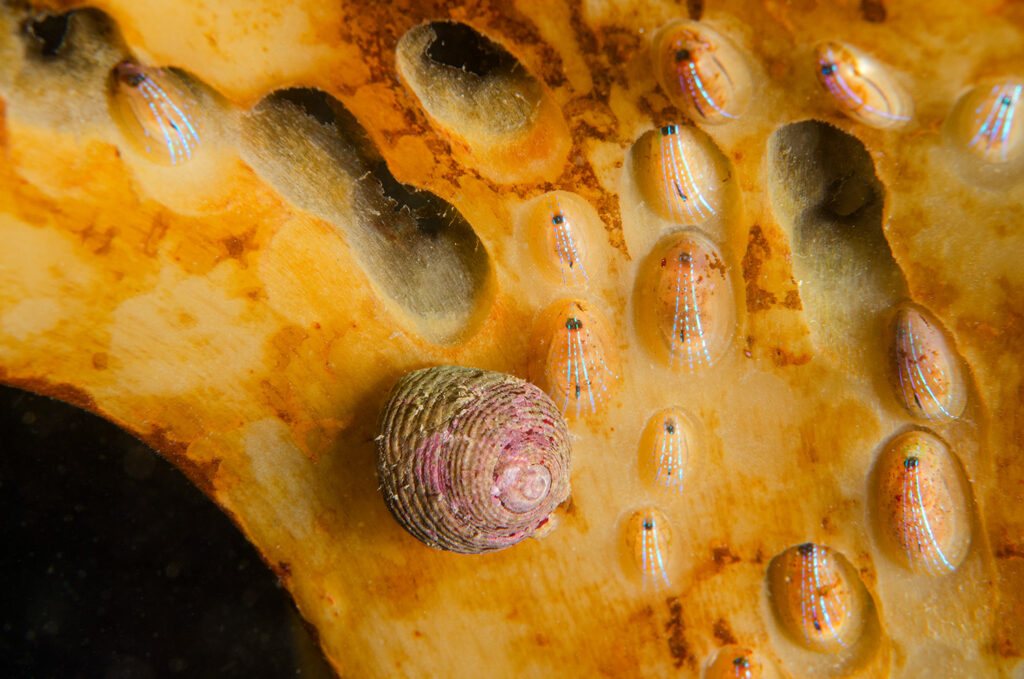
I shoot underwater simply because I enjoy the challenge. The harder the subject is to find or photograph, the more satisfying it becomes. That is probably why I fell so deeply into macro photography. Give me a nudibranch the size of a rice grain, a moody velvetfish or a pygmy pipehorse that thinks it is invisible, and I am happy for the entire day.

For this article, I chose to share my local dive, my favourite dive and a bucket list dream. The first two are right here on my doorstep, which just goes to show that you do not always need a famous dive site to have an extraordinary dive.
Local Dive
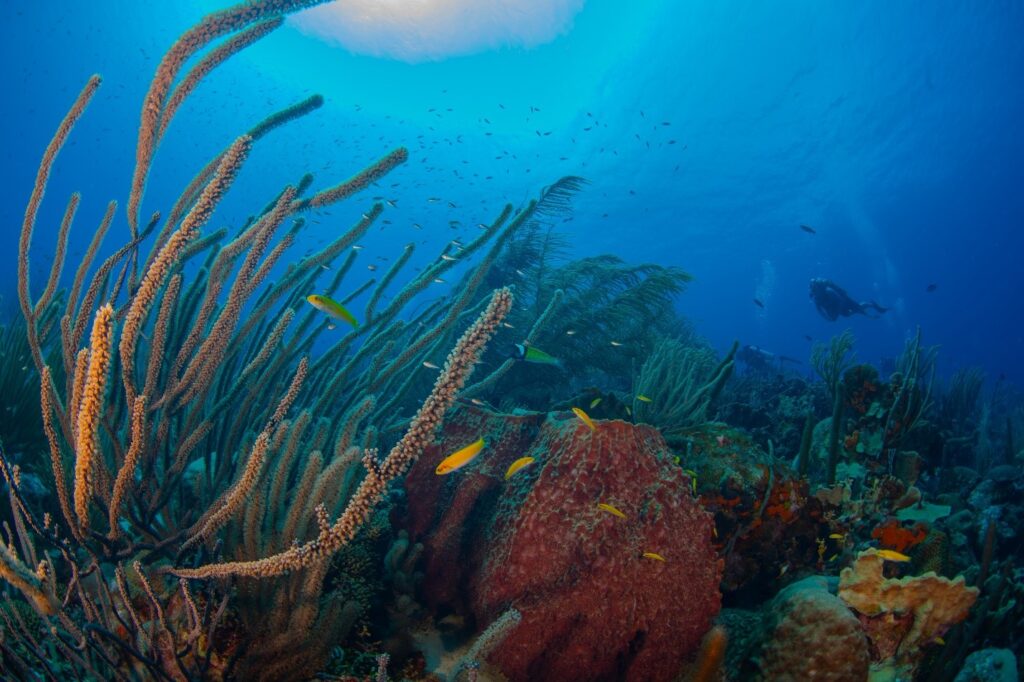
Marsa Nakari’s house reef is one of the most underrated sites in the southern Red Sea. Even divers who know it well sometimes miss just how special it is. Over the years the reef has taken its fair share of natural knocks, from flooding to bleaching, and yet it is still one of the richest and most interesting places to dive.


The topography alone keeps you entertained for hours, with ridges, gullies, sandy pockets, miniature amphitheatres of coral and plenty of places to tuck in and explore. It is very much a reef that rewards patience. The slower you go, the more it gives back.
The macro life is where the reef really shines. I have found nudibranchs like Gymnodoris ceylonica, and Goniobranchus charlottae along with velvetfish, seamoths and ghostpipefish. One of the most memorable moments for me was spotting a pair of winged pipefish. They are not exactly colourful supermodels, mostly beige and brown and quite plain in photos, but I was still absolutely delighted to find them.


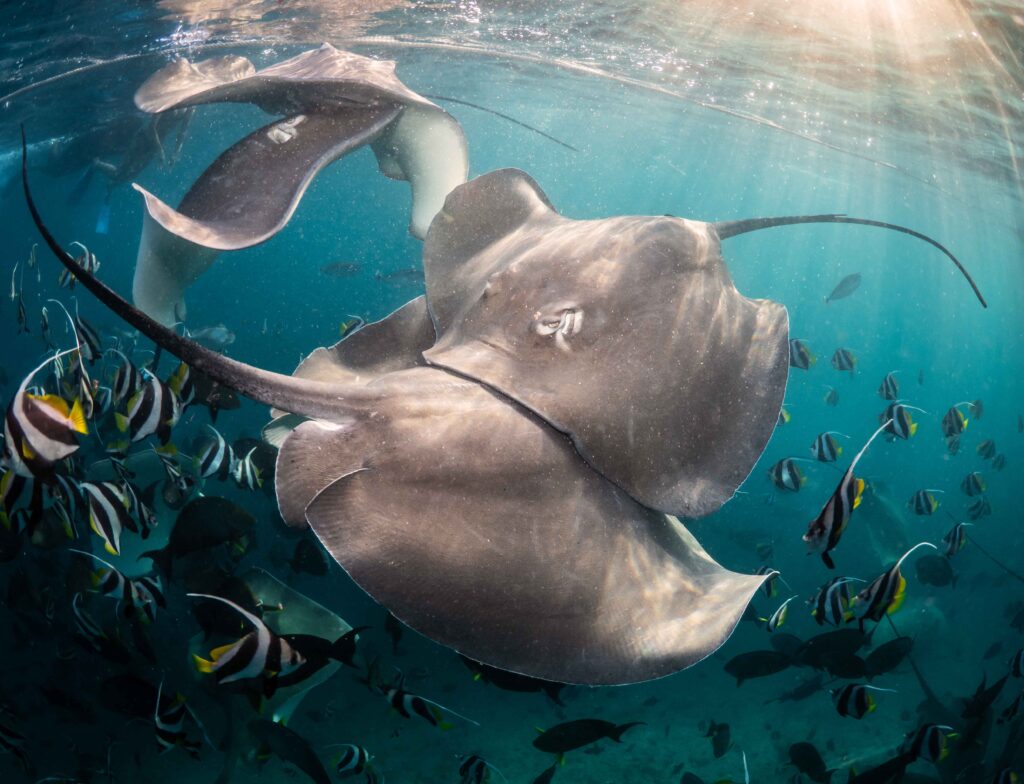
Then there was the week the mantas moved in. Two of them decided the house reef was home for a few days. My colleague, Flavia, and I were snorkelling with one, when suddenly she shouted for me to come over. Right below the surface was a tiny seahorse bobbing along, impossible to ignore. Only at Nakari can a manta ray end up being the distraction.

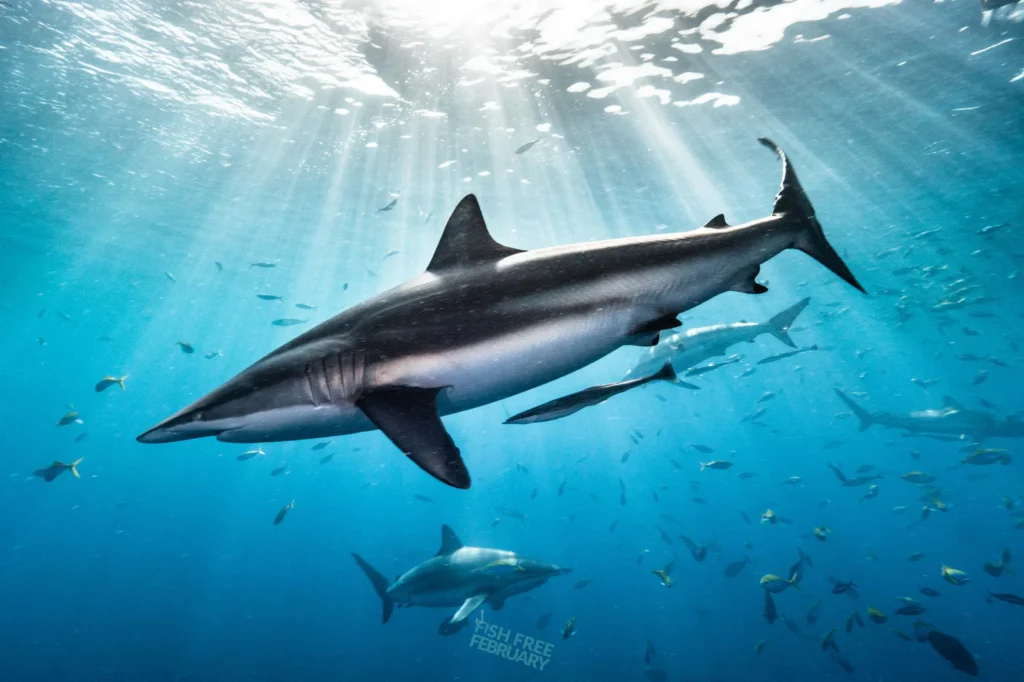
The rest of the bay is just as lively. Shoals of Indian mackerel sweep past in tight, coordinated bursts. There are turtles that glide between the pinnacles like they own the place, and we even have resident baby sharks that visitors are always thrilled to spot. In the middle of the bay, big rays rest on the sand, and if you are lucky, a lone eagle ray passes through the blue.
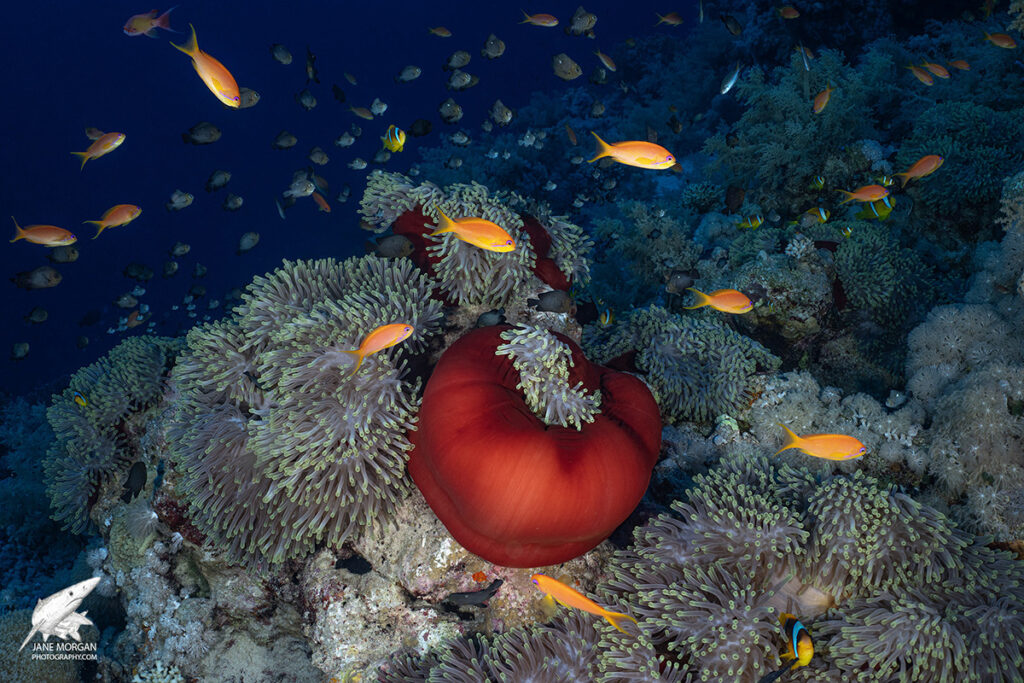
Various patches of anemones are always crowd-pleasers though I’m always searching the skirts for eggs.


The outer reef, especially the shallow sections, is incredibly healthy, dense with hard and soft corals and full of anthias. It is also where we recently found a harlequin filefish, a perfect reminder that Nakari never runs out of surprises. No matter how many times you dive it, there is always something new waiting.
It is a reef that makes you work a little harder, and that is exactly why it remains one of my favourite local dives. The rewards are always worth the effort.

Favourite Dive
There is a particular dive site, which I will keep nameless for now, that has become my go-to place for inspiration. When you first jump in, it looks a little strange. The seagrass bed stretches out in all directions, surrounding four coral patches, which don’t look like much from the surface. It definitely does not shout “photography hotspot.” Then you get closer.
Those little coral patches are bustling with life, especially juveniles. If you enjoy small subjects or capturing behaviour, you can easily spend an entire dive moving only a few metres.


The real treasure for me, though, lies along two long metal pipes that run over the sandy bottom. At first glance they look out of place, but for macro photography they are absolute gold. Along their length you can find nudibranchs, shrimps, blennies (including the unicorn blenny Nakari is famous for), tiny scorpionfish, juvenile lionfish and the always charming pixie hawkfish. The pipes feel like an underwater neighbourhood where every resident is interesting.


Hard and soft corals grow on the pipe inlets, creating a colourful, textured backdrop that works beautifully in photos. Around the pipes you often see a school of juvenile bannerfish swirling like confetti and the odd bold batfish gives you the side-eye before heading off to the cleaning station to get mobbed by glass shrimps. Add a curious turtle or a wandering boxfish and the whole scene becomes playful and full of life. If you are really lucky the dugong will make an appearance too, just to make you regret having your macro lens on.


This site is a reminder that you should never judge a dive by the first glance. Some of the best moments hide in the strangest places.
Bucket List: Lembeh, the Holy Land of Macro
If you ask any macro enthusiast where they dream of going, the answer usually comes instantly, Lembeh, and I’m no different.
I have not been yet, but one day I will. Every underwater photographer I meet tells me the same thing, that I would absolutely love it and that it needs to be at the top of my list.
Lembeh is famous for the kind of creatures most divers only ever see in ID books. Mimic octopus, hairy frogfish, flamboyant cuttlefish, rhinopias, blue-ringed octopus, all of them going about their day in the black volcanic sand. The idea of diving a place where unusual critters are the norm feels almost unreal. It sounds like the ultimate playground for anyone who enjoys the challenge of macro.
One day I will get there. And when I finally do, I already know I am not going to want to leave.
Final Thoughts
 Living and diving in Marsa Alam has taught me that beauty is not always obvious and that some of the most rewarding photography comes from slowing down and paying attention to the small details.
The Red Sea hasn’t been immune to natural changes that have affected reefs worldwide in recent years. Those impacts are real, but they are not the full story. There are still incredible critters to be found, you just have to work a little harder for them, and that effort makes every discovery feel all the more rewarding. Sandy patches, seagrass, pipes, house reefs, all of them can be full of life if you approach them with curiosity.
If you ever find yourself in this part of the Red Sea, you will probably find me somewhere on the sand or in the seagrass, nose-down, photographing something tiny and strange. It is probably also the reason I have famously never seen a whale shark.
Sarah O’Gorman on Instagram: @scubasogs