Future Focus: India Wauton

In each instalment of Future Focus, we speak with past and present students of the Marine & Natural History Photography BA(Hons) course at Falmouth University about their experiences, challenges, and successes on the course.
 India Wauton – Alumni
(Graduated Marine and Natural History Photography in the summer of 2025)
Gina: What were you doing before coming to Falmouth University and how did you find out about this degree?
India: Before coming to Falmouth University, I had just taken my gap year where I travelled around Thailand and Bali. I didn’t go to university straight away as I didn’t know what course I wanted to do. I studied Photography as one of my A-levels so I already knew it was one of my passions. I’ve always loved being in the sea since I was a child, diving under the water like a seal!
One day my sister showed me this course, Marine & Natural History Photography at Falmouth University which she thought I’d love. At first, I was hesitant, but then my family and I looked it up online and saw some of the videos on the university’s website of students filming animals and photographing underwater. I thought, wow!
Since I was young, I’ve always wanted to do something involving animals, so when I saw this course, I instantly knew it was perfect for me. Involving both animals and photography!
Gina: Was there a particular part of the course that piqued your interest?
India: The underwater module was what drew me in, along with the filmmaking side. When I saw it advertised on the Falmouth website, I thought underwater photography & videography sounded incredible. I grew up watching David Attenborough documentaries and always thought it would be amazing to be one of the filmmakers. I’ve also loved animals since I was young, so being able to photograph them underwater sounded like a dream.

Gina: Did you have any underwater photography experience before joining?
India: Not really. I had a GoPro which I would take on sailing holidays with my family but I never knew there were big underwater cameras which you could use! Once I found out that there was a course like this one, I was so excited to try.
Gina: What were your expectations from the underwater photography module?
India: I actually didn’t know what to expect. I hadn’t had much diving experience before, but I’d always wanted to learn properly, and the fact I could now do that with a camera was amazing. My expectations were simply to capture beautiful imagery of animals underwater. I didn’t know much before applying, but I knew I loved being in the water, so I had a feeling I’d love it.

Gina: So, you successfully joined the course. Were you apprehensive about anything initially?
India: I was a little nervous about being able to scuba dive while handling the cameras underwater at first, but once I started, I had so much fun! I was also worried I might not be as good as others, but those worries quickly faded the more I got in the water.
Gina: Did you learn to dive specifically for the course?
India: Yes, I did! I tried diving once in the Maldives when I was about 14 and loved it, but I’d always wanted to do it more. The course gave me the perfect reason to learn properly. I completed my PADI Open Water course in Koh Phi Phi, Thailand, and loved it so much that I went on to do my Advanced Open Water PADI course there too. I later completed my PADI Rescue Diver course in Jersey, where I grew up. I’m so grateful as I have loved every second in the water!
Gina: How was your first cold-water dive?
India: My first cold-water dive was great! I did my first cold-water dive when I completed my PADI Rescue Diver course in Jersey. I actually love being in cold water, so it didn’t feel too different – you just have to wrap up more!

Gina: Did Falmouth support you adequately for that dive?
India: Yes! The Falmouth University dive team feels like a family. They’re so supportive and help with any worries you might have. Plus, they have a dog named Ruby, which is definitely a bonus!
Gina: Describe a typical week as an underwater photography student.
India: A typical week for me is going to seminars and lectures, working on my project and booking out a camera to go snorkelling with my friends! I sadly haven’t been in the water this year as much as I’ve wanted to but I’m aiming to get back in the sea soon!
Gina: Did lectures effectively prepare you?
India: Yes, absolutely. Gina’s lectures helped me so much – learning how to use the cameras properly, how to approach subjects and also different ways to shoot. I’ve learnt so much since my first year at uni.

Gina: How are dives organized?
India: At the start of the term, everyone is given different dates and times to arrive at Silver Steps, where the dives take place. When we arrive, we choose a dive buddy, set up our kit, listen to a safety briefing, and do a buddy check to make sure everything’s fine before entering the water. We then do a quick practice with the cameras to check lighting and settings in general, before heading down to dive! Afterwards, you feel amazing, you de-kit, warm up, and head back to uni to sort out camera equipment!
Gina: What did you enjoy most about the underwater photography course?
India: Definitely being in the water! Since choosing the underwater module, I’ve been able to dive more often which I’ve loved. Learning how to use the underwater cameras for the first time at Silver Steps was such a great moment. Combining scuba diving with photographing the beauty of marine life is just incredible.

Gina: What does a typical dive day look like?
India: On a typical dive day, students go to Silver Steps where Falmouth dive team and Seaways meet us, we kit up, listen to a safety briefing, do our buddy checks, make sure we have the right settings on our cameras, and then we get into the water! It is so much fun and feels like a great community as everyone has a shared love for the ocean.
Gina: Describe the dive team at Falmouth.
India: The dive team is awesome! Jane, H, Elle and Gina are the best – they’re so supportive and have made diving such a special experience.
Gina: How much has your work improved since starting?
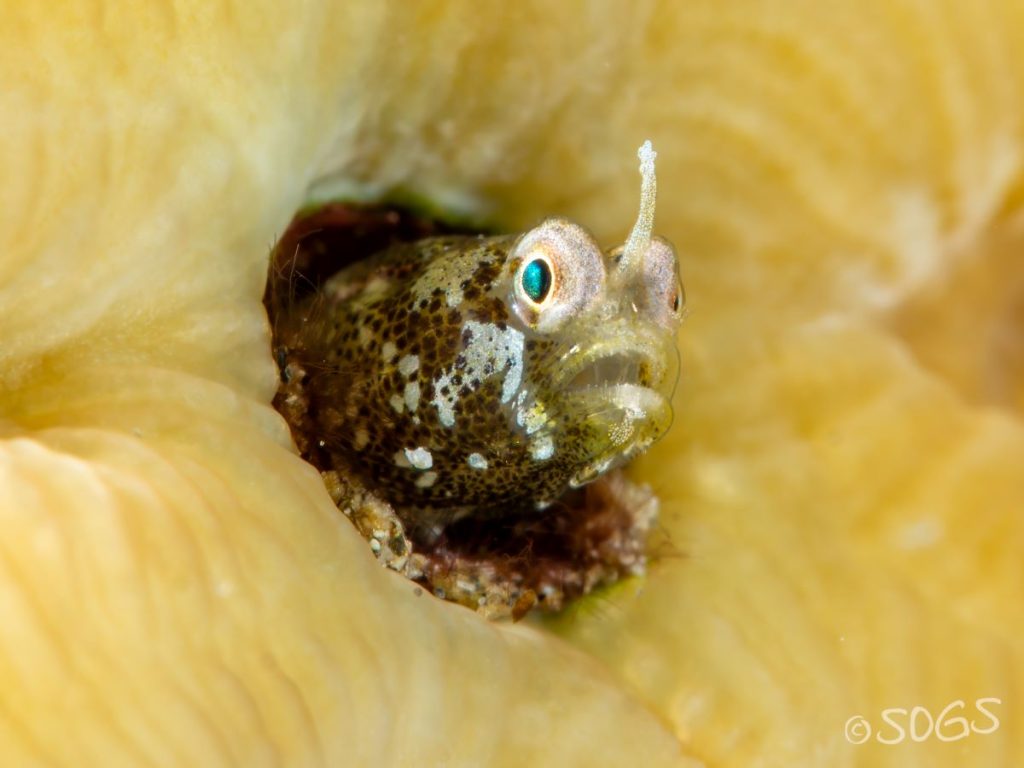
India: My work has improved tons since starting. At the start, I found it really difficult to get the lighting right with the underwater strobes. As time went on, I learnt how to use the strobes effectively and created my macro project on Colour & Textures which I had so much fun doing. I have also found more confidence within my photography as time has gone on.
Gina: What’s your proudest achievement?
India: My proudest achievement so far is my underwater portfolio on Colours & Textures. I’ve always loved colour and small details, so I found macro photography really fun. It’s amazing to see all the tiny details and colours underwater. It really opened my eyes to see how much beauty there is beneath the surface.
Another thing I am proud of was getting to speak about some of my photos at the Go Diving Show earlier this year – it was such an exciting and rewarding experience!

Gina: Were you surprised by the biodiversity?
India: Yes! I didn’t expect the underwater world in Cornwall to be as beautiful as it is. There’s so much life: kelp forests, spider crabs, mauve jellyfish, barrel jellyfish, cat sharks, seals, and so much more. The biodiversity is incredible!
Gina: Do you feel prepared for a career in underwater photography?
India: I do feel prepared for a career in underwater photography. There’s still so much I want to learn and experience, but I’m so excited for what’s ahead. I’d love to dive and film in different parts of the world.
Gina: Advice for prospective students?
India: If you have a passion for wildlife, nature, storytelling, or the ocean, I’d say go for it! Even if you’ve never picked up a camera before, you should totally give this course a go. The amount of love you have for nature will grow and you will have so much fun.
Gina: Any advice for current students?
India: It’s okay to not be perfect. As long as you’re having fun and enjoying yourself, that’s what matters. Keep practicing, keep shooting, and you’ll discover what you truly love to do.
Gina: Would you choose this degree again?
India: Definitely! I’ve loved this course and everything I’ve learnt along the way.
Click below for more details about Falmouth University’s Marine & Natural History Photography course:
https://www.falmouth.ac.uk/study/undergraduate/marine-natural-history-photography
Meet Gina Goodman and the rest of the team at Falmouth University shaping the next generation of underwater photographers here.