Beyond Diving: Discover the Costa Cálida by Snorkelling
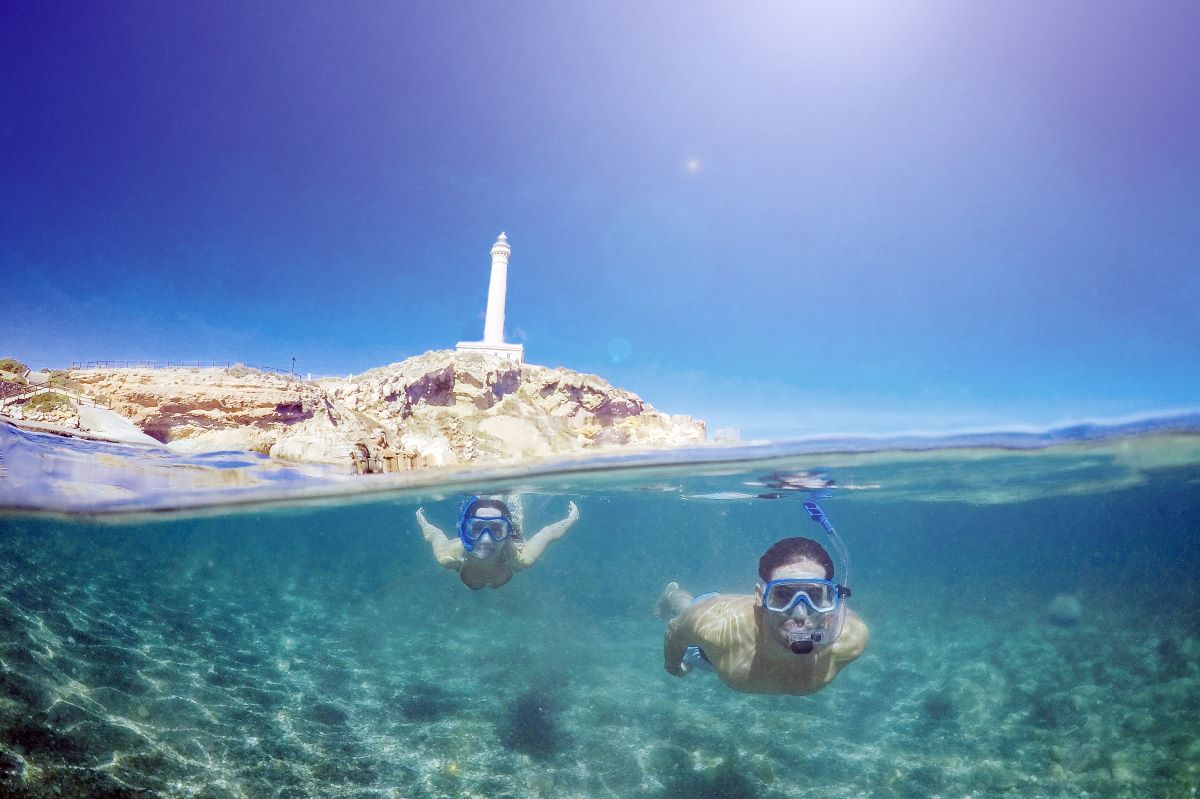
For divers, the Costa Cálida is naturally associated with what lies beneath the surface.
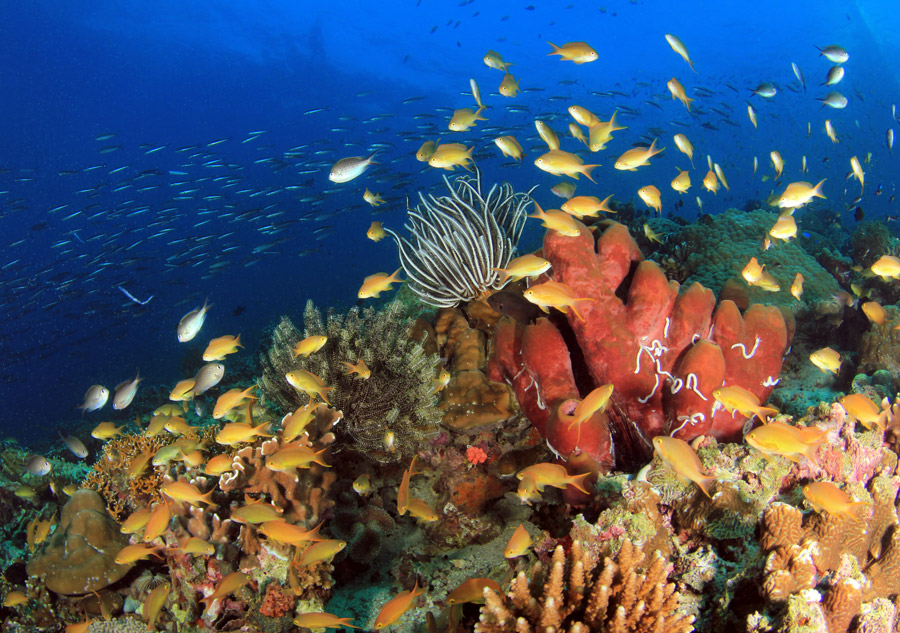
Around Cabo de Palos, Cartagena, Mazarrón and Águilas, the Mediterranean coastline offers a remarkable variety of underwater landscapes and marine habitats that have made the Region of Murcia a well-established diving destination.
But your connection with the sea does not have to end when the cylinder is put away.
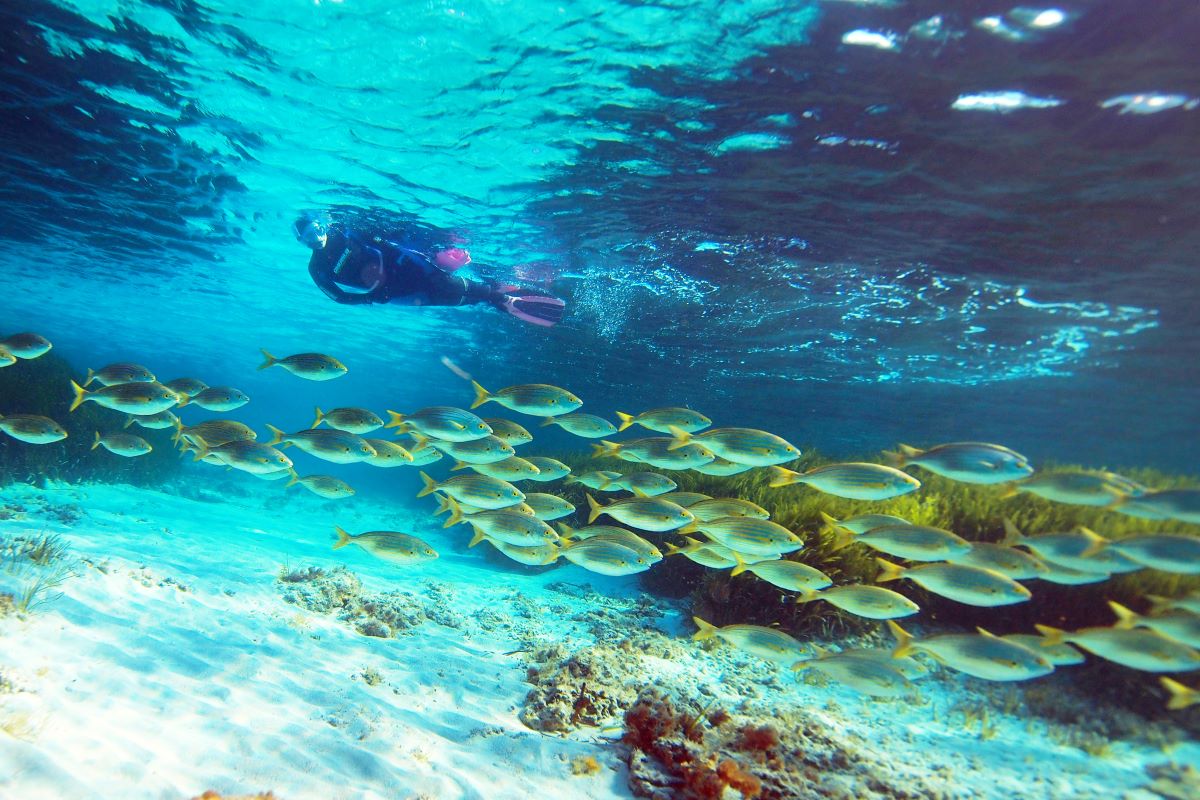
Along the Costa Cálida, a network of official snorkelling routes offers another way to explore the coastline. Staying close to the surface, these routes take you through rocky shallows, seagrass meadows and sheltered coastal waters, offering a different perspective on the marine environment.

For experienced divers, snorkelling can provide a change of pace between dives. For non-diving partners, friends and family, it offers the opportunity to experience the same coastline from the water too.
A closer look at the shallows
Snorkelling requires very little equipment: a mask, snorkel and fins are enough to explore the waters close to shore.
But the difference is not just in the equipment. Without planning a dive profile or keeping track of depth and bottom time, there is more freedom to follow the contours of the coastline and observe what is happening beneath you.
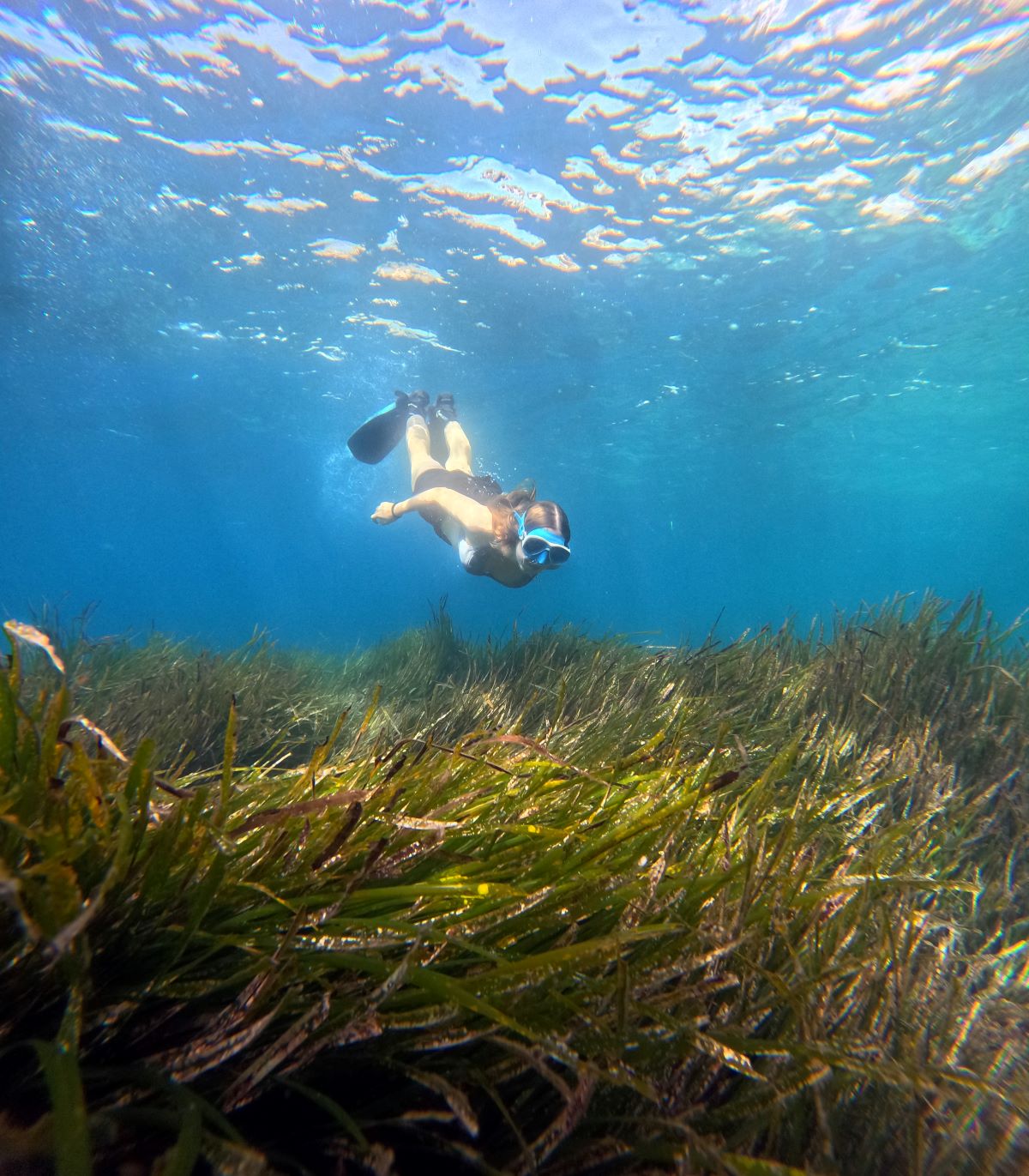
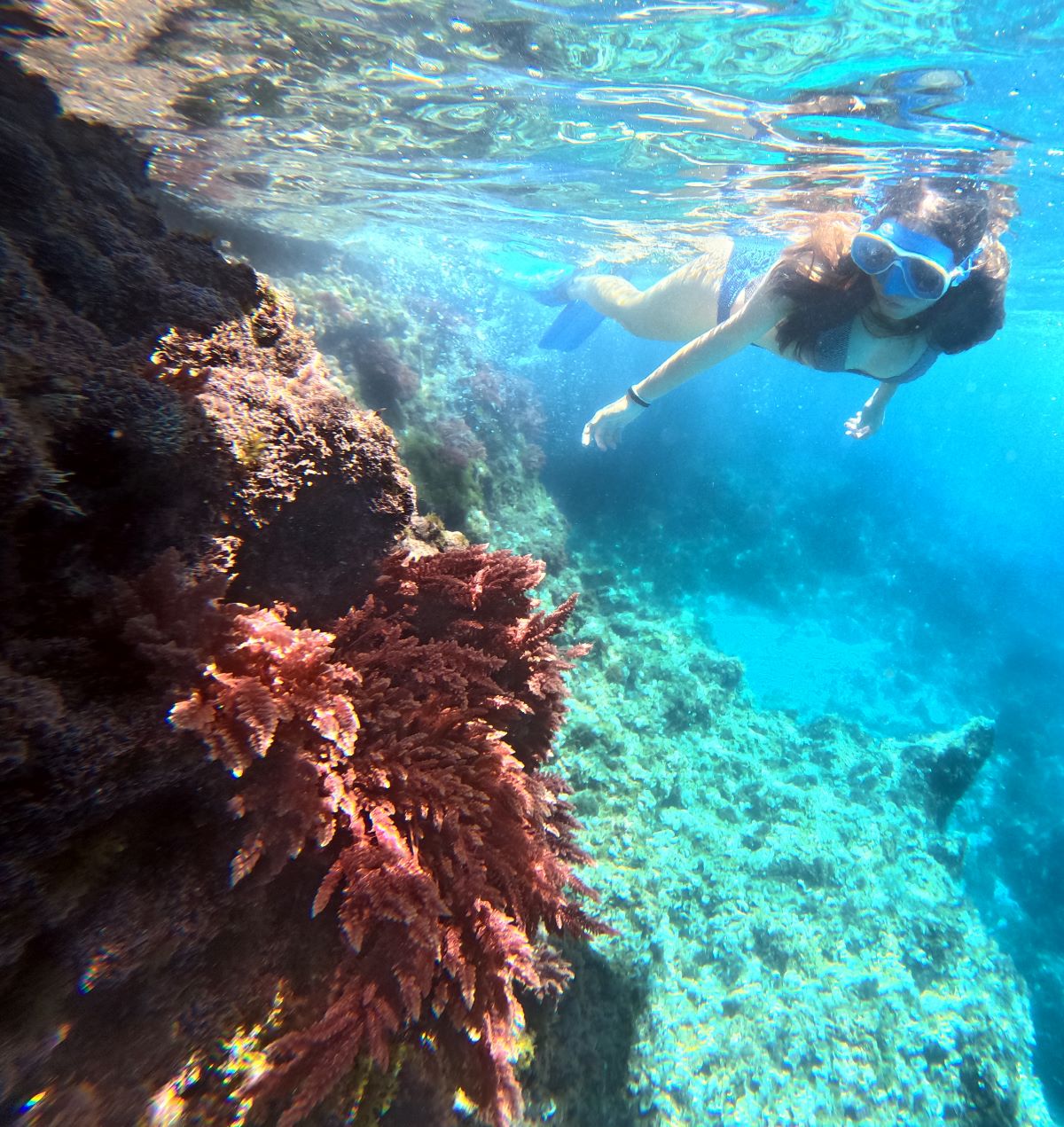
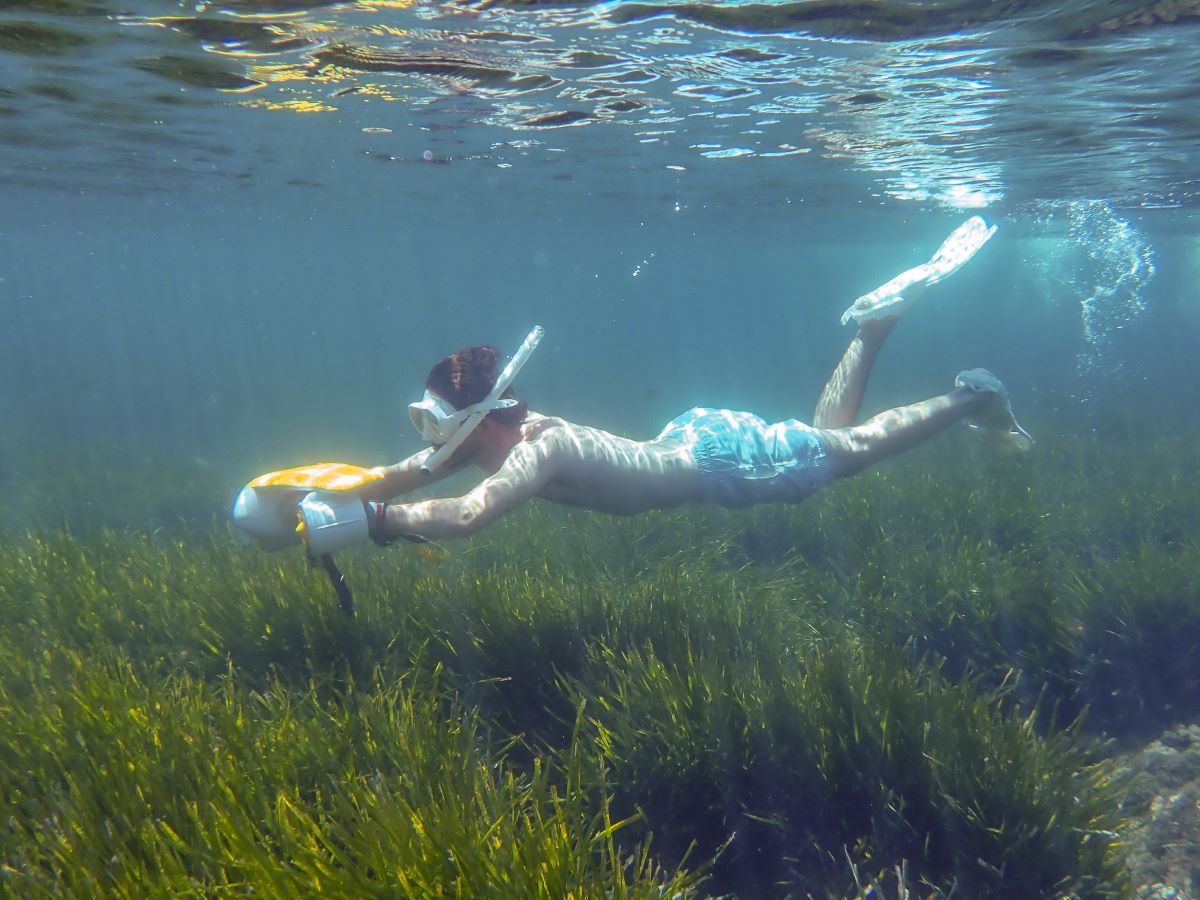
Rock formations, patches of Posidonia oceanica and marine life moving through the shallows become the focus. Places that might simply mark the beginning or end of a scuba dive can take on a whole new character when explored at snorkelling depth.
It is a slower way of experiencing the sea, allowing you to look more closely at the details of the coastal environment.
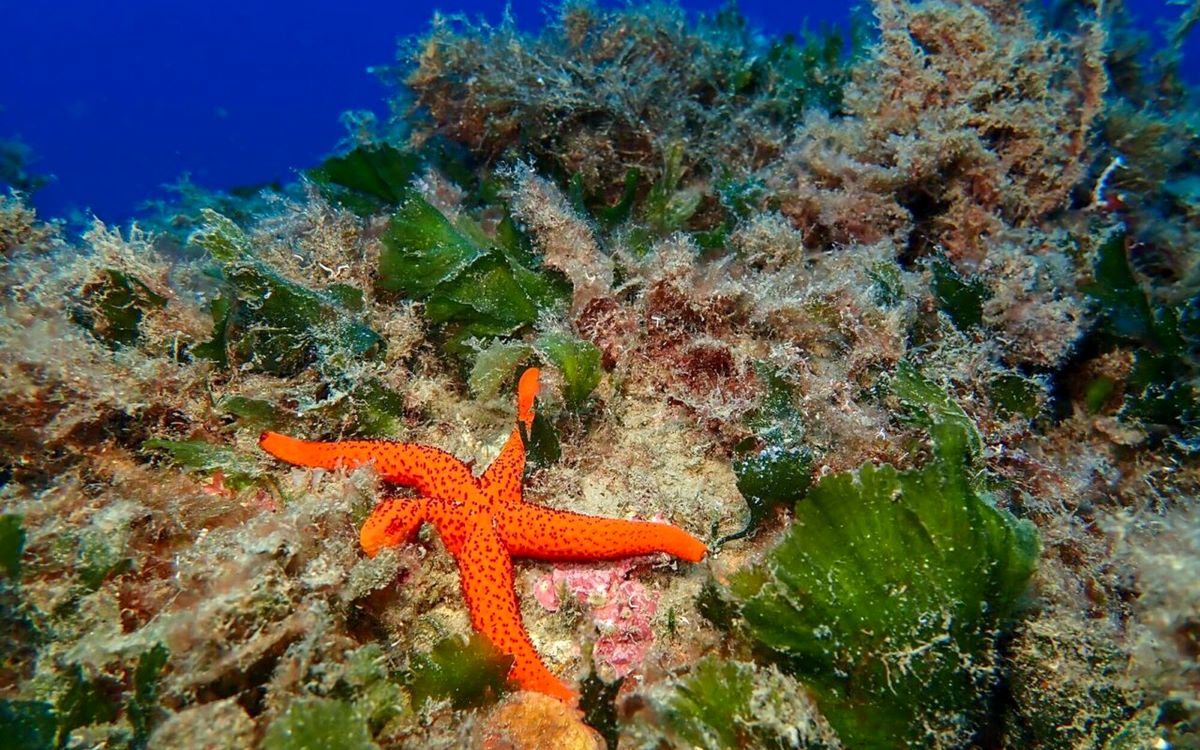
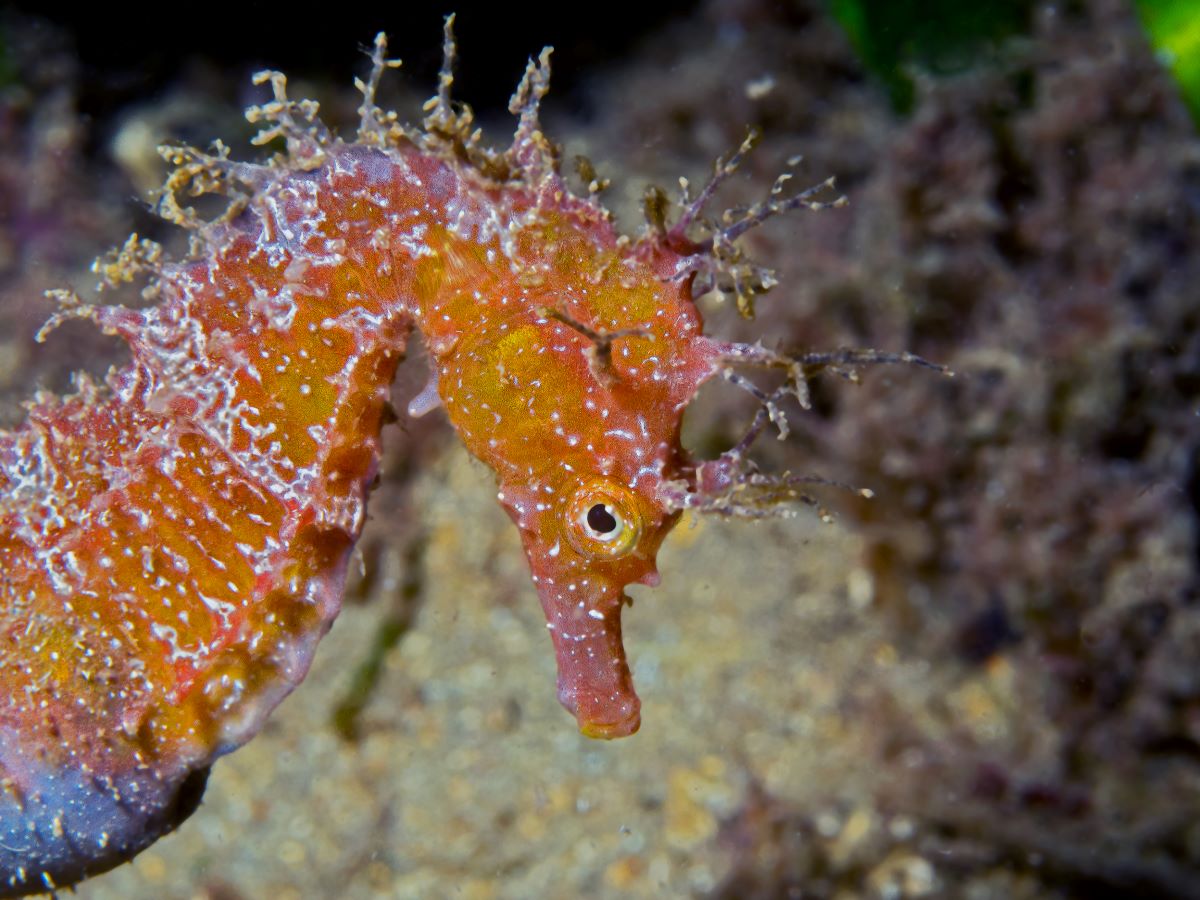
Want to know what you might encounter in the water? Our Mediterranean Marine Species Guide highlights some of the species to look out for while exploring the Costa Cálida’s shallows.
Snorkelling routes along the Costa Cálida
The Region of Murcia’s official tourism platform features a network of snorkelling routes distributed along the Costa Cálida. The routes vary in character and difficulty, allowing visitors to choose according to their swimming ability and experience.
Around Cabo de Palos, one of the region’s best-known diving areas, several routes follow the rocky coastline. These include Cala del Pato Vizo or La Galera, El Descargador, Cala Fría, Cala Reona and Cala Las Escalerillas.
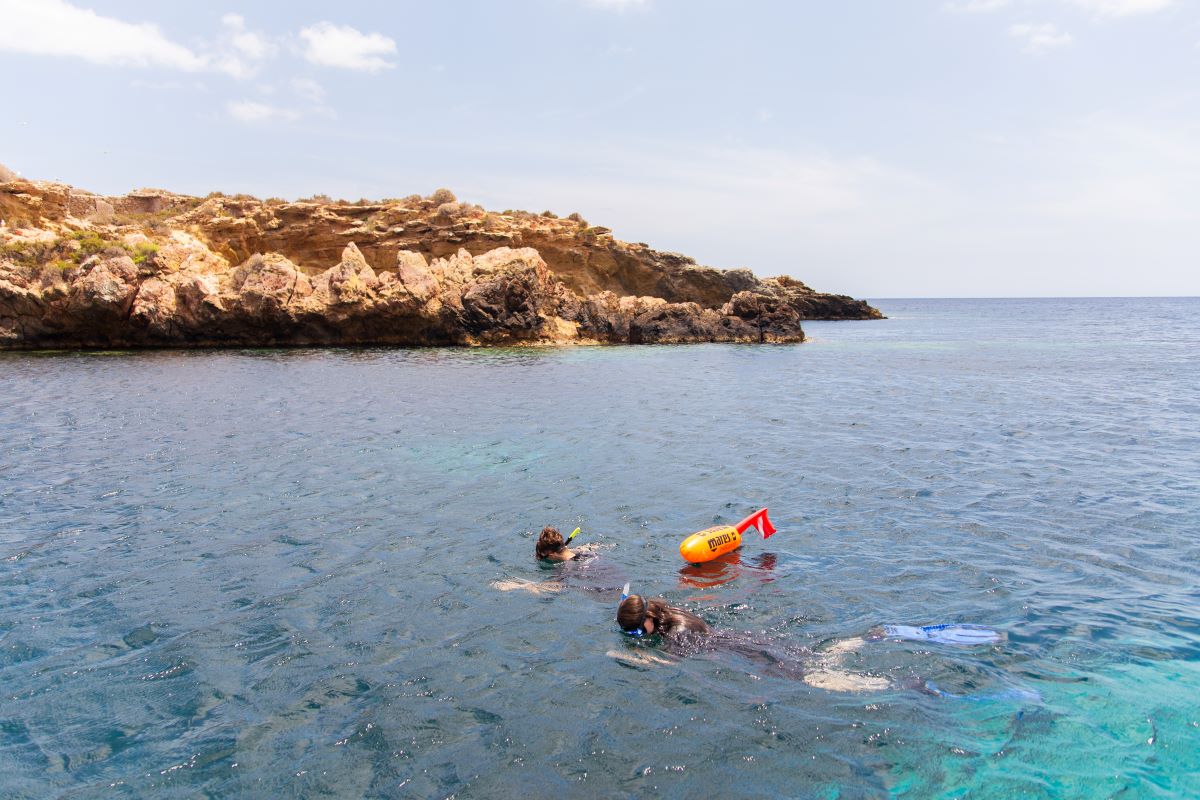
The combination of rocky seabed, shallow water and Posidonia habitats makes this stretch of coast particularly interesting to explore from the surface. For divers who know Cabo de Palos from below, it is an opportunity to see the same coastline from a different perspective.
Further along the coast, El Portús, close to Cartagena, has its own official route.

In the Mazarrón area, routes include Bolnuevo–Playa del Rincón, Isla Plana and Pico del Águila–Punta de los Gavilanes.
Towards Águilas, the routes continue with Playa del Hornillo, Playa de La Cola and Calarreona.
The full selection is available through the Region of Murcia’s official snorkelling platform, where each route includes information to help visitors choose an appropriate itinerary.
When diving is not on the agenda
A diving holiday can involve more time on land than the dive itinerary initially suggests.
There may be a day between diving activities, a change in weather, or simply a day when another dive is not quite what everyone in the group wants to do.
Snorkelling provides an alternative that keeps the sea at the centre of the day.
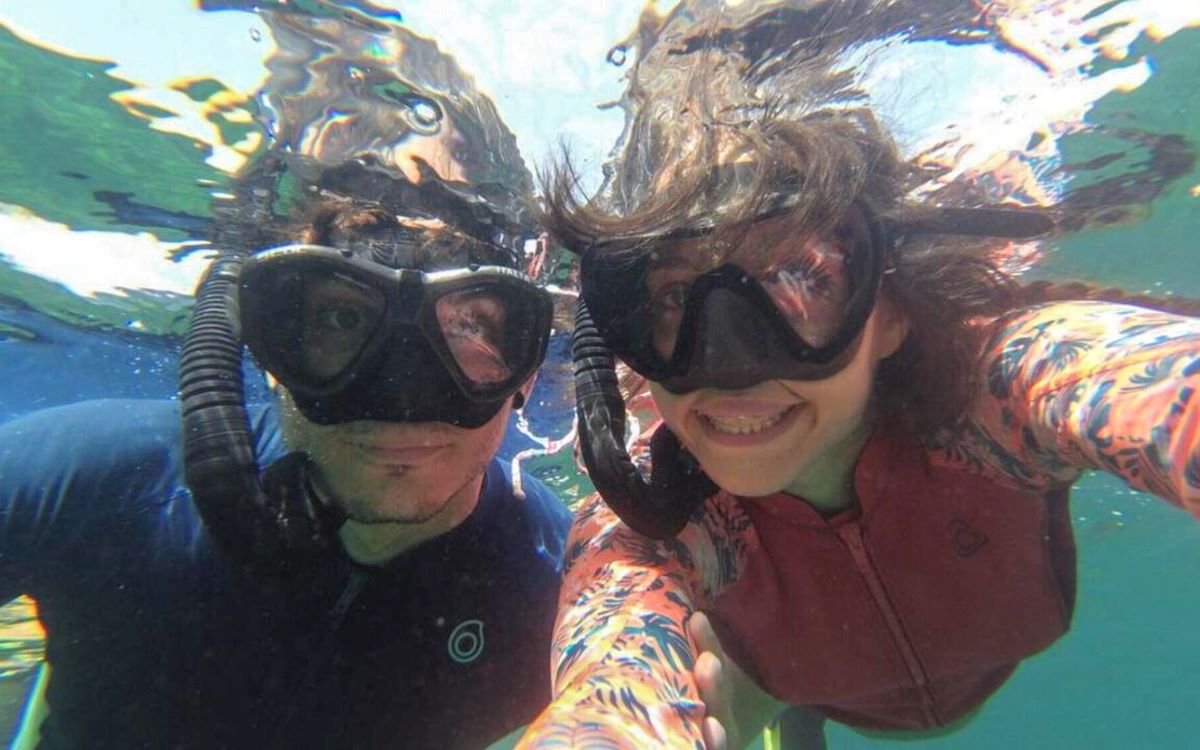
For non-divers travelling with a diving group, the appeal is straightforward. Instead of spending the day away from the water, they can explore the same coastline from the surface.
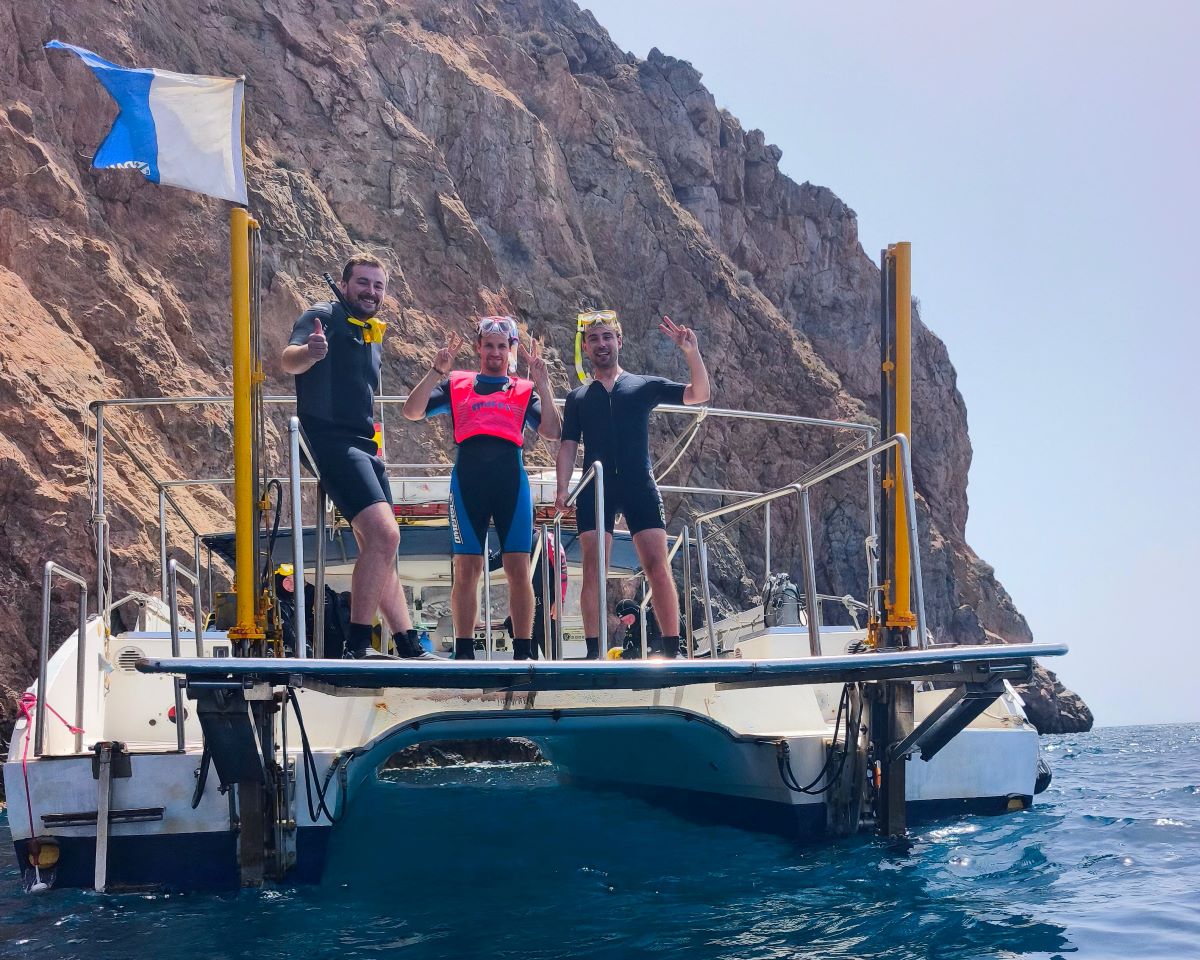
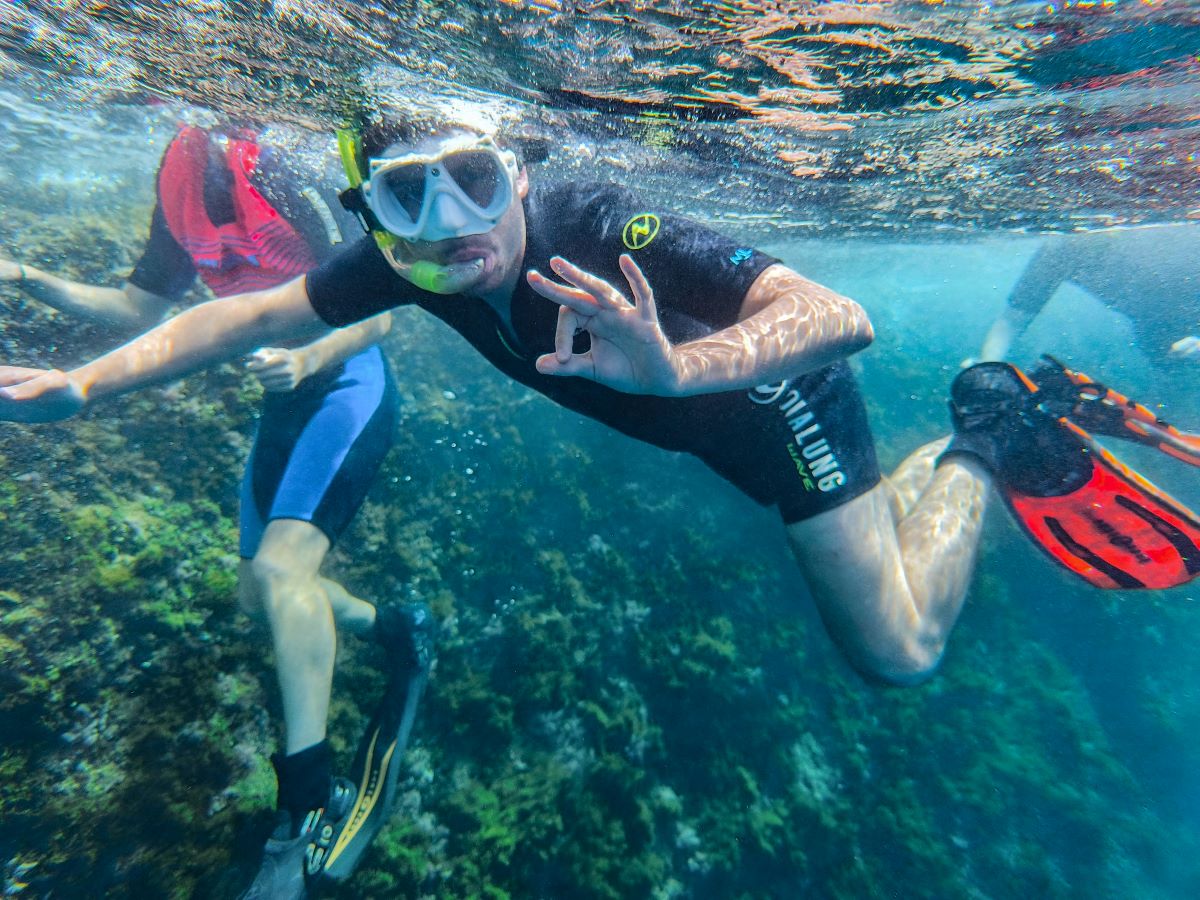
This makes snorkelling particularly well suited to groups with mixed interests. One person does not have to give up their connection with the sea simply because they do not scuba dive. It can also be an activity that divers and non-divers enjoy together.
The landscape beneath the surface
One of the most distinctive features of the Costa Cálida’s shallow waters is Posidonia oceanica.
These seagrass meadows are an essential part of the Mediterranean coastal ecosystem, providing habitat for marine species and helping to stabilise the seabed.
From the surface, rocky areas, sand and seagrass create a constantly changing underwater landscape just metres from the shore.
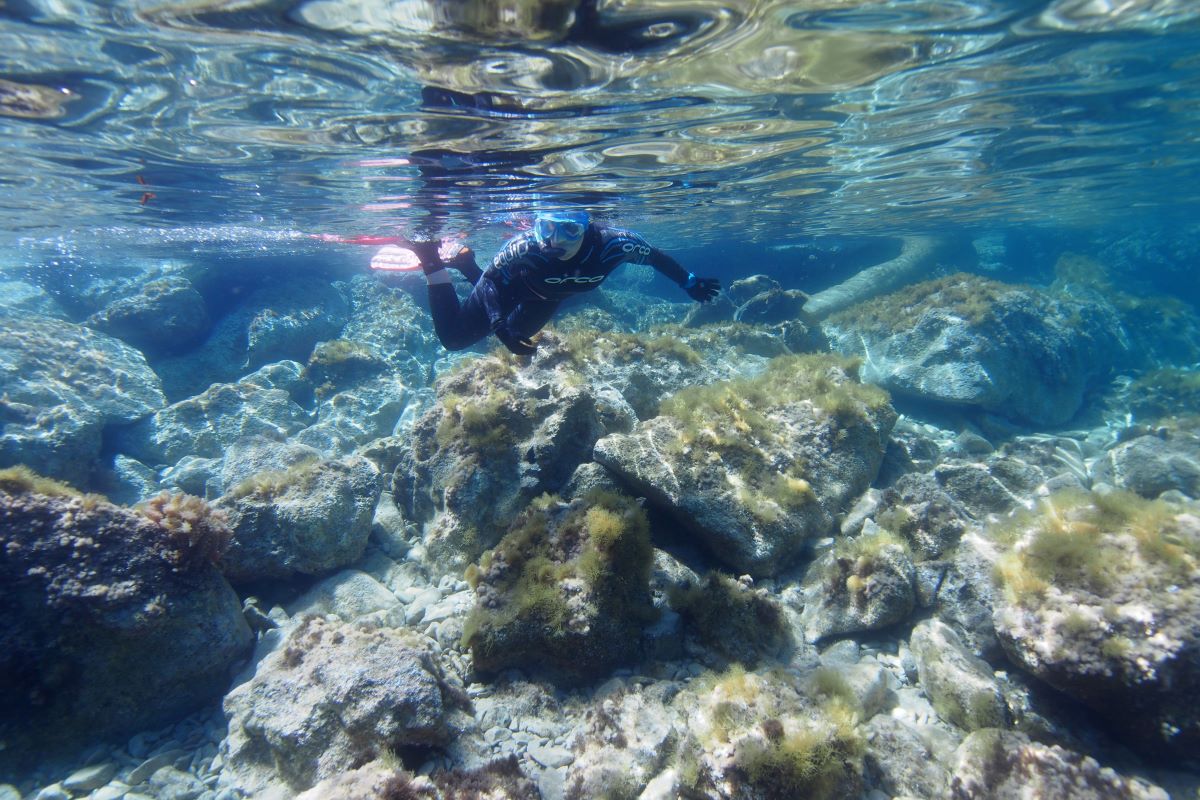
For anyone interested in marine life, snorkelling offers the chance to slow down and observe. There is no need to cover a particular distance or reach a specific point on a route. Sometimes, the most interesting observations come from simply staying in one place for a while.
Another way to experience the Costa Cálida
The Costa Cálida may be known for its diving, but its shallow waters offer another way to experience the Mediterranean.
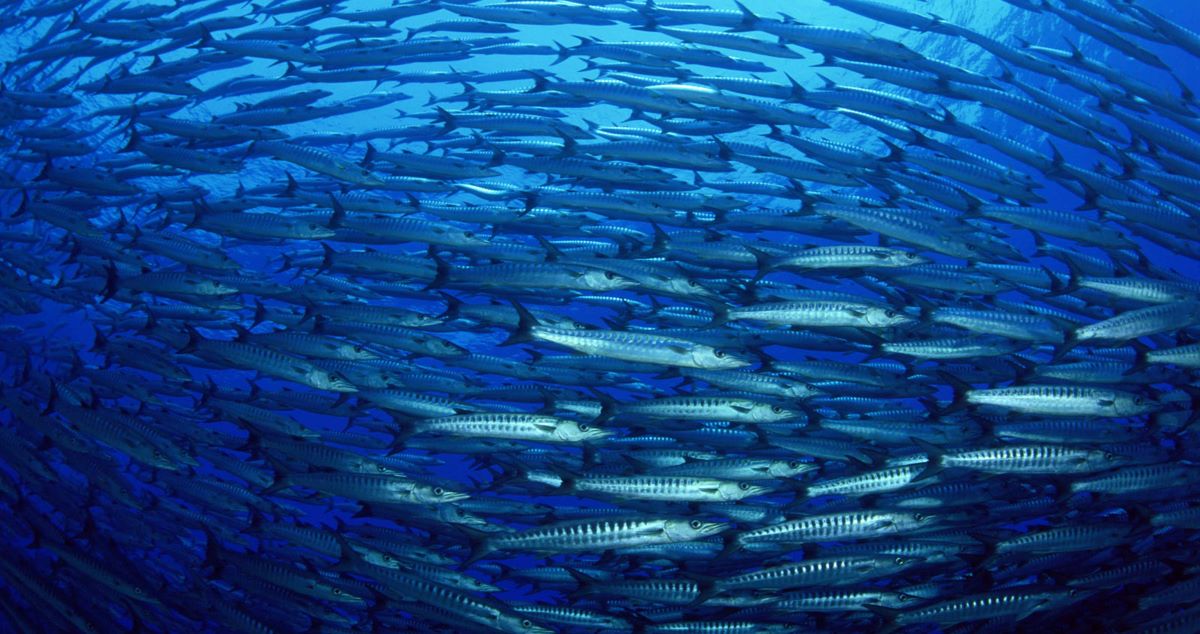
The region’s snorkelling routes complement scuba diving rather than replacing it. They offer experienced divers a different way to spend time in the sea, provide non-divers with an opportunity to explore the coastline, and reveal the marine environment between the beach and the deeper dive sites.

Sometimes, all it takes is a mask, snorkel and a pair of fins to discover another side of the Costa Cálida.
 Visit the Region of Murcia’s official snorkelling platform to discover more.
www.facebook.com/turismoregiondemurcia
www.instagram.com/turismoregiondemurcia
www.youtube.com/c/turismoregiondemurcia
@turismoregiondemurcia