Hidden Worlds: The Camera Setup Behind the Film – What Actually Worked at Depth
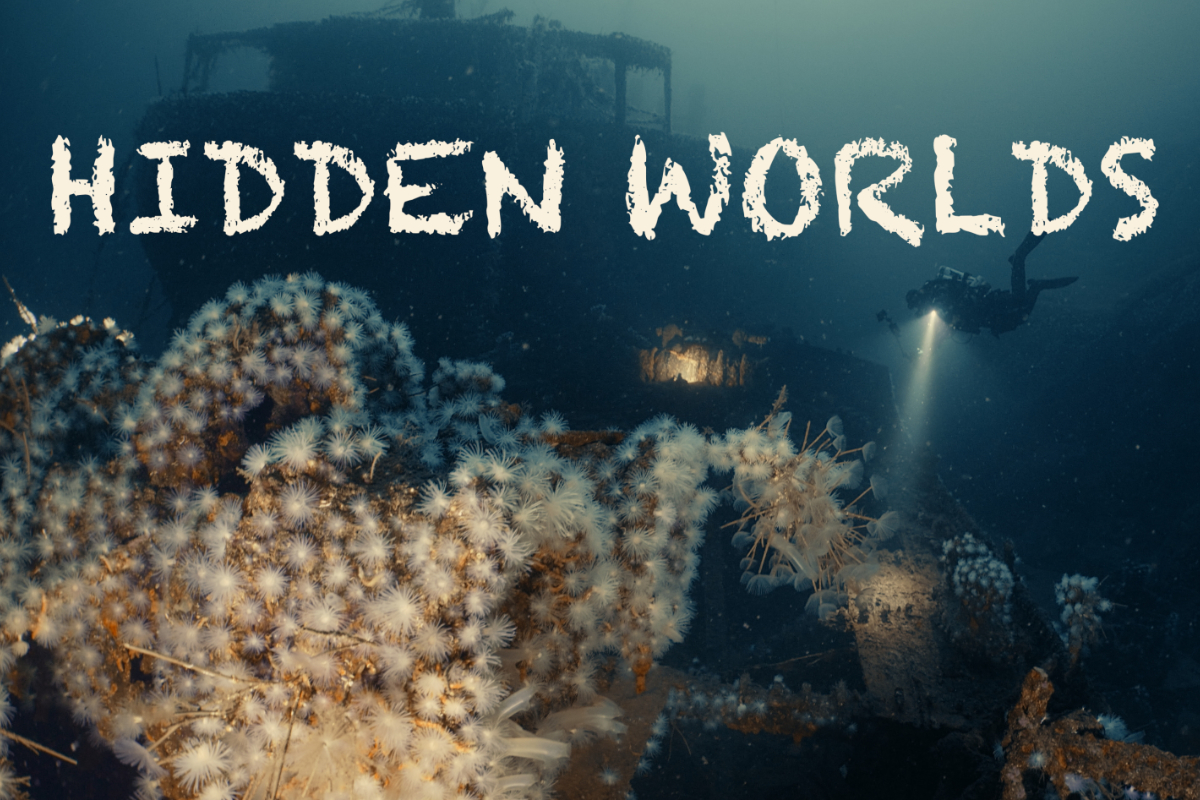
When people talk about underwater filmmaking, the conversation often turns quickly to specifications, new camera bodies and theoretical image quality. But on deep technical dives, the real question is much simpler: what actually works underwater — reliably, repeatedly, and under pressure?
During the production of Hidden Worlds, my setup changed constantly. Some choices proved themselves immediately. Others only made sense after flooded components, failed monitors, soft footage and the kind of mistakes that only become obvious later in the edit. Over time, the system became less about chasing the perfect setup and more about building one that could be trusted in wrecks, caves and decompression-heavy dives.
At the core of that system was the Canon C70 in a Nauticam housing.
One of the main reasons I chose the C70 was Canon RAW. The 12-bit internal RAW files are simply excellent. For an independent filmmaker, that matters enormously. The image is flexible, holds together beautifully in post, and gives a lot of room for grading without forcing the workflow into something unnecessarily complicated.
Canon’s colour science was another major reason. There is a reason so many indie filmmakers still love the Canon look. To my eye, Canon feels more organic, more natural and more cinematic, especially in RAW. Sony often appears cleaner and more clinical. Technically excellent, yes — but sometimes almost too clean. For Hidden Worlds, I wanted an image that felt more atmospheric and more pictorial, and Canon gave me exactly that.
What surprised me most was how well the RAW material behaved in DaVinci Resolve. On paper, one might expect RAW to be processor-heavy and slow to work with. In practice, it was the opposite. The files were remarkably easy to edit and grade. That made the C70 even more useful in real production than I had expected.
The Nauticam housing for the C70 turned out to be one of the best housings I have used in more than twenty years of diving and filming. What made it stand out was not just the build quality, but the thinking behind it. It allowed different lens and adapter configurations without becoming impractical, and it felt like a housing designed by people who actually understood field use rather than just specifications.
It was also surprising how quickly this housing disappeared from production, because in real-world use it proved exceptionally strong. Even more interesting is the fact that, with relatively minor modifications, it can also be adapted to fit the newer Canon C80. That kind of continuity is unusual in an industry where equipment is often replaced far too quickly.
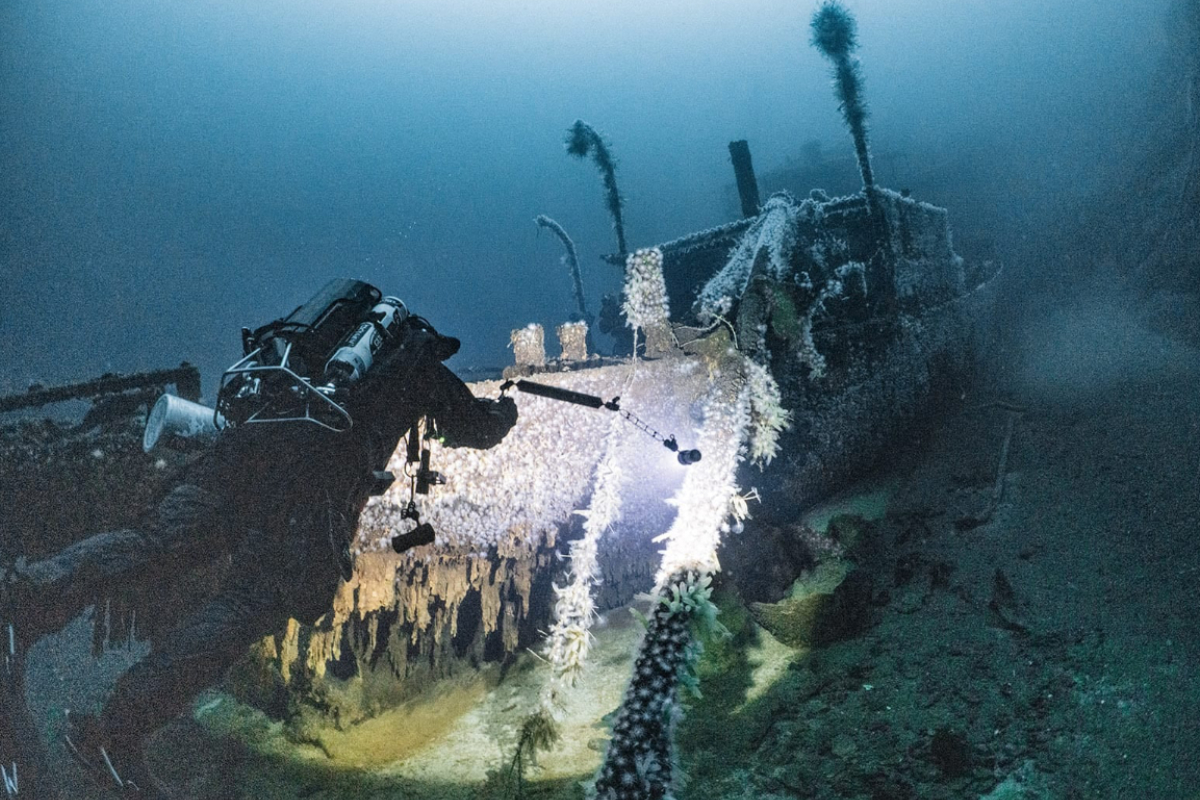
Depth rating is always part of the conversation. The housing is officially rated to 100 metres, which already covers the overwhelming majority of serious technical dives. During filming, I took it deeper than that, to around 120 metres, and it held up without immediate issues. Controls stayed functional, the housing behaved normally, and there were no obvious signs of stress.
Still, it is important to distinguish between what worked in the field and what should be considered advisable. A 100-metre rating already gives a very strong margin. Going 10 metres beyond that is not the same as taking a 60-metre-rated component to 80 metres. At 100 metres, a housing sees about 11 bar absolute pressure; at 110 metres, about 12 bar — roughly a 9% increase. A component rated to 60 metres sees about 7 bar, while at 80 metres it sees about 9 bar — close to a 29% increase. In other words, “just 20 metres deeper” can be a completely different story depending on where you start.
Optically, the most important part of the entire setup was the Nauticam WACP-2.
For the kind of filmmaking shown in Hidden Worlds, I consider it exceptional. The reason is simple: underwater, distance destroys image quality. The closer you are to the subject, the less water there is between the lens and what you are filming. Less water means fewer suspended particles, less visible backscatter, better contrast and a cleaner image overall.
That matters everywhere underwater, but especially in wrecks and caves. If you want to show the structure of a wreck, the width of a passage, or a diver within an environment rather than just isolated fragments, you need wide angle. And you need to be close. Being one metre away from a diver or a structure is always better than being ten metres away with all that water in between. The WACP-2 made exactly that possible. It delivered a very wide field of view while still allowing me to work close to the subject, and for wrecks, caves and confined spaces, that is a huge advantage.
But it also created one of the worst technical problems in the whole system: focus.
The WACP behaves almost like a diopter in the sense that the normal distance logic becomes unreliable. You cannot just trust the metre markings and assume the image will be sharp. What looks right based on expected distance often is not. Underwater, at depth, in low light, trying to judge focus on a small built-in monitor with that optical behaviour is a nightmare.
In the beginning, I avoided an external monitor because of the usual reasons: more size, more weight, more drag, more complexity. In hindsight, that was a major mistake. Too many shots looked acceptable underwater and turned out to be soft in the edit. I remember more than once cursing underwater because I already suspected the image was not really sharp. Without an external monitor, getting consistent focus with that setup was close to impossible.
Once I changed that, things improved — but only after a new set of problems began.
One of the most important lessons from the whole project was that the weakest points in an underwater film system are often not the camera or the housing at all. They are the secondary components: cables, connectors, feed-throughs, and all the little interfaces between systems.
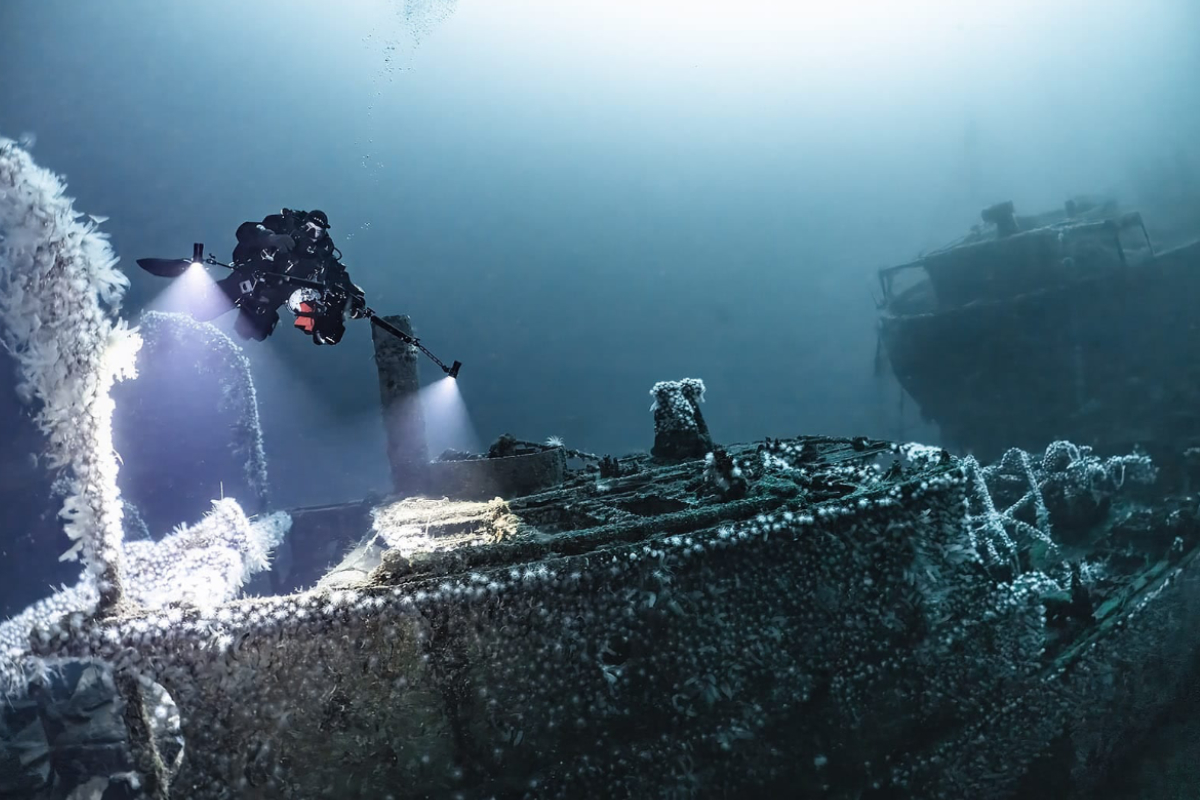
I learned that the hard way with the monitor setup. Two Weefine monitors flooded at the cable connection. In both cases, I had checked everything carefully and tightened it correctly. It still failed. That is exactly what makes these secondary components so dangerous: they can fail even when you are convinced you did everything right.
And it was not only the monitor system.
On one dive at Malin Head, I mounted an Insta360 on a scooter and took it to around 80 metres without any problem. On the very next dive, at roughly 60 metres, the camera flooded — despite being checked properly and definitely closed correctly. That kind of failure is difficult to explain with certainty, but it reinforces the same lesson: underwater reliability is not proven by one successful dive. A system that works once at greater depth is not automatically reliable on the next dive at a shallower one. With small plastic consumer housings in particular, that trust can disappear very quickly.
That is also why relying on a single camera no longer makes much sense. Alongside the main Canon setup, I also carried smaller systems such as an Insta360, a GoPro Mini and a GoPro 13. These were useful for making-of material, secondary angles, additional inserts and pieces that could later be integrated into the overall film language. Today, one camera alone is simply not enough. If you are building a serious underwater production, the main cinema camera is only one part of the overall visual system.
Lighting was another major part of the setup, but the principle remained the same: not maximum complexity, only useful complexity.
In wrecks and caves, light creates the image. Without it, there is no structure, no depth and no sense of space. In some situations, I placed lights deep inside a wreck and then framed the shot from farther back, sometimes using a scooter to build depth and perspective into the scene. When it works, the effect is substantial. The image gains real dimension instead of looking flat and purely functional.
But each additional light also means another battery, another mount and another possible point of failure. That is always the trade-off. The question is never simply how much more gear you can add, but how much complexity you can still control.
That, ultimately, was the real setup philosophy behind Hidden Worlds.
Not what looked best in theory. Not what sounded best in a gear discussion. But what could actually be trusted underwater, repeatedly, and under the constraints of deep diving.
Some parts of the system proved themselves immediately. Others took multiple failures before they became usable. That is normal. Underwater filmmaking gear is rarely defined by specifications alone. It is defined by whether it still performs when depth, cold, task loading and limited time all begin to work against you.
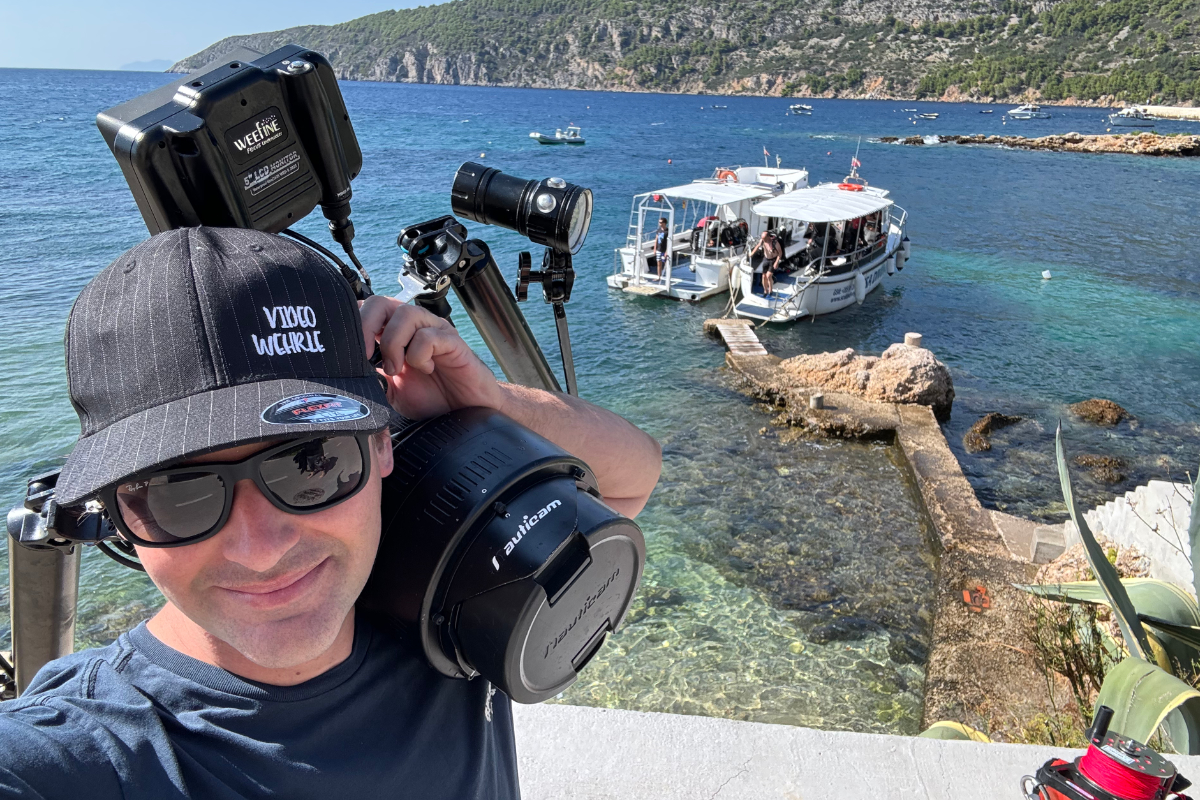
Because in the end, the best underwater camera system is not the most advanced one.
It is the one you can trust when the dive leaves no room for doubt.
Hidden Worlds is currently available on Amazon Prime Video in selected regions, and worldwide via direct streaming in full 4K with extended subtitles.
For Scubaverse readers, the film is also available with a 25% discount via the following link using the code SCUBAVERSE:
https://wehrlefilms.gumroad.com/l/hiddenworlds
Photography: Ingo Leuschner (Including stills from Hidden Worlds)