The Golden Rock Gem in the Caribbean: Part One
If you were to spin a globe and let your finger land on the Caribbean, you’d likely hit a place with a high-rise resort, a neon-lit casino, and a cruise ship the size of a small city. But keep looking. Nestled just a few miles from its more famous neighbours, St. Kitts and St. Maarten, lies a tiny, eight-square-mile volcanic gem that hasn’t changed its vibe since the 1700s. Welcome to Sint Eustatius, or as the locals affectionately call it, Statia.
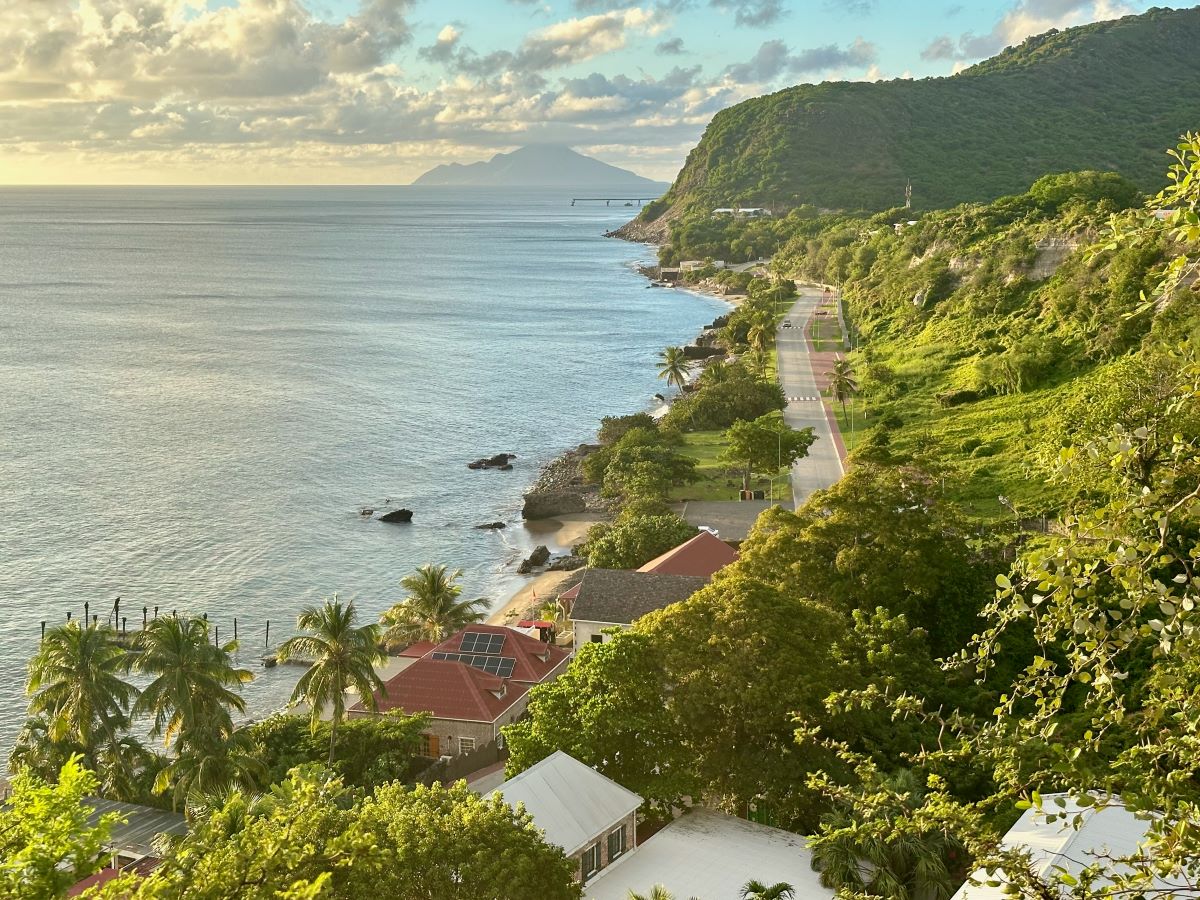
Statia is the Caribbean island time forgot, and that’s exactly why you need to go there. Unlike its flashy neighbours, this tiny jewel of the Dutch Caribbean isn’t about crowded beaches or mega-resorts. It’s about stepping back into the 18th century, exploring volcanic rainforests, and diving into history.
So how do you get there? I flew British Airways from London Gatwick to Saint Kitts. You do have to touchdown in Antigua, but you don’t get off the plane; it stops just to let a few passengers disembark, and then it’s a short hop over to Saint Kitts. In fact, it’s the world’s shortest Boeing 777 flight, scheduled for 35 minutes, with some flights taking as little as 15 minutes, so sadly, there’s no in-flight service. When you land in Saint Kitts, you make your way down to the harbour, where you are met by a private transfer speedboat that takes you over to Statia. I was met at the speedboat with a cold beer; if it had been a martini, I’d feel like James Bond speeding along the water, watching the island disappear behind me. You must remember you are travelling through several countries on your way, so you do have to clear customs and immigration. But it’s super relaxed—so much so, I almost forgot to check out of Saint Kitts on my way to Statia, and I had to jump off the boat and run back to immigration!
As with many places in the Caribbean, Statia is super chilled. It is a special municipality of the Netherlands where English is the primary language of daily life, spoken by most of the 3,200 people who live there, while Dutch is the official language used for administration and education. I do love that Caribbean twang in people’s accents. It instantly makes you feel super relaxed and at home.
Don’t let Statia’s sleepy character fool you. In its heyday, this island was the Manhattan of the Caribbean, earning the nickname “The Golden Rock.” As a duty-free port, its harbour was a vital, bustling centre of global trade. Imagine up to 3,000 ships a year crowding the bay, loading and unloading slaves, sugar, rum, textiles, and weapons. Much of this would find its way onto the Americas, especially the weapons, which were used in the War of Independence.
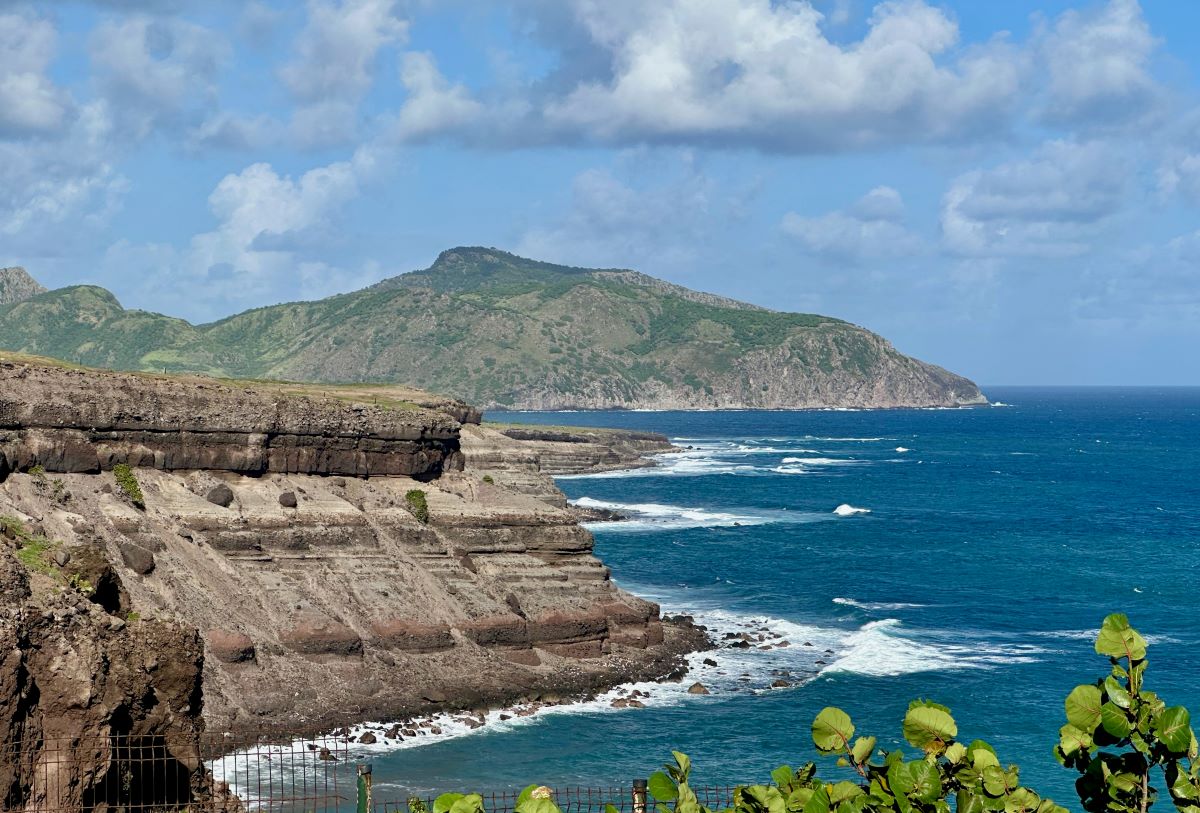
This strategic importance made Statia a hot potato, leading it to change hands an astonishing 22 times between the British, French, and Dutch. The crumbling stone walls you see along the shore of the harbour today are remnants of warehouses that once held unimaginable wealth.
These days, much of the island’s wealth comes from oil storage and bunkering; tankers are often seen loading and unloading their black gold cargo into huge storage containers up on the hillside. I was told that NuStar, which currently operates this facility, is the biggest employer on the island, with the public sector and tourism coming in second and third.
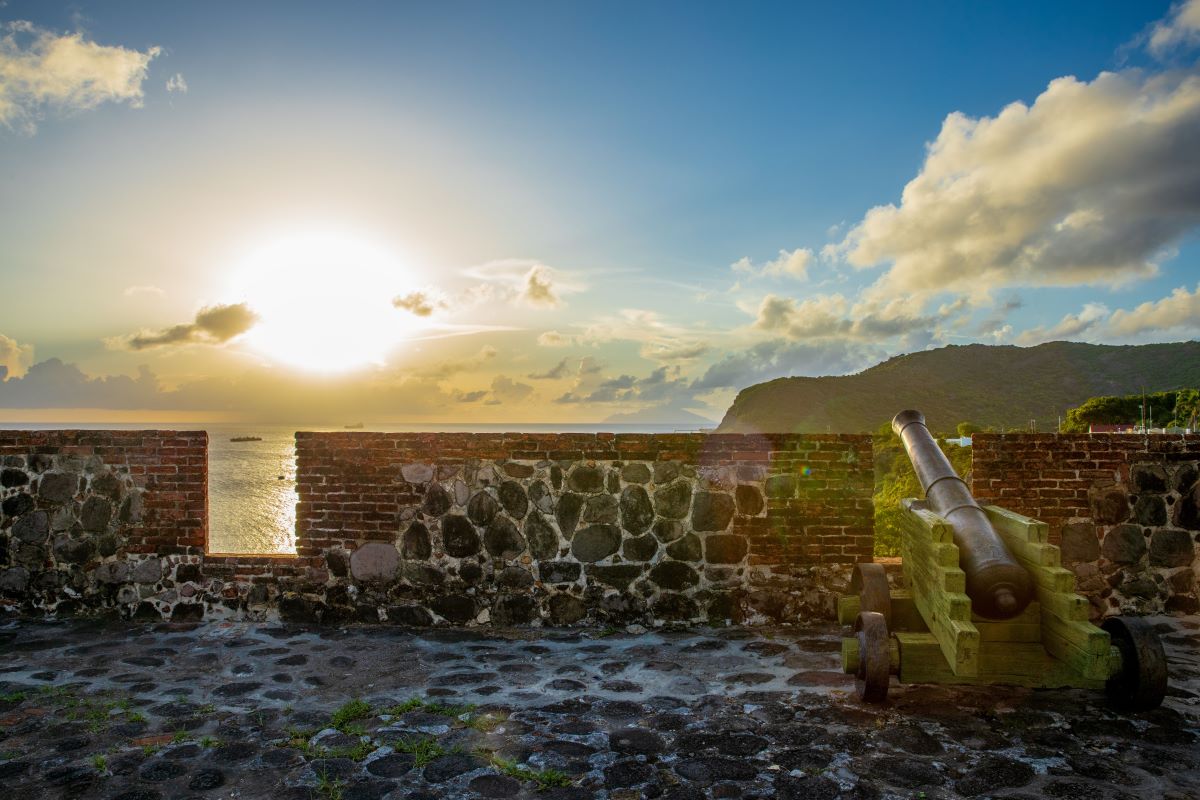
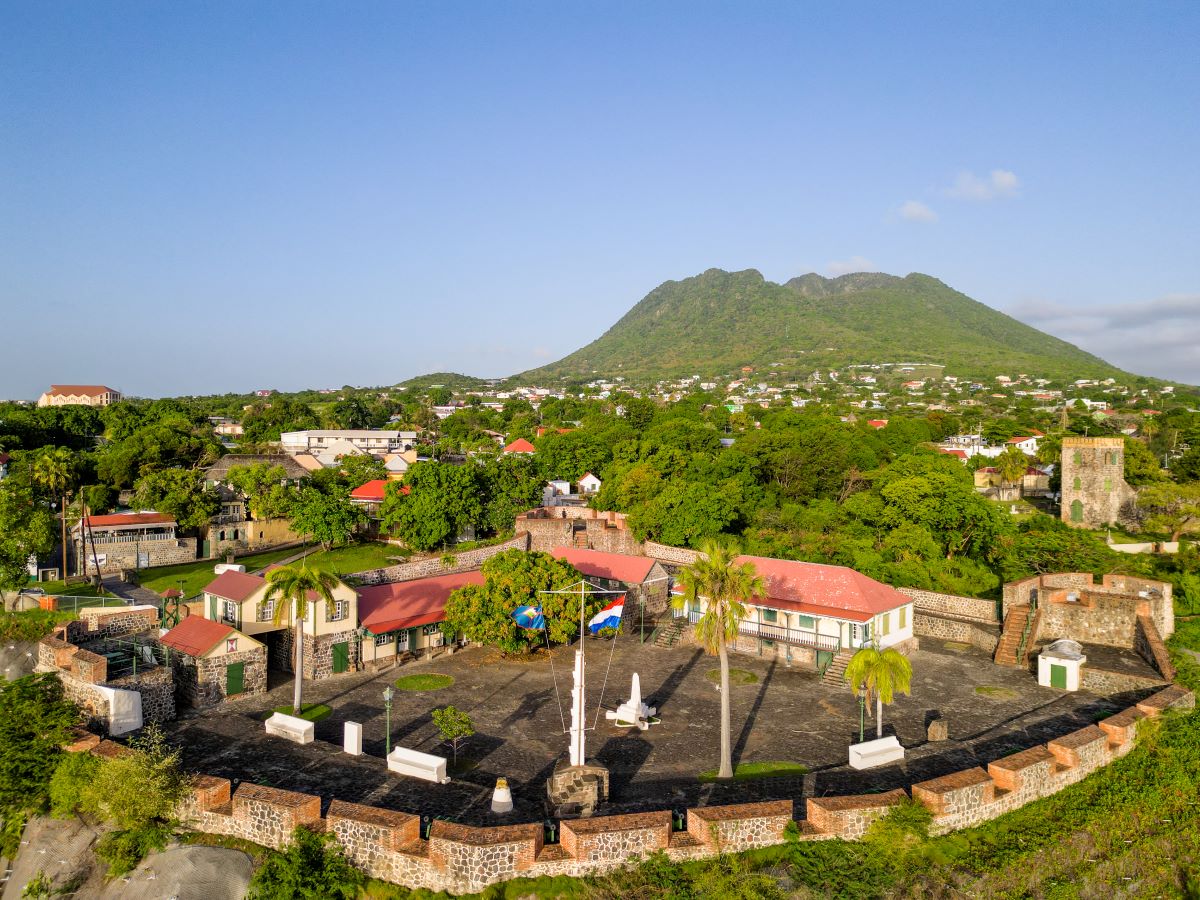
But Statia’s biggest claim to fame is tied directly to American independence. On November 16, 1776, the cannons of Fort Oranje fired a salute to the American ship, Andrew Doria. This was the first official recognition of the brand-new United States flag by a foreign power. It has come to be known as the “first salute.” It was a brazen act that delighted the Americans but swiftly provoked the British, who soon invaded the island. This single act has tied Statia to the US ever since, although US tourists only make up a small part of those who visit this small island. Known as “Statia Day,” the first salute is remembered every year, and the anniversary includes ceremonies and festivals celebrating the island’s role in the birth of the U.S. This year (2026) marks 250 years of this famous moment, and I’m sure there’ll be some great celebrations to mark its anniversary.
As I mentioned before, this small island has remained an amazing time capsule, unspoilt by mass tourism that has ruined so many of its neighbouring islands. The main town of Oranjestad is full of beautiful old wooden buildings, which are slowly being restored. I would highly recommend a walking tour around here. The history is just incredible.
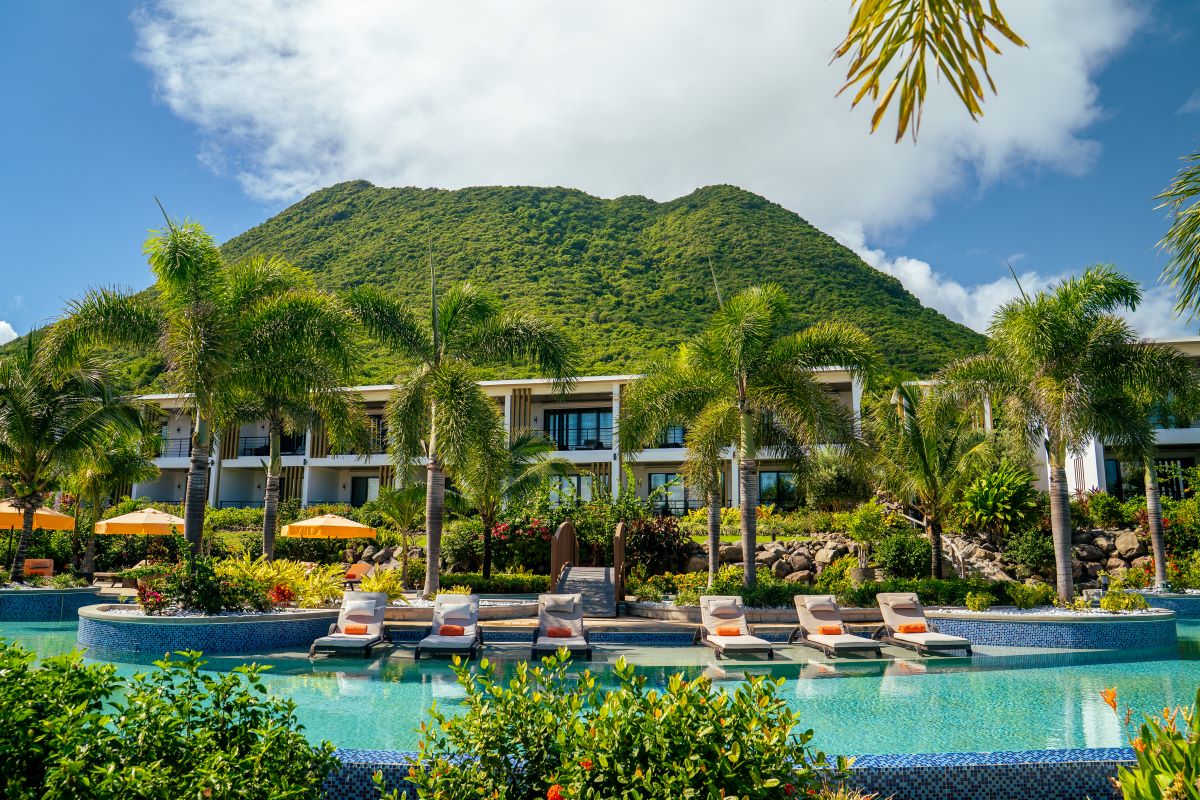
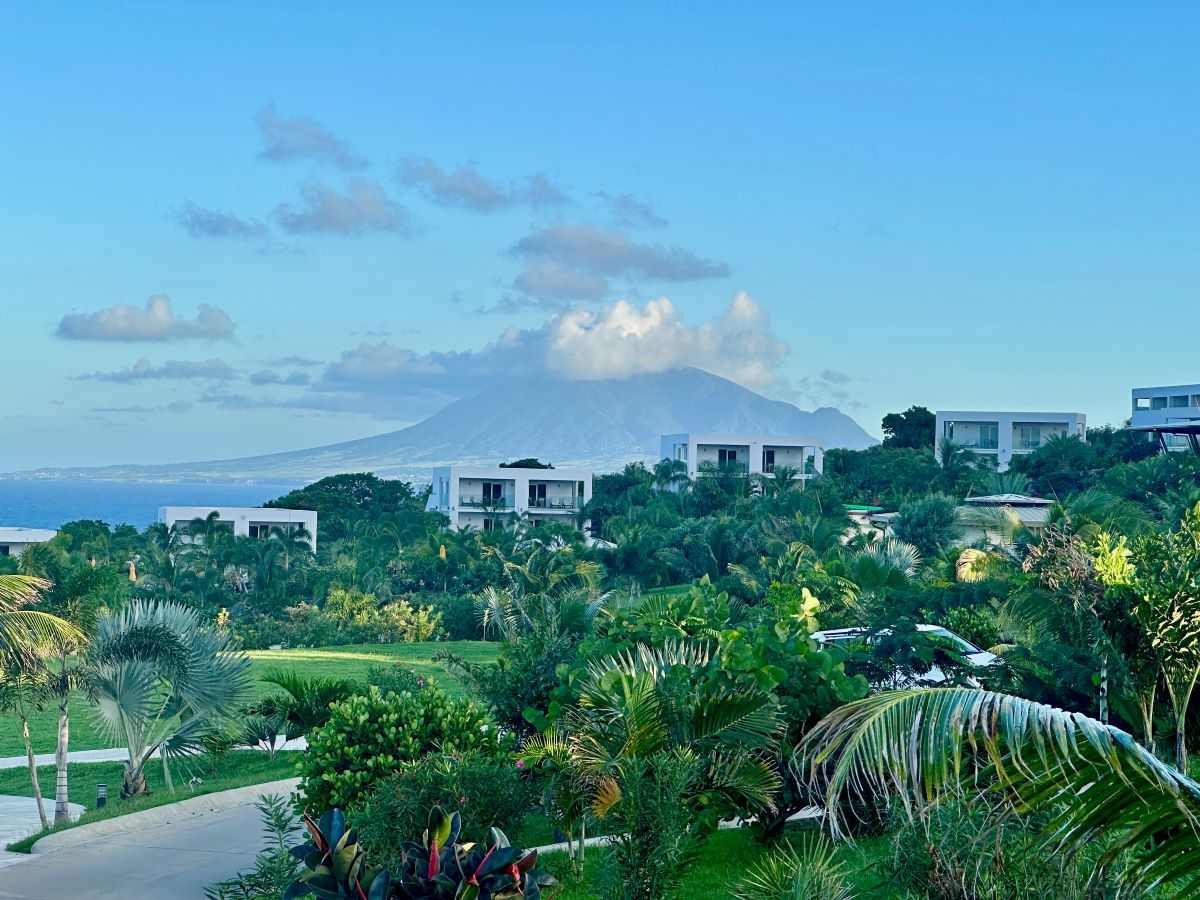
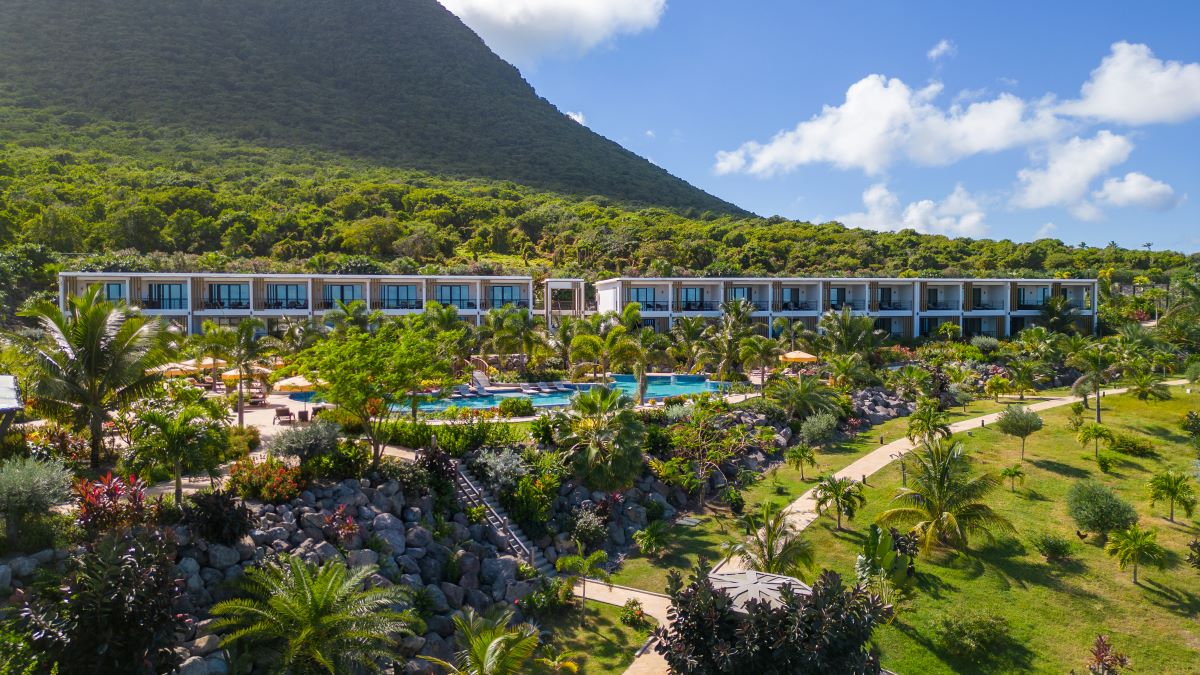
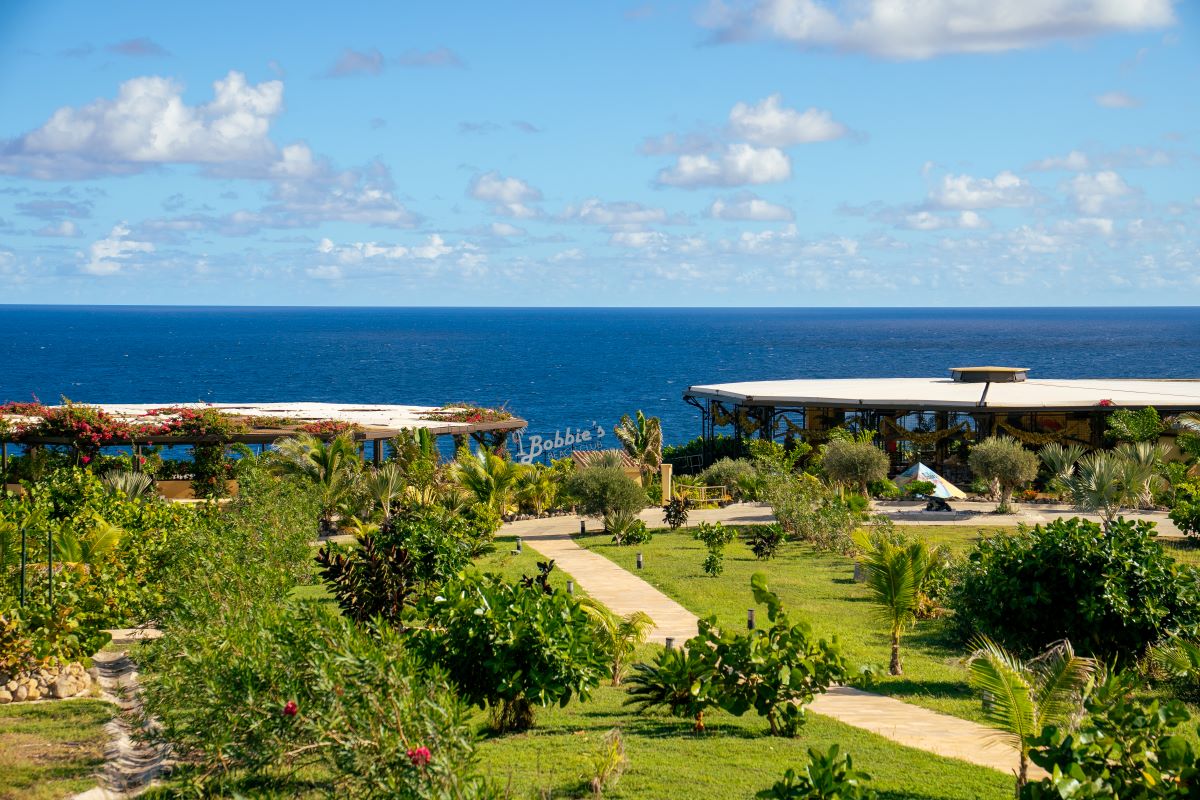
There are only a few hotels on the island, as well as some guest houses. I was staying at the largest hotel, Golden Rock Dive and Nature Resort. Compared to many of the resorts I often visit in Asia, its sprawling 40-acre site featuring 75 luxury rooms seems massive, but once you get there, you realise that it has a real family charm. Golden Rock sits on the side of a hill with the local volcano as its backdrop. It’s on the eastern side of the island with dramatic views looking over the Atlantic. Most of its rooms sit close together at the top of the hill, including reception, the main swimming pool, and at the time I was there, its only restaurant and bar. So even though it’s set in this huge 40-acre site, you don’t really need to visit most of it, but of course, this gives you a lot of space if you need it. During my stay, I often saw guests sitting in remote parts of the site enjoying a lovely, secluded drink or a picnic. I visited out of season, so the resort was very quiet, but I think even if it was full, there would be enough space for everybody to find a little bit of solitude.
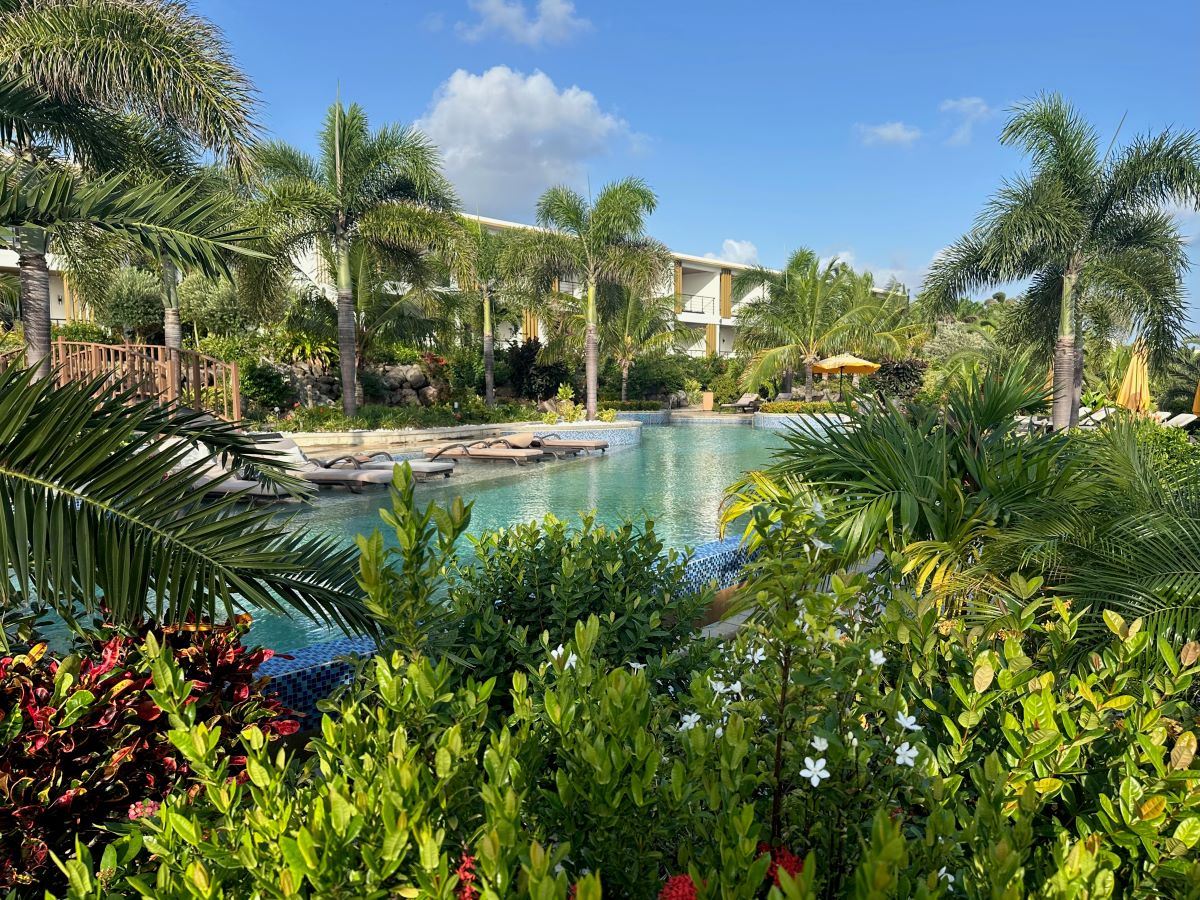
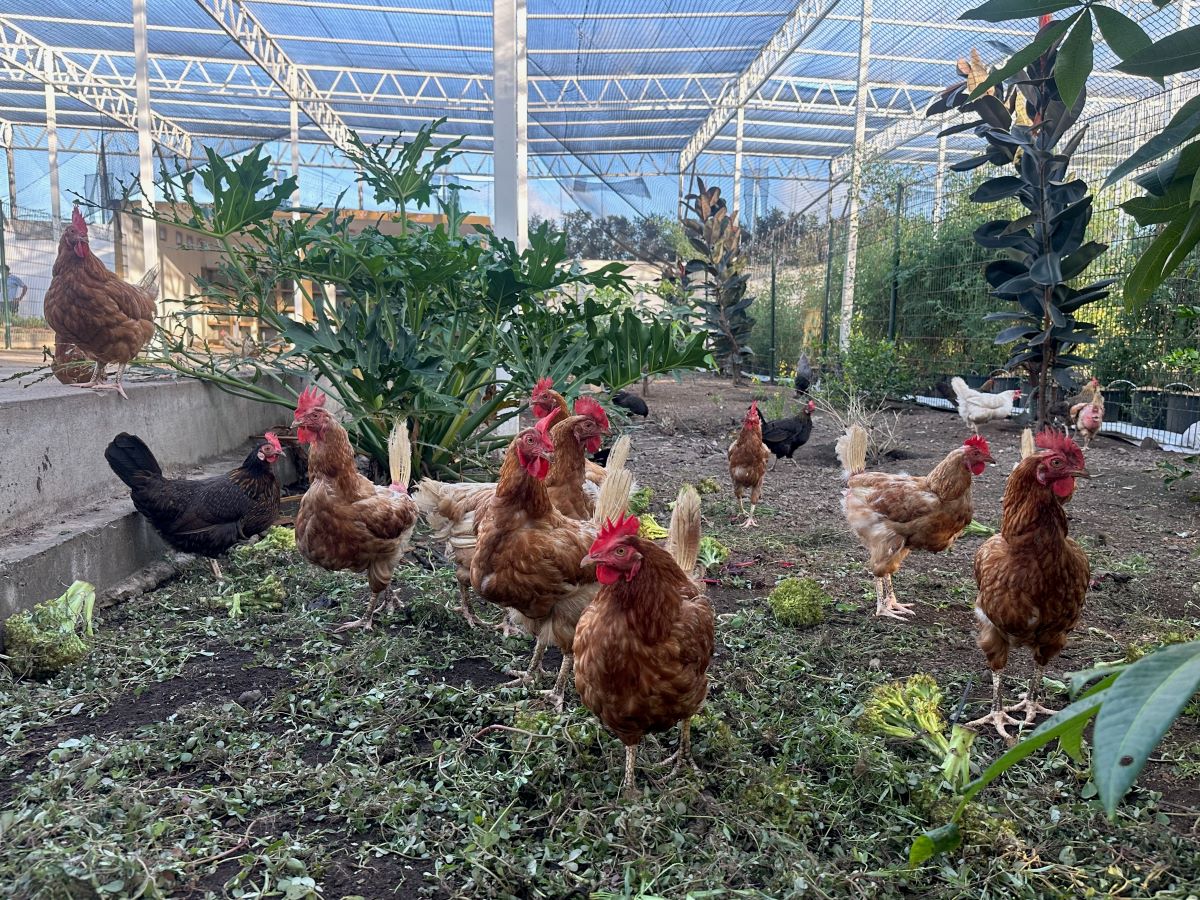
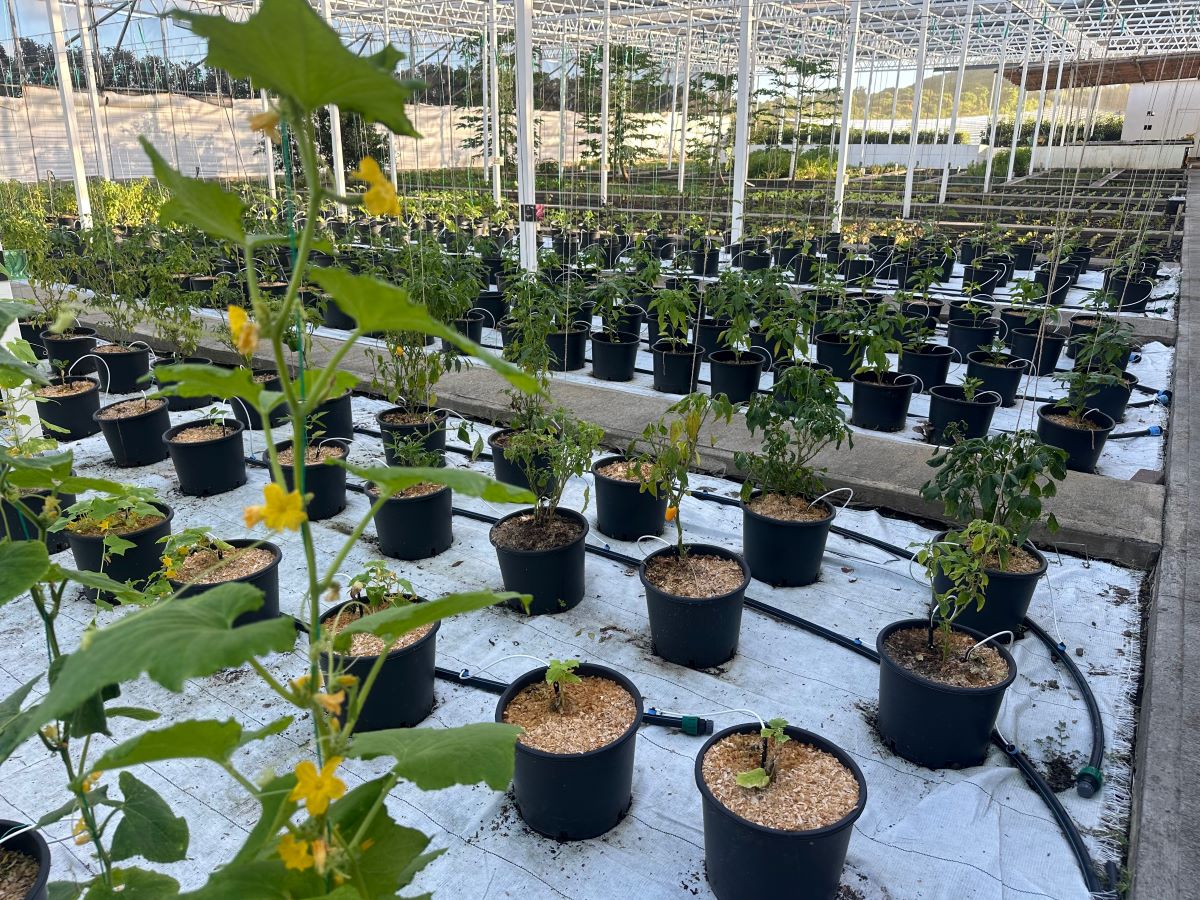
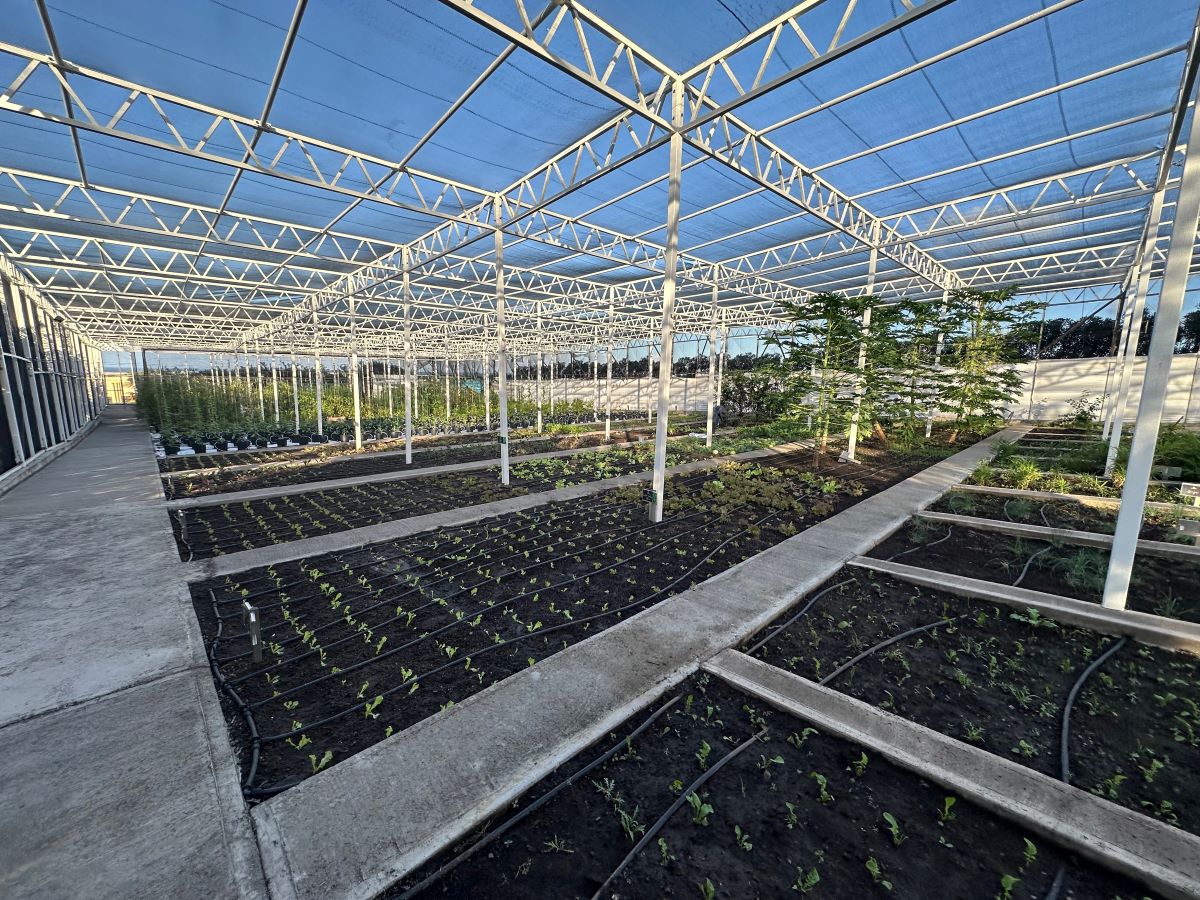
The resort is brand new, only opening in 2021, and it looks it; everything is shiny and polished. But the way they seem to care for everything, I think it will look like that in another 15 or 20 years. What about its eco credentials? I’m always a bit dubious of somewhere that calls itself “eco,” but Golden Rock has been recognised with a Green Globe certification and the Green Key Award for excellence in sustainability. There is a huge solar plant that powers the resort, an amazing farm on site that produces much of the vegetables and fruits, as well as quite a few chickens for the freshest eggs you could ever have at breakfast. On top of this, you can drink the water directly from the tap. Yeah, I know, this blew me away—I can’t remember the last time on holiday I could just go up to my tap and get a nice glass of freshwater. They use a reverse osmosis system that takes seawater and allows it to become drinkable. This has got to reduce the amount of plastic by a considerable amount and gets a big thumbs up from me.
The restaurant was a bit more fine dining than the simple affair that most divers I know are normally used to, but the food is absolutely delicious. Sadly, it served fewer local dishes than I would have liked, but there are a few you must try; these include the goat curry and Johnny cakes. Be warned, the portions are huge! Breakfast was always lovely, sitting in the morning sun looking across the beautiful gardens onto the Atlantic. I would always sit outside for this, and on many mornings, I would see some of the resident hummingbirds flicking between the plants looking for their own breakfast. It really makes me feel like the humdrum of daily life back home was a million miles away.
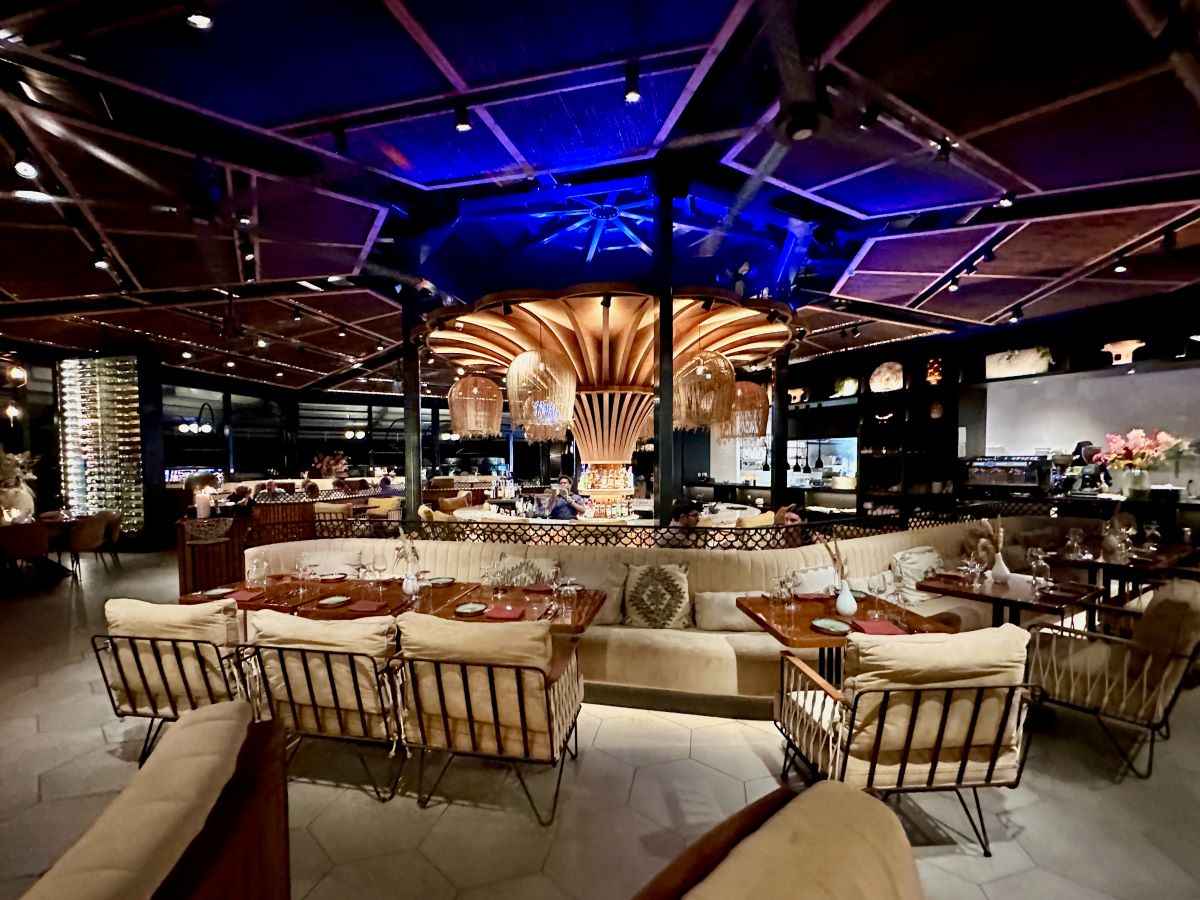
There’s a swanky bar in the middle of the restaurant with incredible staff that can mix you up that fancy tropical cocktail that is a must while you’re in the Caribbean. Although it wasn’t ready on my visit, there is a second bar and restaurant opening soon at the bottom of the hill next to the sea, Bobbie’s Beach Club. I was told that this would be a much more relaxed dining and drinking experience, and they would also have regular music and DJs.
Look, I know this is supposed to be an article about diving, and there’s been none of that so far, but I promise in the next instalment we will get straight to it, so make sure you come back and read it soon.