Open Ocean: a not for profit NGO marine field station in the Red Sea

Providing services for universities, researchers, interns, schools, divers, volunteers and conservationists
Open Ocean was established in 2010 to provide a not for profit NGO field station in the Red Sea for academic facilities and divers in general. Founder Hans Lange could not have dreamt how well received his vision would be.
Things truly took off in 2012 when Hans joined forces with Pharaoh Dive Club and Roots Red Sea to establish a totally self-contained field station near El Quseir at their remote coastal desert outpost surrounded by a phenomenal array of marine habitats and an abundant natural resource to study.
The academic interest in the Research and Education opportunities coupled with the simplified logistics of being a complete package proved a great move for Open Ocean and the academic facilities that have been drawn to the field station.

At El Quseir the focus was on Volunteering with residential programmes providing opportunities to get involved in many aspects of life in rural Egypt, in various fields such as Environmental Conservation, Citizen Science Projects, and Local Community Interactive Relationships.
Open Ocean has welcomed numerous volunteers to the programme from all walks of life and all demographics.

Volunteers are very much hands on with whatever activity is running, including:
Environmental Conservation
Organising beach and reef clean ups; sorting of and collating data on the collected debris; appropriate recycling and disposal of the collections.

Community projects such as maintenance and refurbishment of local schools.

Providing conservation education sessions with practical events for the local children and environment groups.

Contact Open Ocean at info@openoceanproject.org
Citizen Science Projects
There are various ongoing Citizen Science Projects running at Open Ocean and every visitor is encouraged to get involved during their stay. Volunteers take a variety of roles within these projects, collecting data directly through surveys or indirectly collating other participants’ data at the end of the day. If suitably qualified, they can also get involved with establishing and running their own projects.

There are various opportunities to get involved such as Turtle Watch or the Shark Trust‘s survey which are simply reporting your sightings from your dives through to full project developments such as Fern’s Reef and the Sea Grass Survey.
Fern’s Reef
In August 2016, Open Ocean established a virgin artificial reef with sterile substrate to monitor and research the colonisation of the new structure. The lead on the project was Fern and the resultant reef is known as Fern’s Reef.

Contact Open Ocean at info@openoceanproject.org
The structure required bringing in from the shore 500 pieces of fossilised coral bed, formed into a random shaped metre high barrier in a depth of 8 metres with a sand bed and a relatively good tidal flow.
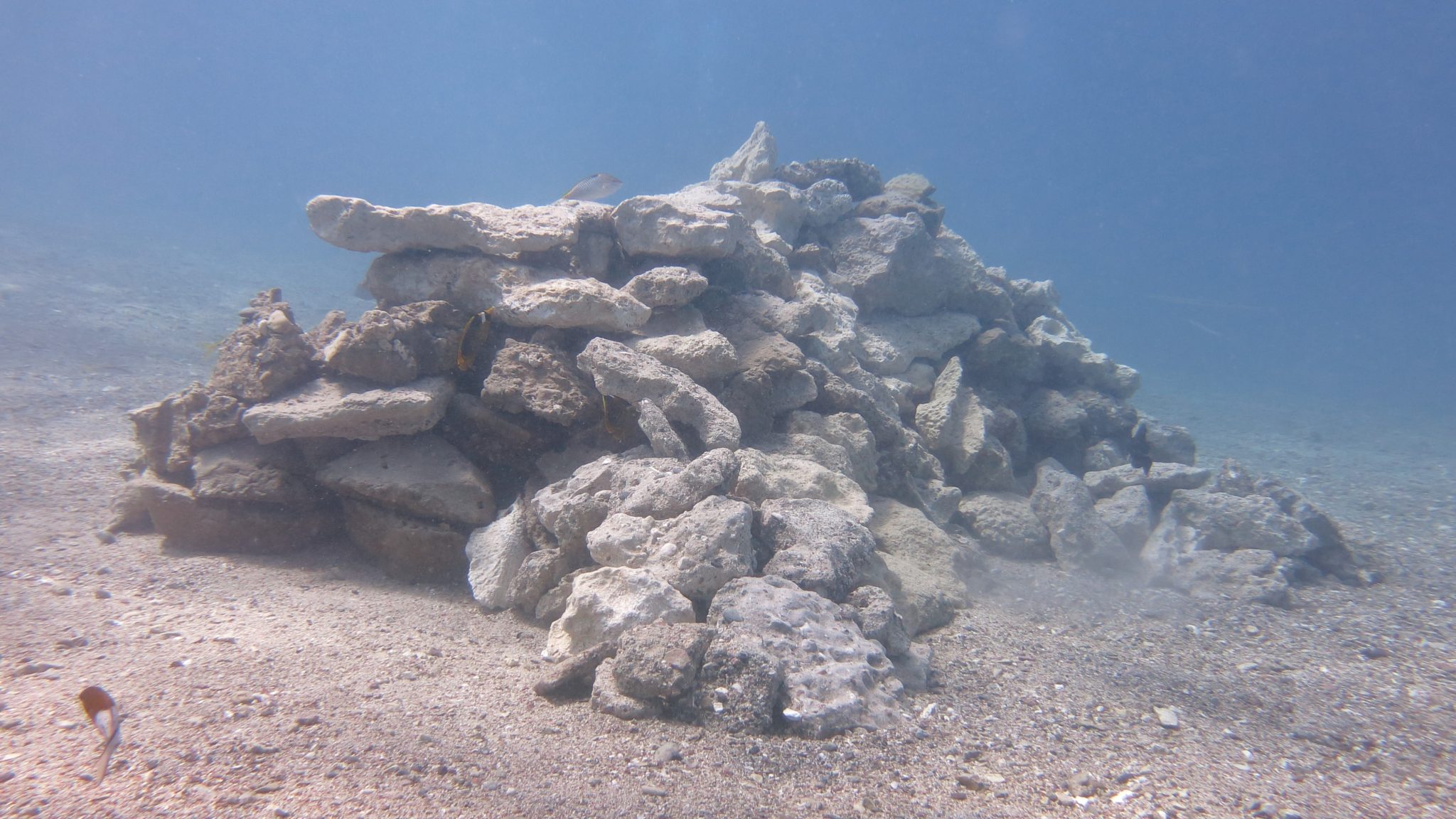
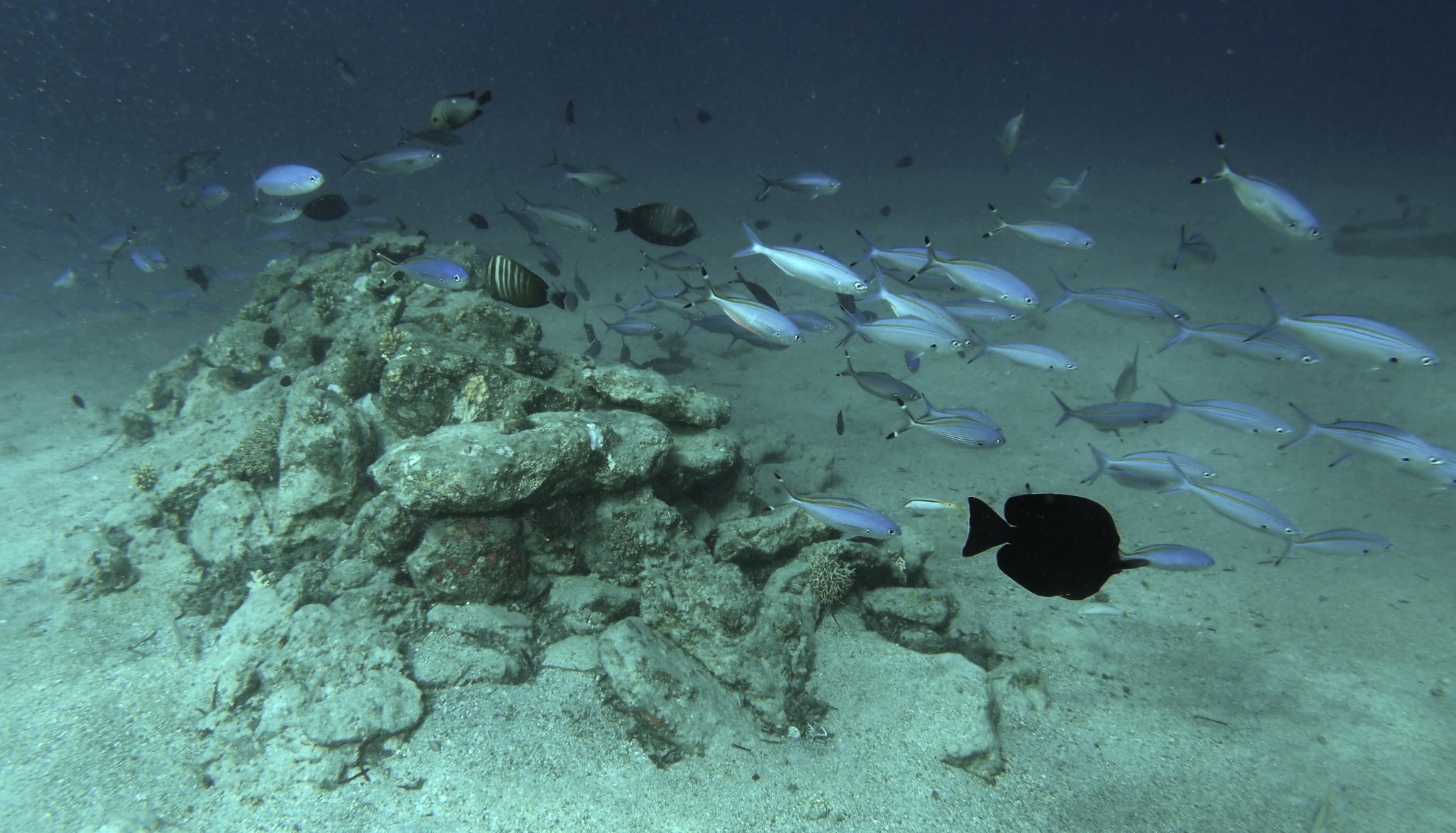
On completion a photo telemetry image was produced to establish a 3D base model record. After just a short period of time, signs of emerging life were noted and after just 6 months there were numerous corals taking a foothold with numerous fish inhabiting different areas of the structure.


This is an ongoing subject of observation and study, one that every visitor takes great interest in as it is now a thriving young live reef. Those with a more scientific outlook also note the distinct changes in topology around the reef, generated by the tidal flow and sand substrate movements. The Open Ocean team are on hand to provide a guided view of the everchanging project.
Contact Open Ocean at info@openoceanproject.org
Sea Grass Survey
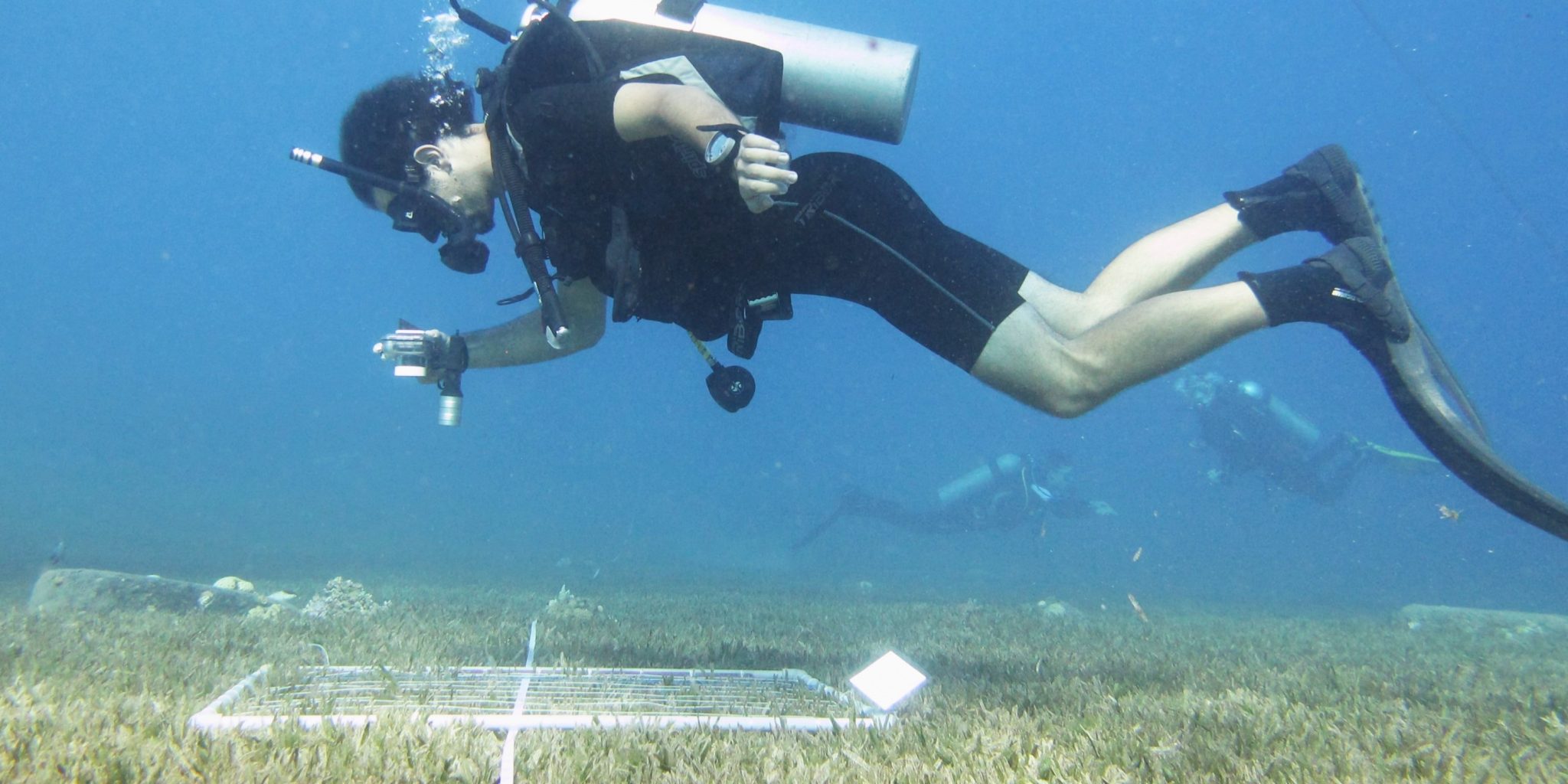
The latest Citizen Science Project has been established by Open Ocean: a Sea Grass Survey. The team noticed that a patch of sea grass had begun to form a small meadow in the bay, which raise several questions for research and study. Why has it appeared? How has it seeded itself? What species of grass and algae are there? What aquatic life will make use of the new habitat? And so much more.

Two volunteers were assigned the task to establish the sea grass project; Gerald Taylor and his 13-year-old son, Finlay. Both had the prerequisite diving skills – Finlay in fact, despite his age, came to Roots with 100dives already under his belt.

A month-long exercise at Roots would give Finlay, who has an exceptionally keen interest in the underwater world, real life experience living and working in a foreign country, and an understanding of marine biology project work. Coupled with the project, Finlay worked with the marine biologists at Open Ocean carrying out fish and coral ID and measuring / monitoring techniques.
The initial objective of the project was to measure the perimeter / extremities of the sea grass within the bay and to gain an understanding of its shape, distribution and density.

Contact Open Ocean at info@openoceanproject.org
Together Gerald and Finlay formulated by which they were measure the perimeter of the sea grass. They then undertook land-based measuring techniques using 50 meter transects and quadrats, with the full knowledge that stretching a tape underwater to a distance of nearly 50 meters would have its own complications. Armed with their method, Gerald and Finlay set out to map and record the area taking a fixed point location to set the datum.
If you would like to follow the process that they adopted and see how the project developed, you can read Gerald’s summary here.
Meanwhile, alongside the volunteering activities, the grassroots Research and Education activities at Open Ocean have a very impressive, ever growing academic client list with numerous top facilities making regular visitors for both field courses and research projects.
That’s due to Open Ocean’s aim to satisfy researchers’ needs and requirements by providing and ideally located field station with modern research facilities as well as advice and support in administrative and organisational matters.

Contact Open Ocean at info@openoceanproject.org
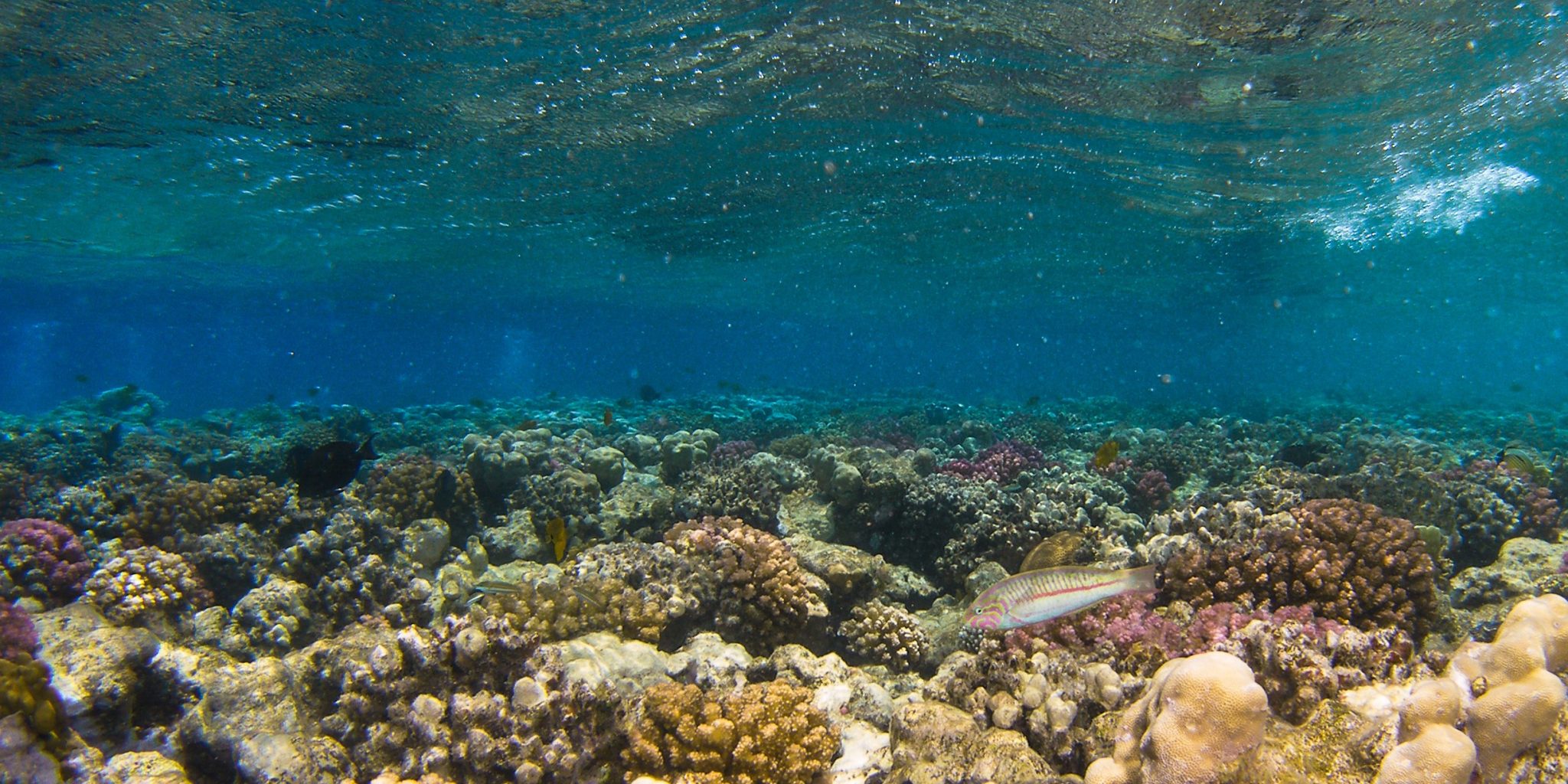
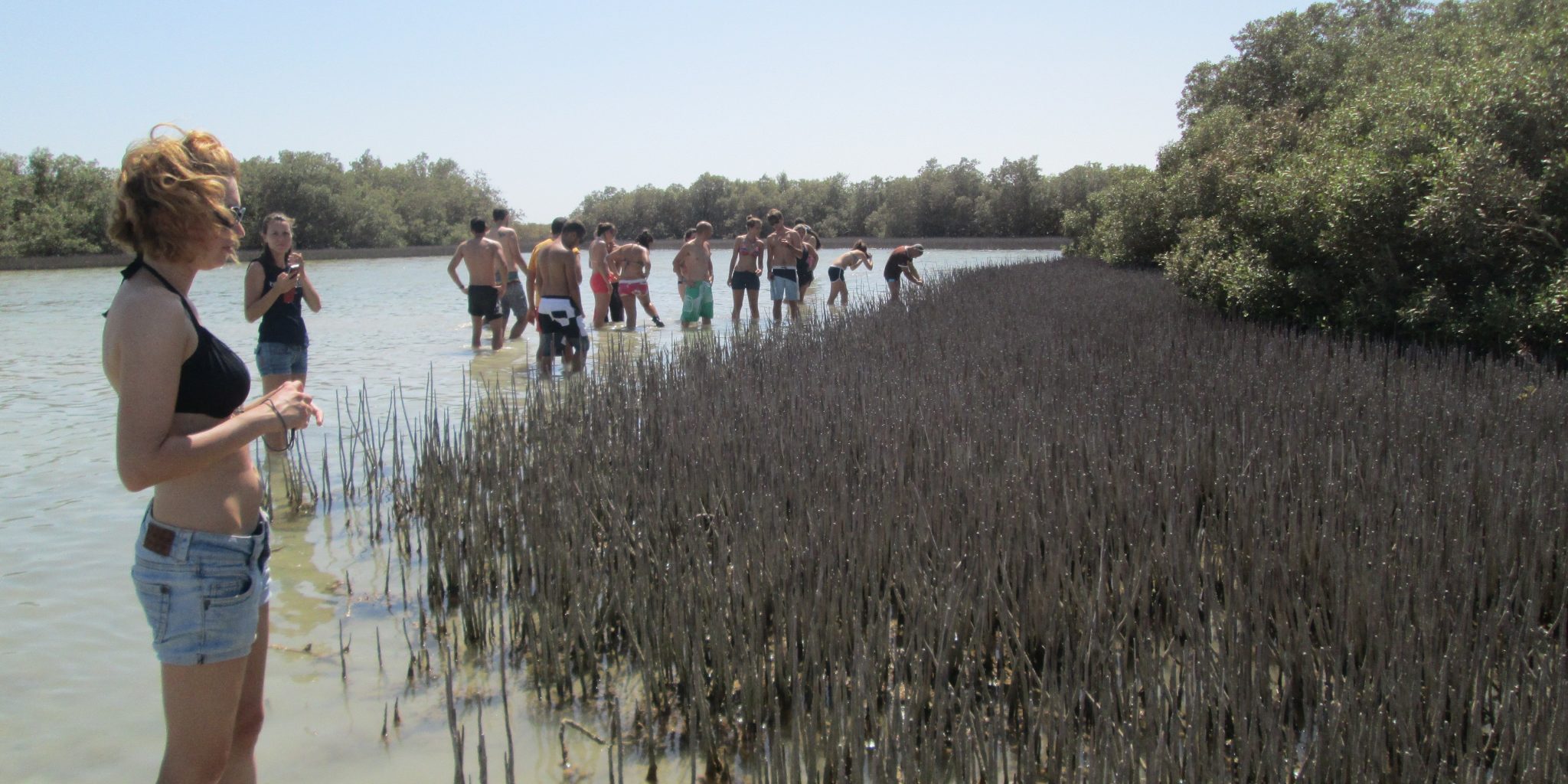
The Open Ocean Field Station offers direct access to the Red Sea at both the house reef, Abu Sauatir, and nearby dozens of reef sites, along with other local habitats of interest including mangroves, sea grass meadows and fossil reefs.
Find out more about what is available at Open Ocean Field Station with a short presentation here.
Research Opportunities
It’s not just the field study groups that frequent the field station; it’s an ideal location for individual study and research projects. here are a few examples of unique studies.
Micro Plastics
Lucy Deans took up a six month placement with Open Ocean in 2016 during which time she completed an amazing amount of conservation work with the assistance from the volunteers and staff. In addition to her paper on microplastics in the sea bed, she endlessly battled with debris from land and sea, collecting, sorting and collating data for her own and other projects.


Contact Open Ocean at info@openoceanproject.org
Camera Drops
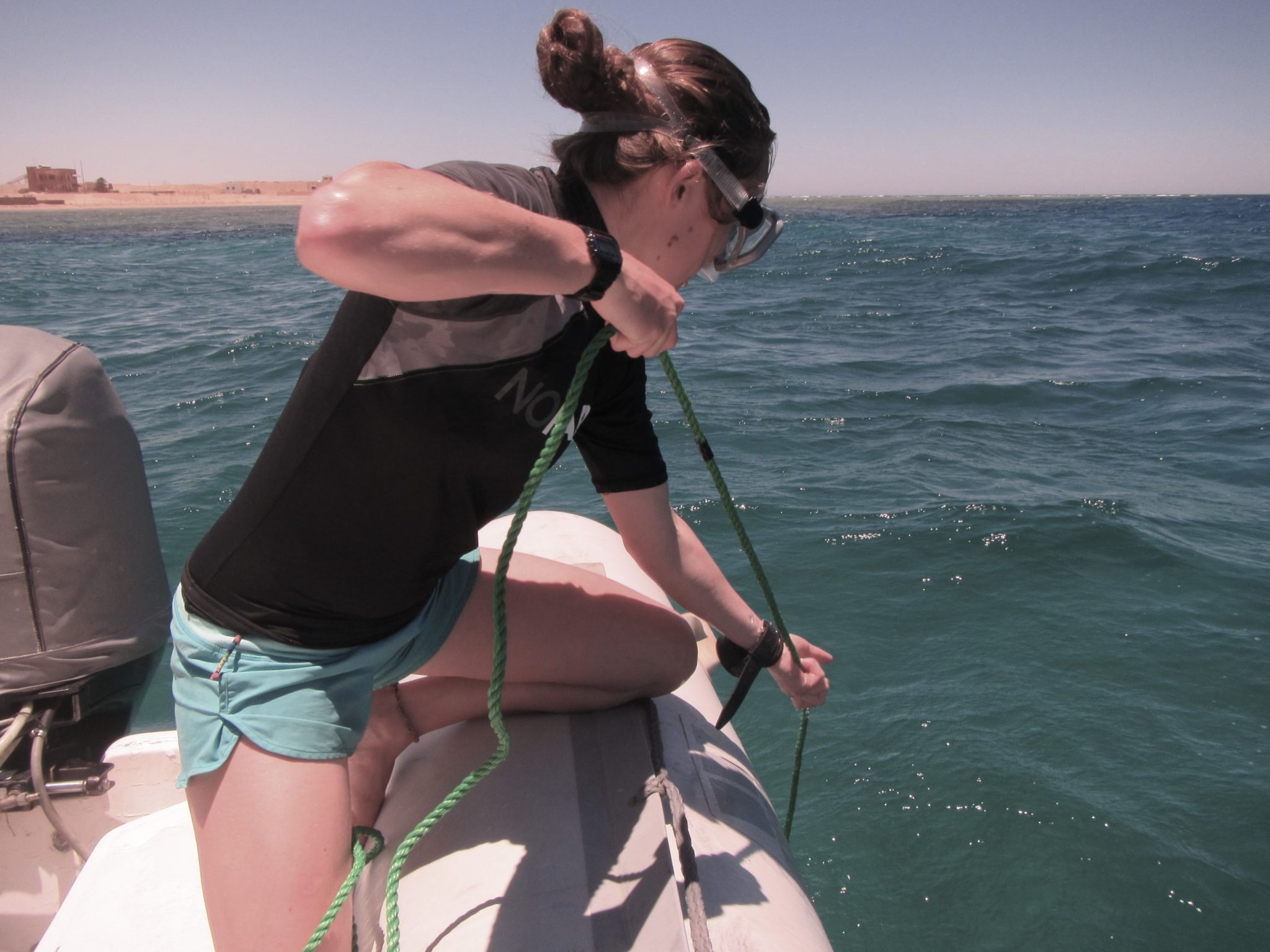
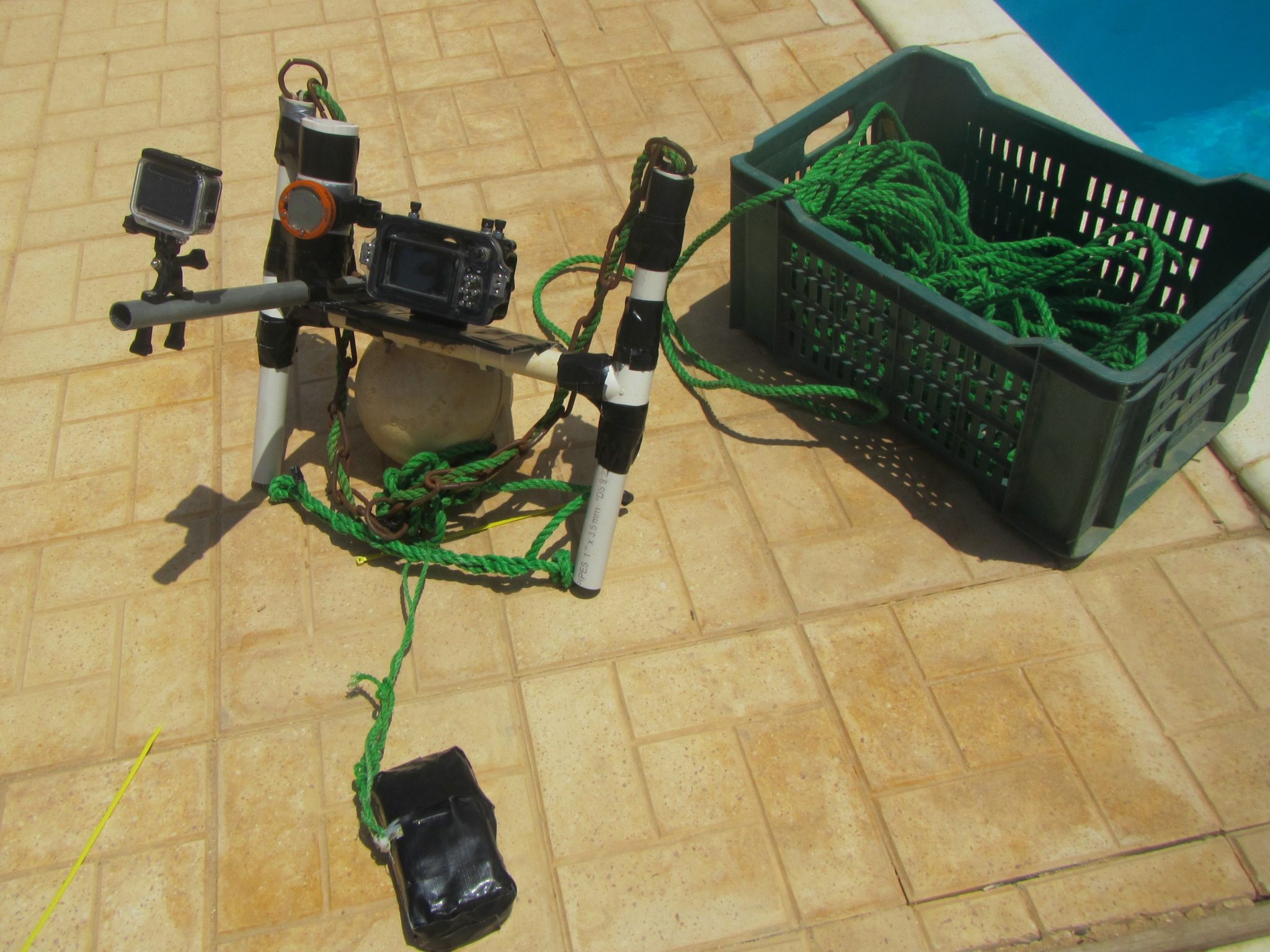
The vast majority of study of the oceans is coastal exploration of the shallow depths from the surface to 20m. Over the past few years the Glasgow University students having been completing summer project work and have been completing camera drops extending this study from 60m to 100m. It’s another example of the range of opportunities that are available from the Open Ocean Field Station.
Contact Open Ocean at info@openoceanproject.org
National Geographic Octopus Study
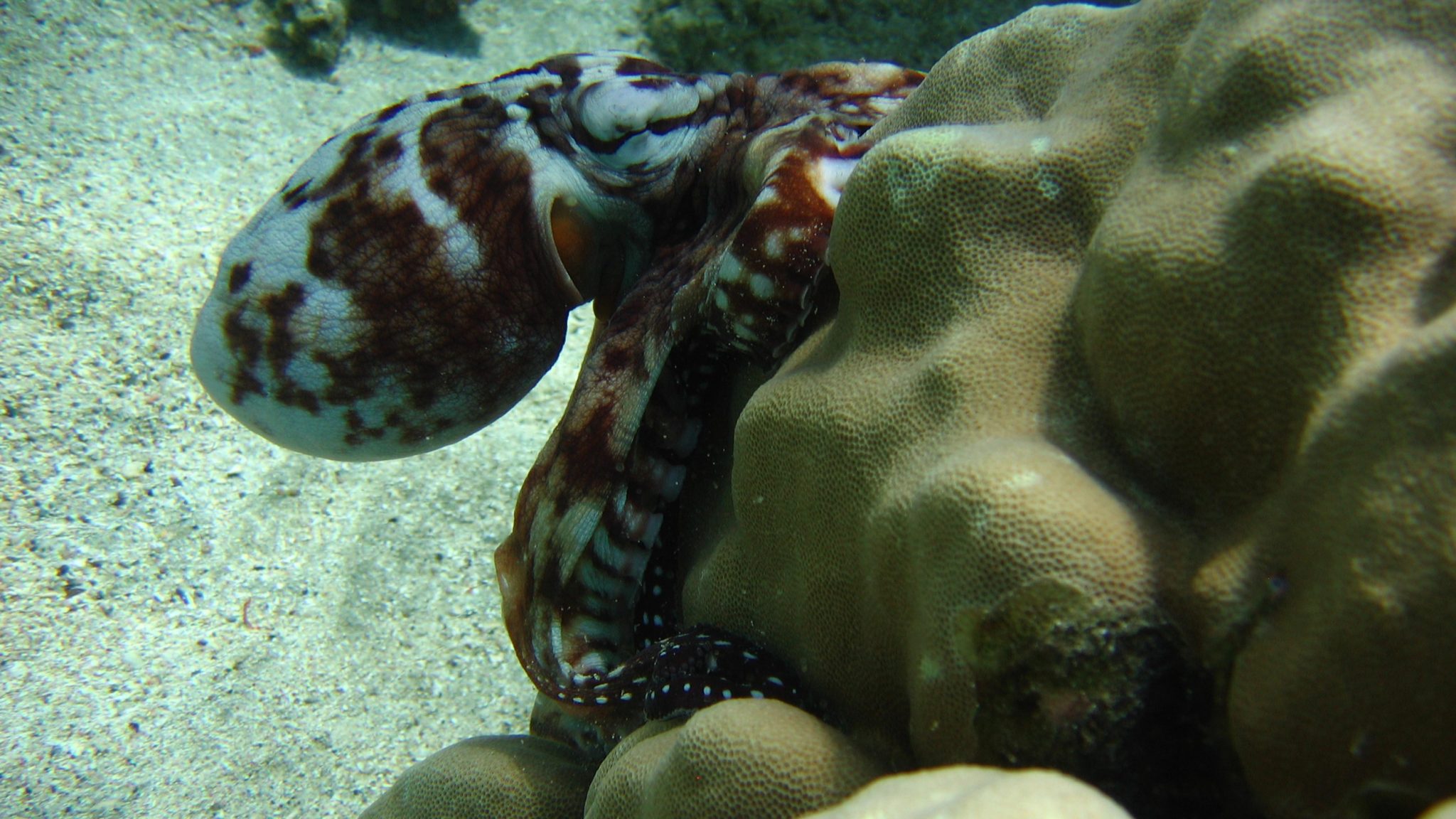
In 2019, the Open Ocean Field Station provided Eduardo Sampaio the perfect Red Sea for his continued National Geographic funded research on cephalopod behaviour, cognition and neuroscience. His team spent 10 weeks on location recording the incredible behavioural repertoire, camouflage capabilities and complex cognition. View Eduardo’s publication.

Survey and Marine ID Courses
In recent years there has been a steep increase in school participation at Open Ocean generally taking advantage of the Open Ocean Survey and Marine ID Courses giving the students insight into the spectacular aquatic environment. The courses can be conducted for snorkellers or divers.

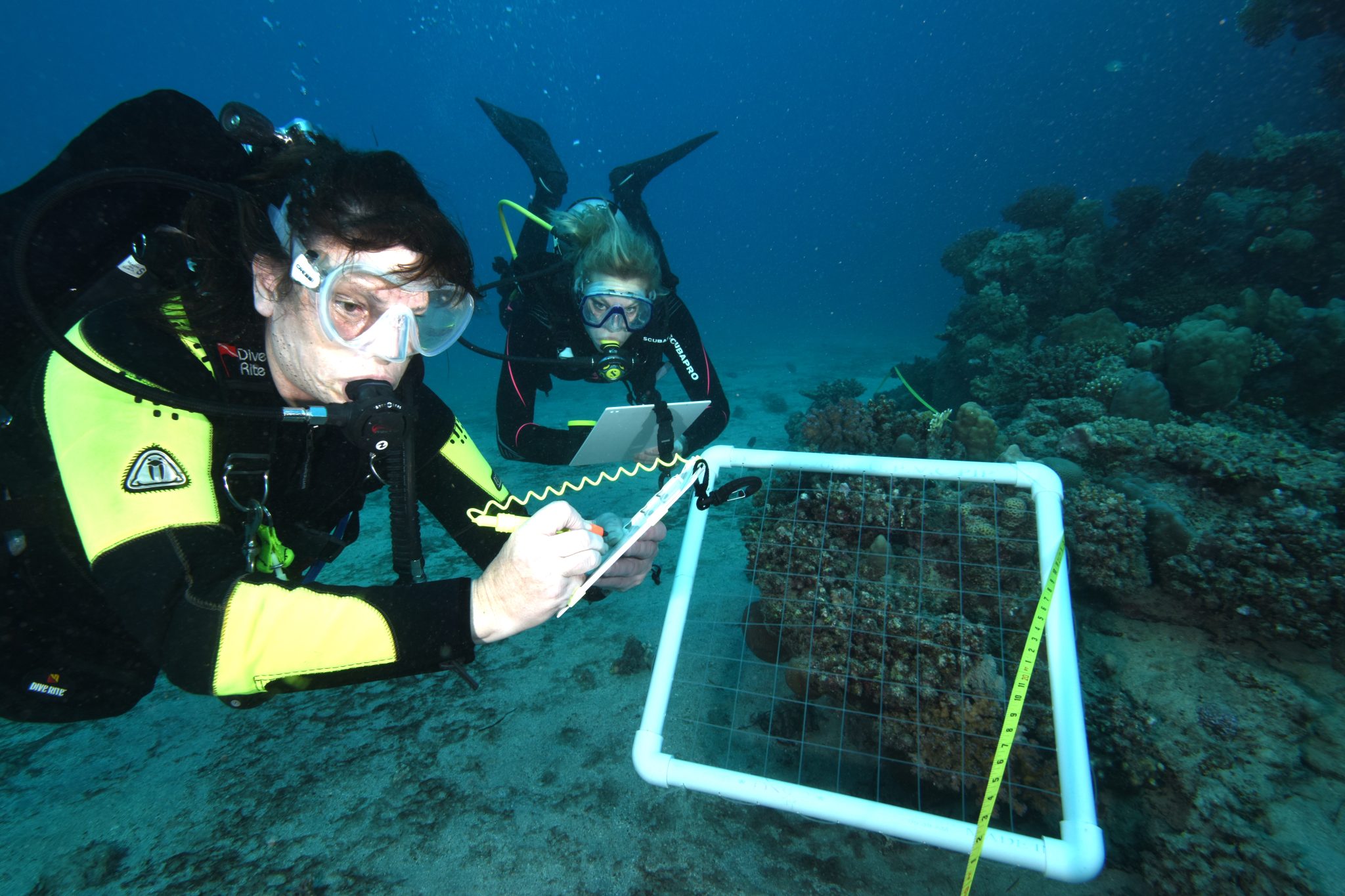
There is a range of Open Ocean Marine ID Courses for all ages and levels, whether it is young children beginning their voyage of discovery or experienced marine enthusiasts.

Contact Open Ocean at info@openoceanproject.org
If you are looking for a new expedition base for your school with an educational background, view our Open Ocean Prospectus for schools here.
Meet the Team
The engine room of Open Ocean are the enthusiastic dedicated team who simply love to talk about the wonders of the marine environment, particularly the Red Sea at El Quseir.
Resident Marine Biologist marc leads the team at the station, ably supported by our Intern Tierra, who provides great support.

Alongside is Sammie who takes care of the volunteering activities and is liaison with the local community. Currently Sammie is working with Rose who is out volunteering while developing her diving skills and certifications. Rose has completed her RAID Rescue and is and is about to start the RAID Divemaster.

Contact Open Ocean at info@openoceanproject.org
They’re not alone though; our consultant Marine Biologist, Dr Deb with her 12 years of field courses at El Quseir, provides vastly experienced guidance and support.
If you are interested in coming out to be a part of the Open Ocean team, here is what just a couple of volunteers have to say:
Contact Open Ocean at info@openoceanproject.org