Protecting England’s Wreck Sites: Site Security Protocols Launched
The security of heritage assets is of the utmost importance; a monetary value cannot be attached to the significance of a site or its associated artefacts. This statement is true for both on land and underwater sites.
The policing of underwater sites however, is often a trickier affair, with out-of-sight often equalling out-of-mind. Unfortunately, a site’s underwater location does not stop thieves from stealing or damaging artefacts.
To aid in the protection of our underwater cultural heritage, a selection of sites of historical, artistic and archaeological importance have been protected by law under the Protection of Wrecks Act 1973 (https://historicengland.org.uk/listing/what-is-designation/protected-wreck-sites/). Historic England manage these sites on behalf of the Department of Digital, Culture, Media, Digital and Sport (DCMS), and a team of Licensees, effectively voluntary custodians, play a key role in their ongoing management.
The licensees work tirelessly on the wrecks and have had a special relationship with them since the very first days of the Protection of Wrecks Act. If it wasn’t for them, many of the sites would still be unknown and we would have very little knowledge of many of the existing sites. Their presence on the sites acts as a deterrent to anyone thinking of accessing the sites illegally and their monitoring ensures that the sites are understood and enjoyed by many people.
To further aid in the physical protection of these significant sites, Historic England funded a partnership project between the Protected Wreck Association (PWA https://protectedwrecks.org.uk/) and MSDS Marine (https://msdsmarine.com/). This national-level project has seen the development of Site Security Plans for protected wreck sites. The model developed is based on the highly successful model developed by Ron Howell and the SWMAG team who are Licensees for the Salcombe Cannon and Moor Sands protected wreck sites.
A Site Security Plan is the end result of a process which assesses how secure a site is from illegal access. By completing two very easy to use but highly specialised forms, the site is given:
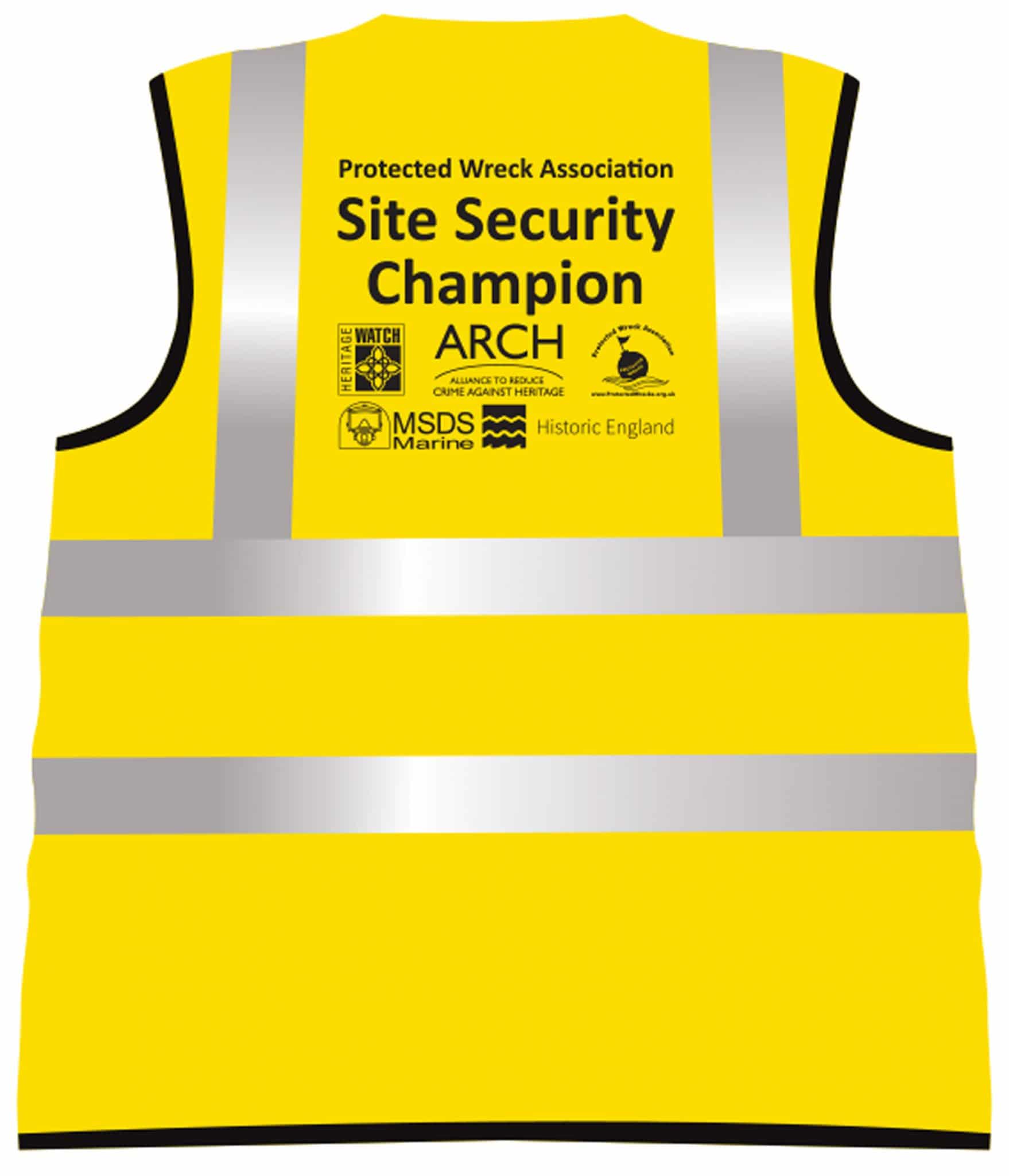
- Its own Site Security Champion
- Its own Heritage Crime Officer in the Police
- A level of risk of heritage crime occurring to enable appropriate response to be put in place and to allow targeting of resources
- Quick win opportunities to decrease its level of risk
- A protocol for the licensees to follow every time they access the site
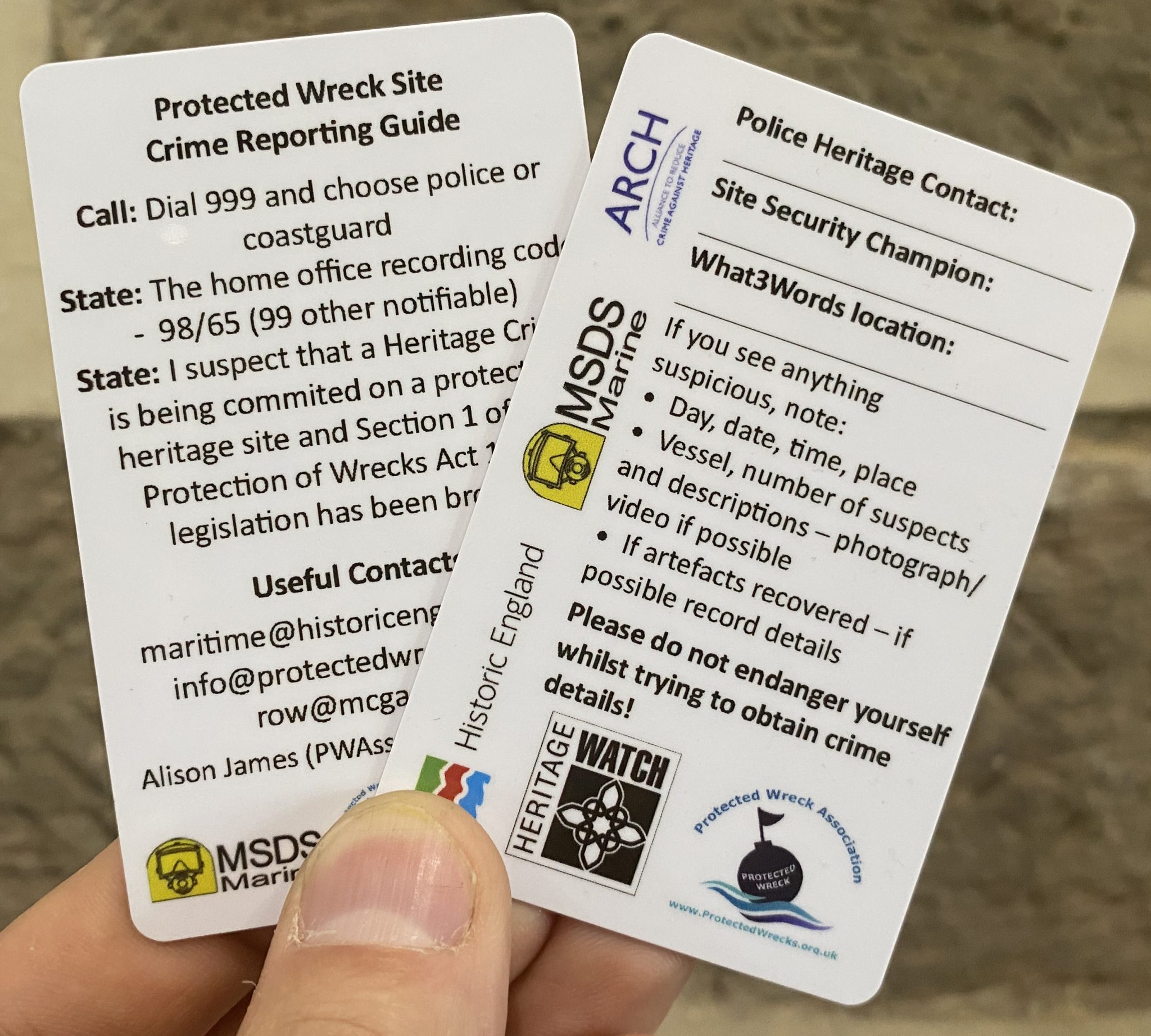
- Specialist guidelines to enable crime reporting to enforcement authorities
- A toolkit consisting of: A High Vis vest, to help identify the Site Security Champion to the public / authorities and pocket-sized card, summarising guidance on reporting crimes.
The project team will be supporting Licensees and their teams in completing a Site Security Plan and Risk Assessment for each Protected Wreck Site. MSDS Marine will be contacting Licensees inviting them to book a slot to work through the process. Individual Licensees and teams can also follow the guidance to complete the documents on their own with MSDS Marine on hand to support as required.
The Site Security Forms are accessible on the Protected Wreck Association website, in the members only area https://protectedwrecks.org.uk/members-area/site-security/ . If you are not a member and would like to join, this is an excellent time, as its free!
Assessing the security of a wreck site will inform Historic England of any sites which are at a high risk of heritage crime, and aid them in the future management of these sites. It will assist Licensees in highlighting areas for concern and in turn offer positive actions that can be taken to reduce the threat. It is hoped that the scheme will help put practical measures in place to ensure that the sites are protected from illegal activity in future.
Alison James, Project Manager at MSDS Marine said: “I spent ten years working at Historic England managing England’s protected wreck sites and at times was incredibly frustrated by being unable to ‘police’ the sites. The model we have developed is based on the highly successful model developed by SWMAG which has been shown to work on a number of occasions. We hope this will make a real difference to the sites and the teams that work on them.”
Professor Mike Williams, Chair of the Protected Wreck Association said: “We are delighted and grateful that Historic England has funded this project. It will enable us to undertake valuable work to support our members, who are dedicated volunteers protecting our maritime heritage.”
Hefin Meara, Marine Archaeologist at Historic England said: “We are pleased to support this important project and recognise the enormous contribution that licensed volunteer divers are making to help protect England’s fascinating marine historic environment.”
For more information please visit www.ProtectedWrecks.org.uk , www.MSDSMarine.co.uk, and www.historicengland.org.uk.