Women Divers Hall of Fame Recognises Cody Unser

For anyone who has lost the use of their limbs, scuba diving can bring a special sense of freedom.
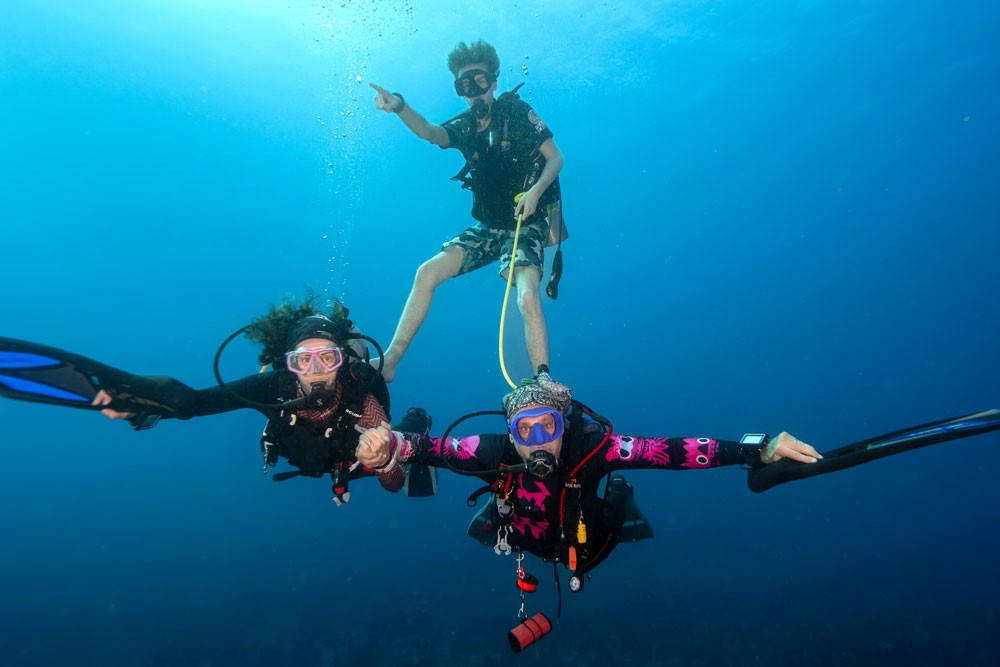
29-year-old Alberquerque-based Cody Unser has made it her mission to bring paraplegics like herself the opportunity to experience scuba diving.
“When you’re down there, you’re no longer seen as disabled,” Unser said. “You feel a self awareness – something that lets you know you’re OK.”
Her work through the Cody Unser First Step Foundation, which she started with her mother, Shelley Unser, in 2000, and the veteran-oriented project Operation Deep Down – which begun in 2005 – has brought her recognition from the Women Divers Hall of Fame.
Unser will be inducted into the Women Divers Hall of Fame in April at a ceremony in New Jersey, making her the first disabled diver among the 200 members of an international organization that honors women who are pioneers in their field, have achieved a world record or made a significant impact in dive-related safety, education and leadership.
“This is huge for the disability community,” said Shelley Unser.
‘Sister of the Sea’
Joan Forsberg, board chairman of the Women Divers Hall of Fame, said they were proud to give Unser the honor she deserves.
“Cody has qualifications in so many of our criteria. She’s taken her disability and turned it into an ability – and who can’t applaud that,” Forsberg said.
She said the organisation typically accepts only six women each year and the selection process is highly competitive.
“We’re really looking for leaders,” Forsberg said. “That’s one of the most important criteria.”
For Unser, becoming a “Sister of the Sea” as the Hall of Famers call themselves, is a recognition of her role as a woman in a historically male-dominated sport and as a representative of the disability community.
“I feel very honored to be a part of this. A lot of these women are super smart, they’ve done so many things,” said Unser.
Unser was paralyzed from the chest down at age 12 by transverse myelitis, a neurological disorder caused by inflammation of the spinal cord.
Life-changing impact
Through her foundation Unser has worked to raise awareness, foster medical collaboration and develop programs for paraplegics. She worked with camps for children with conditions like spina bifida and cerebral palsy to enable them to experience diving. Unser also helped initiate a 2011 study in the Cayman Islands in which she participated along with several paralyzed veterans that looked at the effects of diving on those with paralysis.
Privately funded, the study showed some divers with disabilities experienced improvement in sensation, tone or motor function, according to Dr. Adam Kaplin, neuroscientist and principal psychiatric consultant to the Johns Hopkins Department of Neurology, who was the lead investigator for the study.
Kaplin wrote a letter recommending Unser for the Hall of Fame.
“Cody’s contributions have had a life-changing impact on thousands of handicapped individuals she has personally touched by organising, developing and promoting the role that diving tailored for the disabled can play in safely liberating them from their physical constraints,” Kaplin wrote.
Unser, who has been studying for a master’s degree in public health at George Washington University in Washington, D.C., was in Albuquerque this month to take part in the Feb. 13 scuba day at the ABQ BioPark Aquarium. She gave a presentation on her work with the foundation. Her next goal is to raise funds to bring children who have dived in a swimming pool to the ocean.
Unser also did a demonstration dive in the aquarium’s shark tank with Women Divers Hall of Fame member Susan Kayar, a biologist and science writer who has done dive research for the U.S. Naval Research Institute and the National Institutes of Health.
Source: www.abqjournal.com