Turtle strandings on the rise this winter

An unusual number of young turtles have been washing up on UK and Irish beaches due to stormy conditions, according to news from the Marine Conservation Society. And their advice is, if you find a turtle, do not return it to the sea – report it.
Since November, a number of turtle strandings have been reported to the Marine Conservation Society, and Marine Environmental Monitoring, which maintains the database of UK and Irish turtle sightings.
In total, thirteen turtles have been reported: twelve loggerheads and one rare Kemp’s ridley turtle, all relatively small juveniles between 20-50cm in shell length. This is an unusually high number.
Most strandings have been in the south-west, with the furthest north being Anglesey. One was also reported on the west coast of Ireland in County Mayo.
Rod Penrose, who leads Marine Environmental Monitoring, said: “Although we see the most hard-shell turtle strandings and sightings between December and February, this year, we’ve had more than usual. They’re mostly juvenile or injured adults, so it’s thought that they struggled to fight the strong winds and currents of severe storms in their native waters of the US and Caribbean, where they were carried offshore into the Atlantic Gyre before ending up in cold UK waters”
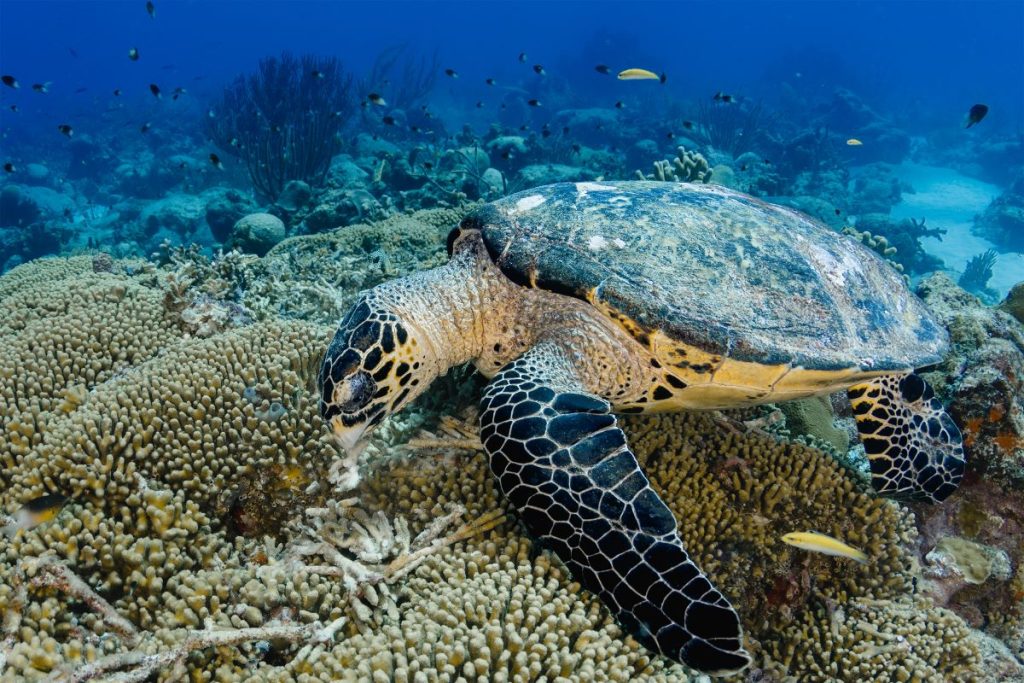
Hard-shelled turtles, like loggerheads and Kemp’s ridleys, go into cold water shock in our chilly winter seas and do not survive for long periods in these conditions.
Of the turtles reported this season, four have been rescued and taken to specialist facilities to be rehabilitated and hopefully released in the future. Every effort is made to collect every individual found, so they can either be rehabilitated if alive, or examined, to understand what led to them arriving on UK and Irish shores.
The Marine Conservation Society asks anyone to report jellyfish and turtle sightings as part of its Wildlife Sightings programme.
Amy Pilsbury, Citizen Science Programme Developer at the Marine Conservation Society, said: “It’s important that we gather data on turtle sightings and strandings, as well as other marine life such as jellyfish, to build a picture of our seas. This vital information about our ocean’s inhabitants, and any changes in their frequency and whereabouts, contributes to scientific research which helps us to find solutions to protect our seas.”
What to do if you find a turtle
If you do find a stranded turtle, DO NOT put it back into the sea. It will be in cold shock and will need help. Instead, wrap the turtle in a damp towel and set it on its belly somewhere safe and sheltered, raising its back end slightly to allow any water to drain from its lungs.
Be sure to report the sighting as soon as possible so that the turtle can be taken to a specialist facility where it can hopefully recover or be treated.
For more information on what to do if you spot a turtle, download the Turtle Code.
Report turtle and jellyfish sightings to the Marine Conservation Society at www.mcsuk.org/what-you-can-do/citizen-science/sightings
Header image: Juvenile Loggerhead turtle. Found in Helston, Cornwall. Photo: Mike Pearson