Tony Wu tops Wildlife Photographer of the Year 2022 underwater winners
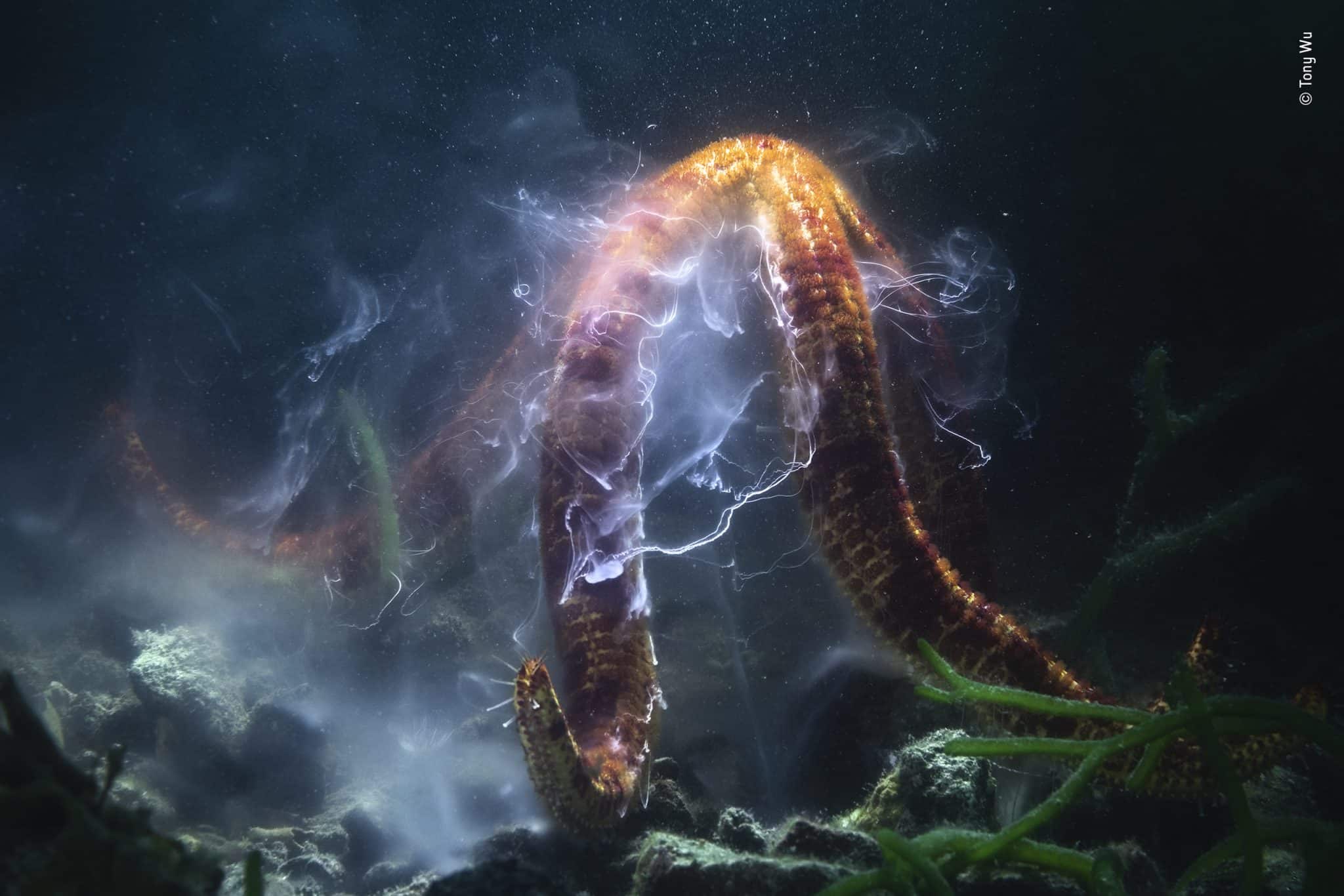
The Underwater category of Wildlife Photographer of the Year 2022 has been won by Tony Wu with his image ‘Shooting star’ (pictured above). Tony, who describes himself as ‘a photographer who takes photos (mostly) underwater’, took the winning image of a spawning sea star in Kinko Bay, Kagoshima Prefecture, Japan.
As the surrounding water filled with sperm and eggs from spawning sea stars, Tony faced several challenges. Stuck in a small, enclosed bay with only a macro lens for photographing small subjects, he backed up to squeeze the undulating sea star into his field of view, in this galaxy-like scene.
The ‘dancing’ posture of spawning sea stars rising and swaying may help release eggs and sperm, or may help sweep the eggs and sperm into the currents where they fertilise together in the water.
Technical details: Nikon D850 + 105mm f2.8 lens; 1/250 sec at f18; ISO 320; Nauticam housing; Backscatter Mini Flash 1 + Inon S2000 + Z240 strobes; RGBlue compact tripod
Tony Wu was one of 19 category winners in this year’s competition that saw underwater and marine images feature highly throughout the awards.
Amongst the Highly Commended images in the Underwater category was an image by Belgian photographer Ellen Cuylaerts.
Liquid silver by Ellen Cuylaerts, Belgium
Highly Commended, Underwater
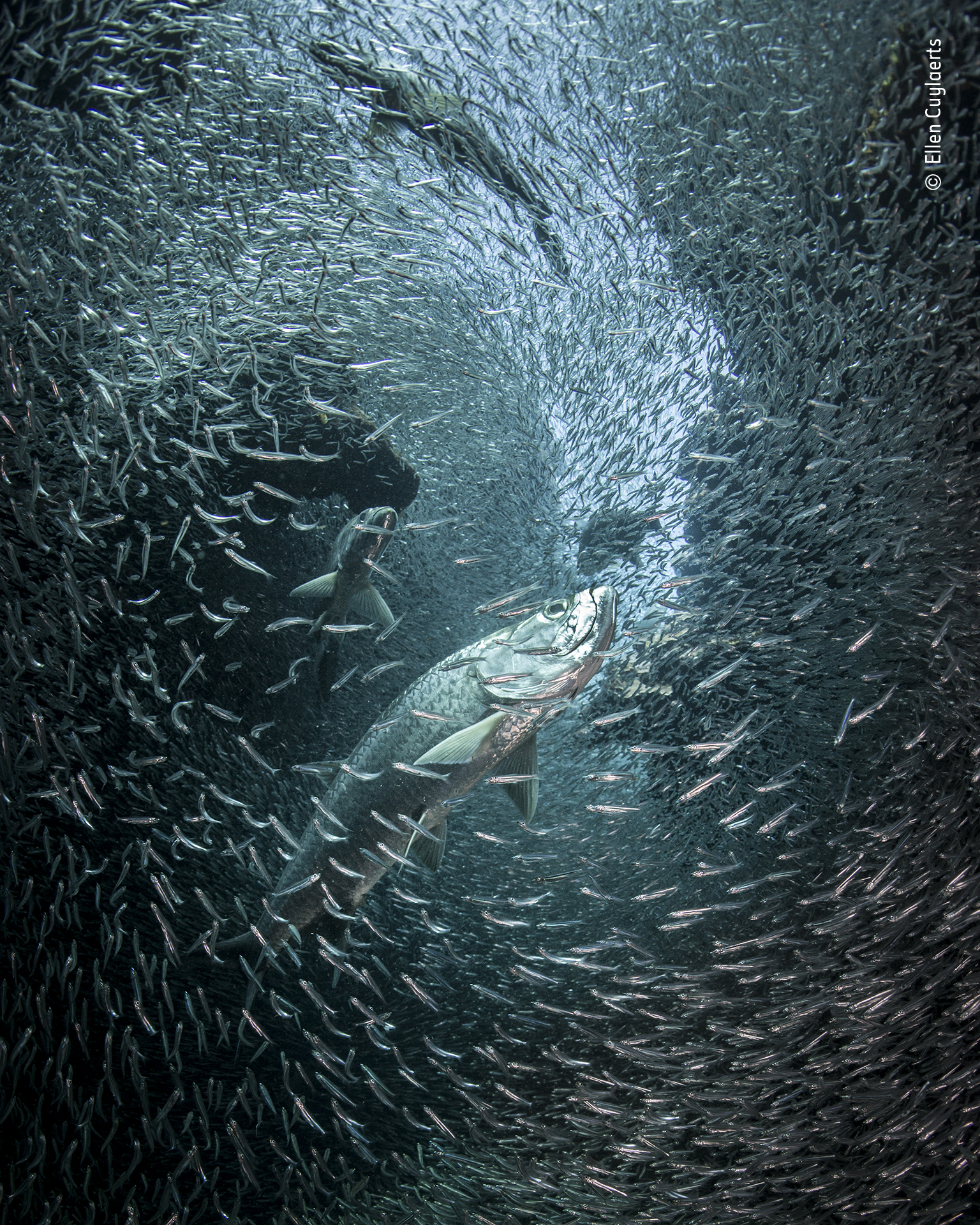
Ellen Cuylaerts is surrounded by schools of glittering silversides swirling around their predators.
The moment Ellen learnt the silversides were back, she grabbed her diving gear. Surrounded by schools of the small fish zipping apart to let the larger Atlantic tarpons through felt like ‘swimming through silver curtains’.
In summer, thousands of silversides arrive from deeper waters to lay their eggs on the sandy shores around Grand Cayman. By day they hide in grottos between coral reefs – but they are not free from danger as predatory tarpons lurk there too.
Location: Devil’s Grotto, George Town, Cayman Islands
Technical details: Nikon D800 + 16mm f2.8 lens; 1/160 sec at f7.1; ISO 500; Nauticam housing; Sea & Sea YS-250 strobes.
Well-known UK photographer Alex Mustard, a frequent winner at the awards, scored a High Commended in the Plants and Fungi category.
Seaweed symmetry by Alex Mustard, UK
Highly Commended, Plants and Fungi
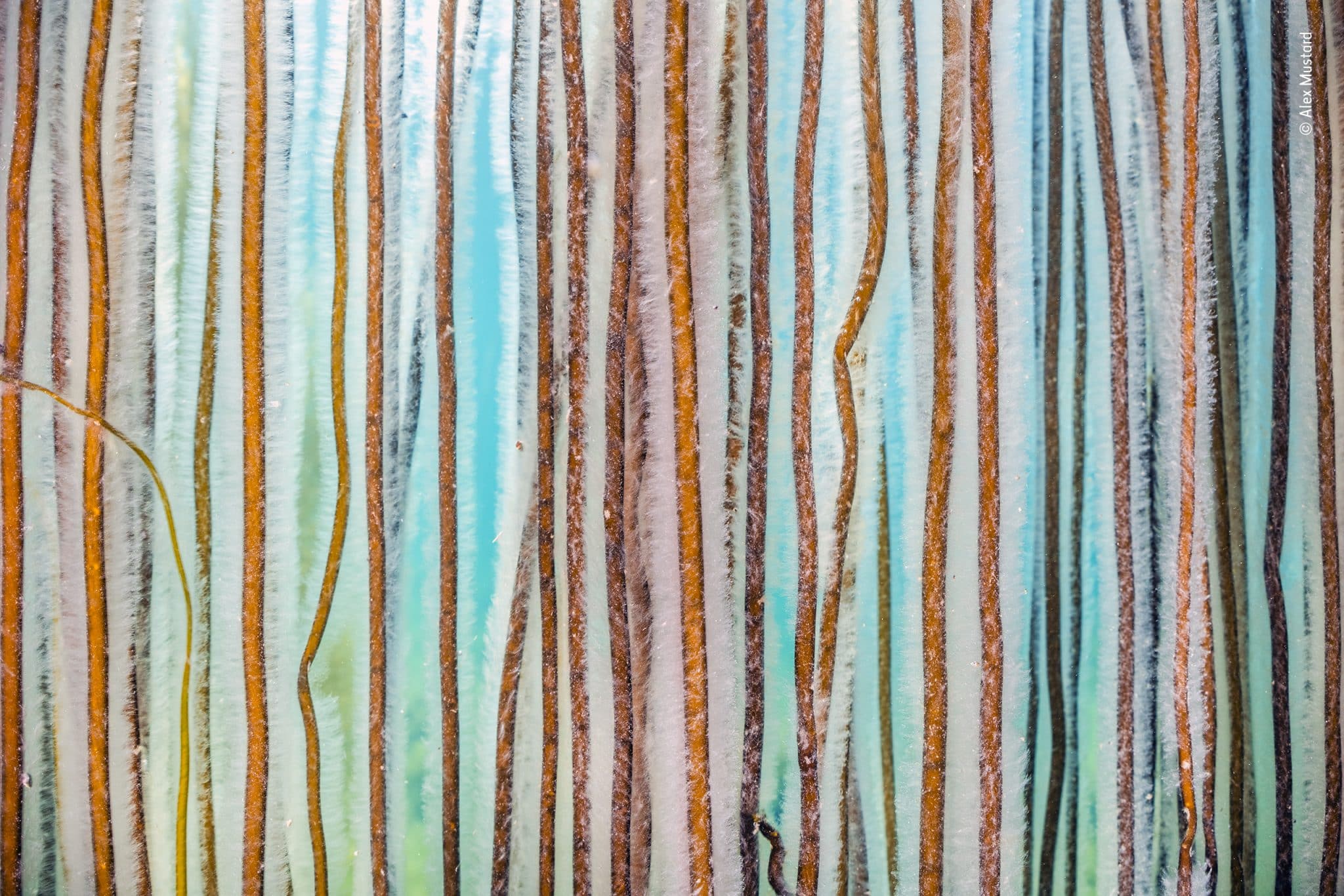
Alex Mustard finds the perfect conditions to showcase the beauty of seaweed.
Confined to the UK coast during the Covid-19 pandemic, Alex developed a love of seaweeds. This image, showing colourful fronds of bootlace seaweed reaching for the light, took planning and precise conditions: a high tide, clear water, calm weather and sunshine.
Bootlace seaweed is hollow, allowing gas to accumulate towards its tip and keep it afloat. Seaweeds forming underwater kelp forests play important roles as foundations for coastal habitats, feeding and sheltering hundreds of marine animals.
Location: Kimmeridge Bay, Dorset, UK
Technical details: Nikon D850 + 28–70mm lens; 1/40 sec at f16; ISO 160; Subal housing + Nauticam WACP-1 lens; 2x Retra Pro strobes.
Winner in the Portfolio category was French photographer Laurent Ballesta with his portfolio of six images – ‘Under Antarctic ice’ – taken in Adélie Land, Antarctica.
Laurent Ballesta endures below-freezing dives to reveal the diversity of life beneath Antarctica’s ice. An underwater photographer and biologist, Laurent has led a series of major expeditions, all involving scientific mysteries and diving challenges, and all resulting in unprecedented images. He has won multiple prizes in Wildlife Photographer of the Year, including the grand title award in 2021.
His expedition to Antarctica, exploring its vast underwater biodiversity, took two years to plan, a team of expert divers, and specially developed kit. His 32 dives in water temperature down to -1.7˚C (29°F) included the deepest, longest dive ever made in Antarctica.
Pyramid of life by Laurent Ballesta, France
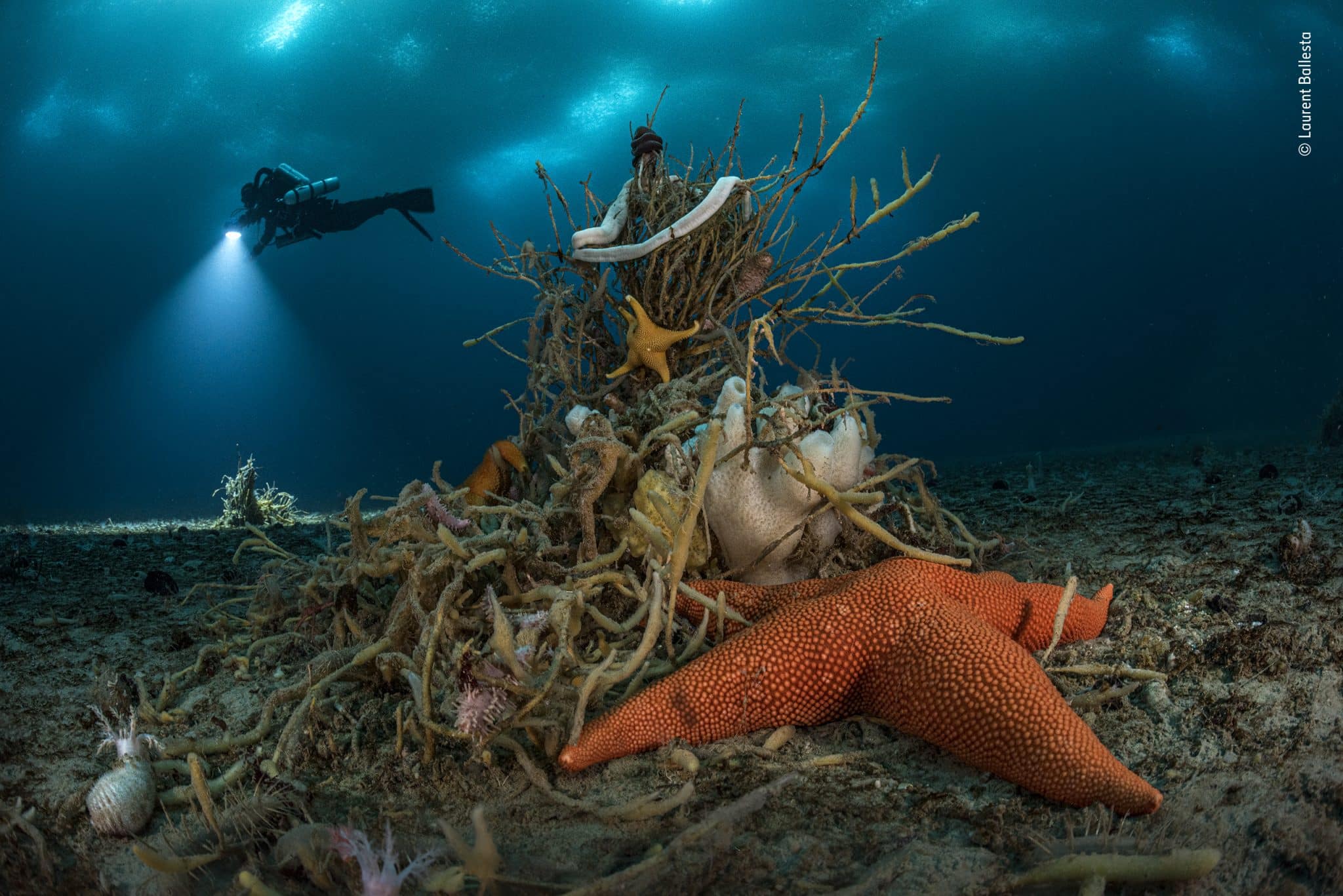
Living towers of marine invertebrates punctuate the seabed off Adelie Land, 32 metres (105 feet) under East Antarctic ice. Here, at the centre, a tree-shaped sponge is draped with life, from giant ribbon worms to sea stars.
Technical details: Nikon D810 + 13mm f2.8 lens; 1/13 sec at f16; ISO 800; Seacam housing; 2x Seacam strobes.
Wildlife Photographer of the Year is developed and produced by The Natural History Museum, London. In an intensive process, 38,575 entries from 93 countries were judged anonymously by an international panel of experts on their originality, narrative, technical excellence, and ethical practice. Dr Doug Gurr, Director of the Natural History Museum comments:
“Wildlife photographers offer us unforgettable glimpses into the lives of wild species, sharing unseen details, fascinating behaviours and front-line reporting on the climate and biodiversity crises. These images demonstrate their awe of and appreciation for the natural world and the urgent need to take action to protect it.”
The redesigned flagship exhibition which is now open at the Natural History Museum, London, positions the photographs among short videos, quotes from jury members and photographers as well as insights from Museum scientists to invite visitors to explore how human actions continue to shape the natural world. Sponsored by global green energy company Ørsted, it runs until 2nd July 2023 and will later tour the UK and internationally.
The 59th Wildlife Photographer of the Year competition will open for entries from photographers of all ages, nationalities and levels on Monday 17th October 2022.
For more information, please visit here: www.nhm.ac.uk/wpy
Header Image: Tony Wu / Wildlife Photographer of the Year