Study Reveals Two Distinct Migration Strategies Among Male Green Turtles

Researchers studying male green sea turtles off the coast of Brazil have discovered that the animals follow two distinct migration strategies after the breeding season.
The study, led by researchers from Florida State University, tracked adult male green turtles at a breeding site off Brazil during three breeding seasons between 2019 and 2022. Using satellite tags, the team was able to monitor where the turtles travelled and how they used the water during and after breeding.
Around 80% of the tagged turtles travelled between 300 and 1,000 kilometres to different feeding grounds after breeding, while the remaining 20% stayed in the same breeding area throughout the year.
The research also recorded differences in the turtles’ diving behaviour. Satellite tags collected information on dive frequency, depth and duration, allowing researchers to examine how the turtles used different parts of the water column.
Understanding these movements could help improve conservation measures, particularly by identifying migration routes and feeding areas that overlap with potential threats such as fishing activity and vessel strikes.
The researchers say the findings could also help improve the effectiveness of marine protected areas by providing a better understanding of the habitats and routes used by male green turtles.
Male sea turtles are particularly difficult to study because, unlike females, they rarely return to land after entering the ocean as hatchlings. The researchers say this has left significant gaps in knowledge about their movements and the areas they depend on.
The study also highlights the importance of male green turtles to the wider population. As ocean temperatures rise, more female turtles are being produced because sea turtle sex is determined by incubation temperature, making an understanding of male behaviour increasingly important for conservation.
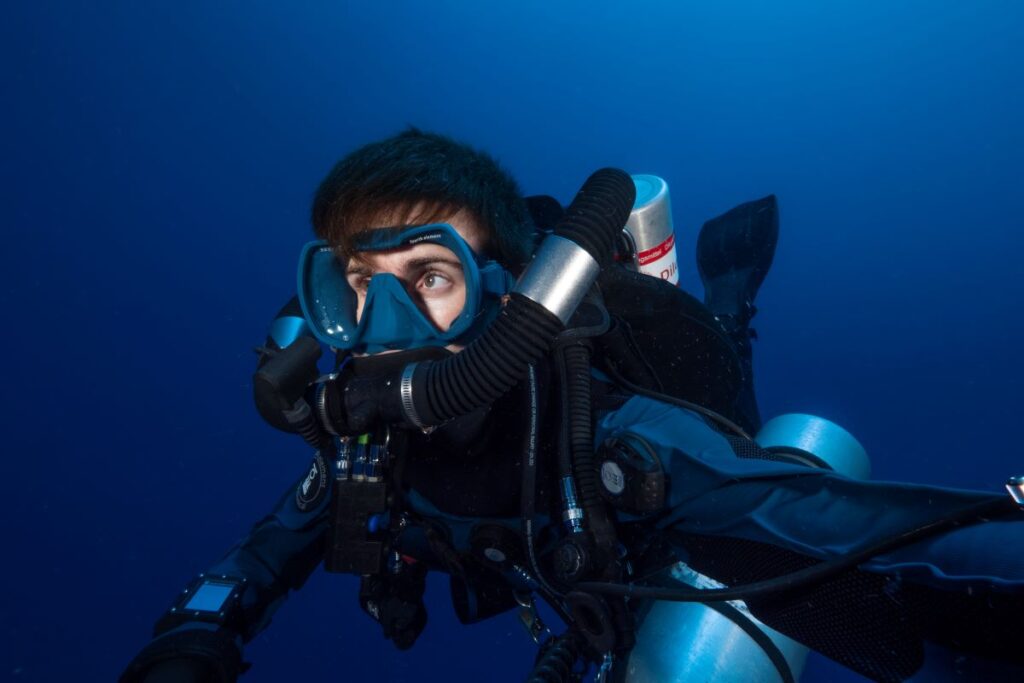
The research involved more than 230 free dives at Fernando de Noronha, an archipelago off the Brazilian coast, where the team located, tagged and observed the turtles.
The study was funded by the National Science Foundation, with additional contributions from researchers and conservation organisations in Brazil and the United States.
Photo: Jane Morgan
Source: Florida State University