Seahorses

A guest blog from Isobel Fairbairn
When I was younger, I’m sure I always wanted to meet a unicorn; maybe one day I still will! Though as I got older, I realised the more interesting (and more likely) horse to come across in the wild is the Seahorse.
Although I haven’t yet had that opportunity besides in the odd aquarium, the best time to go out looking for them would be summer as the warmer months is when they reside in shallower waters, before going deeper into the ocean in winter to avoid the harsher weather. There are approximately 54 species (and counting) varying in size found in different spots all over the world, even recently being spotted in the River Thames!
Seahorses come from the genus Hippocampus, which comes from the Greek Híppokampos, Híppos meaning horse and Kámpos meaning sea monster.
Possibly their most interesting fact is that the male Seahorses are the ones to give birth, being as they’re one of the only species in the world to do this, it’s also possibly the most well-known Seahorse fact! This has its purpose though, as this then frees up the female Seahorse to start making even more eggs.
The males take these eggs from the female, self-fertilise and incubate them, the gestation period can range from 14 days to 14 weeks, then proceed to give birth to baby Seahorses, known as “Frys”. The amount of frys that are produced depends on the species size, ranging from 50-150 babies in smaller species to 1500 in larger species.
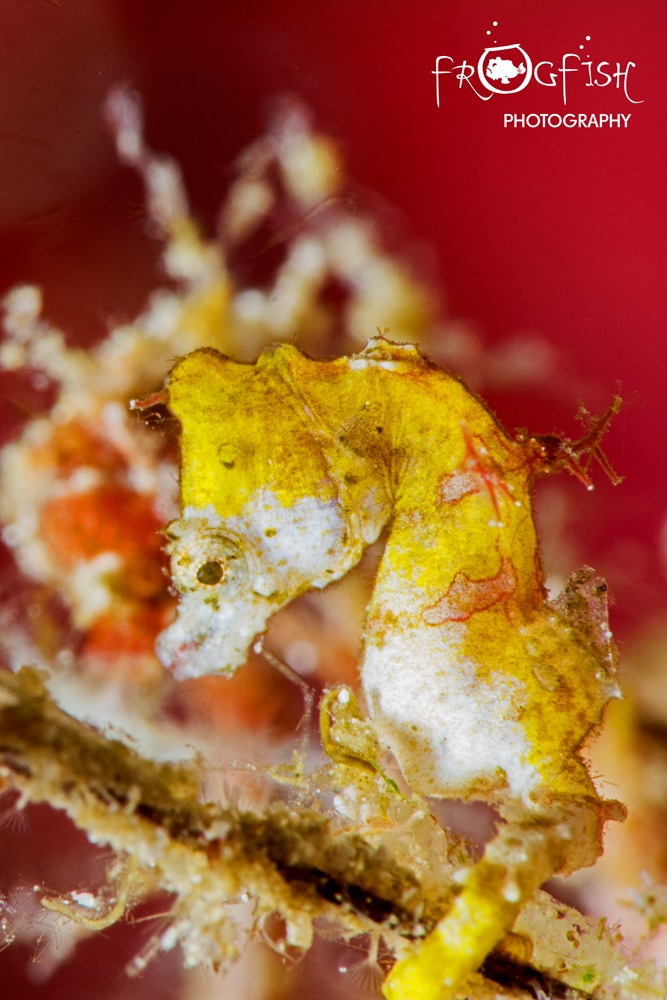
Although they be but small, their eyesight is mighty… Seahorses eyes work independently from one another for extra excellent vision, this helps them to hunt and protect themselves. Oddly they also sleep with their eyes open, this is due to the fact they don’t have eyelids. While sleeping they cling onto coral to stop themselves floating away… flying should be left to the unicorns in this case!
As magical as Seahorses may sound, in many cases they, on paper, sound a lot more like monsters than fairy horses, with their complex exoskeleton- fused together with a flesh type covering and a tendency to accidentally eat their own babies… because they look so much like tiny crustaceans (if you ask me, that sounds like an excuse a Seahorse would make up). They can consume up to 3,000 or more brine shrimp a DAY! They manage all that shrimp with no teeth!
We all have weak spots but being a bad swimmer while living in the OCEAN really shows that God does have favourites, sadly for the Seahorse this is indeed the case. These not so strong swimmers use their dorsal fins for power, beating them 30-70 times per second.
Now although not much of that seemed too appealing, Seahorses are still special creatures who need our protection and care. Both species of Seahorse found in the U.K are already protected under the Wildlife and Countryside act (1981). They are at risk all over the world; Chinese medicine take up to 150million Seahorses per year. They are also often snatched from the sea, left to boil in the sun and sold as souvenirs- a horrifying thought.
Seahorses are not exempt from the pet trade either, often caught and sold, then barely surviving in trade conditions for longer than several weeks.
So, remember, if you see a Seahorse in the wild, leave it as untouched as you would a unicorn.
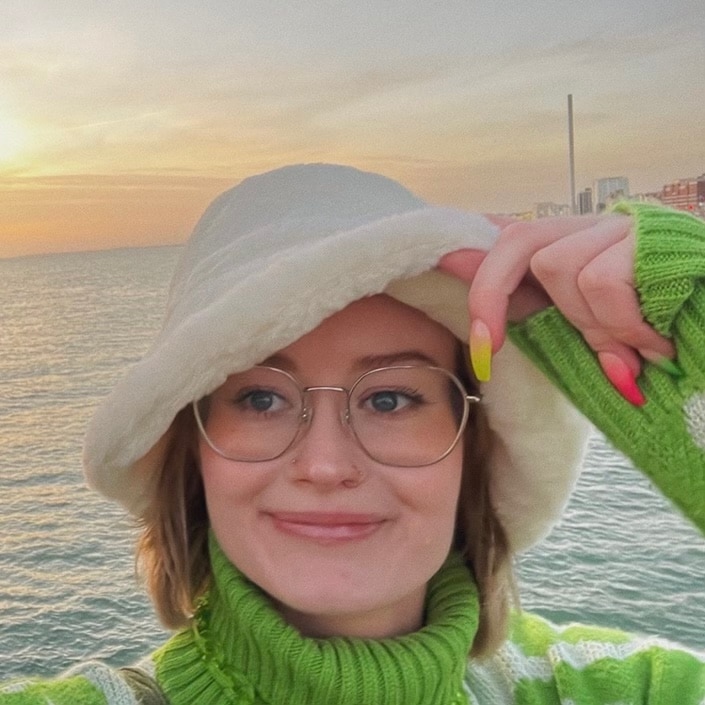 Isobel Fairbairn is a 22 year old first year Marine Biology student at the university of Salford with a passion for both writing and marine life. “I loves to share things that I learn along my journey and that’s when I decided I wanted to take my career towards writing, I’ve always wanted to write but when my two passions collided I knew I had to go in this direction.”
She lives in Manchester. Her favourite fish is the Chimera Shark and she is currently undergoing her diving training with BSAC with the university’s diving society. “I am equal parts terrified and excited.”
Instagram: @ihf.media