Scientists Capture Remarkable Coral Recovery in Stunning Images
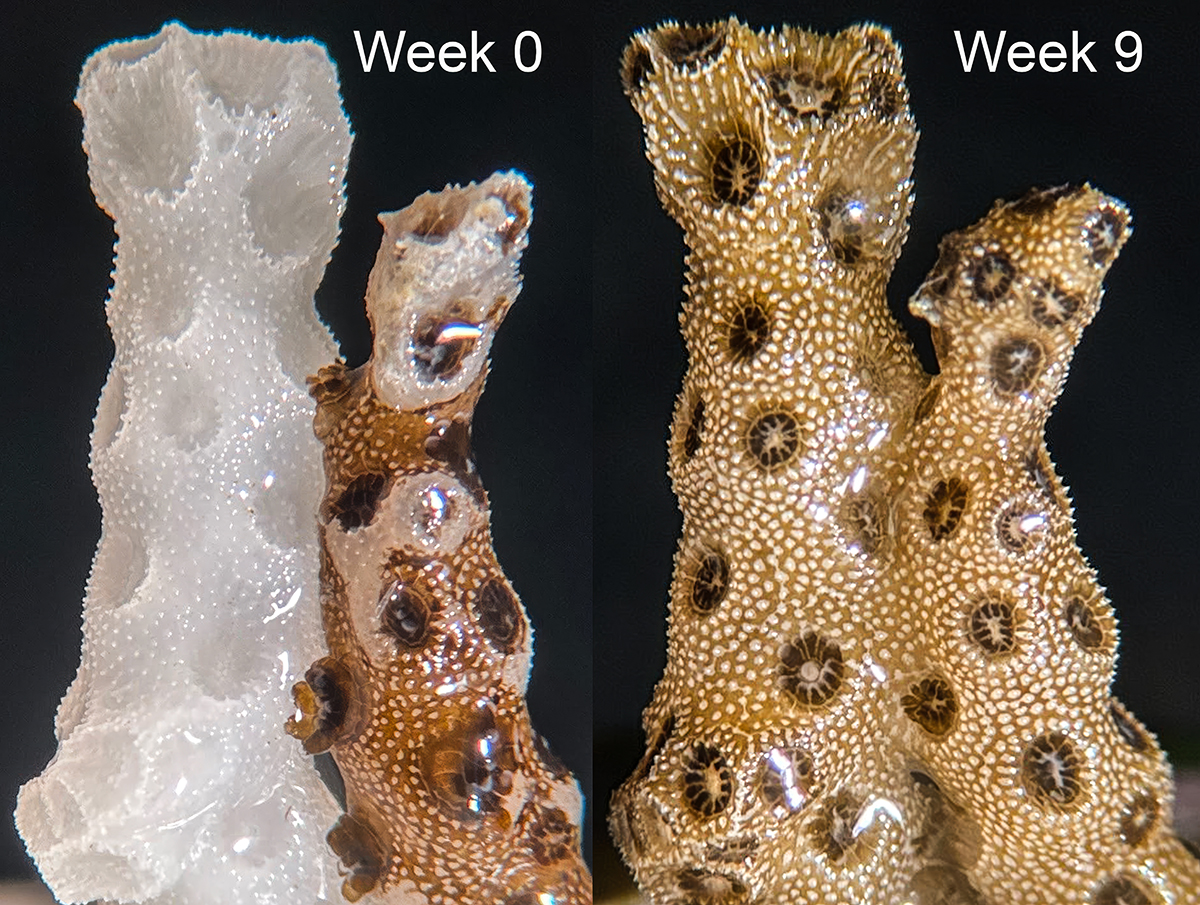
A remarkable series of underwater photographs reveals how a severely bleached coral can regain its colour, offering a fascinating glimpse into the recovery processes of these vulnerable marine animals.
The images, captured over nine weeks by underwater photographer and researcher Danny Collins, document the transformation of a coral from a ghostly white appearance to a rich golden-brown, with its individual polyps becoming increasingly visible.
Coral bleaching occurs when stressed corals lose the microscopic algae living within their tissues. These algae provide much of the coral’s energy through photosynthesis and are responsible for many of the colours associated with healthy coral reefs.
While bleaching does not necessarily mean a coral has died, prolonged stress can prevent recovery and ultimately prove fatal.
In this photographic sequence, however, the changes are striking. Initially pale and translucent, the coral gradually develops darker pigmentation and more clearly defined structures. By Week 9, its appearance is dramatically different.
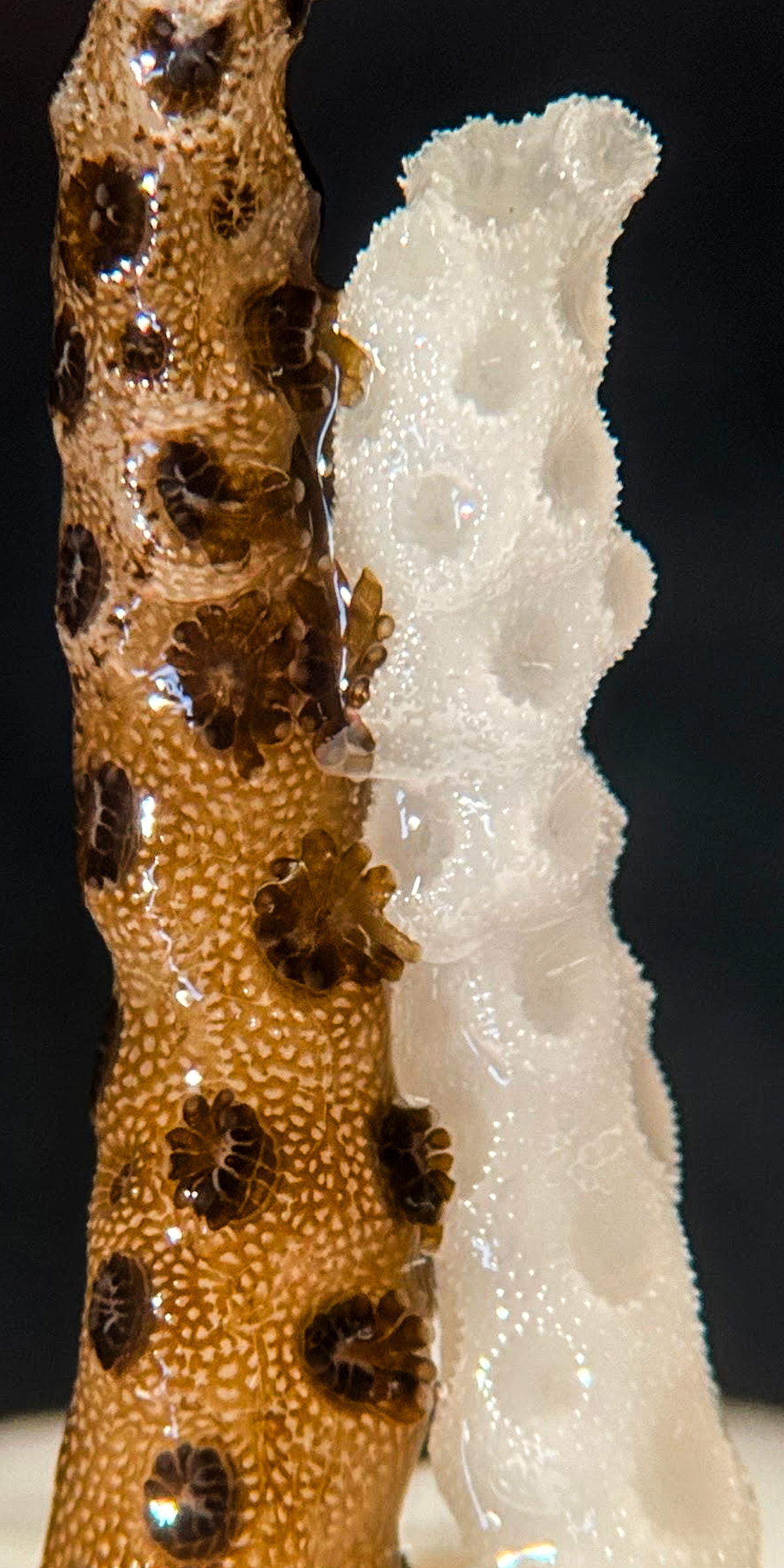
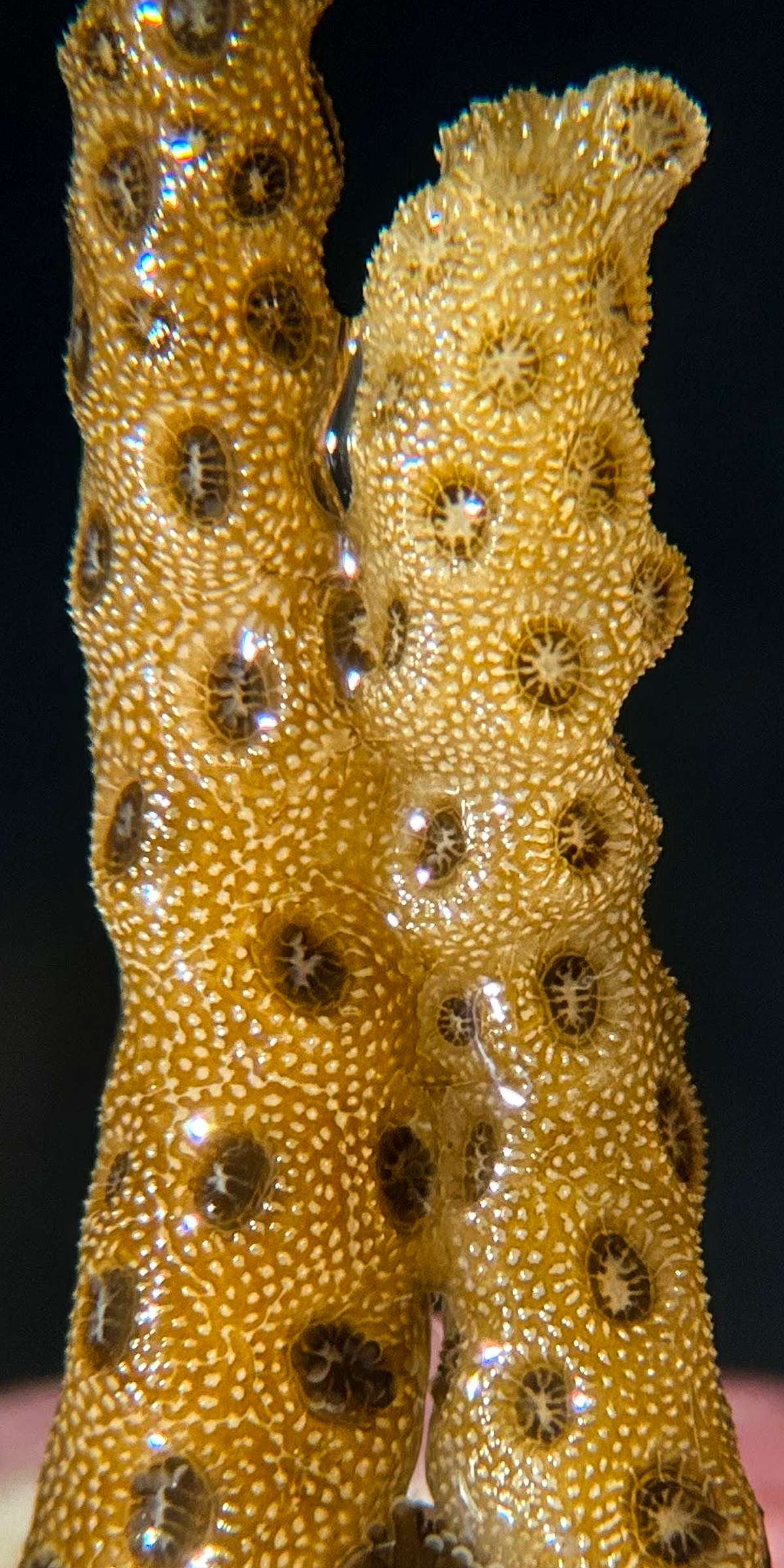
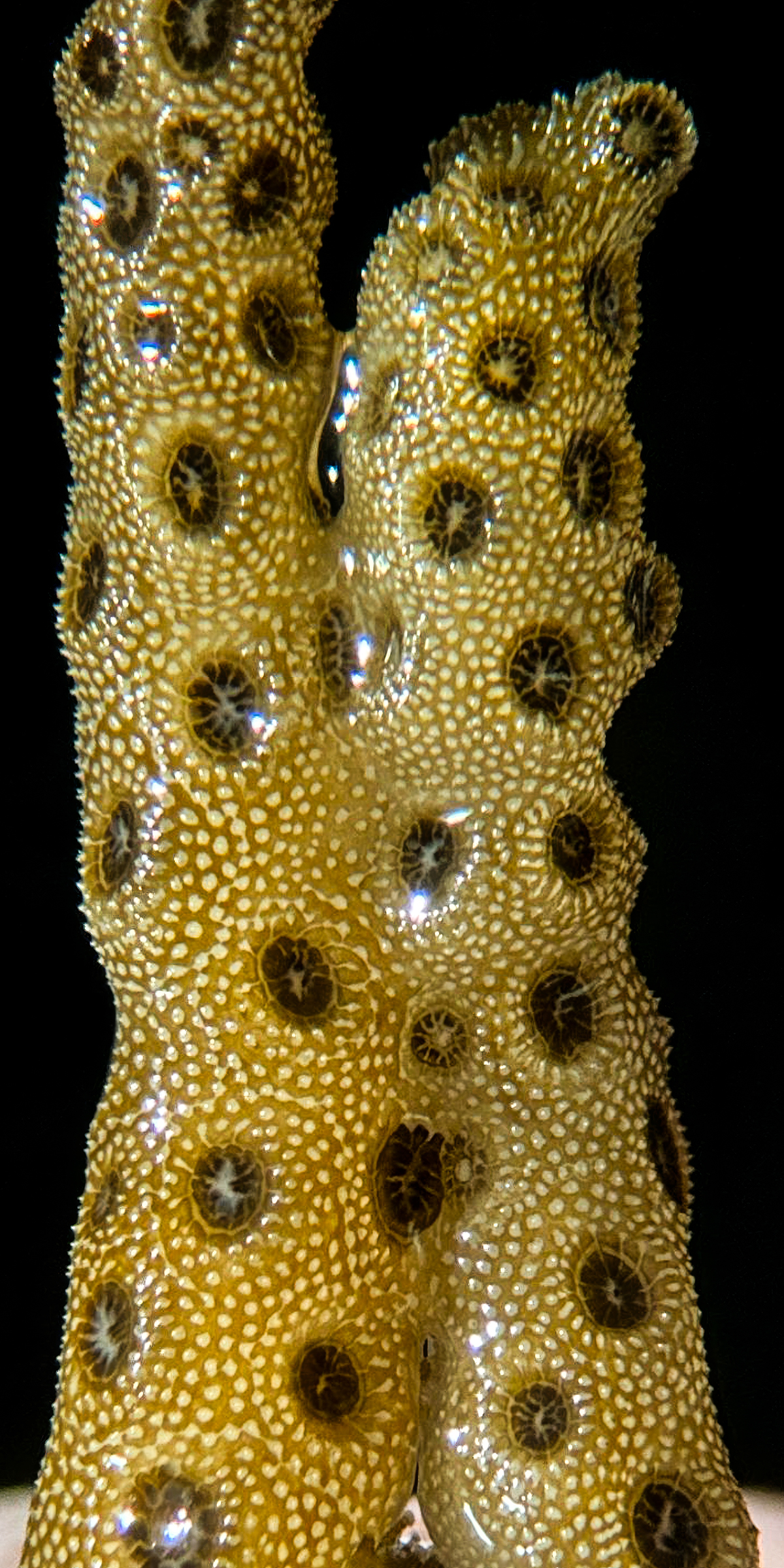
Detailed close-up images also reveal changes taking place over much shorter periods, while fluorescence microscopy provides scientists with another way of examining the processes involved.
The photographs offer a rare opportunity to follow these changes in extraordinary detail, highlighting both the complexity of coral biology and the importance of understanding how corals respond to environmental stress.
With coral reefs facing increasing pressure from rising ocean temperatures, research into the mechanisms behind bleaching and recovery is becoming ever more important.
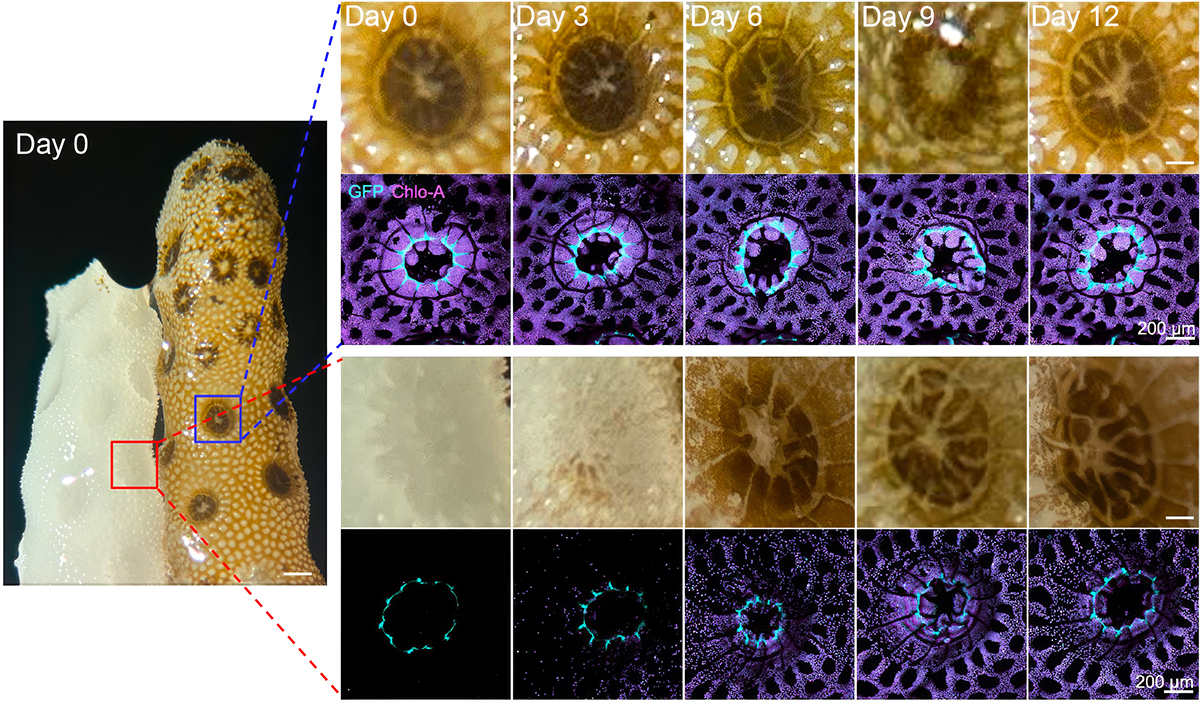
Image credits: Danny Collins; Danny Collins and Jana Šípová.