Protected Sharks Removed from US Waters for Overseas Aquariums
Dozens of endangered sand tiger sharks have been taken from protected US waters and exported to aquariums around the world, raising concerns among marine scientists about the long-term impact on wild populations.
An investigation by The Guardian, published on 15 October, reveals that 80 sand tiger sharks (Carcharias taurus) were collected from Delaware Bay between 2018 and 2024, with most destined for overseas aquariums.
The sharks, also known as grey nurse sharks or ragged-tooth sharks, are classified as Critically Endangered globally by the IUCN. Although protected from commercial and recreational fishing in US waters, they can still be collected for public display under special permits.
According to research involving scientists from the University of Delaware, Delaware State University and the University of Rhode Island, the number being removed has increased significantly in recent years.
The investigation found that sharks had been exported to aquariums in China, the United Arab Emirates, South Korea, Thailand and several other countries.
Researchers are particularly concerned because sand tiger sharks reproduce extremely slowly, generally producing just one or two pups every two to three years. Many of the animals being collected are large juveniles or approaching reproductive maturity.
Although populations in the north-west Atlantic are considered more stable than elsewhere, scientists say there has been no formal population assessment, making it difficult to determine whether the removals are sustainable.
Florida-based company Dynasty Marine, which has collected most of the sharks in recent years, told The Guardian that its operations comply with all applicable permits and regulations. The company also highlighted the role of public aquariums in marine education and conservation.
US authorities maintain that collection permits are assessed individually, taking account of established quotas. However, researchers are calling for greater transparency and improved monitoring of the sharks after export.
The findings raise an important question: should sharks protected in the wild be removed from their natural habitat to spend the rest of their lives in aquarium displays?
Source: The Guardian – How protected US sharks are being sold to foreign aquariums
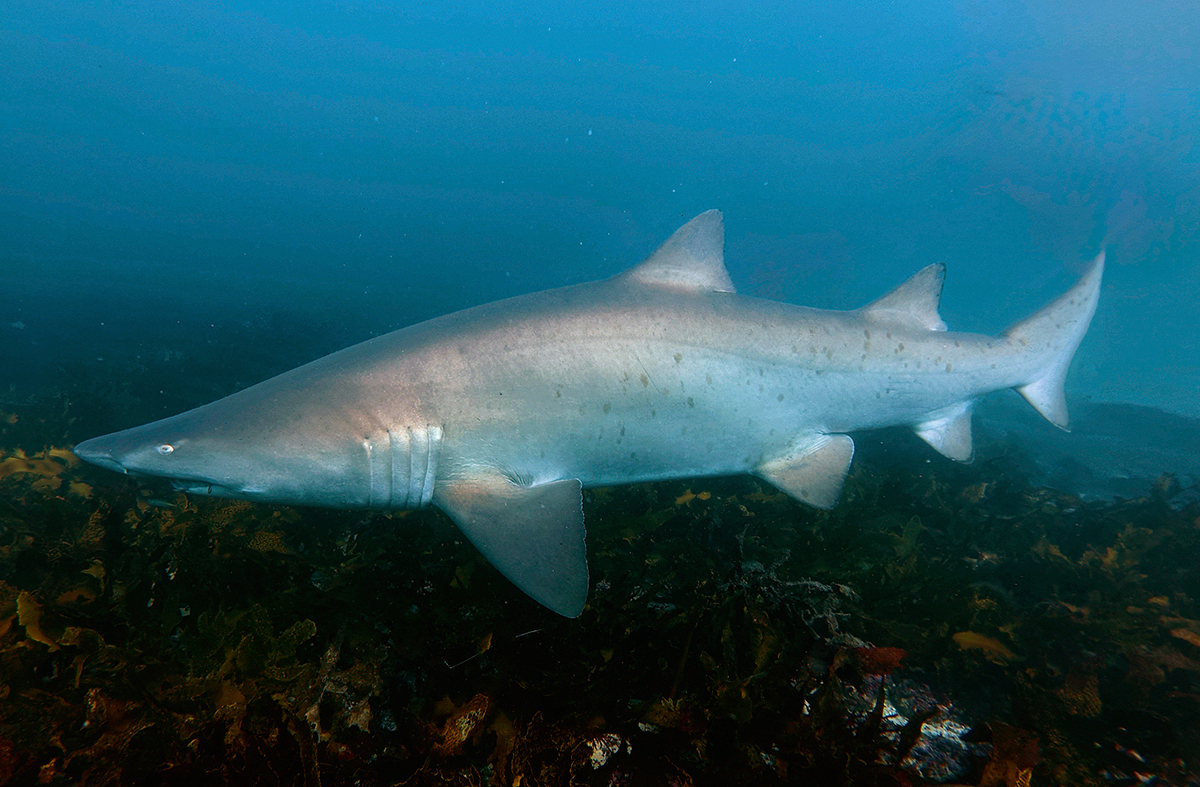
IMAGE: Sand tiger shark (Carcharias taurus). Illustrative photograph: Bryce Watts-Parker / CC BY 4.0 / Wikimedia Commons.