Pinto Abalone Could be Considered Endangered
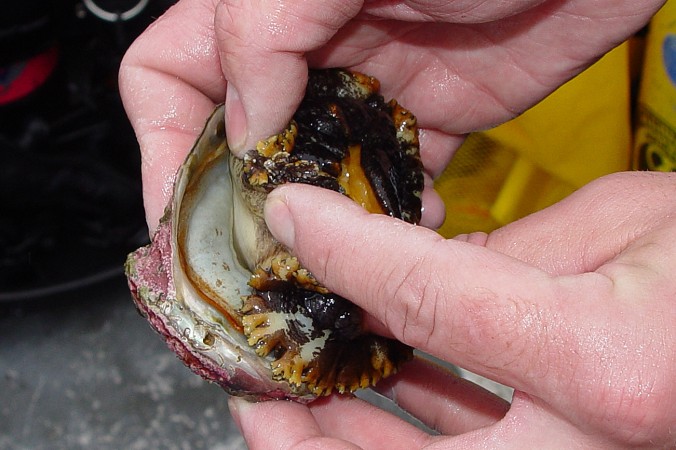
The pinto abalone, a mollusk that’s considered highly tasty, might be considered endangered.
A 6-inch Pacific Ocean marine snail prized for its delicate flavor and colorful shell will be considered for endangered or threatened species status.
The National Marine Fisheries Service announced last week that it will conduct a status review for pinto abalone, which are found from Alaska to Baja California.
The Natural Resources Defense Council and the Center for Biological Diversity filed petitions over the summer calling for the status review that could lead to added protections for the species.
The mollusks were listed as endangered in Canada in 2009, center biologist Kiersten Lippmann said.
According to Lippmann, the marine snails have declined 80 to 99 percent in much of their range.
Pinto abalone live in scattered intertidal zones, and extreme low tides leave them exposed.
“That made them an easy target for traditional hunters, back in the day,” Lippmann said.
Alaska Natives use the meat as a supplemental food and trade item, according to the Alaska Department of Fish and Game. The mother-of-pearl inside of shells decorated carvings and ceremonial dress. Outside coloring can be red, pink, tan or mottled.
Poorly regulated commercial harvest in the 1980s and 1990s decimated populations of pinto abalone, according to the listing petitions.
The center petition says pinto abalone have nearly disappeared in Northern California and are declining in Southern California. Washington closed its waters to commercial fishing in 1994 and Alaska did the same in 1996.
Restrictions on fishing, however, have not produced a comeback since many individual pinto abalone are too far apart to reproduce, Lippmann said.
Natural predators include sea otters, river otters, mink, crab, sea stars, octopus, wolf eel and sculpins, but the biggest threat now is illegal harvest.
“They continue to be poached, in quite high numbers,” she said.
The petitions state that the poachers operate in remote areas of Alaska and British Columbia. They target the largest, most highly reproductive mature adults.
Climate change and ocean acidification are also threats.
The deadline for proposing an endangered or threatened listing is the 1st July 2014.
Photo: Alaska Dept. of Fish and Game, Scott Walker
Source: www.theepochtimes.com