Mass strandings of Portuguese Man of War on UK beaches marking World Jellyfish Day

 Beachgoers in South West reporting large numbers of jellyfish-like creatures to the Marine Conservation Society’s Jellyfish Survey
The 3rd November marks World Jellyfish Day, a celebration of the many weird, wonderful and beautiful beings which make their way into UK waters. This year, the Marine Conservation Society’s Jellyfish Survey has received several reports of a bizarre jellyfish-like creature washing up in large numbers on UK shores.
The Portuguese Man of War is often mistaken for a jellyfish but is, in fact, a colony of hydrozoans – so a ‘they’ rather than an ‘it’. Characterised by an oval, transparent float with many hanging ‘fishing polyps’ which can be tens of metres long, it’s easy to see how they can be mistaken for jellyfish. The sting of a Portuguese Man of War is extremely powerful and as such, can be dangerous to humans.
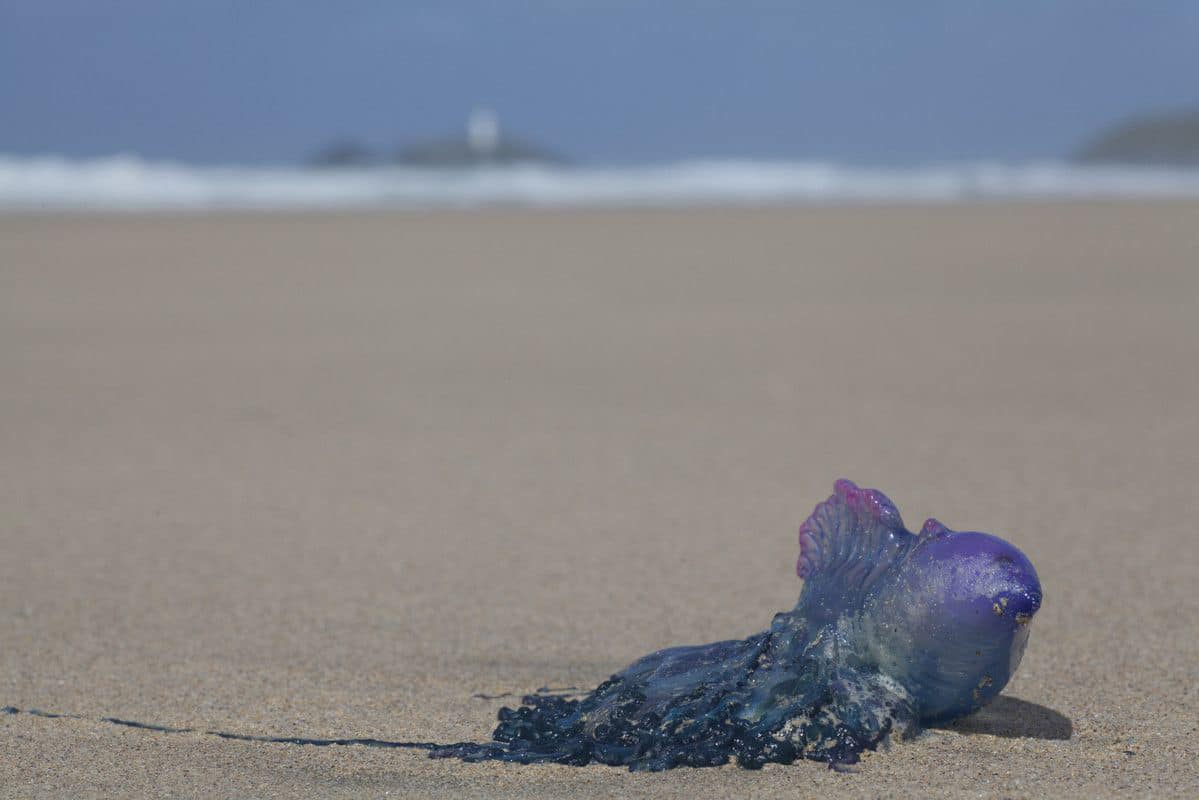
Whilst sightings of the Physalia physalis are relatively rare on UK shores, there’s been a recent influx of reports of them on the South West coast.
Dr Peter Richardson, Head of Ocean Recovery at the Marine Conservation Society: “Through our online jellyfish survey, we started receiving reports of Portuguese Man of War on beaches in south Wales in September. Through October we have continued to receive reports of them from Devon and Cornwall beaches, with mass strandings in Cornwall this weekend. The weather will be blowing them in from the Atlantic as part of another major Portuguese Man of War stranding event. The last stranding, in similar conditions, was in 2017 and they seem to be getting more frequent since we started our survey in 2003.”
“We urge beach users not to touch them because they pack a very powerful sting, but please do report them on our website so we can better understand the extent of this stranding event.”
The Marine Conservation Society has worked closely with the University of Exeter on the Jellyfish Survey. In 2014 they published the UK distributions and seasonality of eight jellyfish and jellyfish-like species, including the Portuguese Man of War, based on the data collected from the survey. This was the first time UK jellyfish had been mapped in over 40 years, and, using the power of citizen science, the charity intends to track changes in jellyfish bloom distribution and seasonality over time.
Professor Brendan Godley Chair in Conservation Science at the University of Exeter said: “The Marine Conservation Society’s Jellyfish Survey is an incredibly helpful tool in mapping these sort of mass stranding events of jellyfish. Since beginning to collect information in 2003, the survey has built up a fantastic data set which helps us understand how jellyfish species react to environmental changes. Identifying where jellyfish are blooming around UK shores gives an insight into how they are reacting to the effects of climate change such as ocean warming.
“The current influx is, no doubt, resultant from the extremely strong winds that we have been enduring in the southwest”
For more information on the different species of jellyfish (or otherwise!) that can be found on UK beaches, please visit the Marine Conservation Society’s website.
To help contribute to the charity’s ongoing Jellyfish Survey, sightings of jellyfish (and other animals) can be reported on the website here.