Humankind… The Menace To Sharks

 Results of pollution in the seas are not fully known, but what has been learned is that this practice not only endangers marine life, but human life as well. Algae that grow on reefs at the sea bottom collect toxins and small fish feed on these algae, ingesting these toxins with their meal. A tuna happens to feed on these smaller fish and in so doing, add the toxins from the algae plus all the toxins of every small fish it has eaten, into its system. A shark is the apex predator of the ocean and feeds on tuna, adding all the toxins from the algae from the reef plus every fish that has eaten it plus every small fish down the food chain, all carrying toxic waste into the shark! Sharks are killed by the thousands each day and the meat is consumed with the fins ending up as shark fin soup. This is then consumed by the greatest predator – the human being.
 This process is recognised as Biomagnification; the toxins lodge in the fat and are not water soluble, neither can urination cleanse the system. The USDA has recommended that pregnant women, children and women of child-bearing age should not eat any shark-derived substance due to the excessive level of mercury therein. However, shark meat is eaten in many parts of the world but in certain countries it is viewed with distaste, possibly due to its proclivity to eat anything, as they are scavengers. Certainly the most widely found shark species eaten is the piked dogfish ( Squalus acanthias), which is tabled in Britain as “rock salmon” and in Australia as “flake.” Whatever it is called, this +/- one metre member of the shark family ends up on the menu. In closing this account of commercial use of shark products, the skin is turned into exceptional leather in use for belts, lady’s handbags and shoes. In reality, the skin, just like the leopard, looks better when the live animal is wearing it.
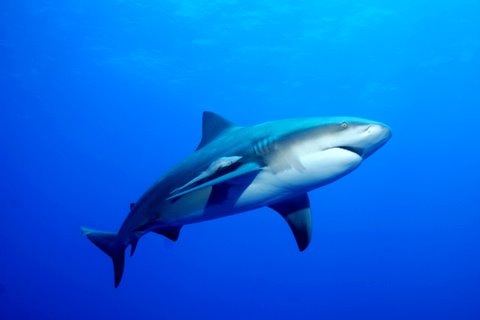 Sharks are the very essence of necessity in the ocean as they keep the waters clean and healthy, cleaning up dead or dying fish as well as sick specimens lower down the food chain. In fact, without them, there would be a proliferation of predators beneath them resulting in a paucity of specific prey items being available. This is due to the fact that large sharks are indeed slow breeders, very much slower than the predatory species below them. As an example, the dusky shark ( Carcharhinus obscurus) may take up to twenty two years to replace itself in the ocean. That is how long it takes to reach maturation and become available for breeding. Very little is known about the breeding cycle of the large sharks that are erroneously labelled “man- eaters.” The Great White, Tiger and the Bull sharks breeding biology has proved almost impossible to record. They do not breed in captivity, unlike large terrestrial or avian predators, where scientific evidence is available. Therefore, of the four hundred shark species in the oceans, comparatively very little is well or reliably documented in this respect.
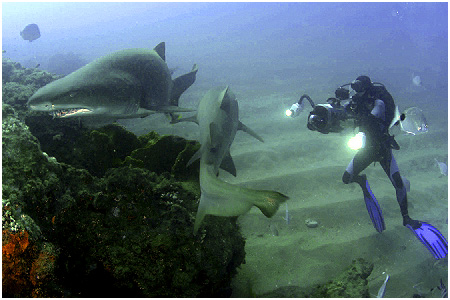
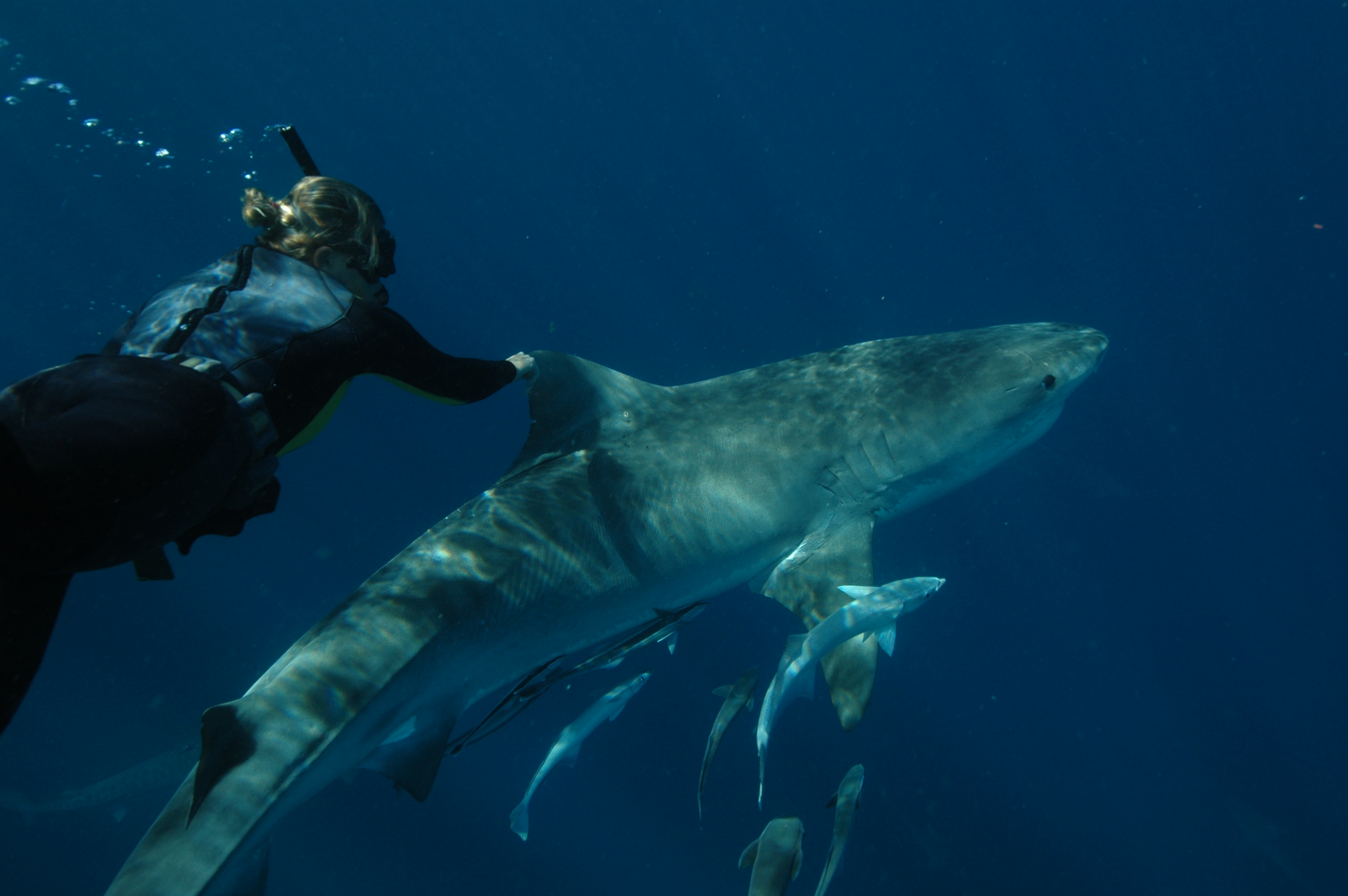 The three species above are well known to the reader as coming into conflict with recreational bathers and surfers alike. It is unfortunate that these incidents occur; the sea is there for our enjoyment, but then again it is also the domain of the shark. Scuba divers, more than anyone, know the attendant risks when entering the water, yet they accept that they are in the environment of the shark and behave accordingly. Today, many divers have experienced the thrill of encountering a Tiger or Great White and have taken a “ride” holding on to the animal. In most cases, the “passenger” has not worn scuba gear as the air bubbles emanating from the breathing apparatus may cause the animal certain disquietude. A female friend of mine has done “ballet” with an Oceanic White Tip shark. It is by no means recommended that EVEYONE try this but these are facts and if the conditions are favourable and the person respectful and qualified, no greater “rush” is possible! Swimming with an ocean apex predator!
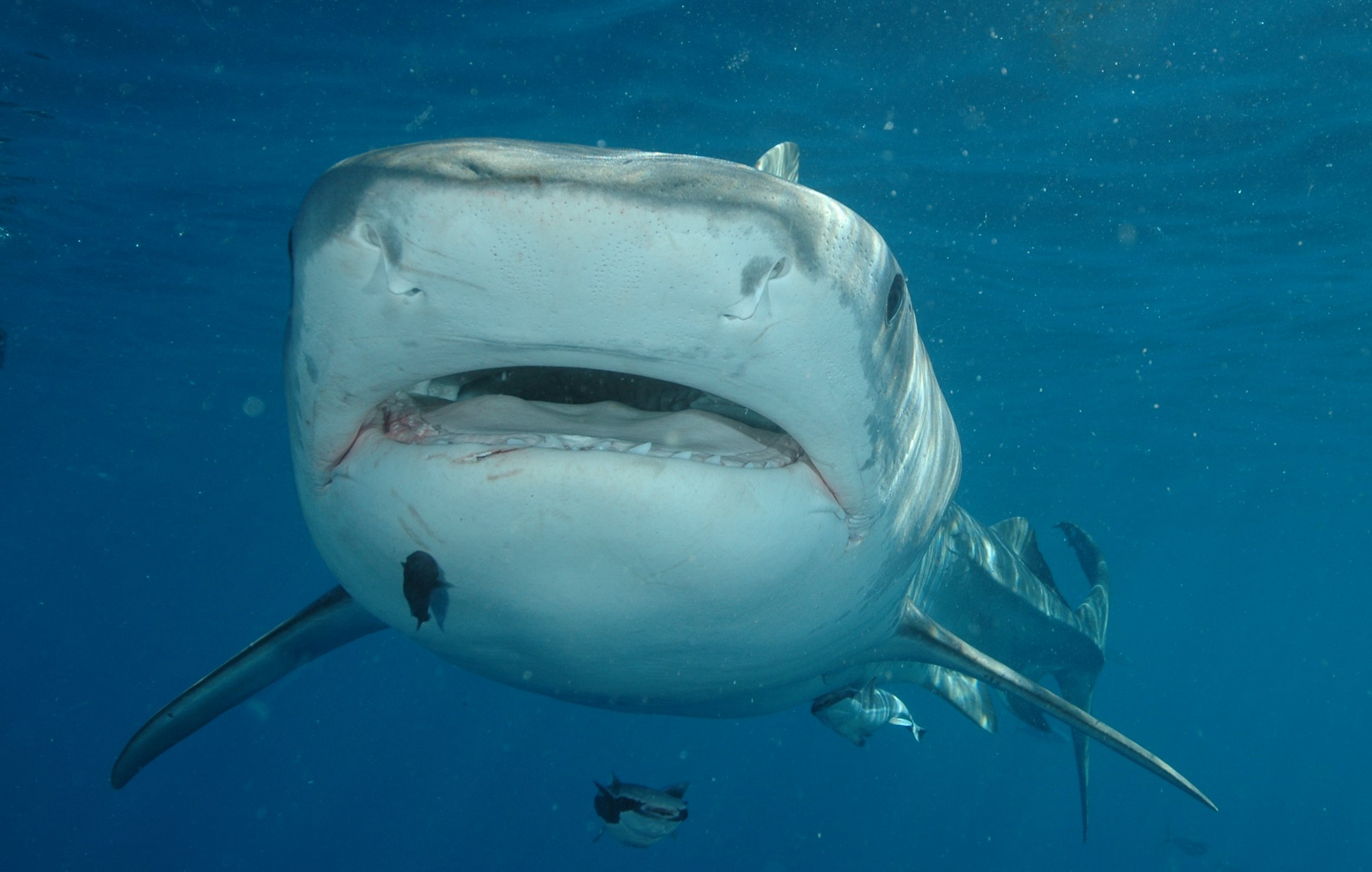 Apart from by-catch and gill nets, shark finning, over-fishing, coral destruction and pollution are top of the list with regard to decimation of marine life. Deep sea trawling has proved to be the number one culprit in killing large species of shark and these are hauled aboard, their fins cut off and the squirming animal tossed back into the sea to suffocate. Notwithstanding this awful slaughter, many other harmless forms of marine life are also victims of this “method.” Dolphins, rays, turtles and coral are to name a few. The very ecosystem is damaged every time sea bottom trawling is commenced. Apparently no legislation is in place to prevent bottom trawling but the consequences will be felt in the not too distant future.
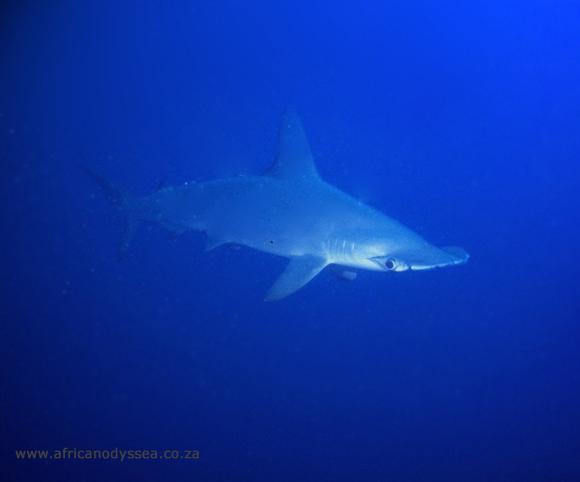 I was once asked, “Why do you suppose that nets are used along the popular beaches?” My answer to that was “To protect the recreational bathers from a potentially harmful encounter with a shark?” The answer to my reply stunned me. “No, to cull sharks!” This form of affording protection is outdated and other methods may be employed to achieve the same results. The current gill nets being used in South African and Australian waters have a mesh size large enough to allow the head of a biggish shark to enter and then ensnare the animal around the gill slits. No shark can swim backwards, so without being able to flow water through the gills, drowning ensues. Thousands of forms of sea life are killed annually by gill netting, in spite of the fact that fewer and fewer sharks are netted. But the nets remain.
 The Red List of the IUCN (The World Conservation Union) 2008 contains the names of endangered animals and plants and unfortunately includes many shark species. Of the nearly 400 species of shark, 100 species appear on the list and are being commercially exploited daily. The following list of well-known species is an indication of the seriousness and sustainability of these animals in the future:
 Great White Shark…..VU (threatened and vulnerable)
Great hammerhead….DD (data deficient)
Hammerhead sp……..LR/nt (in a threatened category in the near future)
Tiger Shark…………….LR/nt ( “ “ “)
Bull Shark………………LR/nt (“ “ “)
Raggedtooth Shark…VU (threatened and vulnerable)
As more data comes to light, the present picture will not show any improvement.
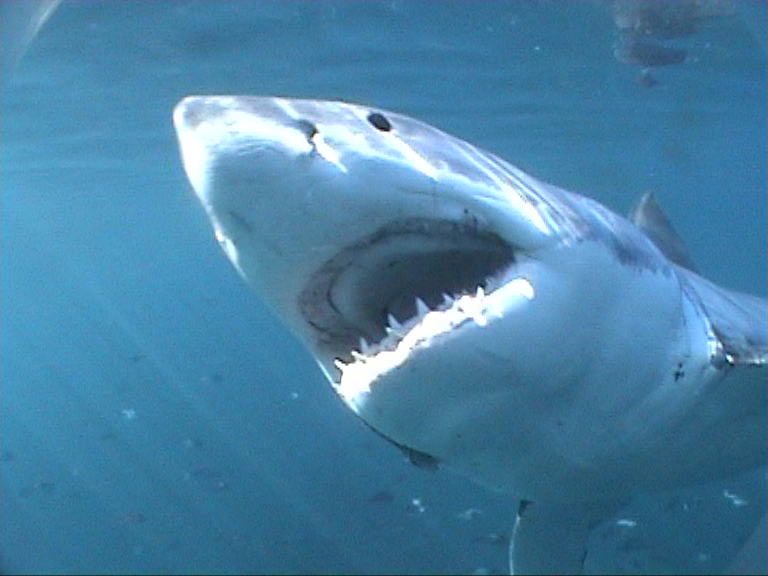 Human Beings have a fear of predators from early childhood and this fear is exacerbated into adulthood. The word “shark” conjures up an image of being eaten alive or horrific injuries being inflicted. No thought is given to the horrors Human Beings inflict on each other but that invisible “thing” lurking in the sea is beyond words and must be done away with. Sharks are not wanton killers waiting for a person to enter the sea in order to get a meal! If this was the case, over-population of the human race would be reduced. Extinction is irreversible and, for us, to be responsible for having ONE species of animal go that way is unforgivable. Sharks have inhabited the oceans for millennia, because… that is where they are meant to be.
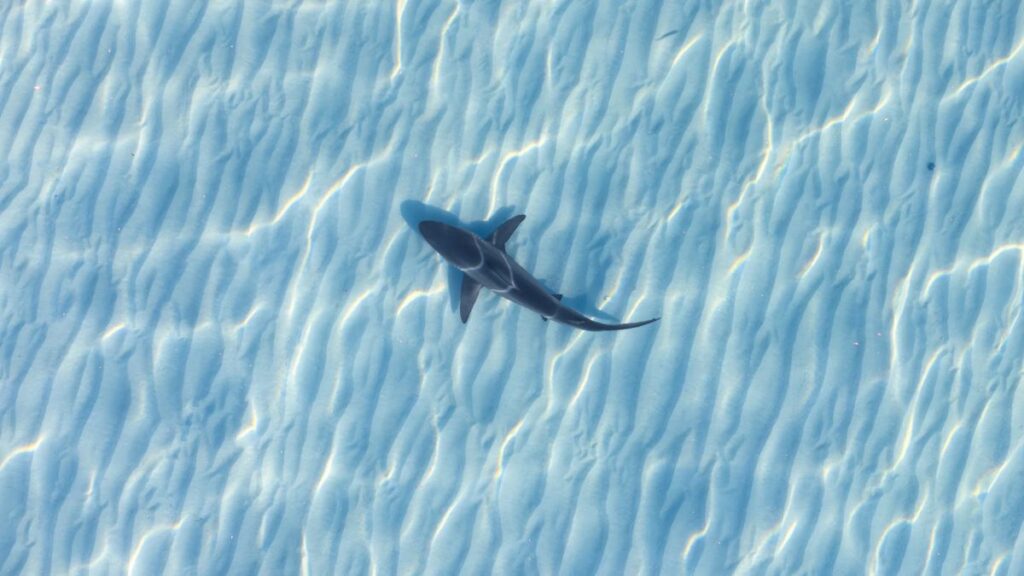
Main Photo by Trevor Krull