Divers discover Wreck of 17th-Century Dutch Warship

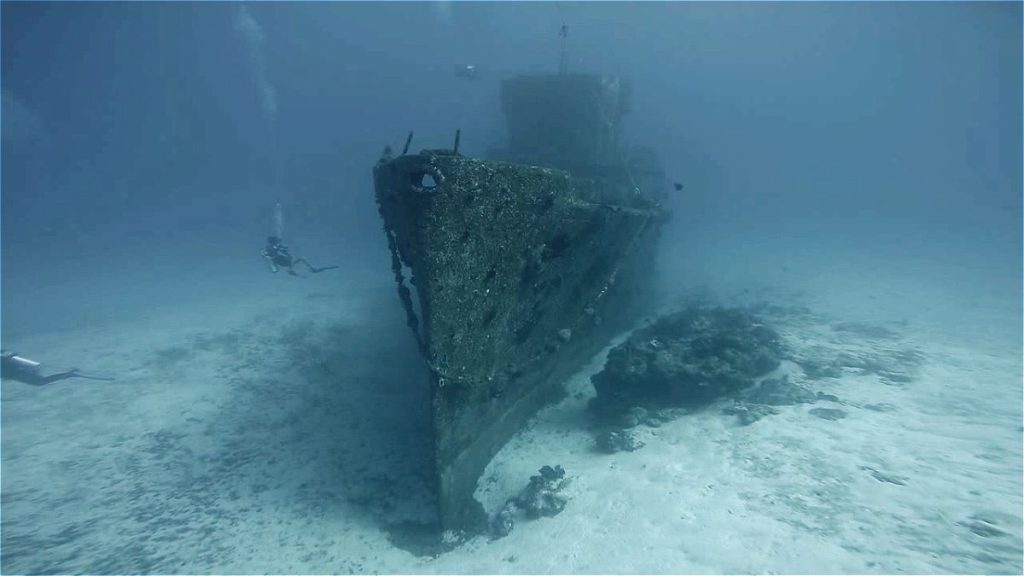
Divers have discovered the wreck of a 17th-century Dutch warship off the coast of the Caribbean island of Tobago. Marine archaeologists think the vessel could be the Huis de Kreuningen, which was lost during a fierce fight between Dutch and French colonists in the 17th Century.
On March 3, 1677, the French Navy launched an attack against the Dutch in Tobago’s Rockley Bay. European settlers coveted Tobago for its strategic location; in fact, the island changed hands more than 30 times after Christopher Columbus arrived in the New World.
The abbreviated story of this particular battle is, “Everybody dies, and every ship sinks,” according to Kroum Batchvarov, an assistant professor of maritime archaeology at the University of Connecticut. Approximately 2,000 people were killed and up to 14 ships went down during the skirmish. However until now, none of those vessels had been recovered.
Back in March, Batchvarov went searching for wrecks in Rockley Bay. Through remote sensing and historical accounts, his team identified a spot where shipwrecks from the battle might have settled on the bottom of the bay. One day, while the rest of his colleagues were sorting out an issue with their GPS systems, Batchvarov and another diver decided to explore under the surface.
“Quite literally, the first thing we saw at the bottom was a cannon,” Batchvarov told a small audience at the Explorers Club headquarters yesterday (Nov. 3).
During that initial 20-minute dive, the researchers found at least seven cast-iron cannons, some of them large, 18-pounder guns.
“This was one of the most interesting experiences of my life in archaeology, and I have been in this field for about 17 years,” said Batchvarov.
None of the sunken ship’s timbers have been uncovered yet from the jumbled wreckage, but divers did find relics from life aboard a military vessel, including 72 clay smoking pipes, an array of dining utensils and burned bricks from the ship’s galley. They also found a beer jug with three engravings of military generals from antiquity: Joshua, David and Alexander the Great.
Several clues led the team to conclude they were dealing with a Dutch warship from the 17th century. For example, many of the pipes had the mark of a manufacturer that operated in Amsterdam from the 1650s to the 1680s, Batchvarov said.
Because of the size of the cannons found at the site, the archaeologists suspect the wreck could be the 130-foot-long (40 meters), 56-gun warship Huis de Kreuningen. Only one other Dutch vessel, the flagship Bescherming, could have supported such large guns, but it survived the battle, Batchvarov said.
The French boarded the Huis de Kreuningen during the Battle of Tobago. To avoid capture, the Dutch captain, Roemer Vlacq, blew up the ship. The blaze spread and destroyed the French flagship Glorieux. Despite their major losses, the Dutch, led by commodore Jacob Binckes, were ultimately successful in holding back the French (Years earlier, Binckes had re-captured New York for the Dutch; the city was, however, returned to England shortly after).
Without proper conservation facilities nearby, the artifacts Batchvarov and his colleagues discovered had to be reburied underwater. But the project has just been awarded a grant from the U.S. State Department’s Ambassadors Fund for Cultural Preservation so that the artifacts can be conserved and displayed in Trinidad and Tobago. Batchvarov and his colleagues plan to return to the site next year; their main goal is to establish the extent of the wreck.
Source: www.livescience.com