Book Review: Erebus – The story of a ship (2019)

In a title of six words, Erebus: The story of a ship, Michael Palin tells us precisely what his book is all about. Through a comprehensive analysis of the Ship’s Logs and crew reports, personal letters, private and naval journals, books, papers and newspaper articles he documents the life of the ship and its crews. He traces their histories from the launch of the ship at Pembroke dock in 1826, via unremarkable Mediterranean patrols, lengthy voyages to Australia to bone chilling Antarctic and Arctic expeditions. They culminate in the last crew abandoning the ship, trapped in Arctic pack ice, in 1848.
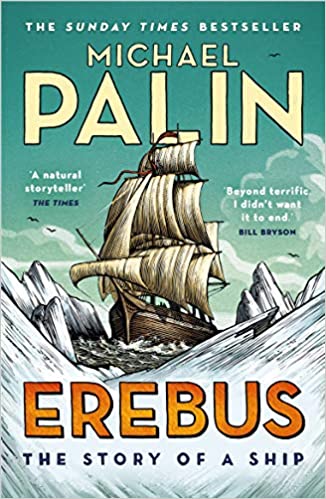 However, Erebus: The story of a ship is more than a mere chronology of dates, actions and events. Michael Palin tells us a complex story. It’s an evolving story of the interpersonal relationships of those men serving on the ship; relationships that blossom and those that deteriorate. It includes accounts of influential men and women who shaped the voyages and crew selection. It also notes the impact of sponsors and suppliers who may have contributed to the final tragedy. It’s a story illustrated by Victorian photographs, other colour photographs and paintings, sonar images, maps and sketches. They all serve to provide a picture of the life and death of those on board HMS Erebus.
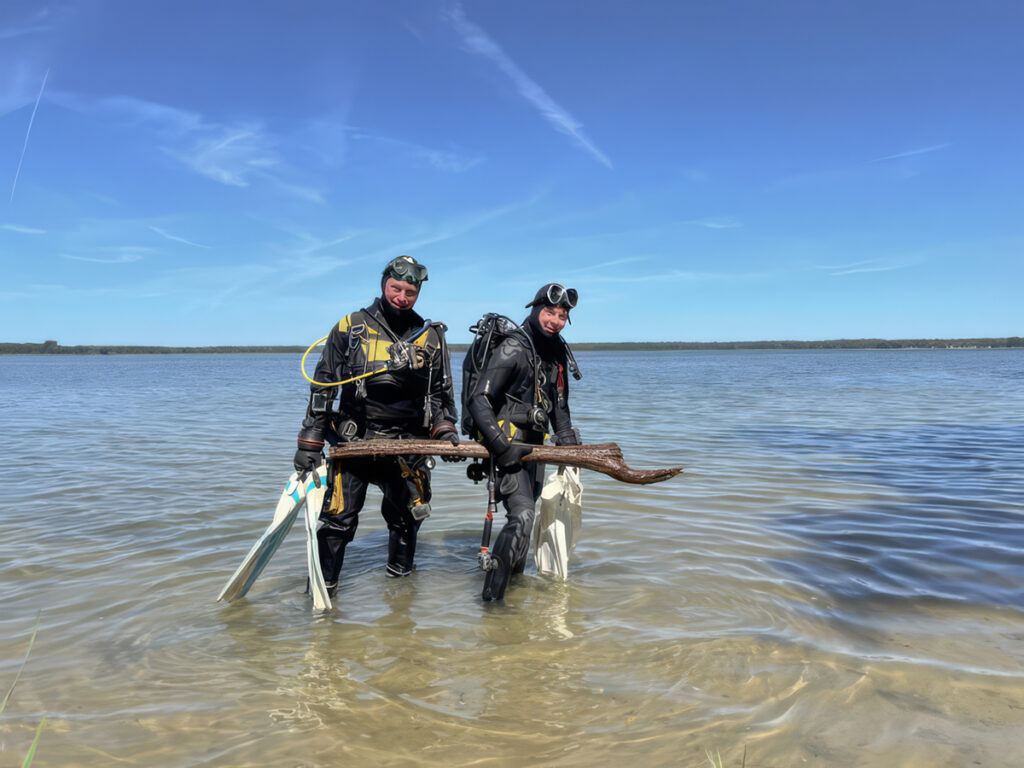
In 1846, during the heroic but ill-fated Franklin Expedition, HMS Erebus, her companion ship HMS Terror, captained by Francis Crozier, and a total of 129 men, “vanished off the face of the earth whilst trying to find a way through the Northwest Passage” (ppxii – xiii). This was the prized northern route to China and India via Arctic waters. HMS Erebus wasn’t seen again until one hundred and sixty-nine years later under thirty-six feet of Arctic water. Divers found the wreck remarkably intact as their description and photographs reveal.
Palin describes how the search for Erebus and her crew extended over decades – often suggesting missed opportunities as well as shocking findings. His summary account of the last desperate months and weeks of their survival, as the expedition disintegrated, is poignant in the extreme.
It’s tempting to describe the book as a slow burn that builds into an inferno – but words like ‘burn’ and ‘inferno’ are at odds with Palin’s descriptive account of the mind numbing cold of Arctic winters and a ship entombed in pack ice for years. Certainly, the pace of the early chapters appear relatively slow when compared to the final crescendo – but they provide an invaluable background to an understanding of the unfolding drama.
You don’t have to be a historian or a marine archaeologist, a sailor or traveller to marvel at the story of HMS Erebus and her crews. You don’t have to be a sentimentalist to read: ‘The one comfort from the whole unmitigated disaster was the news that bodies had been discovered far enough south to prove that Crozier had led his doomed men to the last link in the chain of marine connections that made up to Northwest Passage’ (p. 261).
Erebus: The story of a ship (2019)
- By Michael Palin
- London: Arrow Books
- ISBN 9781 784 758578
- 334 pp
Michael Palin has written and starred in numerous TV programmes; perhaps Monty Python is one of the most famous. He has made several acclaimed travel documentaries to the North and South Pole as well as the Sahara desert and the Himalayas. His books include Hemingway’s Chair (1998) and The Truth (2013). Between 2009 and 2012 he was President of the Royal Geographical Society. Michael Palin was knighted in 2019 and lives in London.
Find out more about Professor Fred Lockwood, who is also a published author, at www.fredlockwood.co.uk.