A TALE OF TWO GHAZALAS: Adventure at Sea and a New-Look Explorer

Have you ever spent a week out at sea, exploring a new dive site every day, doing nothing but eat, sleep and dive? No, neither had I, until this week. I’m twenty-one, newish to diving and had no idea what to expect from a liveaboard in the Red Sea. All I knew was that I couldn’t wait to dive four times a day without getting outrageously cold.
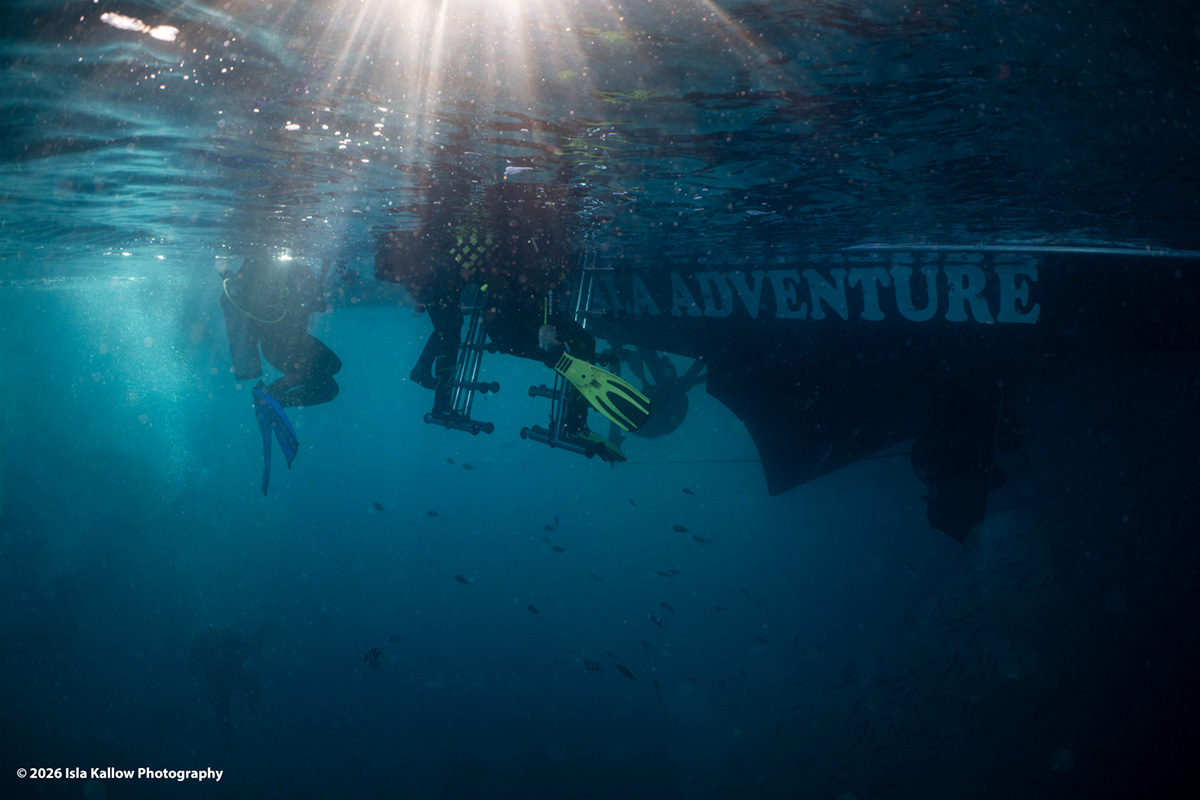
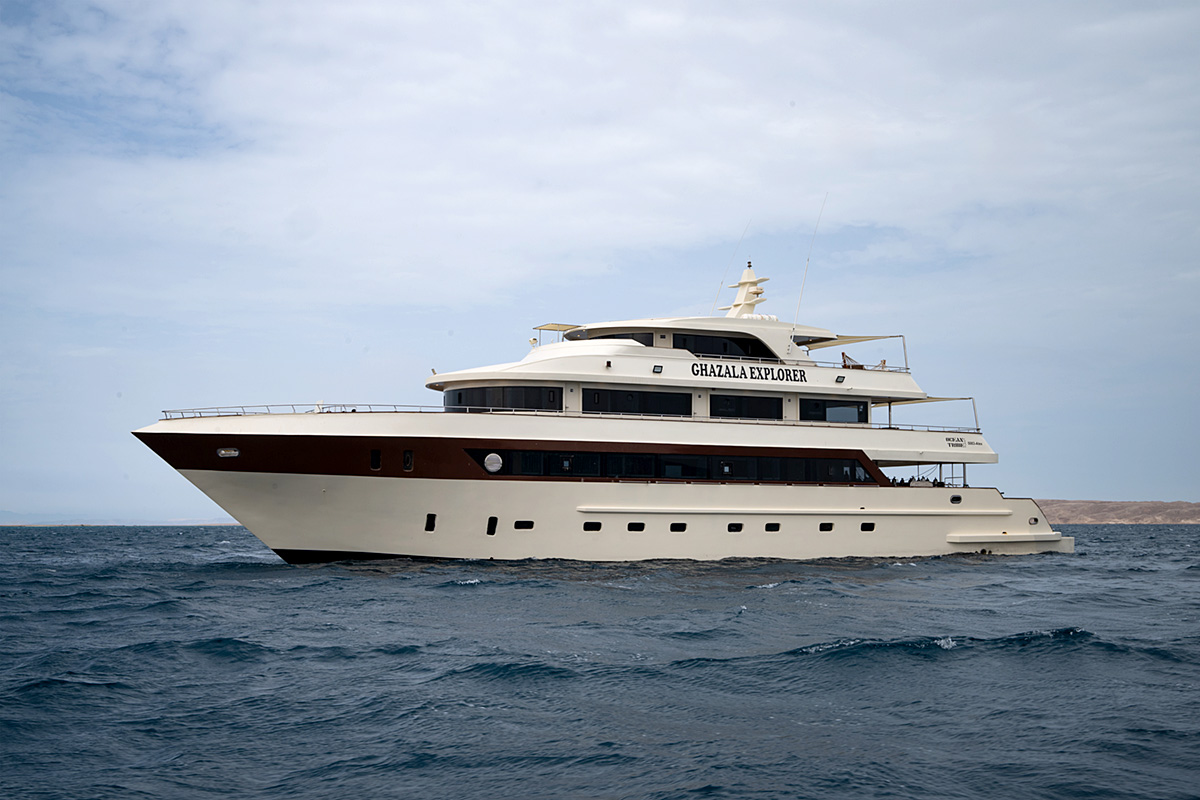
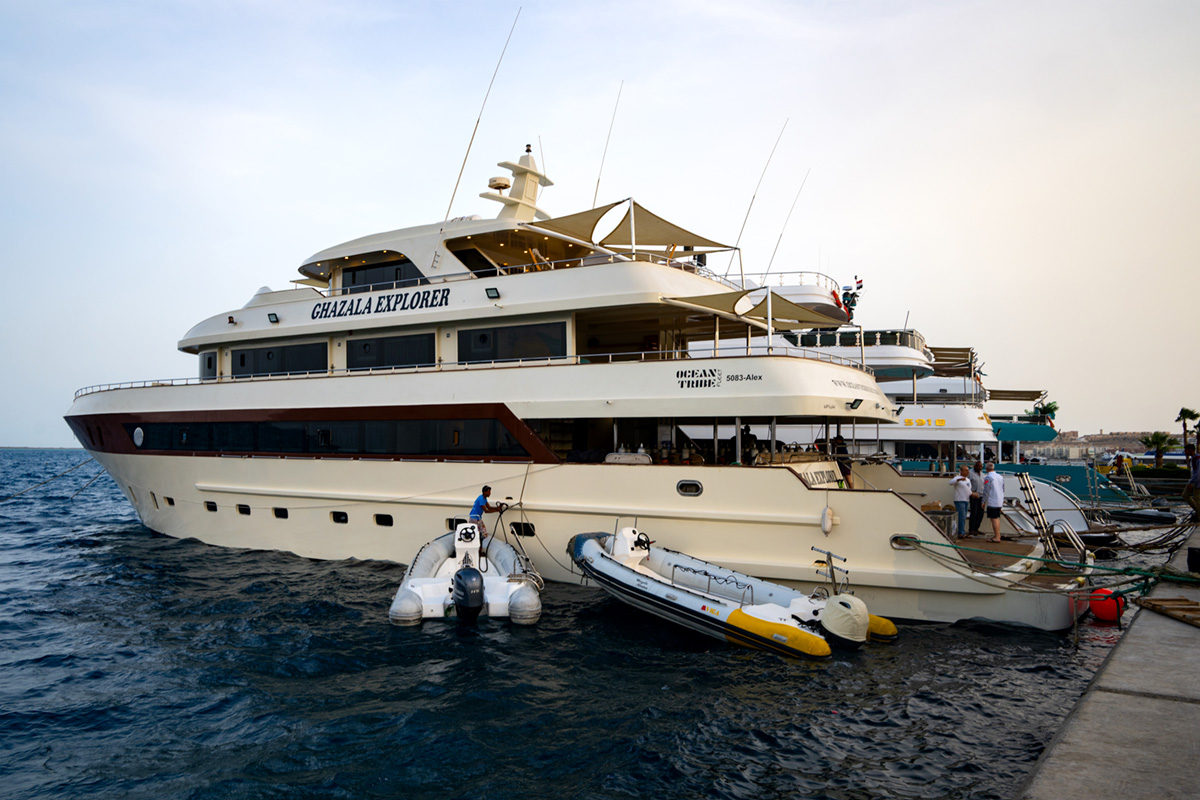
The week started in Hurghada Airport, where I was immediately greeted by members of the Scuba Travel team. What a relief it was to be swiftly helped through passport control and baggage claim and, with just a little bit of struggle, I managed to carry my heavy kit to the private transfer bus. As we then drove through the streets of the city, I was full of anticipation as to what the boat would look like and was not disappointed when we pulled up to the marina. Ghazala Adventure – the latest member of the Ocean Tribe fleet – was moored next to her older sister, Ghazala Explorer. New and refurbished after four months in the dry dock, she was poised to set sail on the open sea.


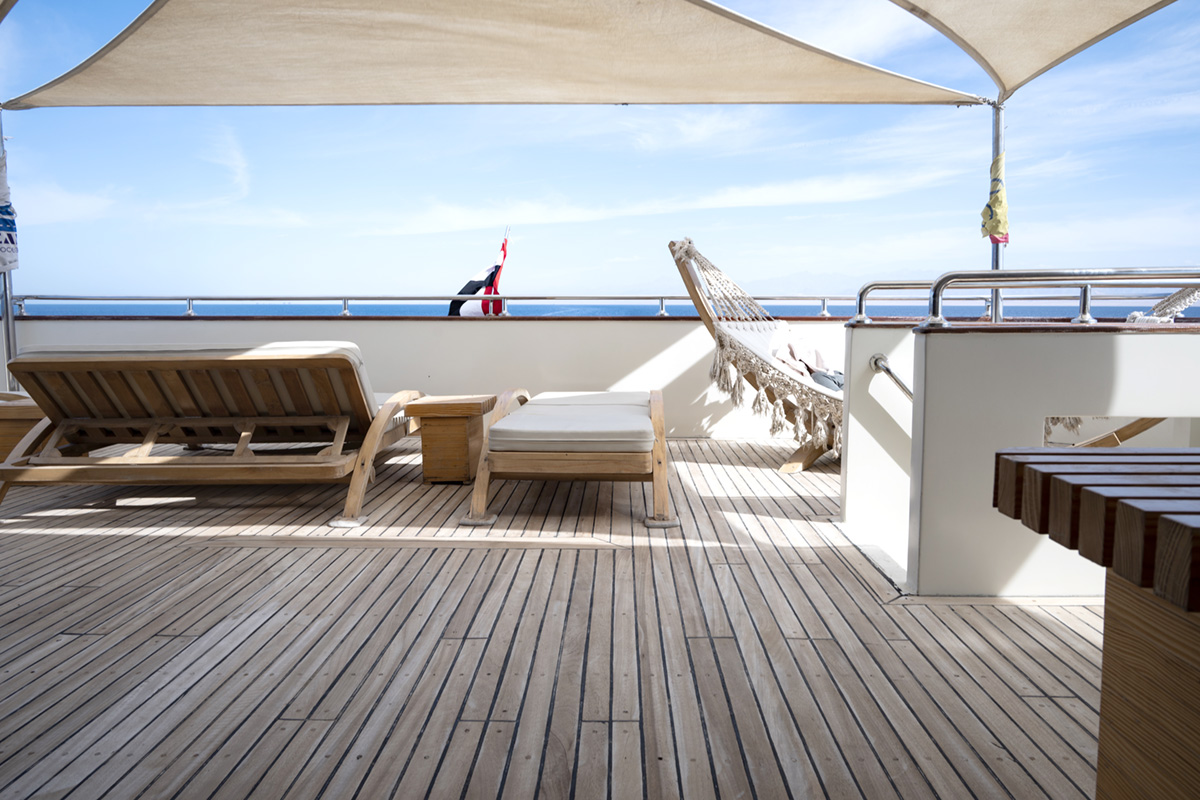
The highlight of the day was a tour around the boat: sundeck, saloon and my favourite, the camera room, equipped with everything a photographer could need on the trip. It really felt like every detail had been thought through, from magnets on the doors to stop them slamming, to well-equipped first aid and medicine boxes. The first day was rounded off with a safety briefing, filling us in on any possible eventualities and how to deal with them. Their informative and engaging style put me at ease – it was obvious the team had done this a thousand times before and we were in safe hands.
The next day kicked off at 6.30am – which I later learned was a bit of a lie-in compared to the usual routine at sea. We set sail after breakfast and had our first briefing on the way to our first dive site. To ease us all in, we had a thorough check dive, which was very much appreciated: weights were sorted out and DSMB practice drills took place, ready for the diving to properly begin.
The next few days blur together in an excitement of wrecks and coral. An average day started at 6am, giving us half an hour to get ready before briefing. For me, this always meant setting my camera up, especially if I’d been too lazy to do it the night before, and analysing O2 levels. The briefings were informative and covered everything from entry, history, route and species we could expect to see before having the choice of going guided or unguided. The dives themselves were the highlight; having never exerienced proper wreck diving before this trip, they were my definite favourite. Surfacing from the dive, we were treated with what felt like luxurious support: the team were there to help us out of our kit and take away our wetsuits to be hung and dried – this is not what I was used to!


After the first dive, we had around three hours of surface time for food and, for me, realistically, this was prime nap time. The food was to die for, really something for everyone; I especially liked falafel for breakfast and soup to warm us up at lunch and dinner. The rest of the day was a simple routine of diving, eating, resting, briefing and then diving again – which I certainly wasn’t complaining about. We were so exhausted by the evening that it was early nights all round so that we were ready for the same again in the morning.
Every dive was memorable and well executed. Having dived in Marsa Shagra earlier in the year, I was worried about coral bleaching in the Red Sea, but I saw little evidence of this out in the deeper water. Gliding around reef systems, we weren’t blessed by the presence of any sharks, but were welcomed by sardines, Napoleon wrasse and barracuda out in the blue water. But what really interested me was the animals which we saw again and again. I liked the familiarity of seeing them at every dive and comparing their behaviour at different sites; anthias, like clouds around the corals, and soldierfish, stubbornly swimming around in the darkest corners. Every dive welcomed a new experience.
But what do we go to the Red Sea for? Incredible wrecks: time capsules of history, rewilded by the ocean. And you simply can’t talk about wrecks in the Red Sea without mentioning SS Thistlegorm. What a privilege it was to dive this WWII relic. The SS Thistlegorm was a British WWII armed cargo ship, transporting supplies to Allied Forces in North Africa when it was hit by German bombers and went down. The shocking part of this story is the fact that the Thistlegorm was never the original target for the hit. RMS Queen Mary, carrying Allied troops, was the target but was missed by two hours. The bombers, unable to get back to Germany carrying the heavy load, spotted the Thistlegorm, a British boat, and decided to hit. Although it was awful that the Thistlegorm went down, I couldn’t help thinking what a relief it was that the bomb didn’t hit the boat carrying thousands of soldiers.
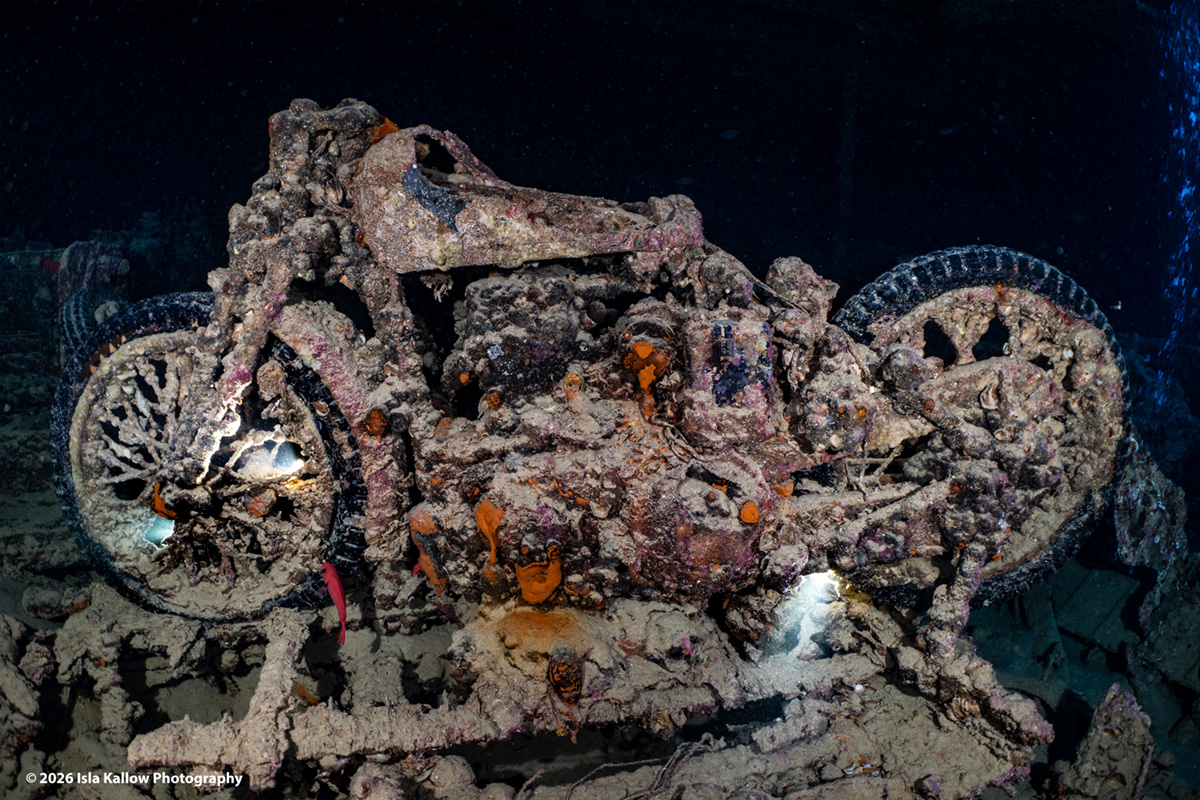
The Thistlegorm’s cargo is what makes this dive so legendary. Dropping down to just above 30m and swimming inside the wreck, I was greeted by practically an underwater museum: trucks, motorbikes and ammunition, some still in their original crates. It’s such a weird feeling to see all these old vehicles frozen in time, growing algae and surrounded by soldierfish. Being careful on air consumption, we spent one dive exploring the holds and another going around the outside. As much as the vehicles are interesting, I loved circling the outside of the wreck, being able to really take in the size of the boat and tracing signs of the war: bomb damage, guns attached to its bow. Crocodilefish camouflaged onto the old artillery, while sergeant major fish grace what used to be the top deck; it’s amazing to see and such an unforgettable dive.
I can’t talk about this trip without mentioning my favourite dive. The Thistlegorm is impressive, and a fascinating look into history, but the Giannis D wreck was the standout dive for me. Sat at around 24 metres and at a 45-degree angle, it makes for a very disorientating swim-through to the engine room. But what made this dive so special was the light. As you move through to the engine room, you are greeted by beaming sunlight from the main ship funnel. This has invited thousands of tiny fish, moving around in great schools. It really was so beautiful, and I can’t wait to go back and photograph it better next time. The rest of the wreck has been rewilded like I’d never seen before; the mast makes for an artificial reef, home to anemones and their symbiotic partners, the clownfish. As a photographer, it was a dream dive!
The trip ended too early for my liking, finishing the week with two beautiful early-morning reef dives, before making a relaxing journey back to the marina. When back, I was lucky enough to get a look around Ghazala Explorer – the older sister of The Adventure. She is just out of the dry dock, with extensive, brilliant updates to match the high standard of The Adventure. The work done to the boat was all rooted in safety for guests and workers alike; new fire exits have been built into the bottom deck, allowing swifter and easier exits for guests, and individual fire alarms have been put into every room, which not only sound a siren but flash lights for those with hearing impairments. Everything has really been done with guests in mind.
The top-deck rooms, originally for dive guides, have now been converted into guest suites with beautiful views out to sea, meaning that the rooms are further away from the engine and therefore quieter. What a gorgeous boat. You can’t think of anything to improve; they really have done a great job. And I can’t wait to be out on her soon to properly see how all the new adjustments are put into action out at sea.


At a glance
Currency: Egyptian pounds (British pounds, American dollars and euros are widely accepted).
Language: Arabic (English is widely spoken).
Electricity: Charging ports can be found in cabins and in the main saloon area. A specific battery charging station can be found on the dive deck for safety reasons.
Who is it ideal for: Anyone! It is recommended that you have 25 dives under your belt.
Best time to go: The Red Sea is beautiful to dive all year, but it really bursts into colour in the warmer months, especially if you are after sharks.
Visa: A 30-dollar visa can be paid on arrival with Egyptian pounds, euros, British pounds or dollars. It can also be pre-booked online with the help of Scuba Travel.
Getting there: From London Gatwick, you can fly direct to Hurghada, where members of the Scuba Travel team are there to help you swiftly through passport control and to the boat.
Sample itinerary price: Roughly £1,671, depending on route and room price. Includes return flights to the UK, full board on the boat and diving!