Malta – the Jewel of the Med, Part 3: Comino
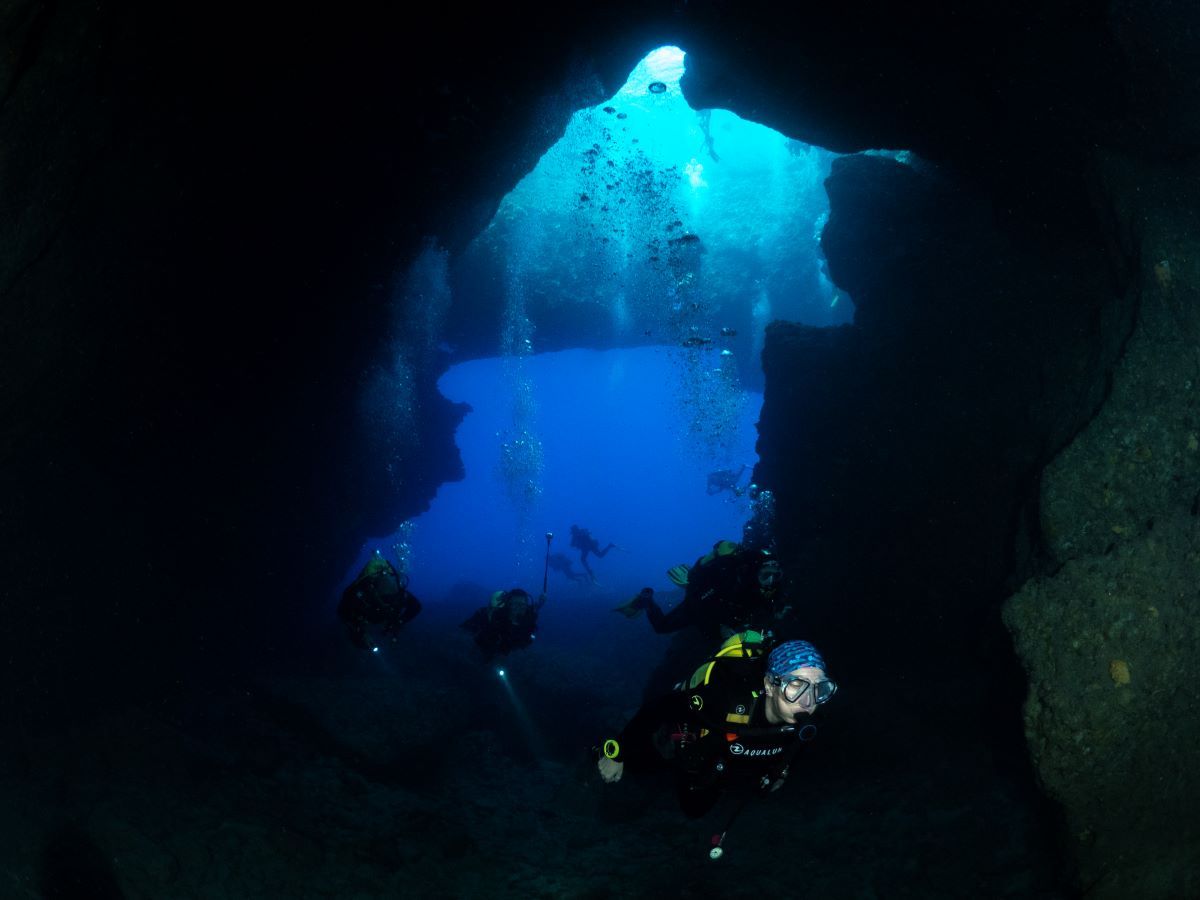
While Malta and Gozo are rightly famous for wrecks, some of the most memorable dives here are all about the underwater landscape, rock formations, and the way the light beams dance from above.
In part 3, we explore Comino’s caves, Gozo’s Blue Hole and Inland Sea, and the patrol boat P31. Together, they show just how much variety exists within such a small stretch of Mediterranean coastline, and why Malta continues to attract divers from around the world.
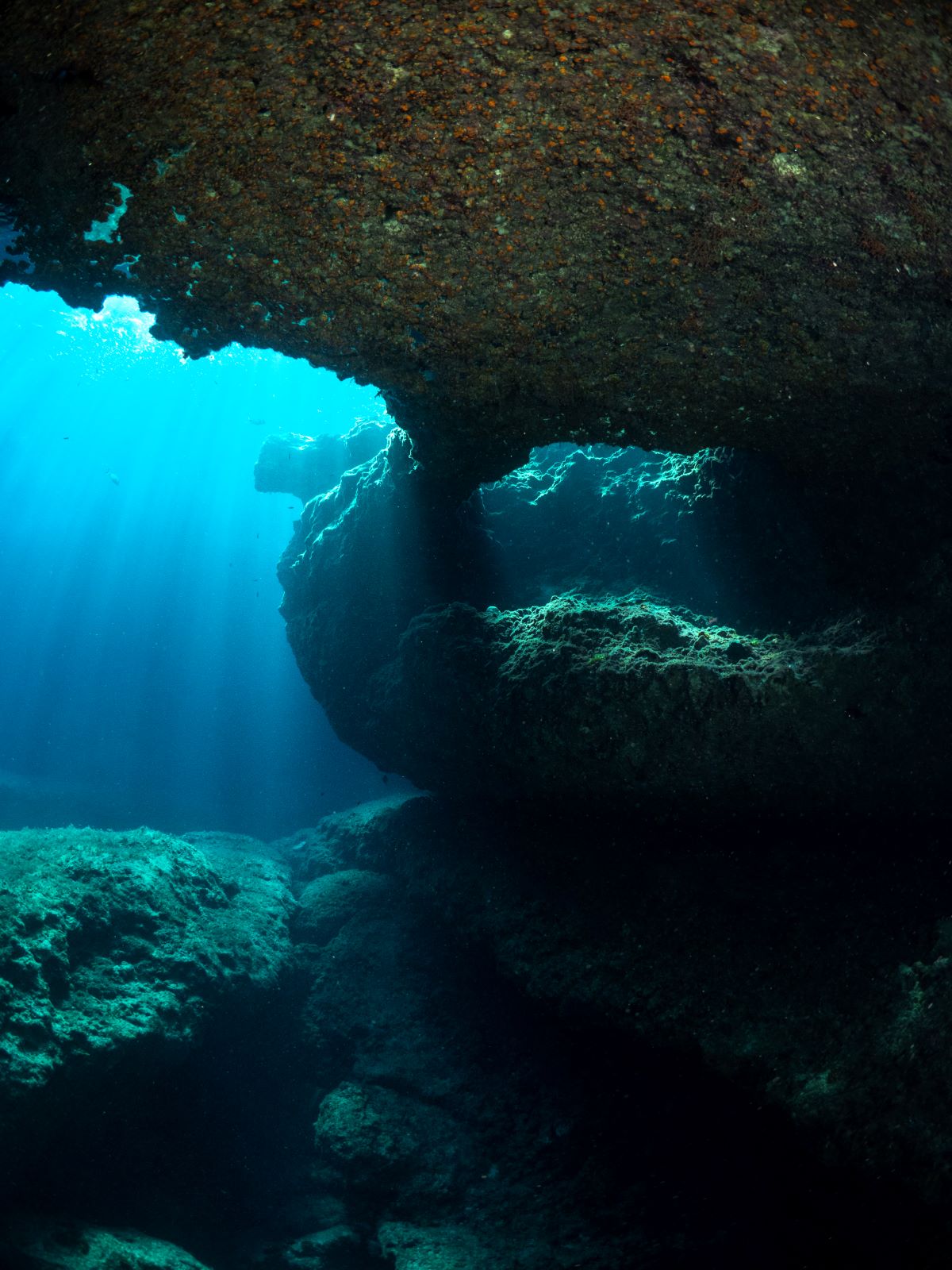
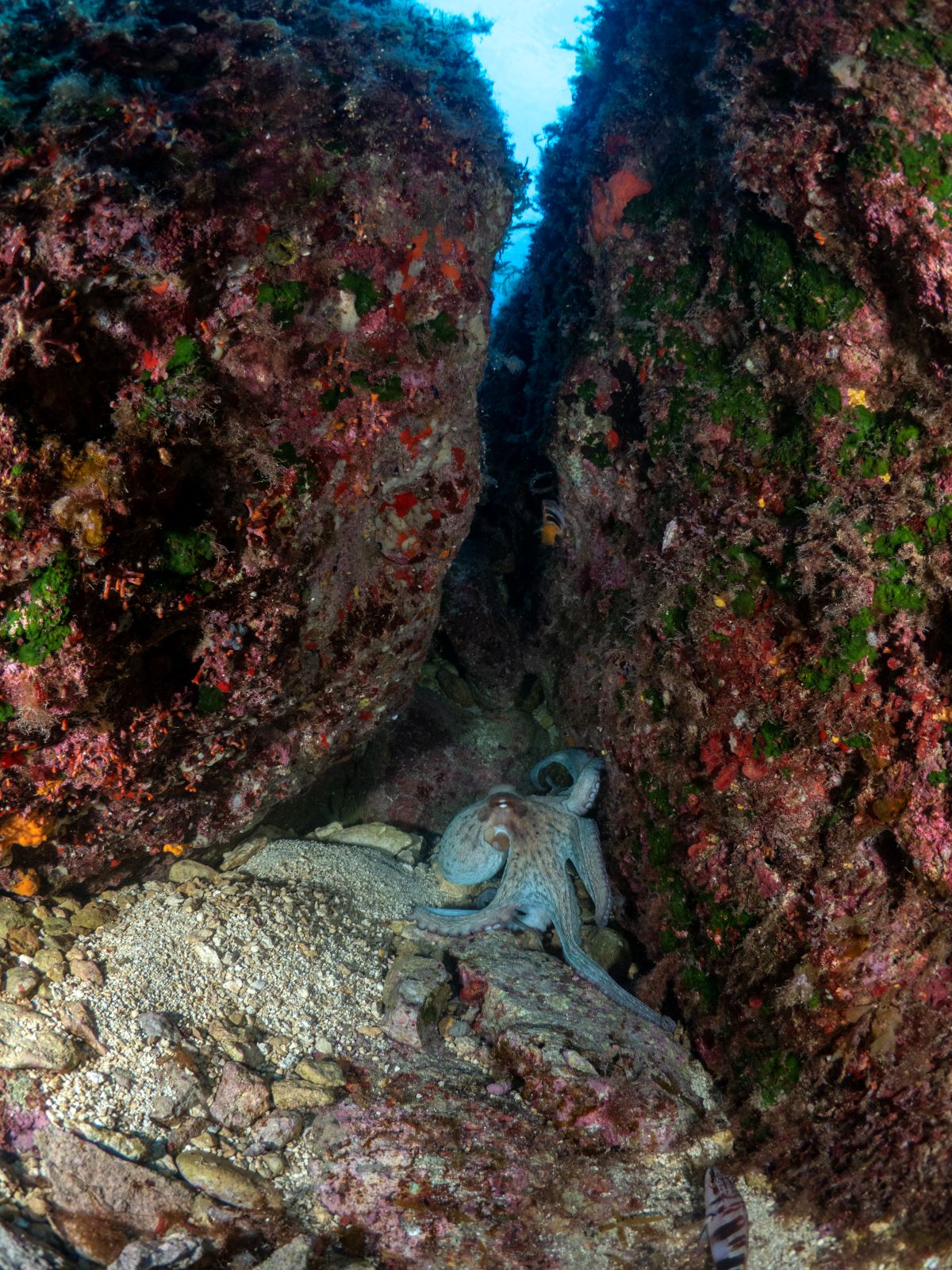
Comino’s caves are among the Mediterranean’s most accessible cavern systems, and they have a feel of diving through coral caves, often full of fish with colourful sponges covering the walls. Outside the caves, the seabed is full of seagrass and even the occasional octopus; at this site, we saw two!
The caves themselves are forgiving, with wide passages and excellent visibility, making them popular locations for buoyancy training, cavern courses, and photography workshops.
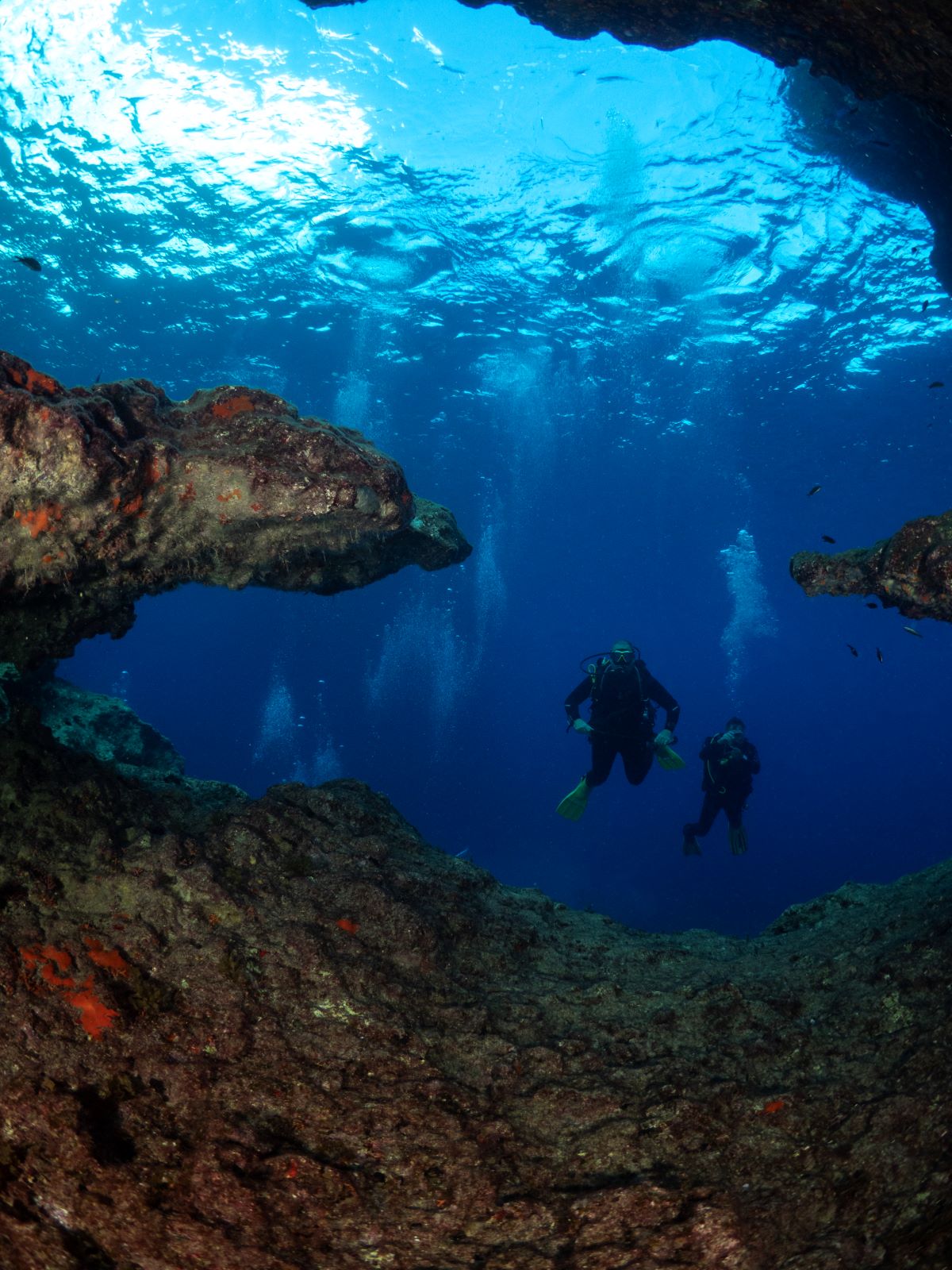
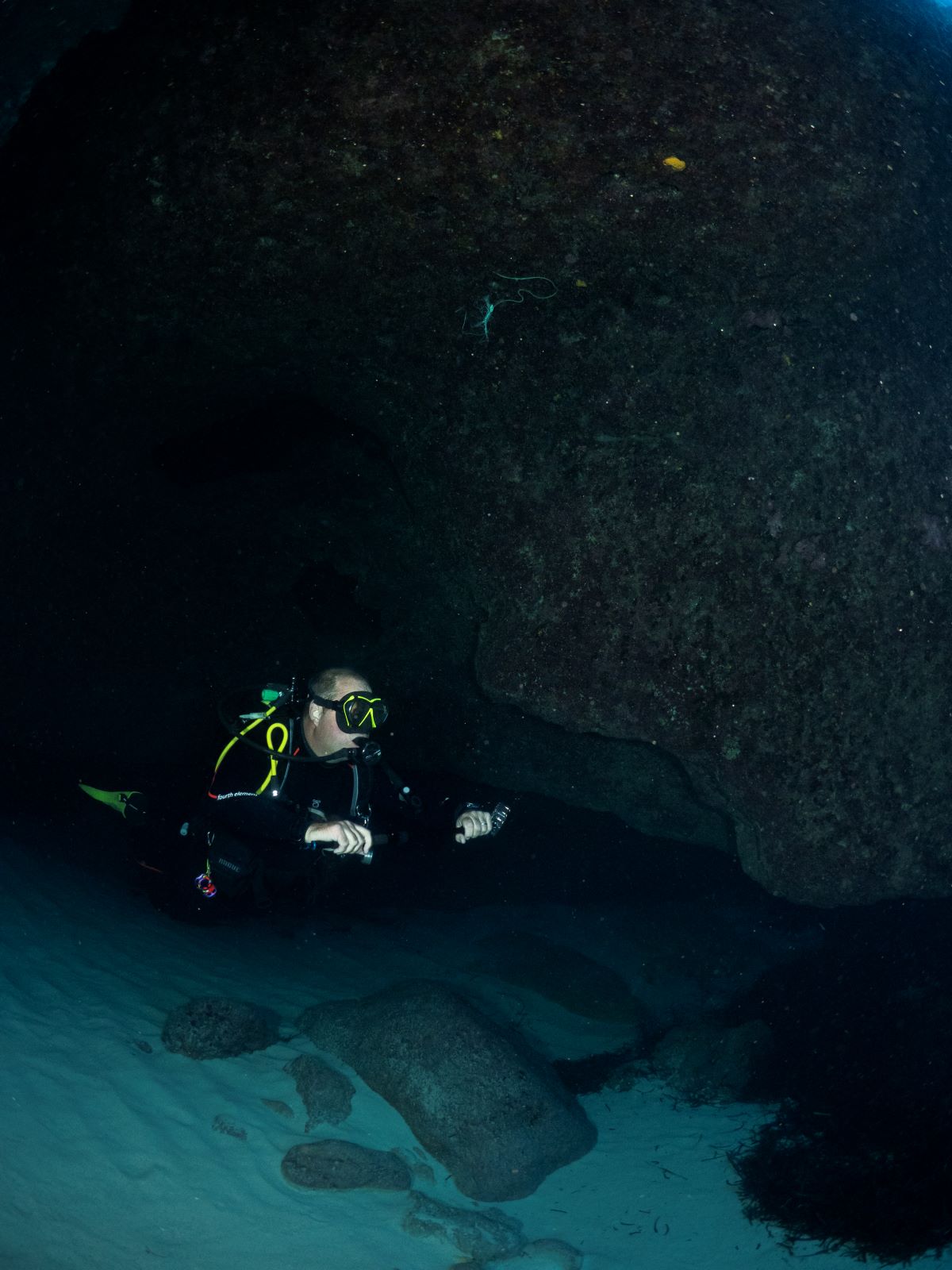
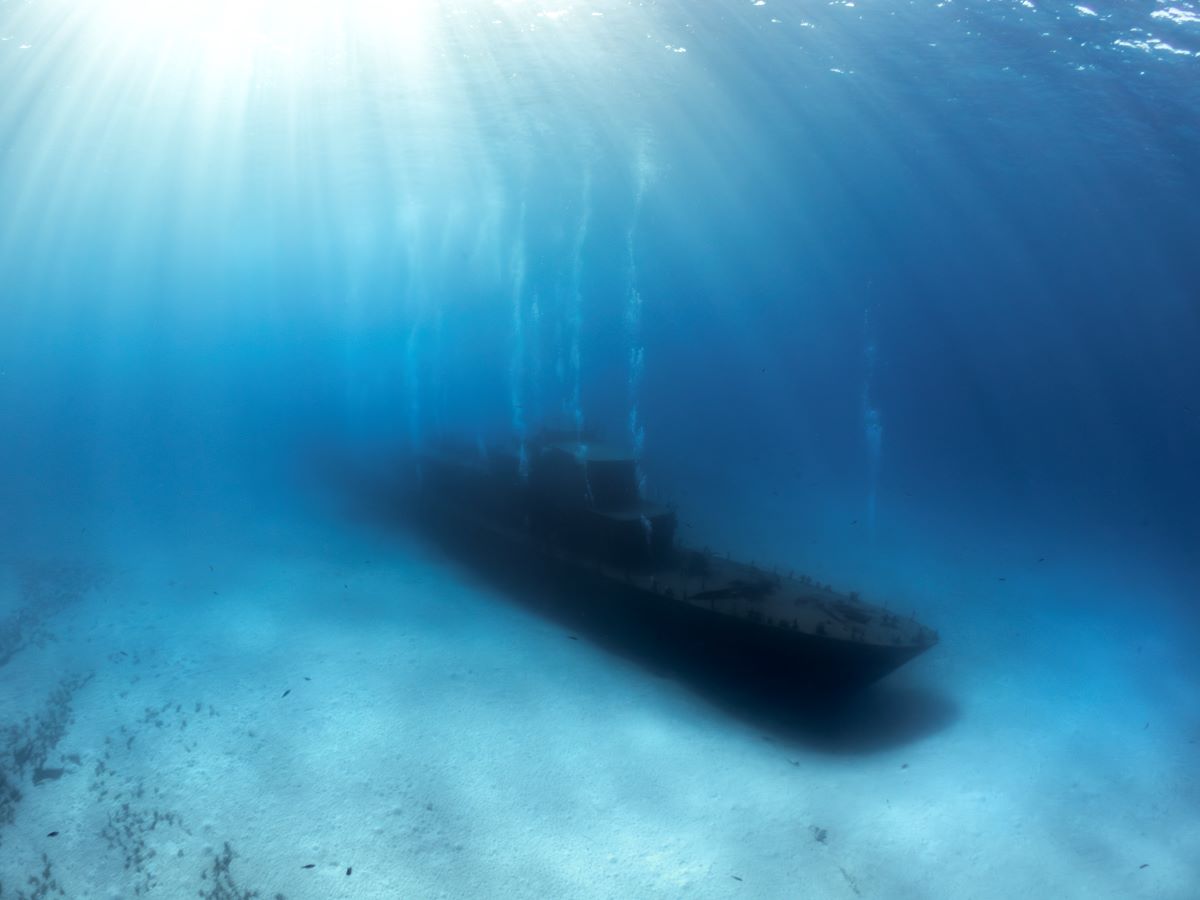
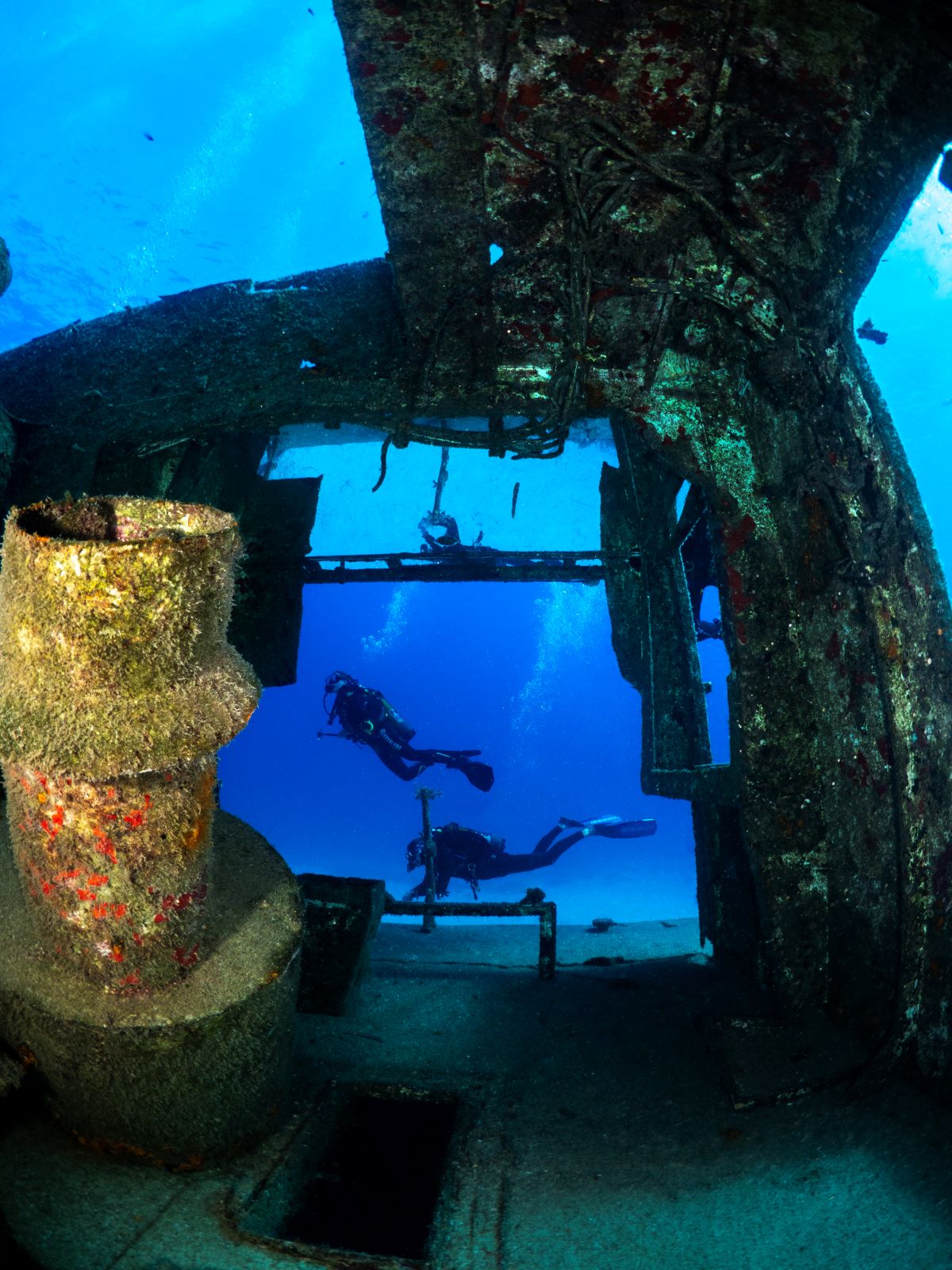
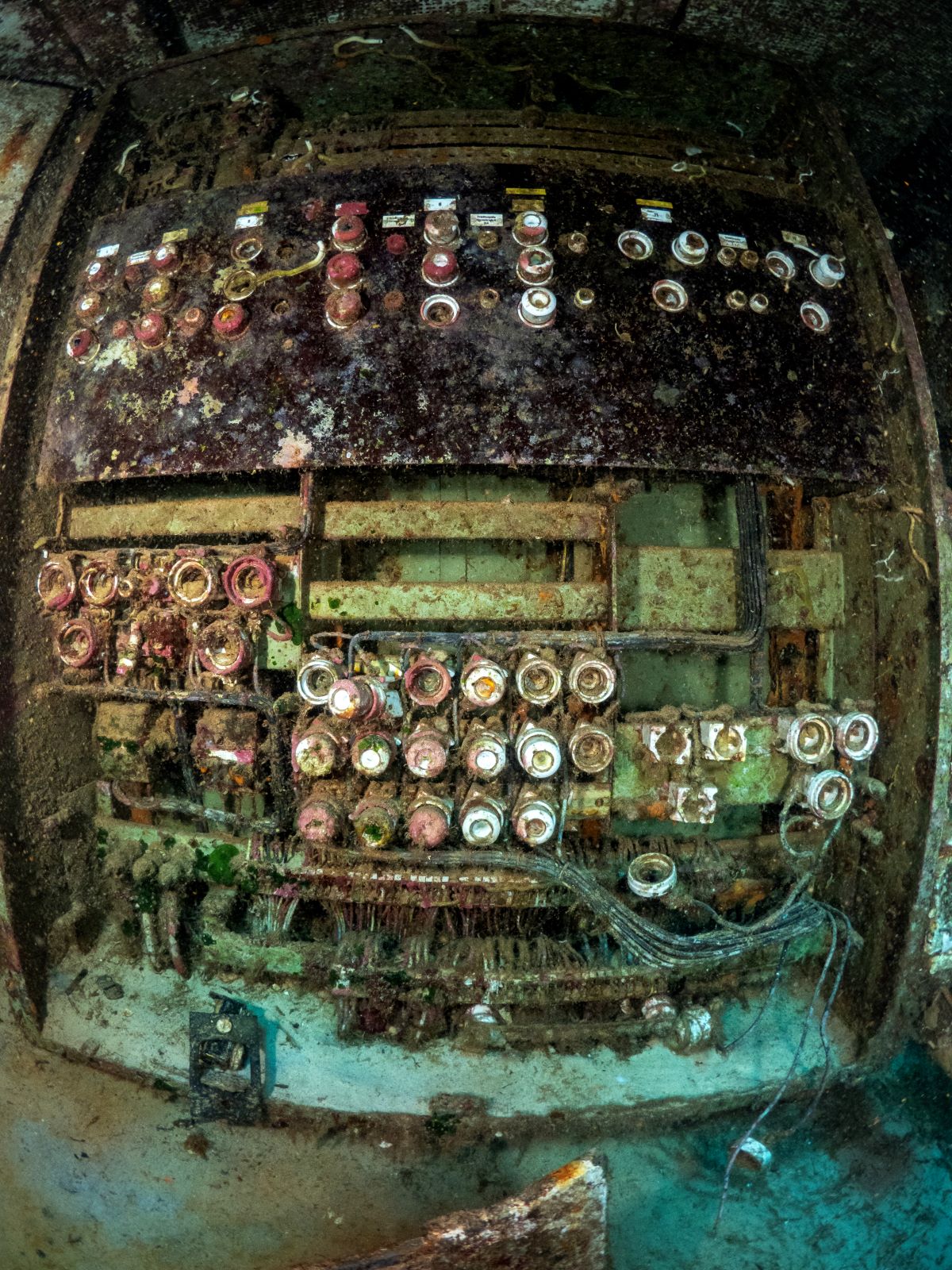
On the same day, we visited the P31 patrol boat, lying just off Comino in approximately 18–20 metres of water. This site offers one of Malta’s most accessible wreck dives. Intentionally sunk in 2009, the wreck rests upright on sand with wide openings in the hull and superstructure, but the most memorable part of the dive for me was how absolutely amazing the visibility was. From the marker buoy, you could see the entire 52m long wreck.
What makes P31 particularly appealing to photographers and divers is its shallow depth. One of the shallowest in Malta’s waters. On bright days, ambient light alone is often sufficient to illuminate the wheelhouse and internal corridors, making it an excellent site to explore without the technical challenges of deeper sites and worry of decompression limits.
On the final day of the trip, we returned to Gozo, this time exploring the rocky structures the island has to offer. We headed to Dwejra on Gozo’s west coast, home of the Blue Hole, one of Malta’s most photographed and famous natural dive sites.
After a short walk down the rocks, the dive begins in a shallow, circular pool before descending vertically through a limestone sinkhole, then suddenly the shaft opens into a wide horizontal archway leading out into the open sea.
The site is also home to the now-collapsed Azure Window, named locally as the azure boulders. Now the site is a stunning collection of underwater peaks which tower over the surrounding rocks. The Azure Window was a hugely popular tourist destination before its dramatic collapse in 2017.
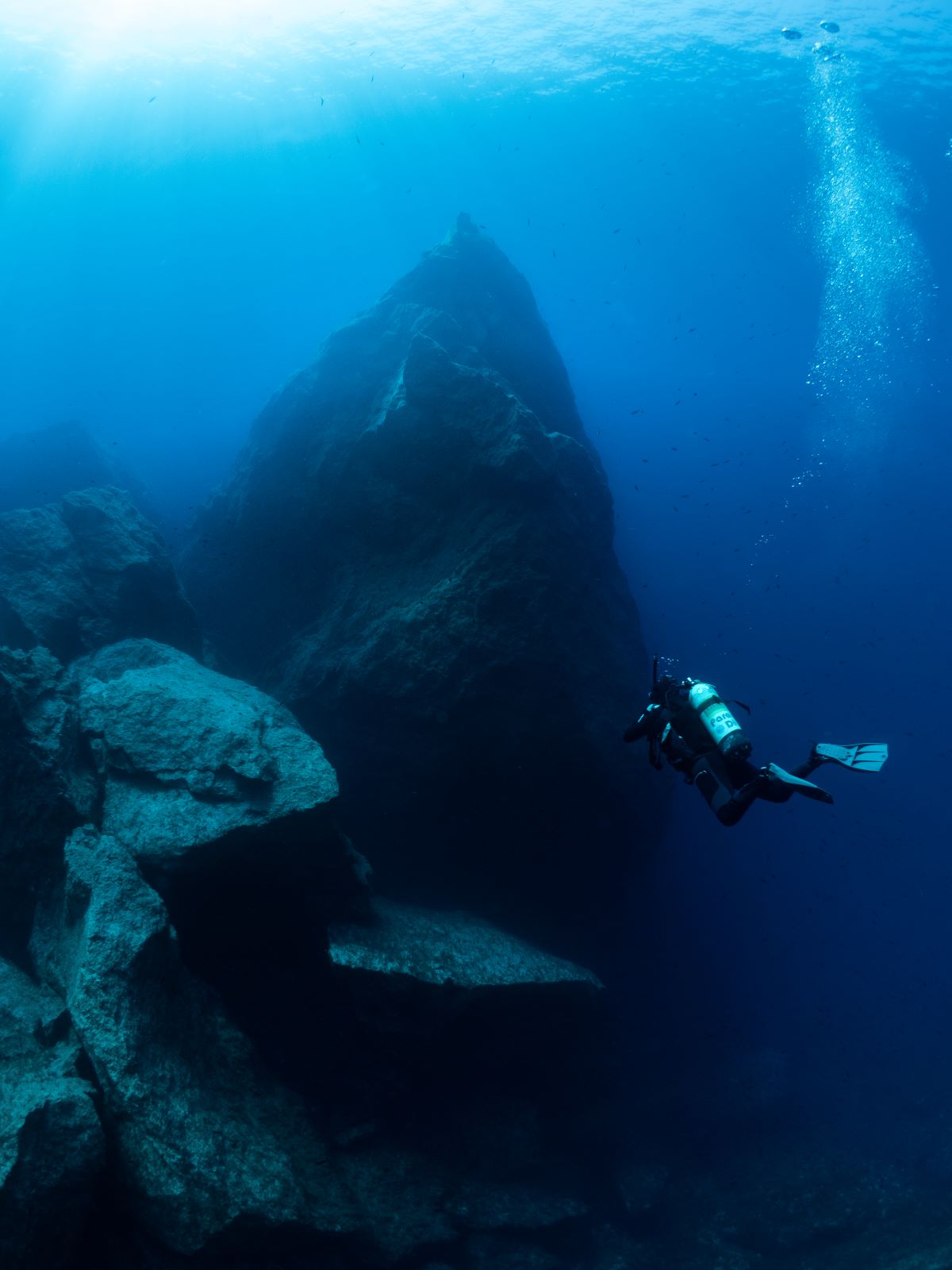
My favourite part of this site is a spot called the chimney, a vertical swim-through that starts at around 15m and reaches all the way up to 6m. An ascent in the middle of a relatively thin tube is challenging but thrilling.
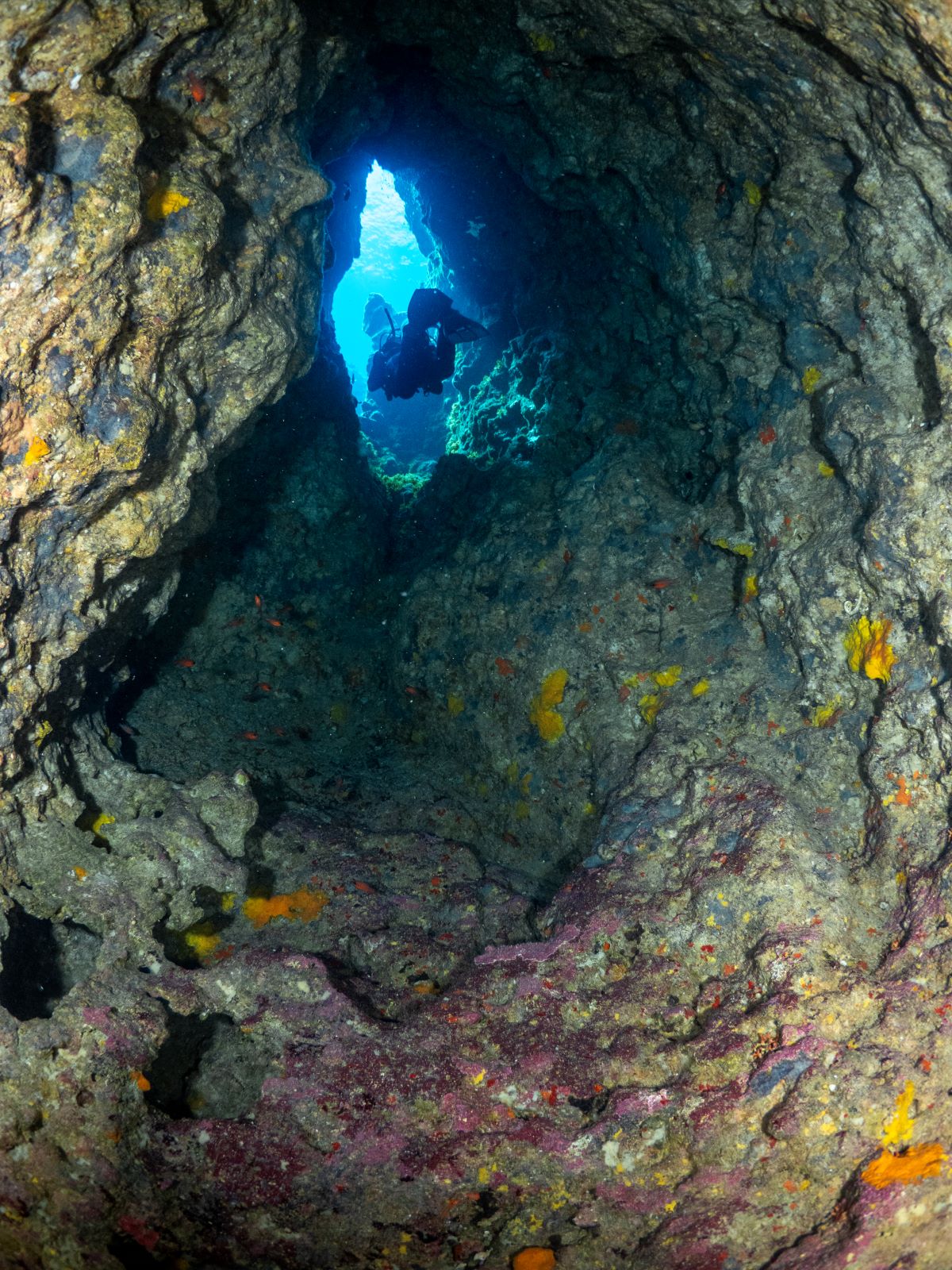
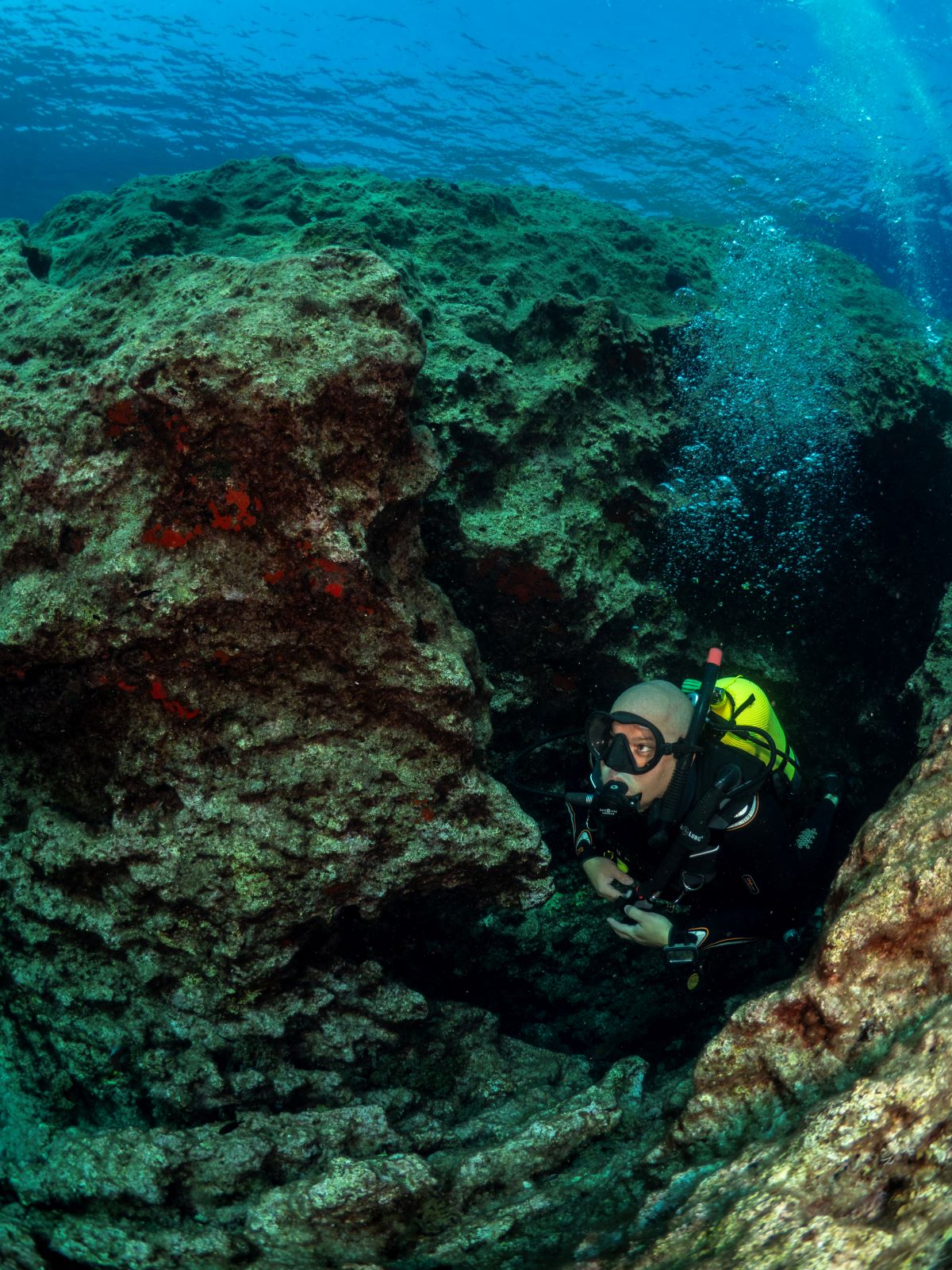
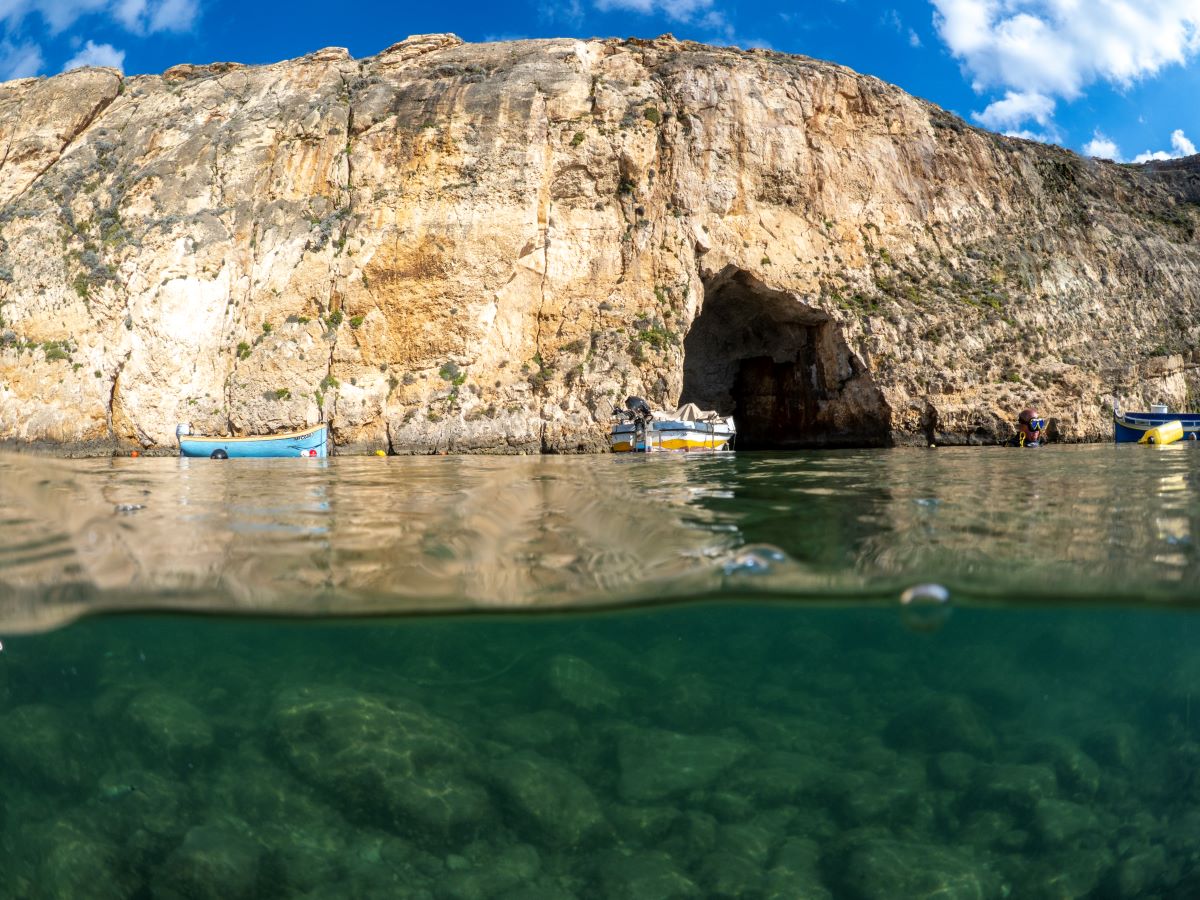
While the Blue Hole often draws the headlines, many divers, particularly photographers, consider the Inland Sea tunnel to be the highlight of the area.
The Inland Sea is a shallow lagoon separated from the open Mediterranean by a massive limestone wall. The connection between the two is a wide tunnel approximately 80 metres long, with depths ranging from 5 to 25 metres depending on the route taken. This cavern passage is dominated by powerful ambient light entering from both ends, producing a striking gradient from shadow to blue that shifts throughout the day.
Unlike many cavern systems, the Inland Sea tunnel remains consistently well-lit. On calm days with high sun angles, light reaches deep into the cavern, illuminating the limestone walls and creating stunning, dancing light rays, which I could sit and watch all day.
Visibility often exceeds 30 metres, but is definitely better in the morning as the site is quite popular with divers and tourist boats, and the entrance can become silty after lots of divers have swum in the shallows. In the morning, the light shines from the lagoon into the tunnel; during the afternoons, the direction of the sun is shining from the outer walls into the lagoon.
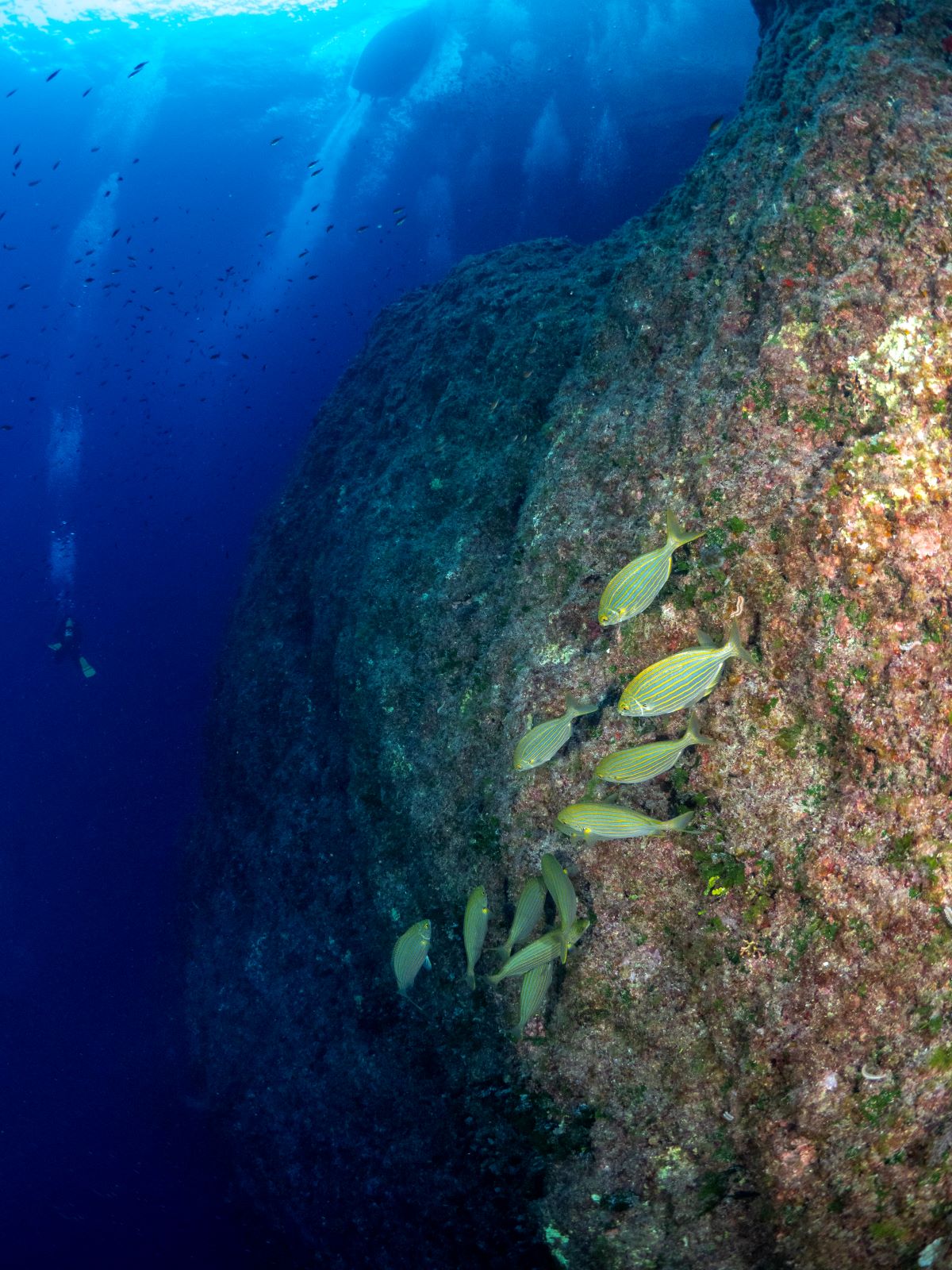
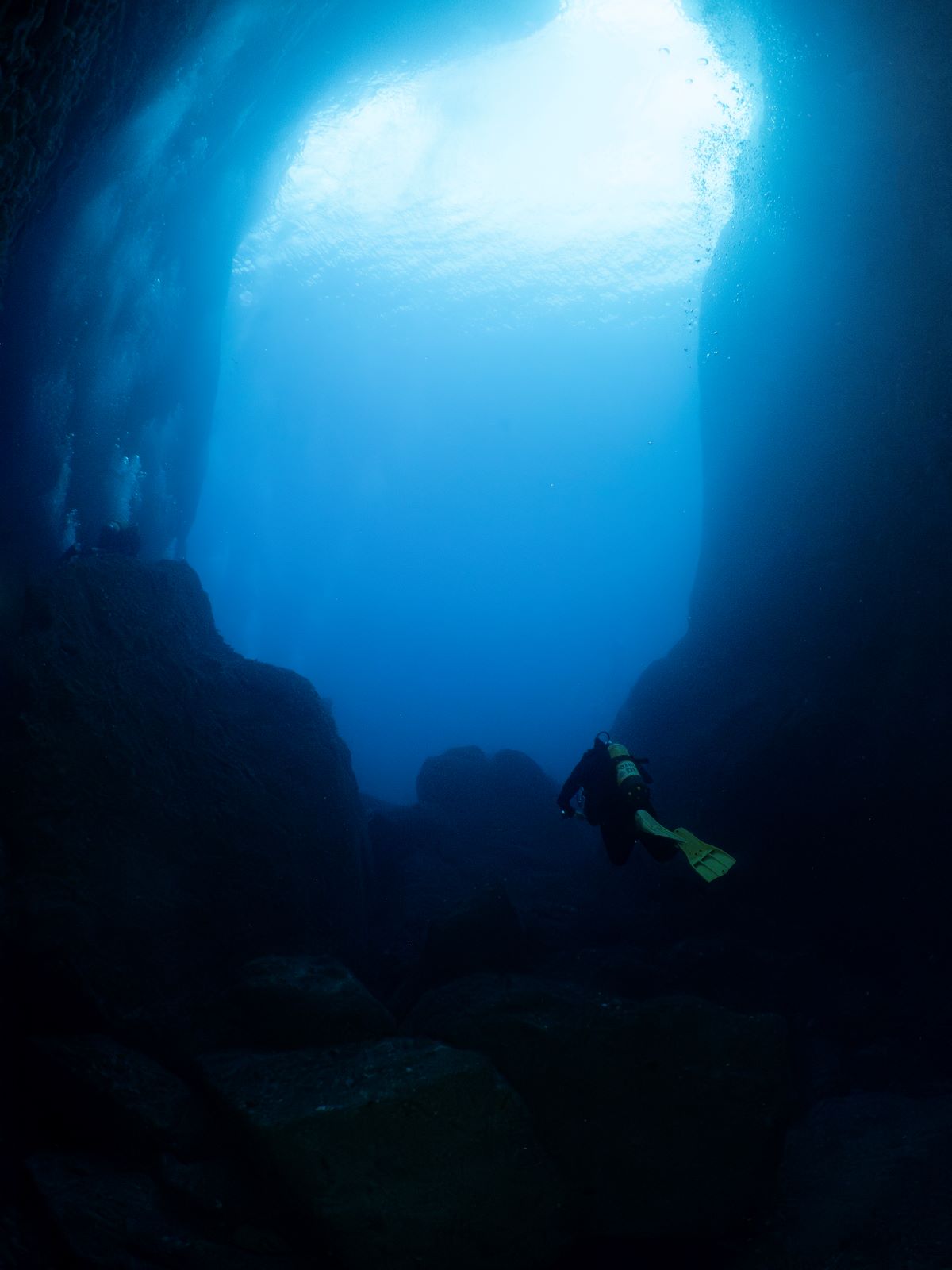
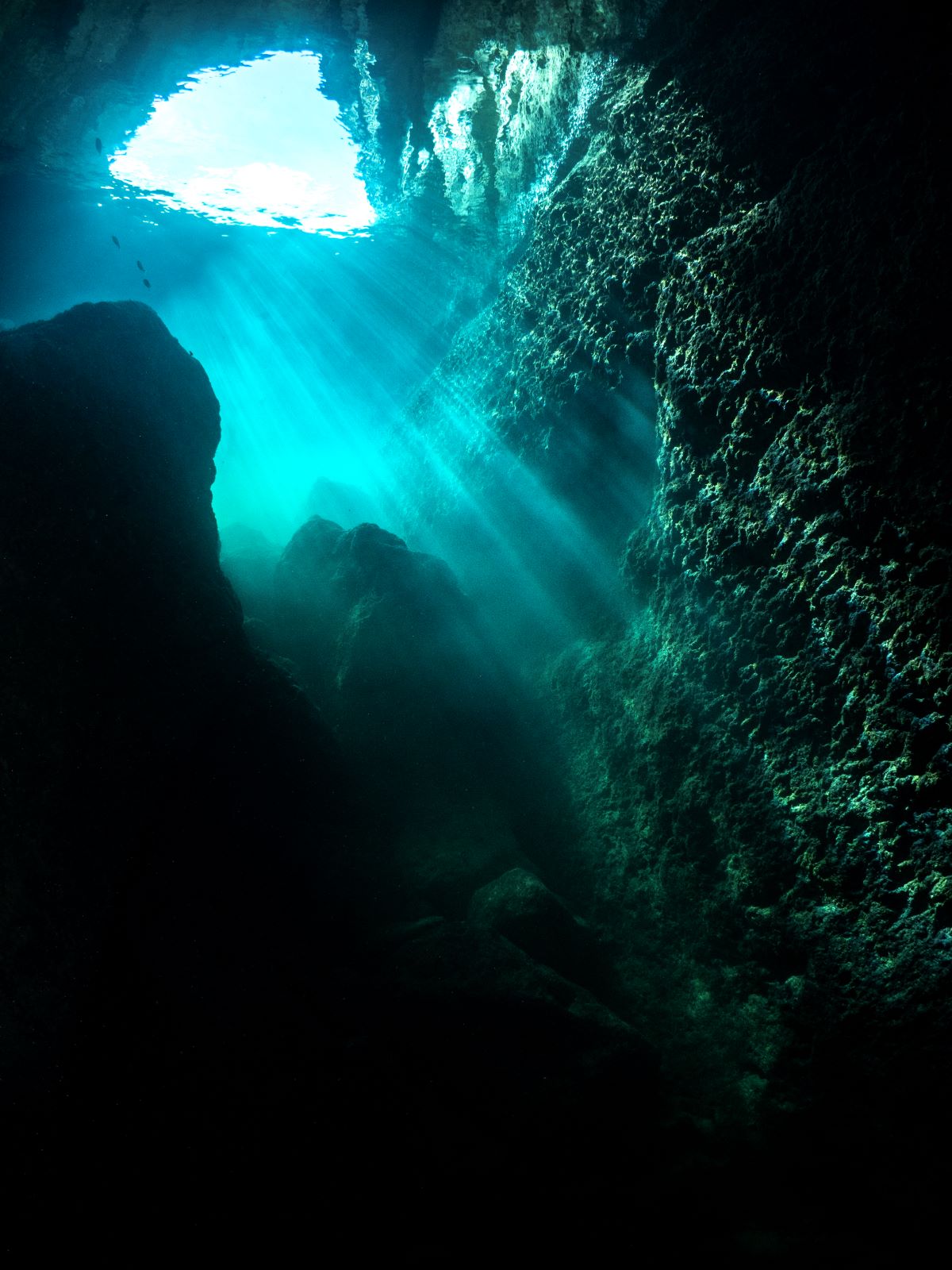
Once outside the tunnel, the underwater landscape opens into steep limestone walls descending into deep blue water. Marine life inside the tunnel is limited, with wrasse, cardinalfish, and occasional groupers sheltering along the walls. Outside, shoals of bream and a chance of seeing passing pelagics are on offer.
From a diving perspective, the Inland Sea tunnel is straightforward, with no complex navigation or technical restrictions, making it accessible to most advanced recreational divers. For photographers, however, it stands out as one of Malta’s most reliable natural-light cavern environments.
In Part 1 (read here), we explored an array of wrecks Malta has to offer. In Part 2 (read here), Gozo’s wrecks showed how steel transforms into artificial reef over time. In Part 3, we have explored the more natural features of the islands. Whether drifting through Comino’s glowing caverns, framing divers at the Blue Hole and surrounding caves, hovering inside P31’s sunlit corridors, or watching sunlight pour through the Inland Sea tunnel, these dives demonstrate why Malta remains one of Europe’s most photogenic underwater destinations, and why so many divers return not for depth or difficulty, but for clarity, light, and exploration.
Shannon’s trip was organised by UK-based dive tour operator Oyster Diving Holidays:
oysterdiving.com/holidays/europe/malta-gozo-diving-holidays
Email: info@oysterdiving.com
Call: 0800 699 0243