Transform your understanding of the underwater world with The Shipwreck Decoder

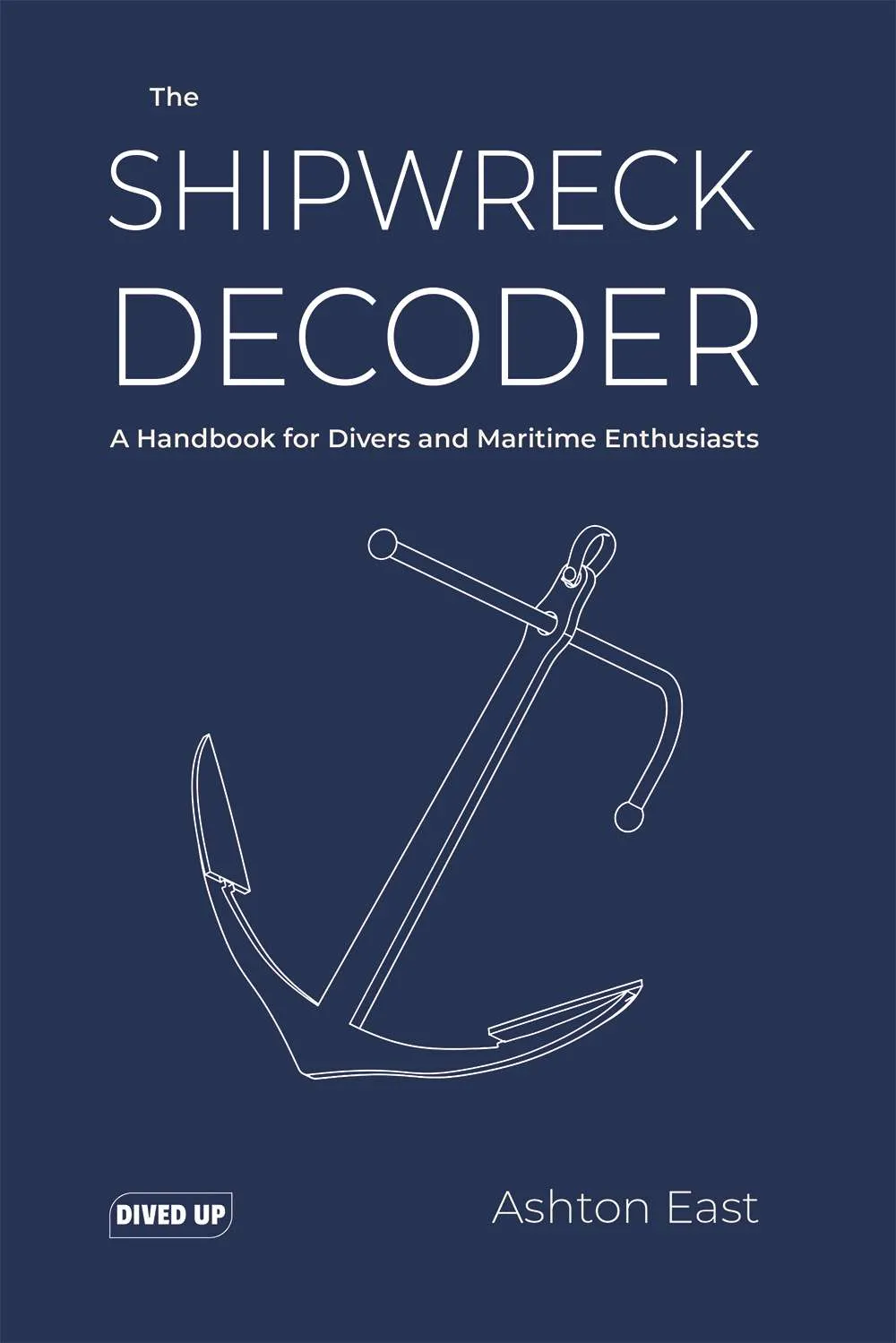 The essential illustrated guide to understanding the silent stories told by submerged vessels. The Shipwreck Decoder by Ashton East provides an in-depth exploration of construction methods and design principles, placing maritime technology in its rich historical context and teaching you how to interpret your observations. Spanning different eras—from ancient craft to Cold War era ships—the book covers everything from structural design and propulsion systems to armaments and navigation instruments, empowering maritime enthusiasts (including divers) to truly ‘read’ any underwater time capsule.
For Divers: The book centres around enhancing the experience and understanding of wreck divers. Practical details, such as how to orient oneself on a wreck using engine components or understanding construction methods, will help them explore more confidently and make better sense of every dive.
For Maritime Enthusiasts: The book provides rich content for anyone passionate about marine engineering, historical timelines, and the evolution of ship design. The knowledge you gain will significantly enhance your appreciation of the topic, including maps, charts, museum displays, and documentaries.
- Featuring 400+ Original Illustrations: Making complex engineering visually accessible.
- A Go-To Practical Guide: A dependable source for the dive boat and après dive identification chats.
- Turn Observations into Knowledge: Clear instruction on identifying features and interpreting their history.
‘A wonderfully useful book, and I cannot recommend it too highly.’– David Gibbins, maritime archaeologist and bestselling author
‘I’m amazed how much information Ashton has managed to cram into two hundred pages – I’ve certainly learned a lot!’– Dominic Robinson, Deep Wreck Diver
‘This is a fantastic book.’– Giles Richardson, Maritime Archaeology Sea Trust
About the author
Ashton East is a technical diver and global shipwreck explorer whose interest and experience is supported by foundational courses in nautical archaeology and an analytical legal background.
The book
Release date 30 September 2025 | RRP GBP £20
Paperback | ISBN 978-1-909455-42-9 | 208 pages |229 x 152 mm
Available from Divedup.com, online and from retailers.
Praise for The Shipwreck Decoder
‘I wish this book had been available 30 years ago when I learnt to dive. I have loved diving on and investigating shipwrecks since those very first open water dives in Portland Harbour, but for years never really knew what it was I was looking at. Now all new divers can. There are few books that are specifically targeted at helping divers get a better understanding of what lies on the seabed in such a clear way so this should become a mainstay in every diver’s library.’
Mark Beattie-Edwards, CEO, Nautical Archaeology Society.
‘Most divers and archaeologists learn about the technology of ships piecemeal, according to the age and type of wrecks that they have been investigating. This can result in considerable gaps in knowledge – you might know a lot about cannons but little about steam engines. And yet the need for a comprehensive knowledge base is paramount, as both amateurs and professionals can move between wrecks of widely disparate characteristics. In this excellent book, Ashton East addresses this need with a wide-ranging catalogue of ship components and fixtures, written and illustrated with great clarity. Unlike most books of this nature, which tend to be weighty reference encyclopaedias, The Shipwreck Decoder is a compact guide that can be read over a couple of evenings. It should be read by all divers involved with wrecks and others with an interest in ships. It is a wonderfully useful book, and I cannot recommend it too highly.’
David Gibbins, Maritime Archaeologist, New York Times and London Sunday Times Bestselling Author.
‘This is a fantastic book and just the kind of introduction to shipwrecks I wish I had when I started diving. Ashton describes it as a primer and a briefing aid to “read” wrecks, and I can definitely see readers leafing through the pages before and after dives to interpret what they’ve seen. I can’t think of another work that can gently guide the reader through the intricacies of ancient boat-building technology or the science that drives a modern marine engine. Its ambitious scope is wide ranging, tracing developments across historical periods and between cultures. While it doesn’t try to master every topic, it methodically covers every part of a ship you can think of from stem to stern (or bowsprit to rudder), with deep dives into important subjects when Ashton thinks the reader needs to know more. Like me you’ll probably find an interesting fact you didn’t know in each chapter. Hopefully it will inspire the curious diver to make sense of the jumbled parts of a shipwreck encountered underwater and enable readers to better appreciate the engineering marvels these ships once were.’
Giles Richardson, COO, Maritime Archaeology Sea Trust.