A Guide to Swimming with Whales

A guest blog from PADI to mark World Whale Day
There’s nothing more magical than an encounter with a gentle giant underwater. Looking into their all-knowing eyes, you’ll quickly realize you are a visitor in their world! Supporting responsible whale tourism around the world is a great way to support local conservation efforts and catch a glimpse of the ocean’s largest ambassadors.
As protected species in most of the waters of the world, often you are limited to viewing whales from afar on the deck of a boat. But if your dreams of swimming with whales run deep, then PADI, the world’s largest diving organisation with over 6,600 dive centers and resorts, can make those dreams come true.
In some parts of the world, it’s possible to not just view them from the deck of a boat, but to enter the water and responsibly swim with them – often without any dive training required!
From sperm whales to humpbacks to the charismatic orcas (who are actually dolphins but definitely deserve a spot on the list), these are the places around the world where it’s possible to meet a whale underwater. Why not celebrate this World Whale Day (Feb 20th 2022) by planning your dream adventure now.
Where to Swim with Humpback Whales
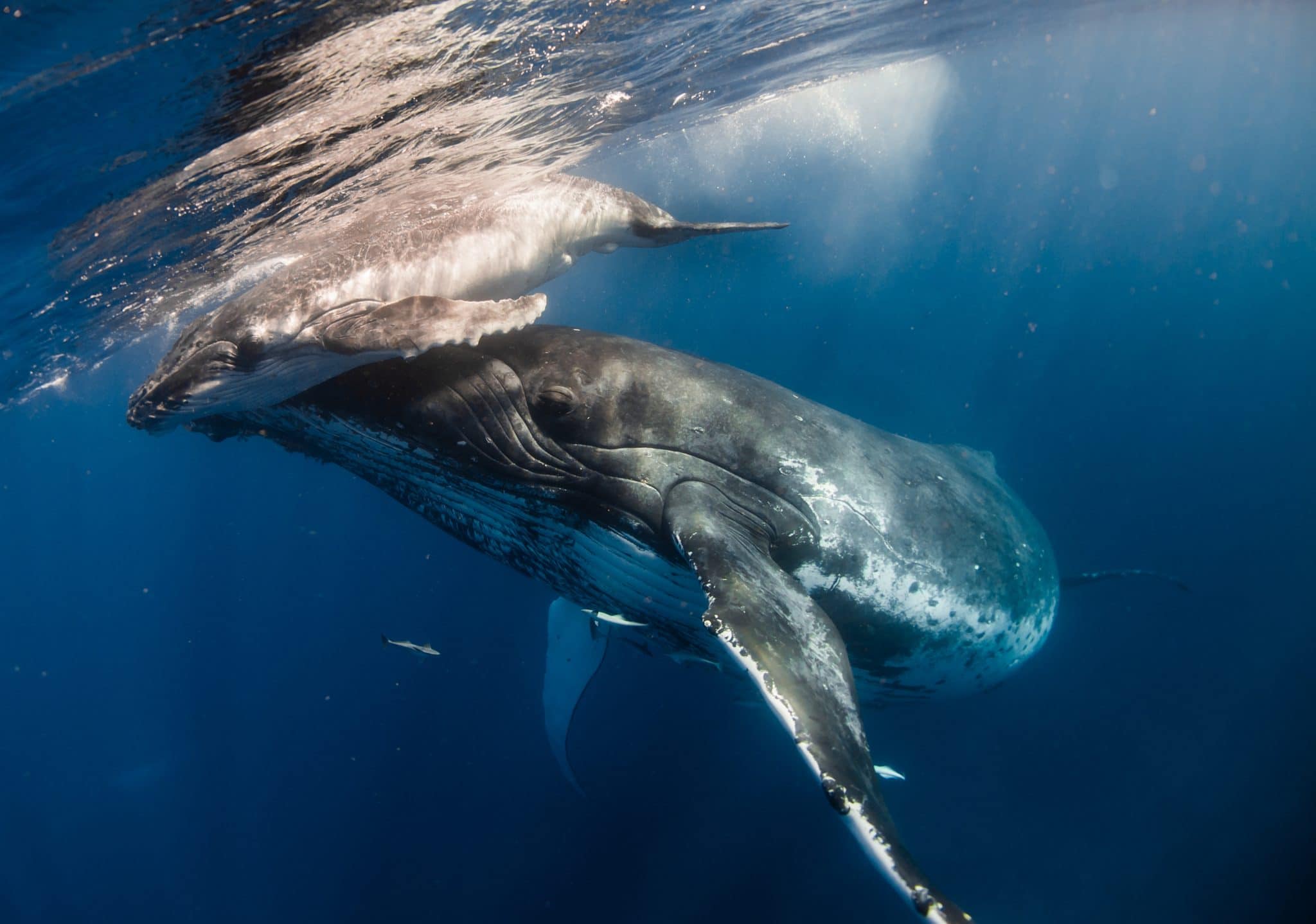
Humpbacks are famous for their mesmerizing whale songs, which can be heard by other whales many thousands of miles away. Growing 50 to 60 feet long, they are strong swimmers that can propel themselves completely out of the water and into the air (aka “breaching”). Getting their name from the small hump in front of their dorsal fin, the underside of each whale is unique in its pattern and pigmentation. Perhaps the coolest thing about humpbacks (besides their crazy water acrobatics) is that they are known to blow bubbles in order to confuse and catch fish!
Their long migrations lead them from the poles to the equator, allowing whale lovers to have close encounters along many diverse coastlines. While there are pretty tight regulations against swimming with humpbacks in much of the world, here are a few where it is legal through sustainable tourism operators.
1. Tonga: July -October
Every July through October, huge numbers of humpbacks travel north from Antarctica to Tonga to mate and calf. The best places to swim with the whales from my experience are the islands of Vava’u or Ha’apai. Only a handful of boat operators receive permits to go near the whales each year, and each boat can only take a small number of people, so booking your trip early is important.
2. Tahiti, French Polynesia: August – October
From August to October each year, humpbacks travel to Tahiti to birth their calves in the calm, warm waters off the island. Today, French Polynesia is a designated shark sanctuary and exclusive economic zone (EEZ) in order to protect its incredible marine life. Tahiti and Mo’orea are the main spots to swim with whales, offering both daily swim experience that also include the extra options of swimming in waterfalls and swimming with rays.
3. Western Australia: June – November
From June to November each year, approximately 40,000 whales migrate along the coastline of Ningaloo Marine Park, including Ningaloo Reef, in order to feed at the poles. Also referred to as Australia’s coral coast, Ningaloo is the site of a thriving coral reef which is home to other marine life including dolphins, rays, and turtles. Tours here take small groups on full day excursions to swim with the migrating whales and are designed to have little to no impact on the marine environment.
4. South Africa + Mozambique: July-October
Hundreds of humpback whales travel up the coast from Durban to Mozambique each July through October to mate and calf in the Indian Ocean. The coastal town of Tofo, which is also known for its population of whale sharks, is a great home base, where you can both snorkel and dive with the whales, as well as the countless other marine creatures that call the area home. Or you can catch them off the coast of South Africa during the infamous and epic sardine run.
5. Dominican Republic: January – April
The Dominican Republic’s Silver Bank is in a 650-square-mile marine sanctuary (now expanded as part of the “Sanctuary for the Marine Mammals of the Dominican Republic”) located about 50 miles north of the island. A large population of North Atlantic humpbacks gather here each winter and spring to mate and calf from the months of January through April. Take a week-long yacht trip to Silver Bank for the chance to to swim with the whales every day during the trip.
Where to Swim with Sperm Whales
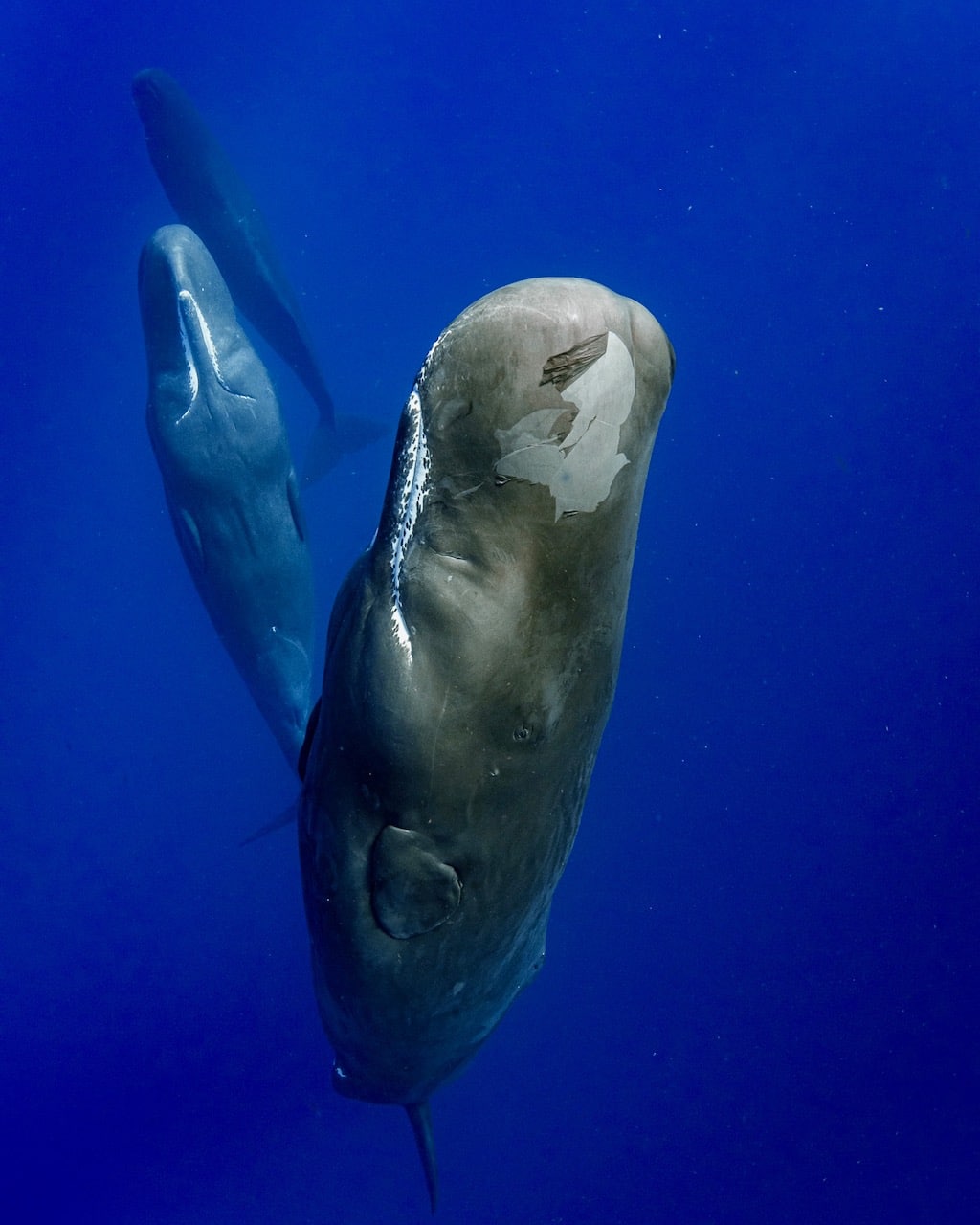
Sperm whales are the largest of the toothed whales, as they can grow to be nearly 60 feet long, and are recognizable by their huge, rounded foreheads. They can dive down more than 3,000 feet (deeper than nearly all other whales) and hold their breath for 90 minutes, which helps them in their quest to eat giant squid and 2,000 pounds of fish per day. Female whales and their calves travel in groups of 15 to 20, while male sperm whales usually travel on their own. They are the loudest animals on the planet, as the clicking sounds they make reach such an intense frequency (more than 200 dB) that the whales can hear each other’s clicks from thousands of miles away. (To a human, sounds over 110 dB can be painful, so sperm whale sounds could blow out your eardrums!) They’re not just loud, though, but also highly intelligent. A sperm whale’s brain is approximately six times the size of a human brain, making it the largest brain of any animal on Earth! (Another fun fact: the whale in Moby Dick is a sperm whale.)
Given that they dive down so deep and can be shy, the best way to swim with them is to find a group of ‘standing’ sperm whales, which is how they sleep. Through and through, sperm whales are gentle giants who sometimes even take interest in interacting with humans.
1. Dominican Republic: Winter Months
In the winter, females and their calves can be spotted off the shores of this Caribbean island nation, which is located halfway between the islands of Guadeloupe and Martinique. Swimming with these whales requires some pre-planning: permits are required, only snorkeling is allowed, and you must be accompanied by a licensed operator.
2. Sri Lanka: February – April
Off the northern coast of Sri Lanka, sperm whales can be spotted from February to April. Tour operators need to obtain a permit from the Sri Lankan government, with the majority of tours organised as a whale watching tours. But if you get lucky enough, there are a few that focus on actually swimming with these mystical creatures.
(*fun fact: Sri Lanka is also one of the only countries in the world where you can swim with the biggest mammal in the world, the blue whale. They aren’t particularly interactive, so your best bet is to jump in the water as it passes by, like a freight train, underneath you.)
Where to Swim with Orcas
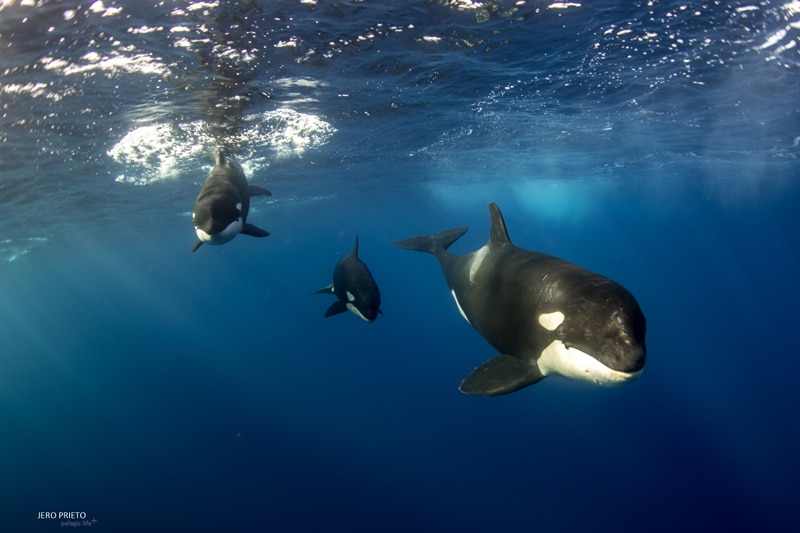
Often called killer whales, orcas are actually in the dolphin family, but they deserve a spot on this list because they’re beautiful, amazing and a once-in-a-lifetime opportunity to swim with. While known to be some of the deadliest creatures in the ocean, they are equally some of the most intelligent. They can even hunt great white sharks! Orcas travel in pods of up to 40, so if you see one, there’ll be dozens more close by.
1. Norway: October – February
From the end of October to the beginning of February, the Tromsø region in the far north of Norway is perhaps the best place to see killer whales in their natural habitat, thanks to the high concentration of herring which brings thousands of orcas (and humpbacks, too) all to one geographical location. Scuba diving typically is not necessary, as the whales remain pretty close to the surface, but snorkeling and swimming are common each winter. Luckily, the orcas are not on the hunt for anything but fish, so they won’t take any interest in you. Because an adventure like this must be so tightly planned and regulated, spots are few and planning ahead is important. Booking online is easy, though, and there are many tours and excursions to choose from.
2. Baja California Sur: All Year Long
Baja California Sur’s magical waters offer an incredible array of opportunities to swim with all sorts of marine life, including orcas. You can easily hop on an exploratory trip with PADI Dive Center Dive Ninja Expeditions with the goal of finding resident pods of orcas that live and hunt off the coastline. There are on average, three core pods of orcas that swim through these waters, making an encounter with them highly likely!
Header Image: Jay Clue / Dive Ninja Expeditions