Underwater photography – without getting wet!
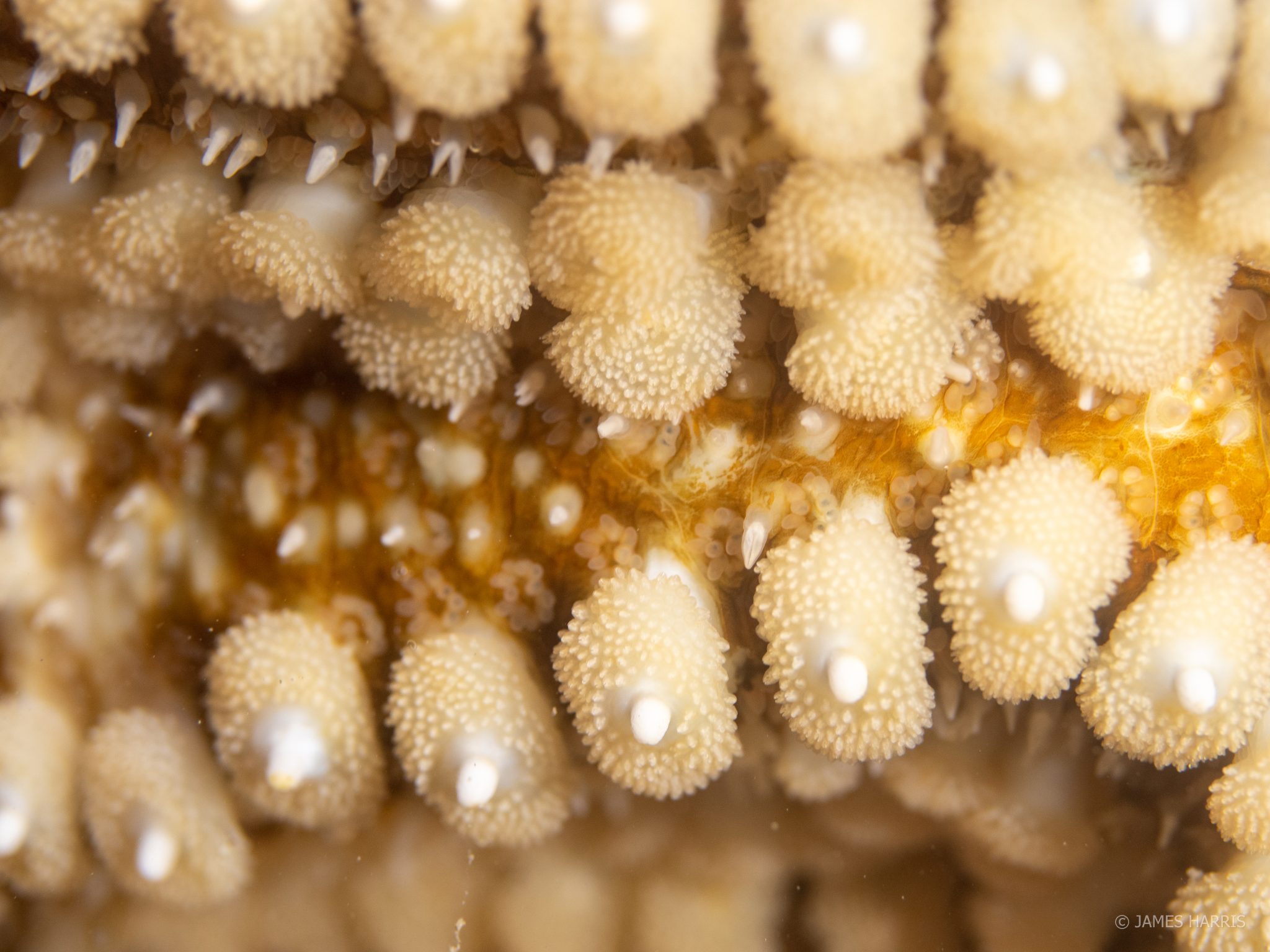
First of all, let’s address the elephant in the room. The image above. It’s a starfish, and those are its spines. OK great, now that that’s out of the way, let’s talk about an underwater (just about) photography idea you might not have considered before: rockpools!
If you’re a warm water diver who enjoys a bit of underwater photography, chances are your camera gear spends more time in storage than in the water. Even us hardy UK divers often leave the camera at home when diving our local site, there’s no denying it’s another thing to worry about.
This is where rockpool photography comes into play. Don’t get me wrong, this type of underwater photography certainly brings its own challenges. Swap buoyancy control for slippery footing, gas management for incoming tides, and a foggy mask for a hidden view finder. But here’s the thing; keep your battery charged and when the mood strikes, you can be out the house in 5 minutes, driving to the beach to take some underwater pictures. Rockpool photography enables one key thing, spontaneity. And when you can be spontaneous, your expensive underwater camera is much more likely to get used!
Macro
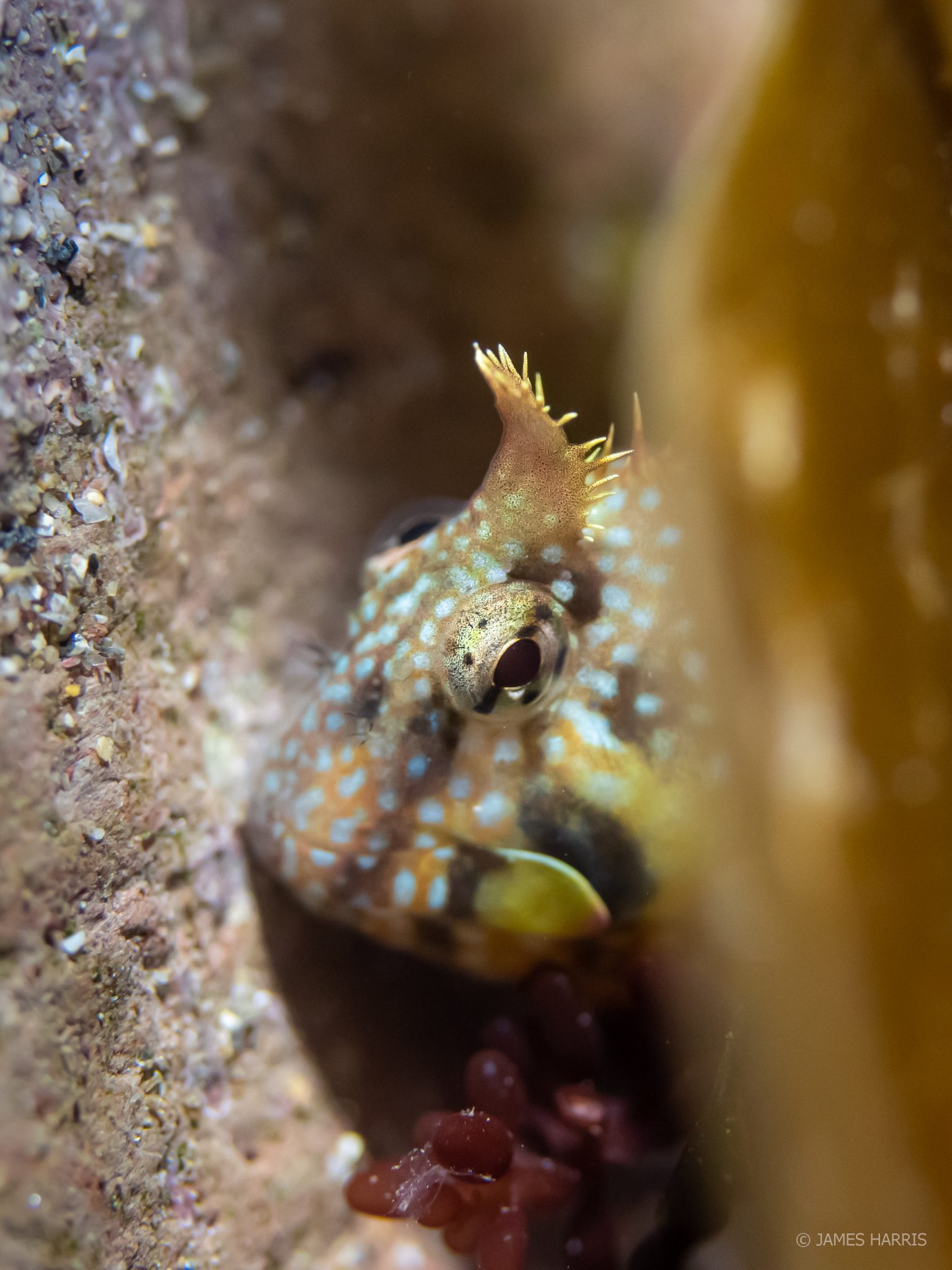
Get comfortable – rockpools are spiky! If you can bring yourself to embrace the fashion faux pas, gardening knee pads would be a blessing. Personally, I just can’t do it, so a rolled-up jumper has to do. Getting comfortable is particularly important when it comes to the first type of shot I’m going to talk about – macro. The Tompot Blenny above was in about 20cm of water which meant the viewfinder was totally submerged. I also had a tiny depth of field because of the macro lens I was using; look at the surface of the rock on the left to see the focus go in and out. Put these things together and you can guess how many shots it took to get that front eye and head fringe sharp.
Macro in rockpools is great, it allows you to bring to life the overlooked critters hiding right under our noses. It definitely takes some time and patience though and getting comfortable makes the experience much more enjoyable.
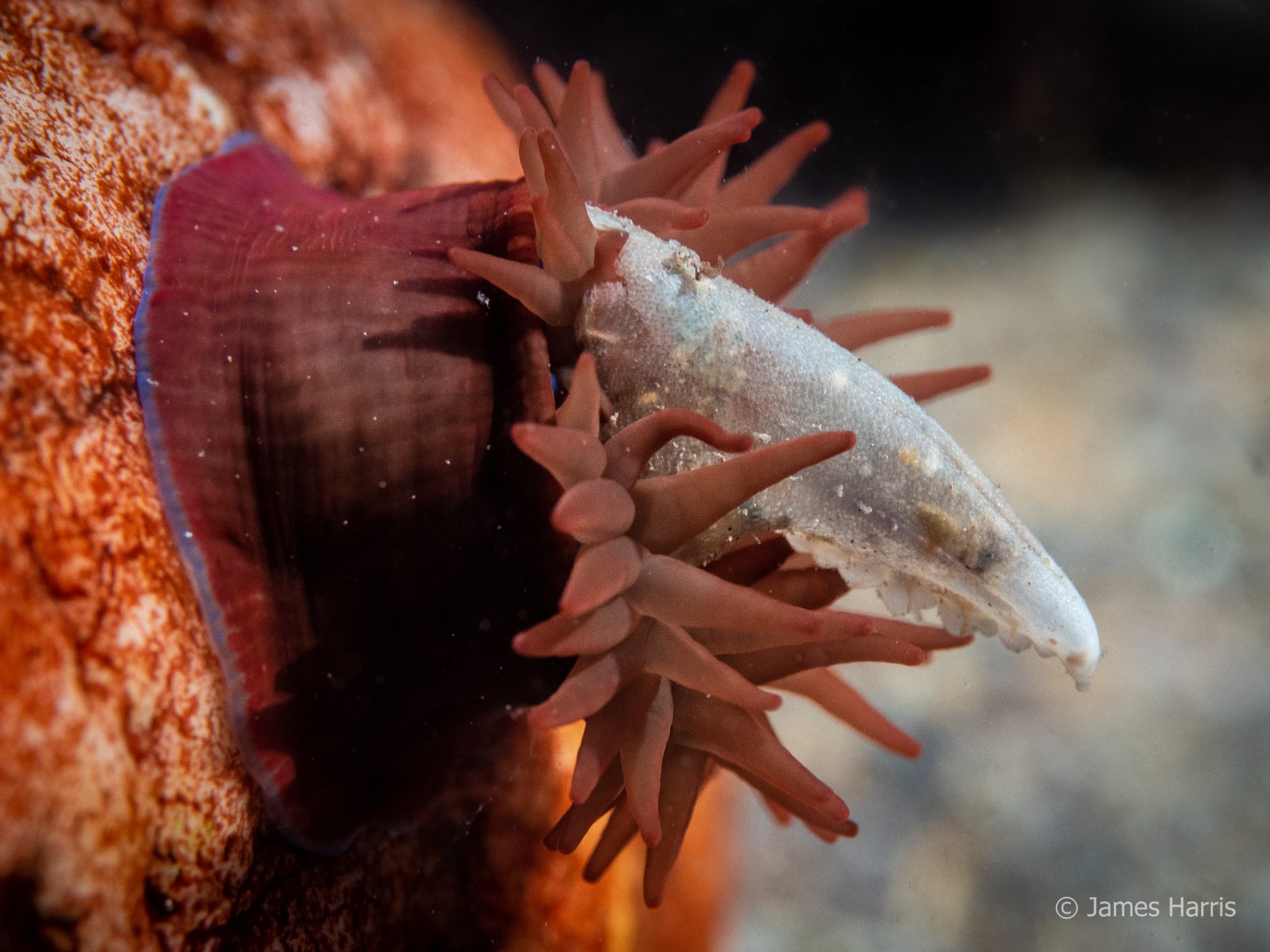
When you think there’s nothing to see, keep looking. At first glance, most rockpools look fairly uninteresting. But in a similar way to when you look at the night sky and the stars gradually reveal themselves, the more time you spend looking in a rockpool, the more you will notice.
This Beadlet Anemone, a pretty common sight in UK rockpools, happened to be dealing with a stray claw that had recently been shed by a moulting crab. I didn’t even notice there was something unusual until I was lining up the shot, and it wasn’t until I got home and zoomed in that I realised exactly what it was.
There is more going on in most rockpools than you might think. It’s quite a departure from open water diving where you have space to take everything in, but I promise – keep looking, it’s worth it!
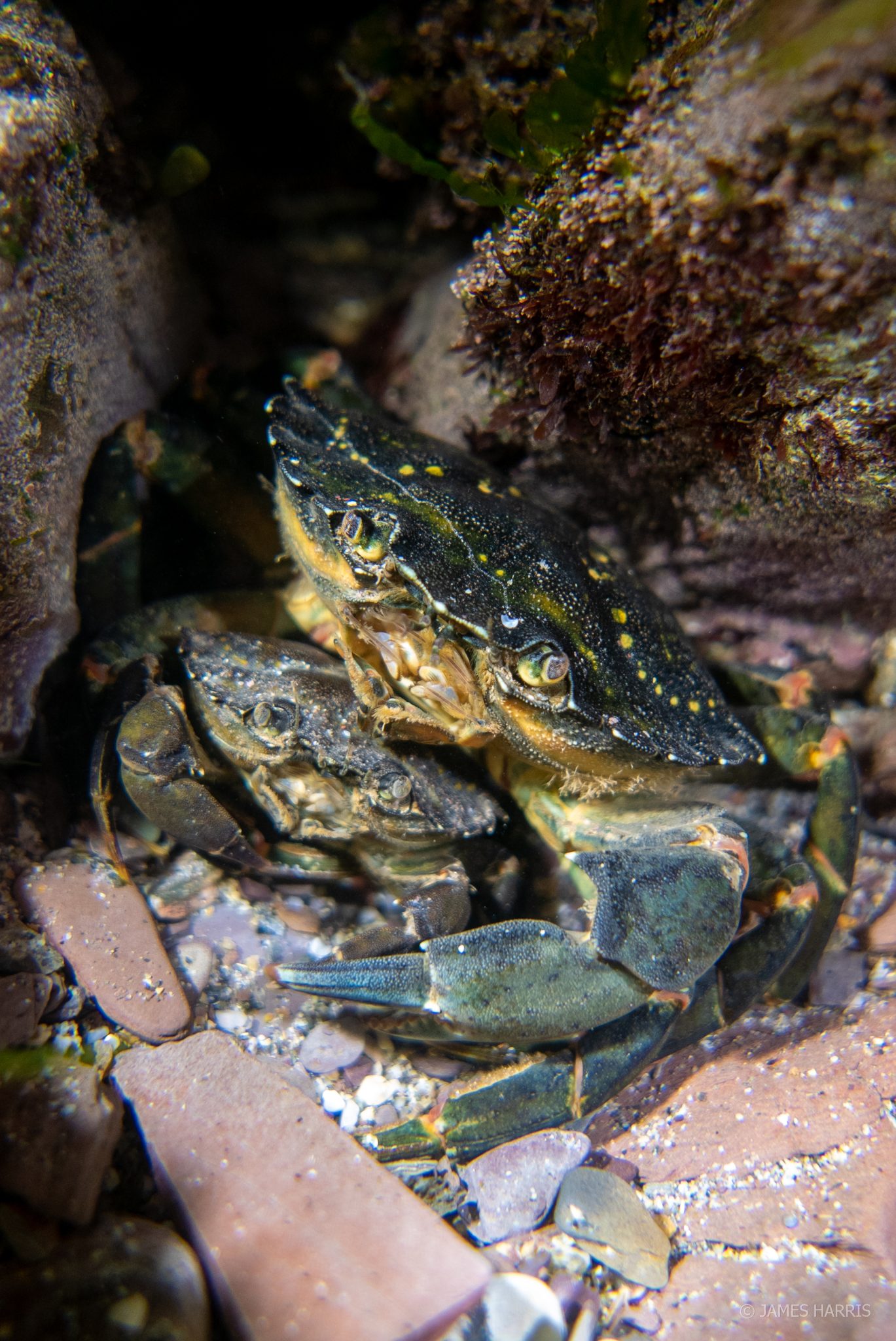
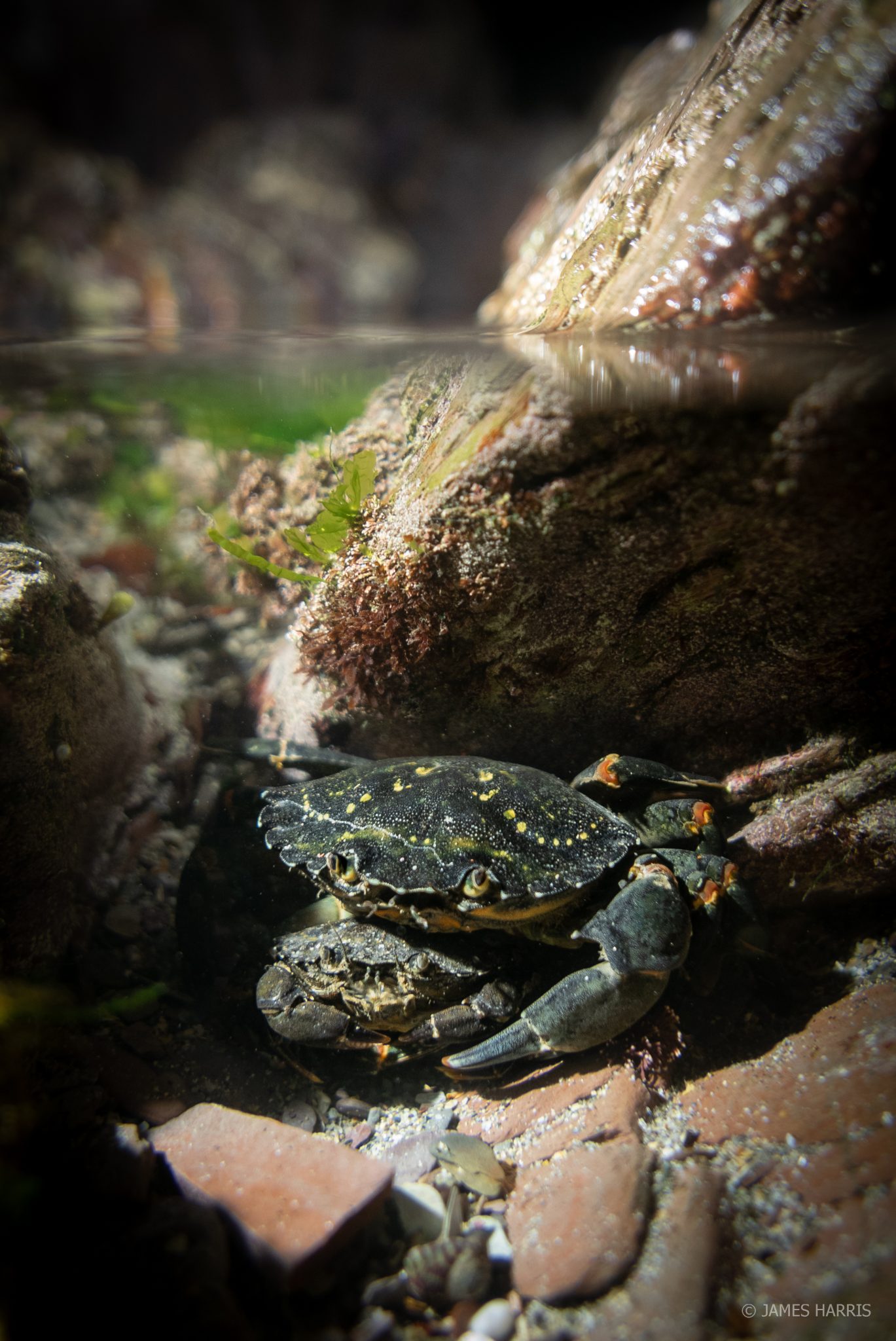
Capture behaviour. You can be forgiven for assuming that rockpools are quite static. They are just full of creatures waiting for a high enough tide to get back to the sea, right? Not necessarily. When I crouched down to take the shot above, I thought there was only one crab. To my surprise, I noticed that there were actually two! The larger of the pair was carrying a smaller crab underneath it, chasing away other critters as it went.
After researching the behaviour, I discovered the two crabs were in a mating embrace. When this happens, a male crab carries a female away from other males where he will guard her for up to six days. During this time, she moults her hard shell (now I think about it – perhaps it was her claw I found in the anemone above?!) in preparation to mate, leaving her vulnerable. Throughout this time, she is totally reliant on him for protection.
Observing behaviour as it unfolds and capturing it with your camera makes you feel connected to rockpools in a more meaningful way than you might be used to. Next time you’re out, watch out for interactions between creatures, you might be surprised how dynamic these habitats are!
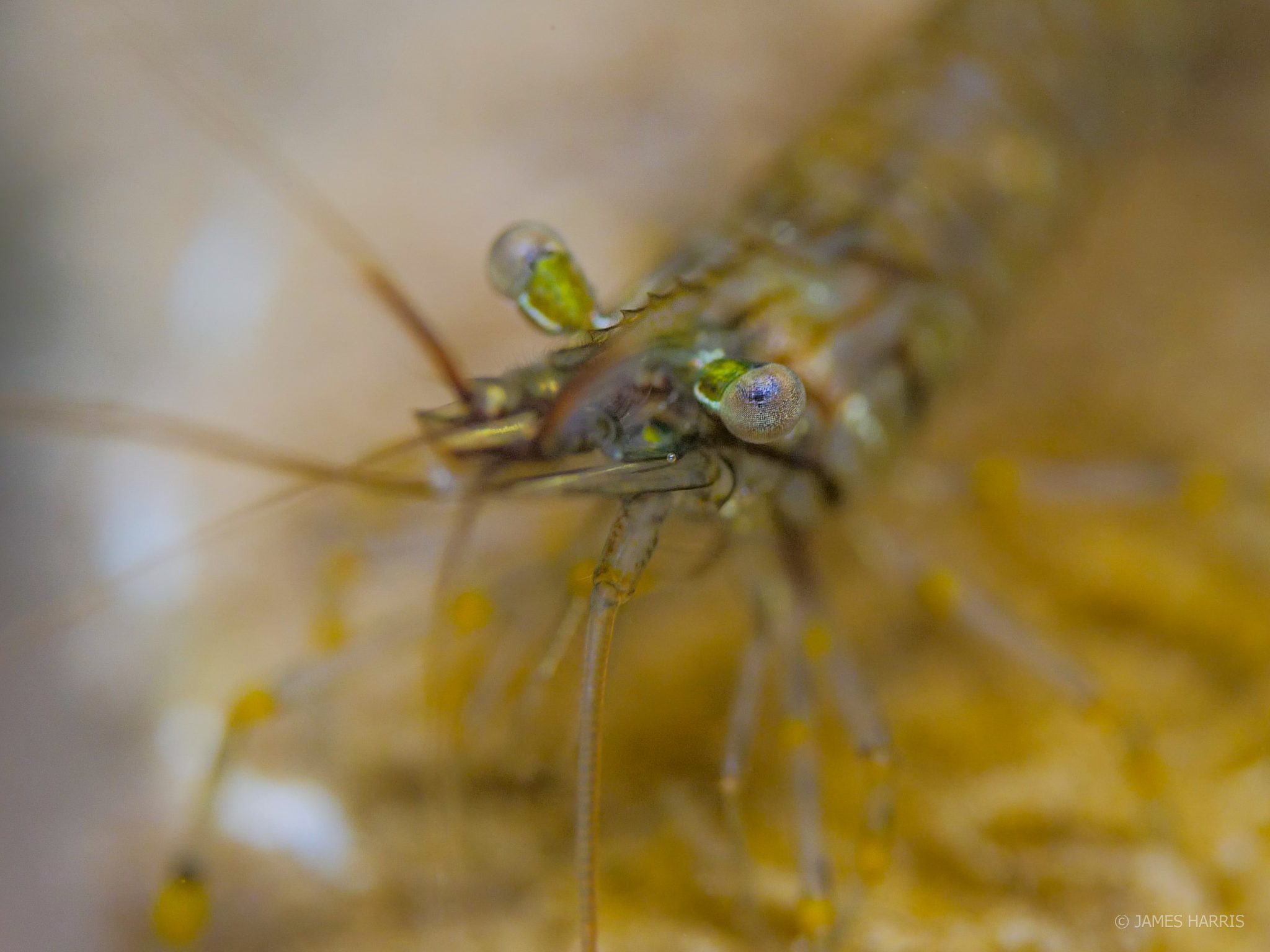
Don’t wait for something amazing. If there’s one thing that you are almost guaranteed to see in rockpools, it’s prawns. They are generally semi-translucent, small, and not particularly interesting. But when you get very close, all sorts of colours, textures and intricate physiological features are unveiled.
The Rockpool Prawn above was only about 1.5cm in length and I only really bothered photographing it to practice with my macro lens. It wasn’t until I got home that I noticed the fascinating blue silver detail in the eyes, similar to a fly. Spiky ridges along its back, bright yellow bands and colourful green eye stems were also revealed under the scrutiny of the macro lens
This silly little creature that I generally ignored, was turning into something far more interesting. Don’t wait for something amazing, get shooting because you might be surprised how amazing the mundane is when given some close attention.
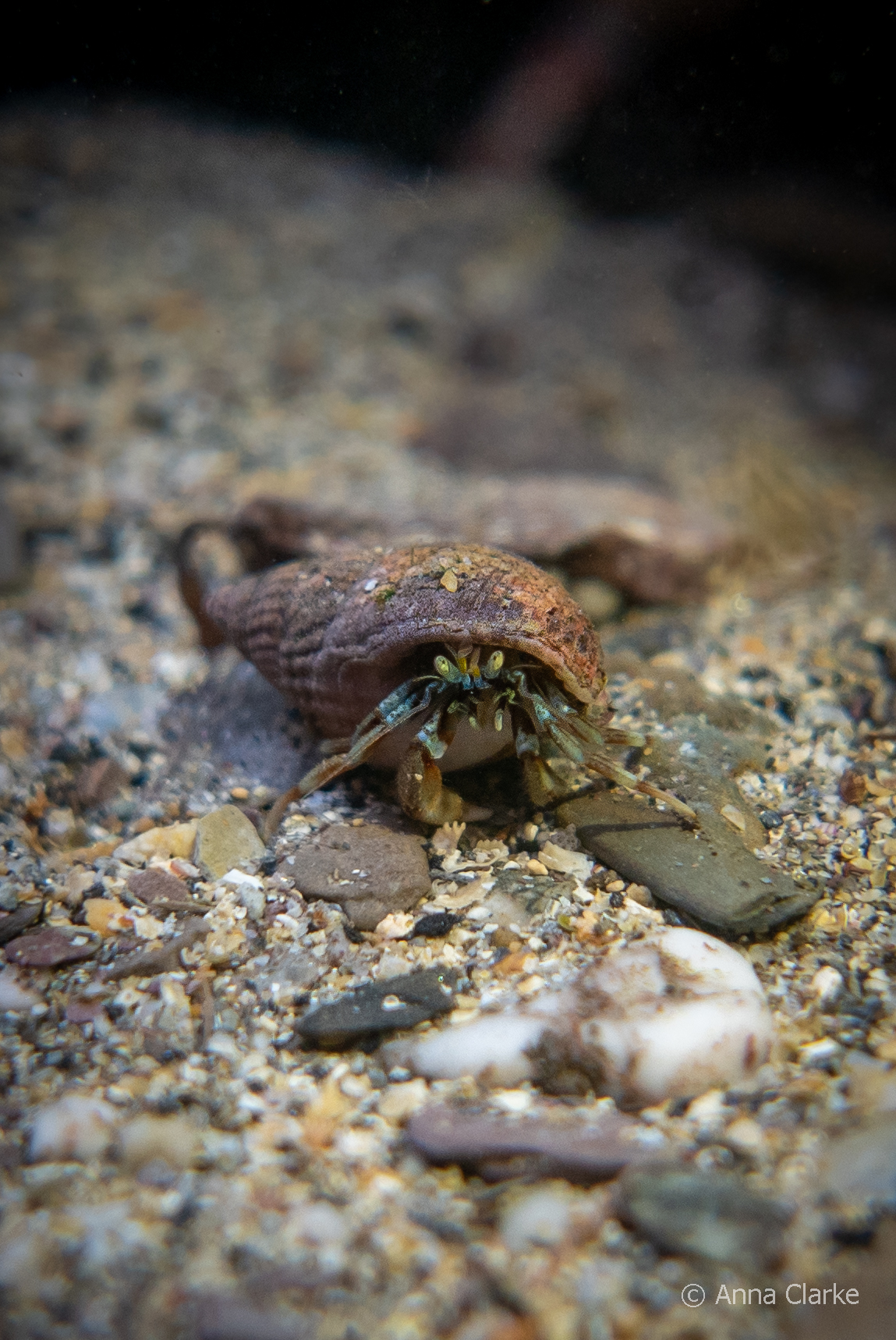
Photo credit: Anna Clarke
Give it a go! The image above was taken during a trip to Wembury Beach by my partner and it was her first time trying underwater photography. She was using a ten-year-old camera and managed to capture a picture as good as any I took.
This shot has such good composition and beautifully captures a moment in time. By getting down low and facing the Hermit Crab head-on, it looks like it’s posing for a portrait. The sprinkle of sand on the top of the shell and the vibrant blue colouring on the legs are the icing on the cake. I love this picture and it’s proof that you don’t have to be a pro to take a great shot. Get out there and give it a go!
Wide-angle & under/over
Put things into context. If you don’t have the equipment/eyesight for macro photography and aren’t sure how your wide-angle setup can be used in a rockpool full of tiny creatures, keep reading.
You might recognise the two Shore Crabs above from an earlier image. That earlier picture was taken using a macro lens whereas this one was an under/over image using a wide-angle lens. Wide-angle is great for this type of shot. The larger dome gives you more glass to position the water line where you want it, allowing you to capture both over and underwater worlds in one shot.
I find this type of picture great for giving some context to your images. They aren’t just random underwater scenes; they are moments in a recognisable environment.
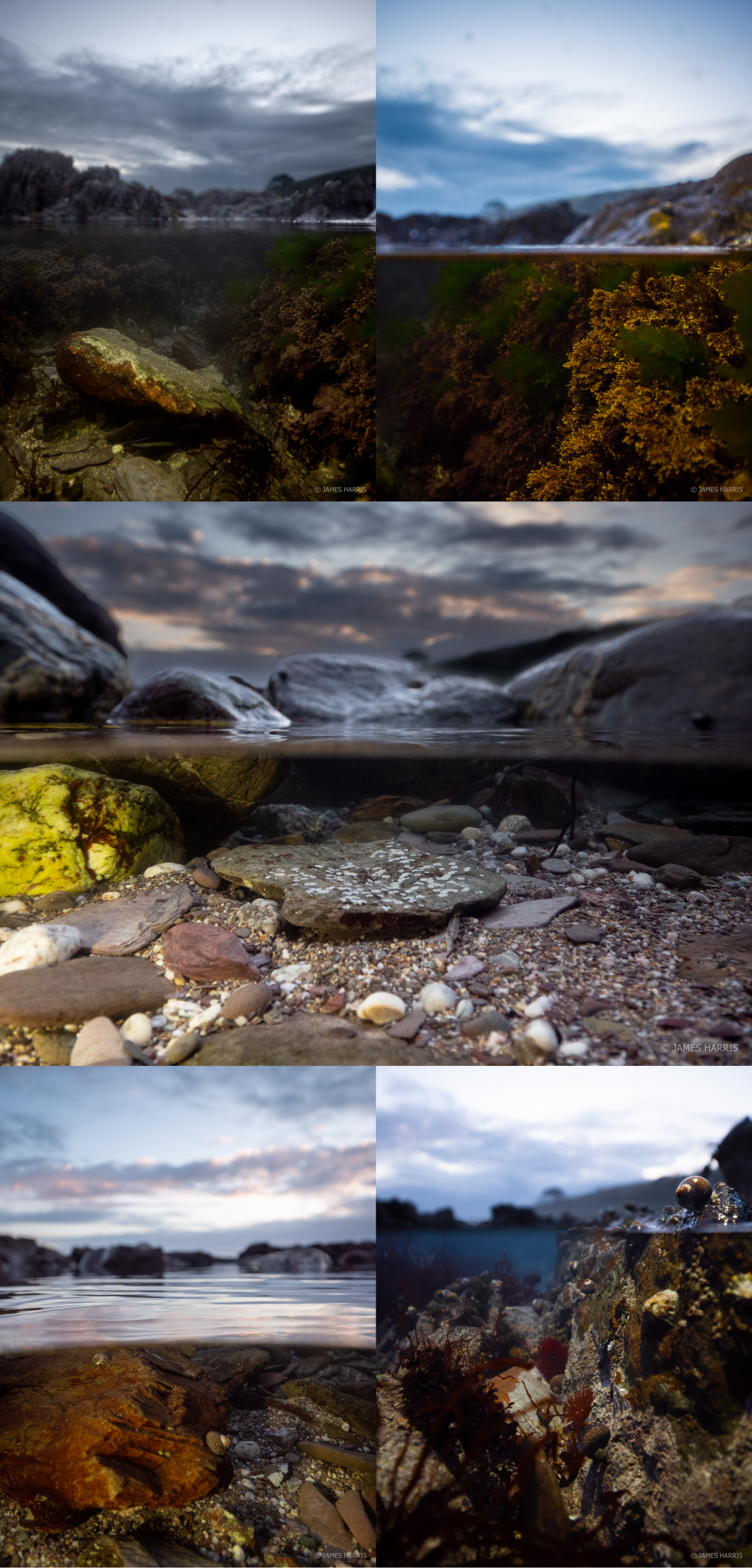
Animals are optional. Now, despite me saying how many hidden creatures will reveal themselves if you look for long enough, those of you with a patience deficiency have another option. Rockpool landscapes are incredible varied and fascinating, particularly if you use a wide-angle lens to capture under/over pictures.
The collage above is a collection of rockpool landscapes I took one evening at Wembury Beach. You can see how different the textures and colours between rock pools within metres of each other can be. From the surface, they look fairly similar, but capturing them in this way allows you to showcase the diversity that’s hidden beneath the water’s surface.
A final thought
If you’re anything like me, one word comes to mind when you imagine taking your underwater camera into a slippery rockpool – awkward. To a certain extent it is, and honestly, it takes a bit of getting used to, but compared to scuba diving, rockpool photography is so convenient. It’s easy to dismiss, but stick with it, stay patient, follow some of the tips above, and you’ll be surprised what you can find just under the water’s surface. Get out there and give it a go and don’t forget to tag me if you post anything online, I’d love to see it!