The Great Eggcase Hunt goes underwater!
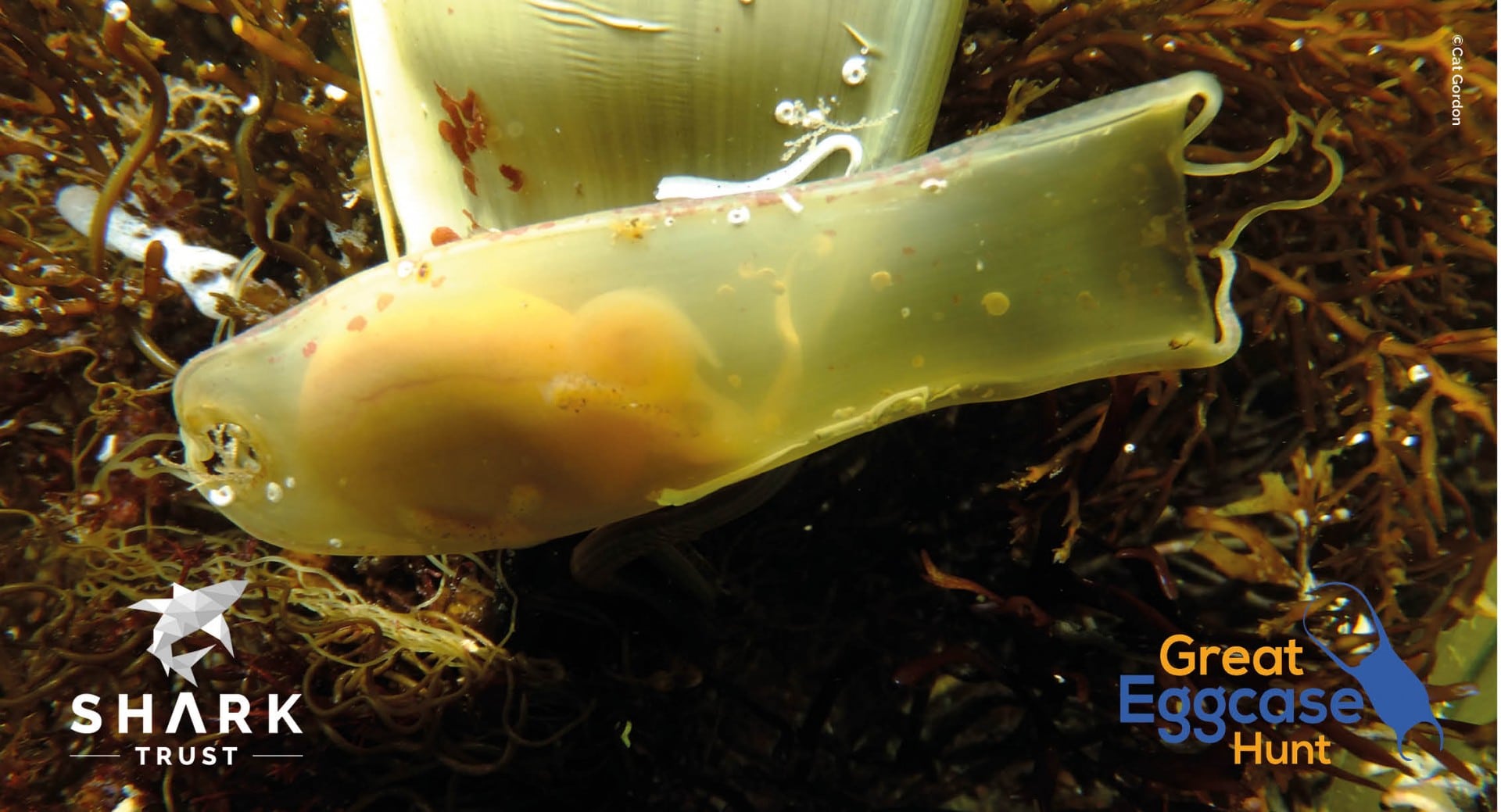
 Since 2003, the Great Eggcase Hunt (GEH) has been encouraging the public to hunt for shark, skate and ray eggcases that have washed up along the UK’s coastline. Despite these records providing a remarkable amount of information on the distribution of egg-laying (oviparous) elasmobranchs, eggcases that are washed up on the shoreline do not always provide a true indication of where they were laid, as ocean currents can carry them some distance. Eggcases Underwater is a spin off from the GEH project, providing a new approach to eggcase hunting.
There are 13 different shark, skate and ray species that are known to commonly lay their eggs around the British Isles, 10 species of skates/rays and 3 species of sharks. These species produce a single embryo inside an eggcase capsule (often called a ‘mermaid’s purse’) and deposit this on the seabed or attach it to seaweed. Once deposited, the shark, skate or ray will take up to 12 months to fully develop inside this capsule.

The eggcases from different species are a variety of sizes and shapes. The two more commonly found shark eggcases feature curled tendrils that allow the female to attach the capsule to a macroalgae as it develops. While a feature of skate/ray eggcases includes a distinctive horn extending from each corner of the rectangular case, allowing the skate/ray to lay its egg on the seabed concealed by rocks, sand, and gravel. When first laid the catshark eggcases in particular are easily distinguishable by their light colour and transparency. Overtime they become camouflaged by fouling species and are often difficult to spot.

The distribution of many shark, skate and ray species is changing and for many species declining. Eggcases Underwater needs your help to improve our knowledge of the distribution of oviparous elasmobranchs, their egglaying grounds, and the types of substrates that different species lay on. If you see an eggcase underwater, please take a note of the approximate location of your sighting and, if possible, take a photograph. You can then record details of your eggcase via the online recording form at www.sharktrust.org/recordyoureggcase or by downloading the app (Android/iOS). Your sightings can help improve the Shark Trust’s understanding of oviparous sharks, skates and rays, which could in turn benefit the conservation, management and protection for these species and their egglaying grounds!
Author: Tegan Consol
For more information, please visit www.sharktrust.org/en/eggcases_underwater.