Northern Red Sea Reefs and Wrecks Trip Report, Part 1: Welcome to Adventure
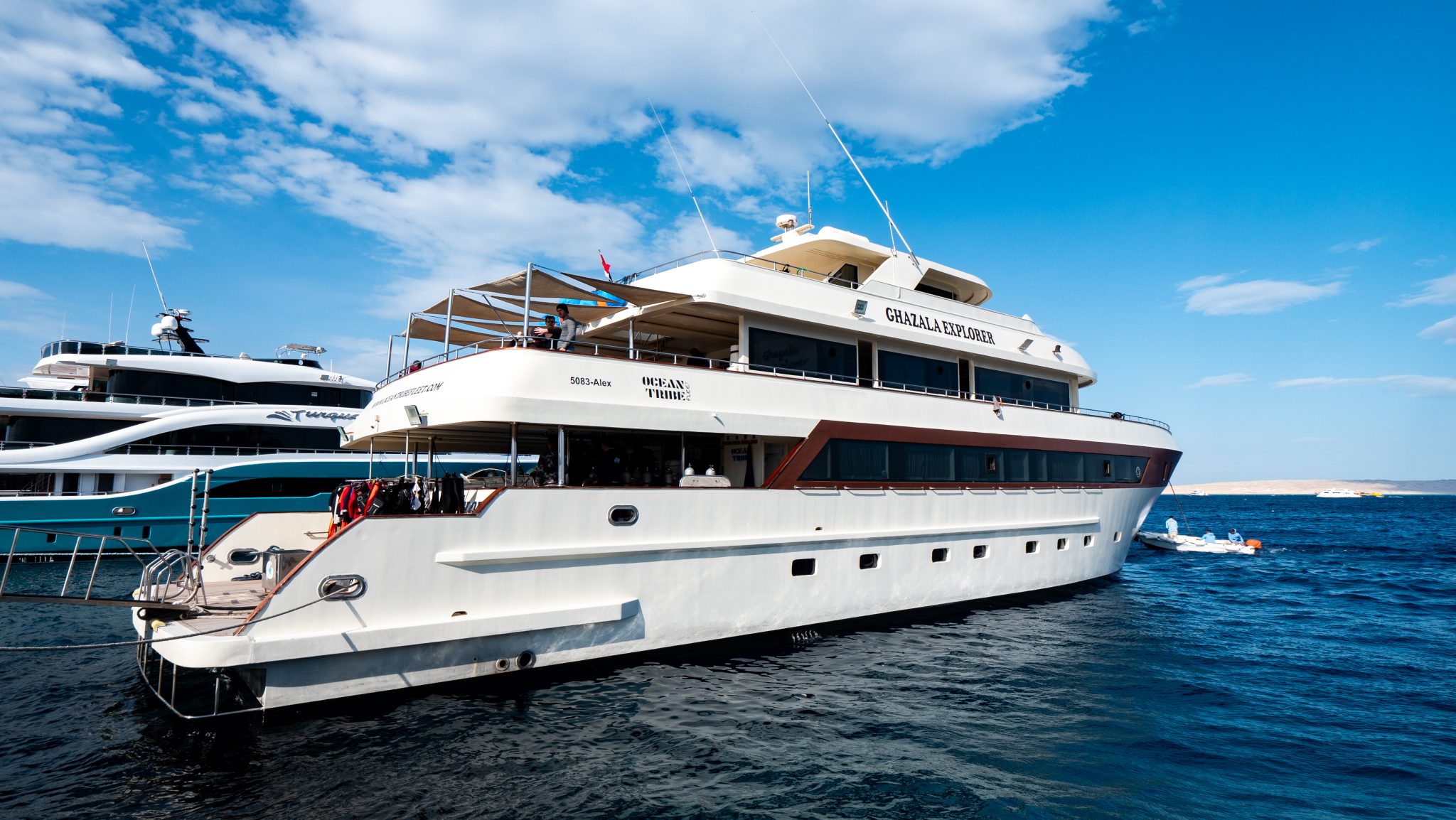
Jake Davies boards Ghazala Explorer for an unforgettable Red Sea diving experience…
The Red Sea is known for its range of dives, from bright, colourful reefs with a diverse array of reef species to world-famous wrecks scattered along its numerous atolls. The reefs and wrecks of the North Red Sea are one of the best ways to experience many of these.
Organised by dive tour operator specialist Scuba Travel, Ghazala Explorer was going to be home for the week for this exciting trip, a 37m steel-hulled vessel with top-class reviews by previous guests.

Departing from Hurghada, the plans were to head north for the first couple of days, including check dives on Global reefs, before then heading to see a few of the wrecks at Abu Nuhas reef. Then we would head across the Gulf of Suez into Ras Mohammed National Park to see what are considered to be some of the best reef dives in the Red Sea. From there, we would head to the Strait of Tiran for a day, then head back south to dive the world-famous wreck and one of the trip’s highlights: the SS Thistlegorm. This would include a night dive prior to heading back for the final day’s diving around Hurghada before heading back to port.
Arriving from Gatwick into Hurghada late in the evening, the Scuba Travel rep was waiting for arrivals ready to take us all to the Ghazala Explorer, docked in Hurghada’s New Marina. Stepping onboard, the high-quality and spacious deck spaces and interior provided an instant sense of comfort. There was a friendly welcome by the crew and guides. After some food, it was time for the boat briefing, which was detailed and covered all the important safety aspects of the vessel and procedures. The kit was then set up in the allocated spaces, and the spacious tables in the interior provided the perfect place to build up my camera ahead of the week’s trip. As soon as everything was done, it was time to head to the cabin to get some rest before an early start for a check dive.
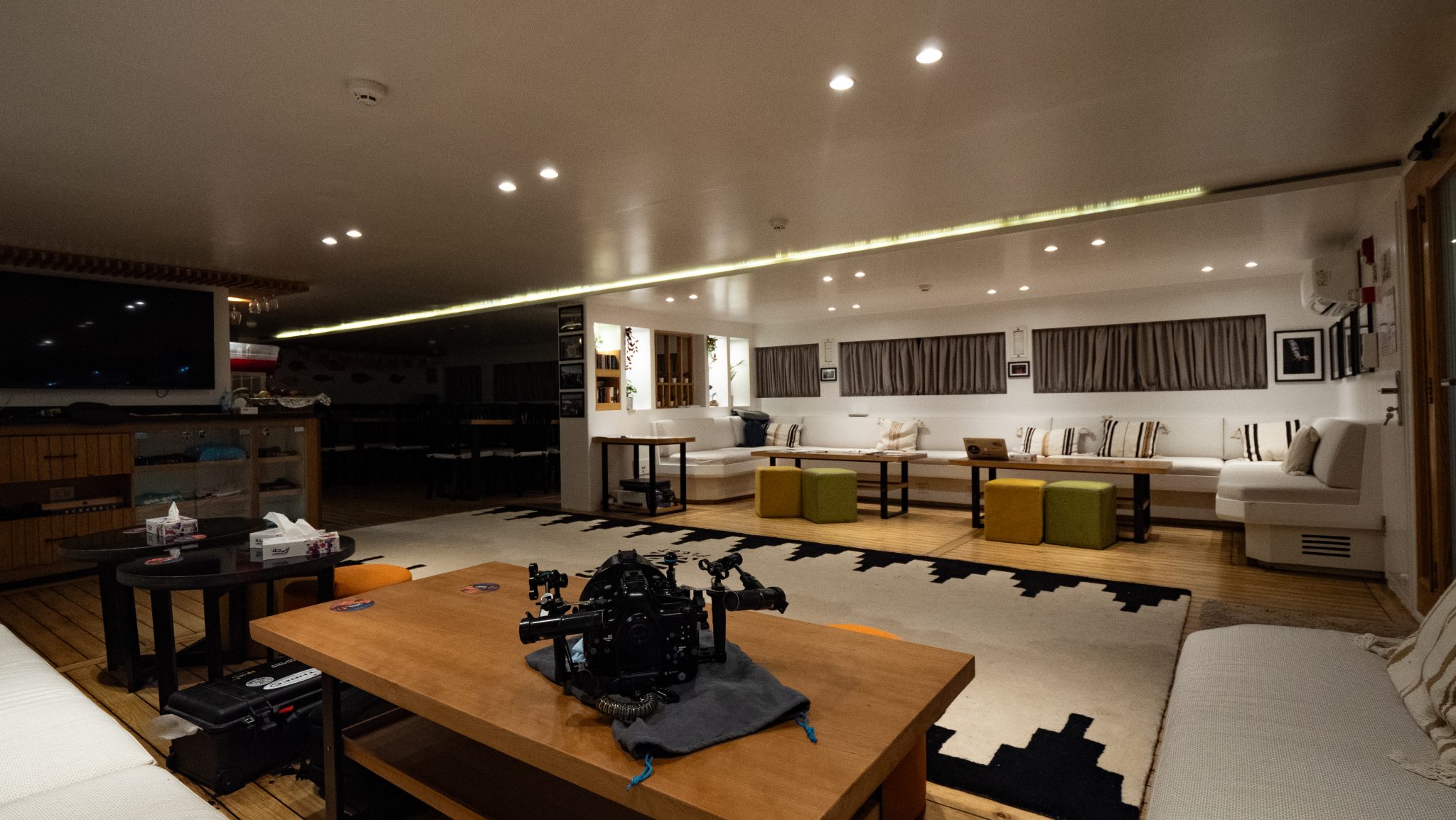
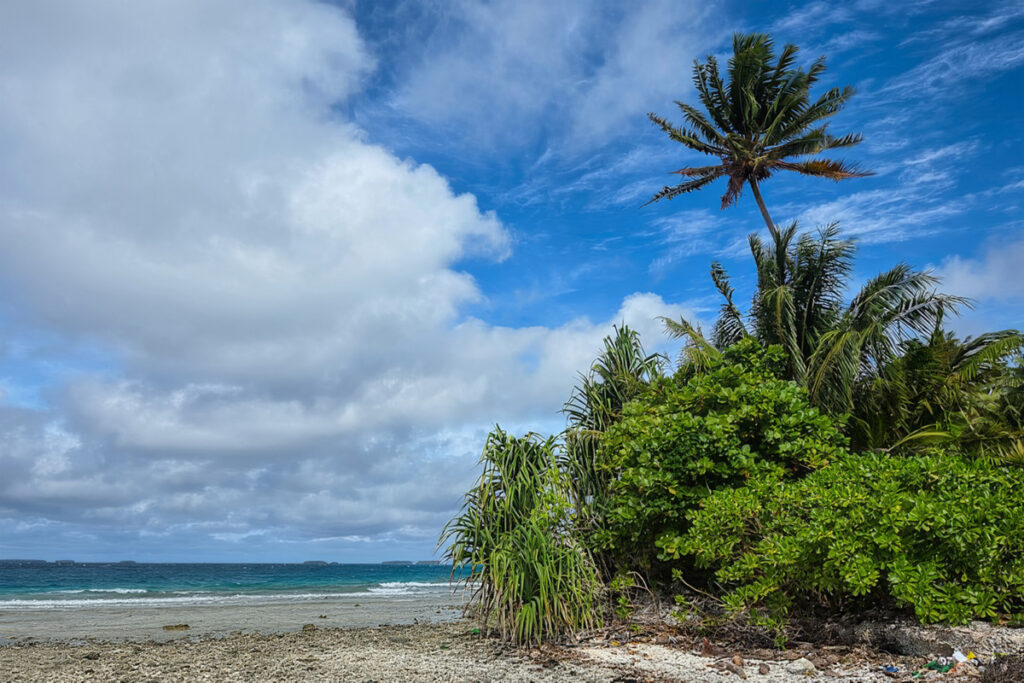
The northerly wind provided a chop, but it wasn’t felt as the steel hull of the vessel cut through each wave. By mid-morning, we were moored up at the reef at Gobal Island, sheltered from the chop on the other side. With Ahmed providing a detailed briefing, it was time to kit up and get in the water to explore some of the reefs below during the check dive. It’s always exciting to stand on the stern of the boat, looking into the clear blue water before taking a stride entry to enter the colourful coral scenery below.
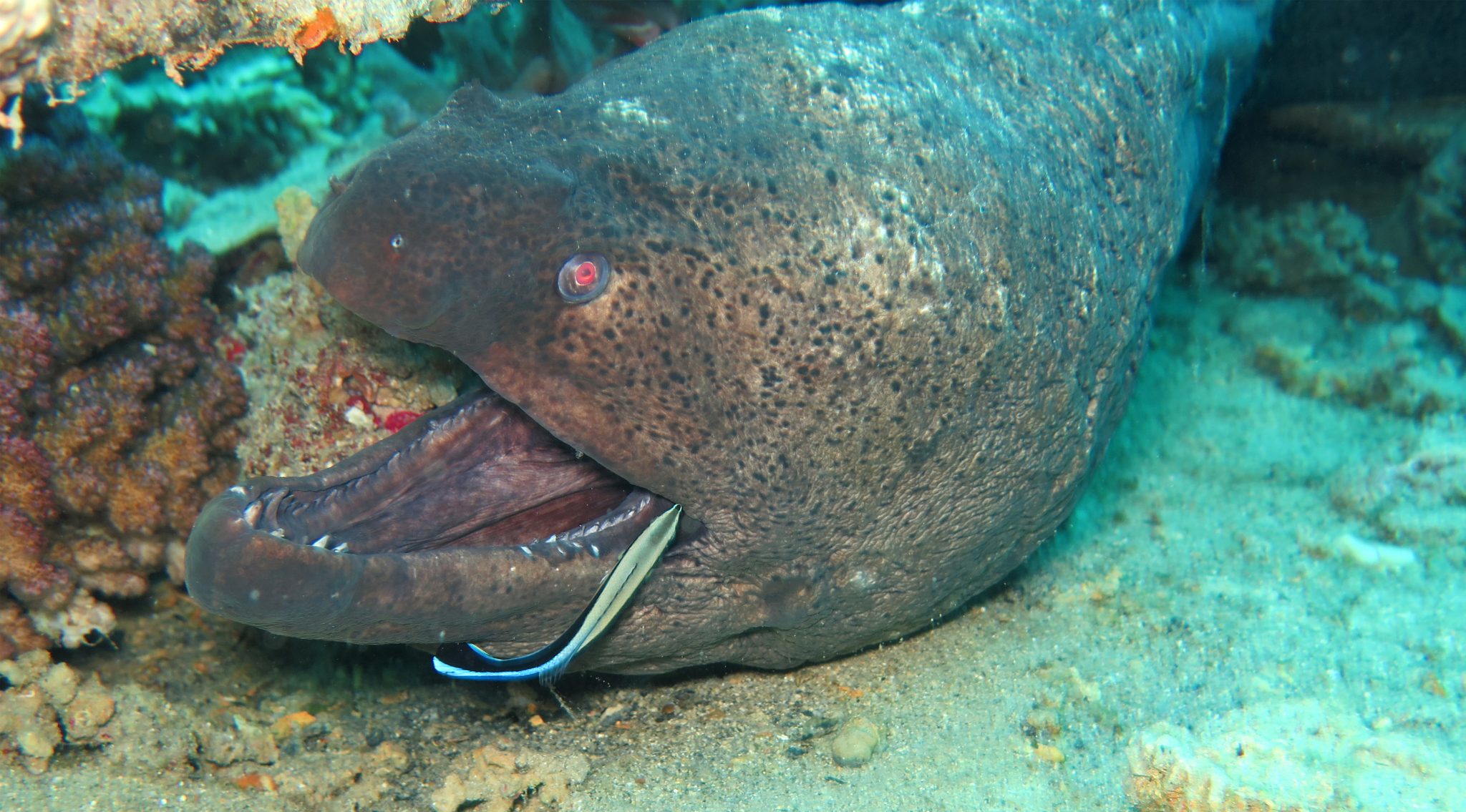
Like most of the dives on coral reefs in the Red Sea, the colours and busyness of the reefs were great to see. It was great to be back on the reefs, taking the time to watch the many species which make up the Red Sea ecosystems before picking out a few to film and photograph. The time flies by as you are constantly engaged with the surroundings, and then before I knew it, it was time to head back onboard, where everyone coming back from the water had big smiles and were full of excitement and anticipation for the rest of the week.
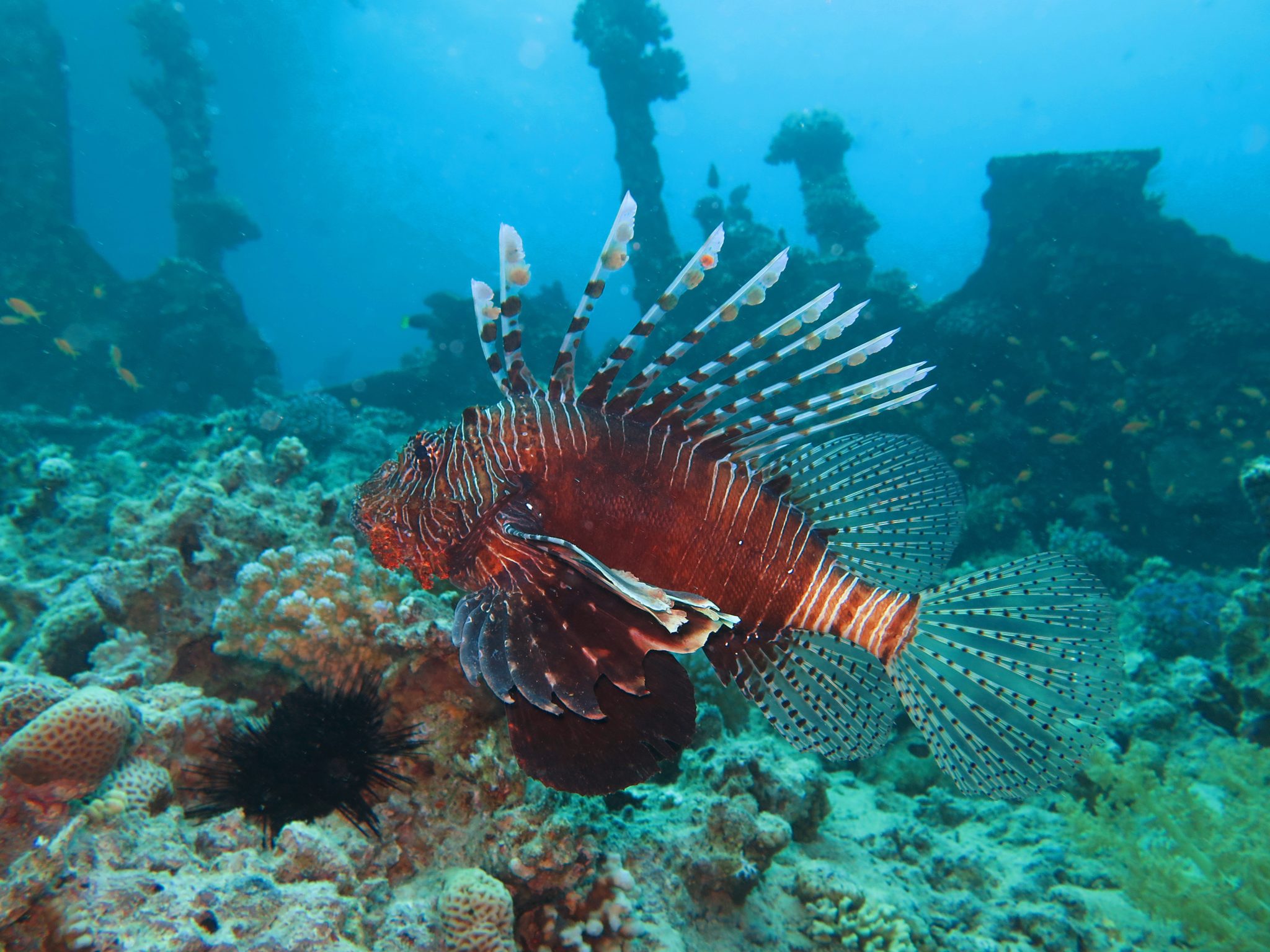
The next two dives, which included the night dive, were on the wreck of the barge, where very little remains act as an artificial reef for many species, which included a few perfectly hidden large stonefish and a crocodile fish camouflaging on the sand beneath the hull. Looking up though was the highlight of the dive, as a squad of squid could be seen mid-water, dancing around. Ascending slowly and calmly, I was able to position myself amongst the squad for the opportunity to get a few close-ups of this great species. Shortly after, the squid were then accompanied by a shoal of halfbeaks just below the surface. Everywhere was just full of life!
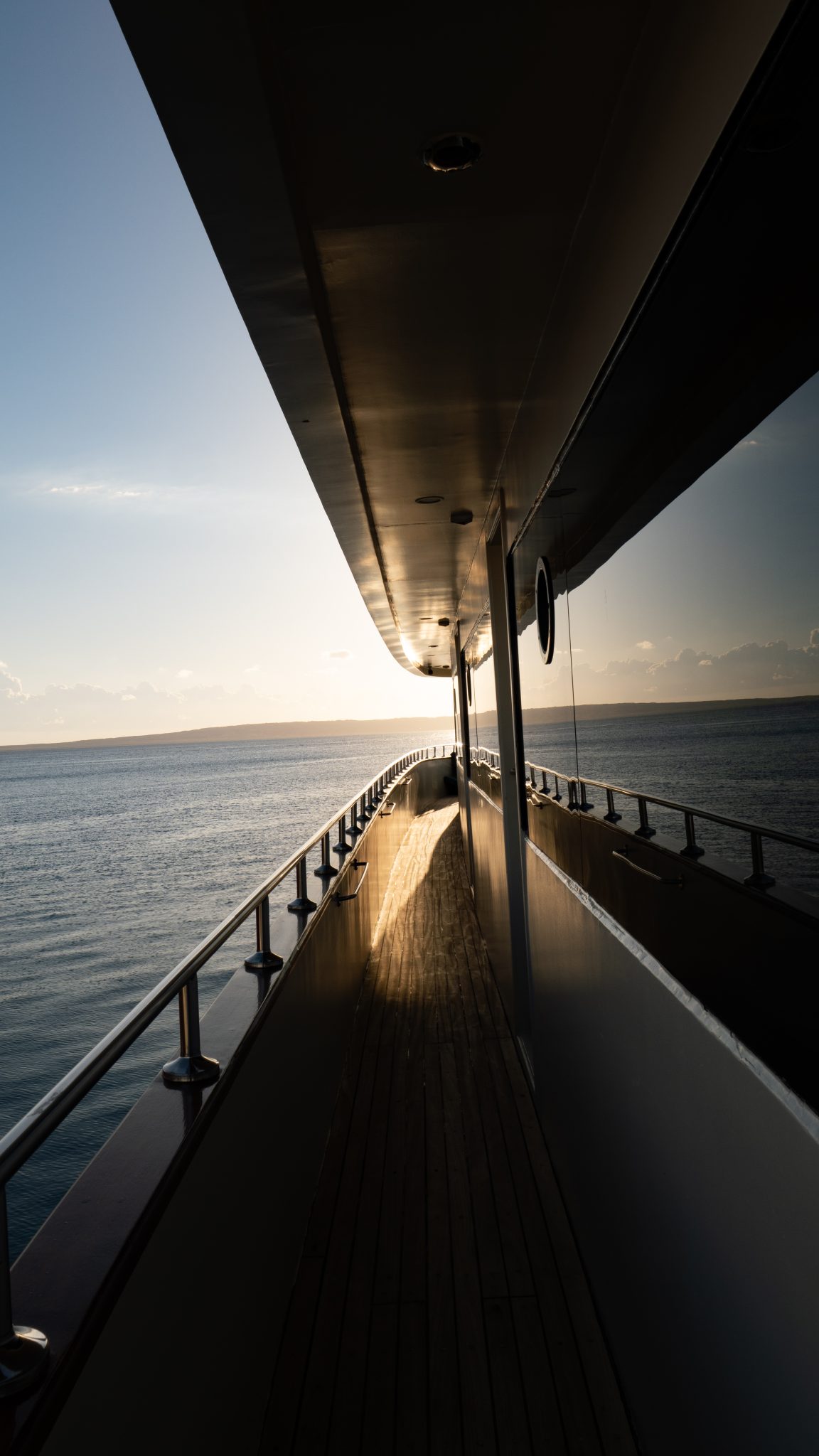
After some afternoon snacks, and as part of the safety protocols of the vessel, it was time to practice an emergency drill to put the briefings into action. The fire alarm rang, and we then had to carry out a full drill of getting the life jackets and using the closest emergency exits to then gather at the muster point on top deck where we would then have a run-through of the life rafts. The drill was great to do and I thought it was a really important part of the boat’s safety, as it was an opportunity to use the emergency exits to ensure a safe and effective evacuation, while also convening at the muster station to go through different scenarios and become familiar with some of the kit used during these emergencies.
Check in for Part 2 from Jake tomorrow!
To find out more about the Northern Red Sea reef and wrecks itineraries aboard Ghazala Explorer, or to book, contact Scuba Travel now:
Email: dive@scubatravel.com
Tel: +44 (0)1483 411590
Photos: Jake Davies / Avalon.Red