Maritime Archaeology Trust explores wreck for BBC’s Inside Out

Archaeologists from the Maritime Archaeology Trust joined a team to help families discover the fate of their relatives for a BBC Inside Out feature, broadcast on the 24th February 2014.
Led by Dave Wendes and cameraman Mike Pitts, the Trust’s archaeologists worked to reinvestigate the wreck of the SS South Western, sunk in 1918.
The South Western was a steam ship built by J & W Dudgeon of London in 1874. At the time of sinking it was owned by London and South Western Railway Company and registered in Southampton.
On the 16th March 1918 it departed Southampton with 12 ½ tons of general cargo bound for St. Malo. There were 28 crew, including Captain John Alfred Clark. That night the ship sank with slightly contradicting accounts of what happened.
The captain reported spotting a submarine at 11 pm, but it was too close to the ship and submerged before a shot could be fired. At 11.30 he reported it again on the starboard side and the order was given to the gunners manning the aft gun to fire. Before they had time to do so the ship was hit by a torpedo and began to sink.
Slightly contradicting the previous report, Frank Gleadhill, the commander of the gun crew, reported that he lay in his bunk until 11.30 pm, at which point he felt a judder throughout the hull. Upon going out on deck he heard the captain report something suspicious and order a sharp lookout. Ten minutes later he spotted a submarine on the port beam. Gleadhill ran to the aft gun, where the two crew loaded and layed the gun. Moments before the order to fire could be given, a torpedo slammed into the side of the ship. After the blast the gun crew were nowhere to be seen.
In the BBC feature families who lost relatives were told of Gledhill’s survivor report to help them understand what happened that night from the personal perspective of those on board.
Initially it appeared that the behaviour of the gun crew was unsatisfactory, but the revelations in Gleadhill’s report suggests this view should be reconsidered. It indicates that gun crew had remained at their station and were only prevented from firing by the explosion of the torpedo.
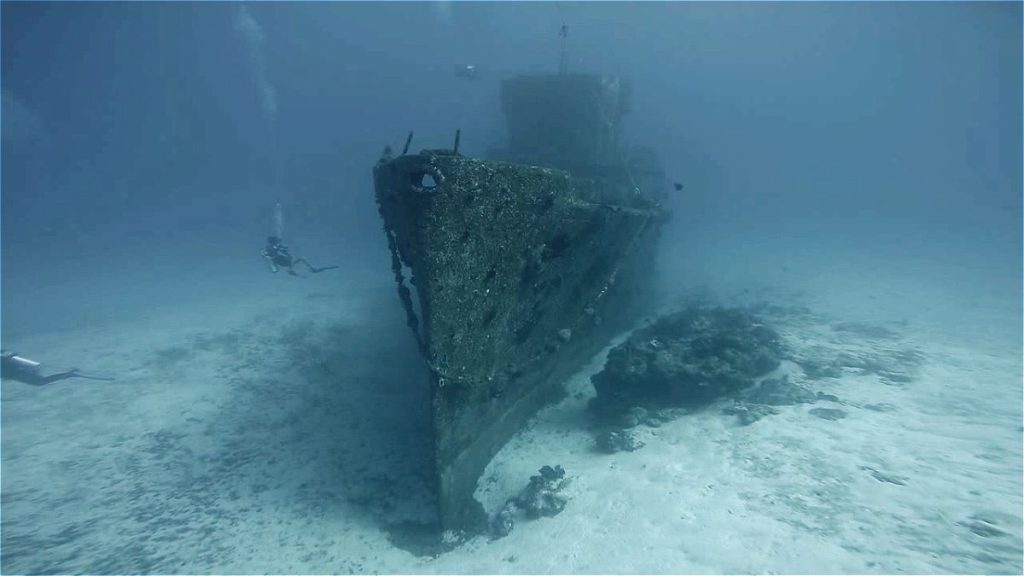
The televised feature shows some previously unseen dive footage of the wreck. This was only possible thanks to extensive archival research carried out by David Wendes who successfully located the vessel remains in his research South Coast Shipwrecks off East Dorset and Wight: 1870-1979. The wreck today has a height of 5-6m above the seabed and lies on its starboard side with its boilers spilled out onto the seabed.
The wreck dive and footage not only contributes to the archaeological knowledge of the vessel, but has also helped families to come to terms with their relatives deaths. Riva Mollison, the great granddaughter of a crewman stated that for her the wreck is a tangible piece of evidence that her relative existed. She believes that exploring wrecks helps overcome the issues of no grave being available when lives are lost at sea.
You can watch the programme in full here.
To find out more about the Maritime Archaeology Trust, visit their website: