Mantas of Palau
Very little is still known about Manta Rays and their behavior, which is why the work of the Manta ID Project in Palau is so important. Leticia Sanchis from NECO Marine Dive Center tells us more…
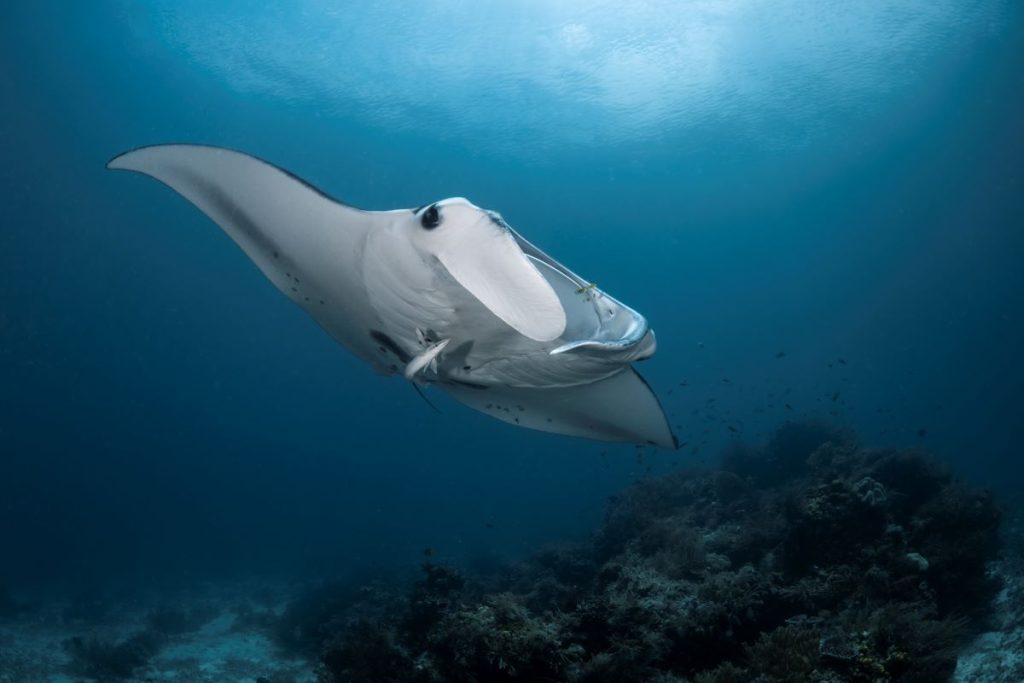
The Manta Rays are one of the most captivating creatures in the underwater world. You can mainly find them where the water is warm all over the planet. Micronesia is one of the best places to observe them – mainly the archipelago of Palau, where over 200 mantas have already been photographed and identified. A few Manta rays are seen around German channel the whole year, but from October to May each year, more come in to mate and form feeding trains around the full and new moons, which can be a spectacular site for snorkelers and divers. When the current dies down, the mantas start making backward loops to scoop up the plankton, and this looks like an underwater ballet. Even when they are not feeding, manta rays can be seen at the cleaning stations, where they are cleaned by small wrasse fish species. If divers kneel down on the sand and give the mantas space, they will stay around and circle the cleaning rock, sometimes for hours. Every year there are newborn manta rays observed around the channel mouth, and some of the largest female manta rays come back every season and have been photographed here for over 20 years. From being in the water with them every day, local dive guides have learned that each manta not only has individual markings which are like fingerprints, but also individual characters and behavior.
Very little is known about them, which is why photos and observations are important for research. In Palau, the Manta ID Palau Project, www.mantaidpalau.org, with NECO Marine dive center as one of the main sponsors, builds a database to collect information on Palau’s individual mantas and share what is learned from observing and photographing them in Palau for the last 25 years. Over 200 mantas have been photographed and identified, 16 of which are Black Mantas. As soon as baby Manta rays are born, they have to look after themselves, find their own food and hide from sharks that try to eat them. They stay around reef channels until they are large enough to go out into the open ocean.
The website shares all the Palau information for all the operators and tourists and encourages divers to share their pictures on the website too.
If you would like to learn how to identify the mantas and to position yourself under water so not to scare them away and disturb their feeding and cleaning behavior, NECO Marine dive center has a PADI dive specialty course: “Manta Identification Diver Palau”, a two day course where you can find out more about Palau’s manta rays and how to observe them best. To find out more about the course, visit www.necomarine.com