Excerpts from Jeff Goodman’s Book Action Camera Underwater Video Basics, Part 3 of 6: Buoyancy Control for Filming

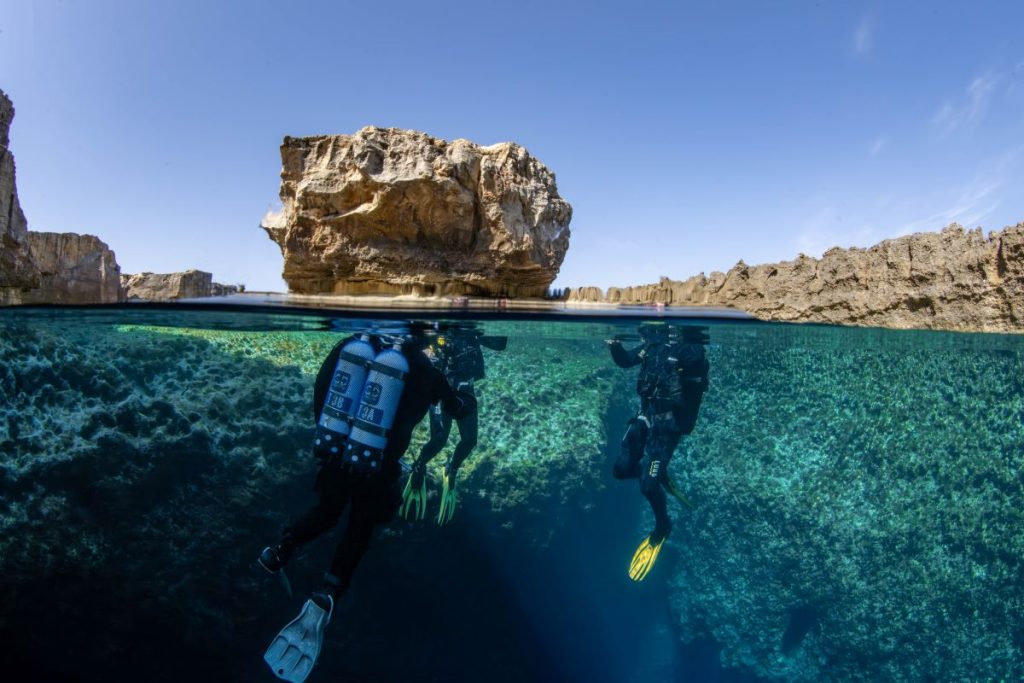
Precise buoyancy control is essential to taking good underwater video. Unlike taking a photo, where the image is captured in a fraction of a second, video shooting requires that you hold the camera steady on the subject for a number of seconds or minutes. It is important to be able to hover, without finning, for long periods in one place and at any depth. The hover needs to be steady so as to minimise any possible body and camera movement. While usually in the horizontal position, it is often necessary to hover in the vertical, as when filming at a coral or cliff face.
Buoyancy control is an important part of diver training and should not be overlooked. It is crucial for camera work as well as for comfortable diving with minimal expenditure of energy and breathing gas. An added bonus to this is if you are relaxed and able to move slowly and surely then most wildlife around you will also relax and not hurry away.
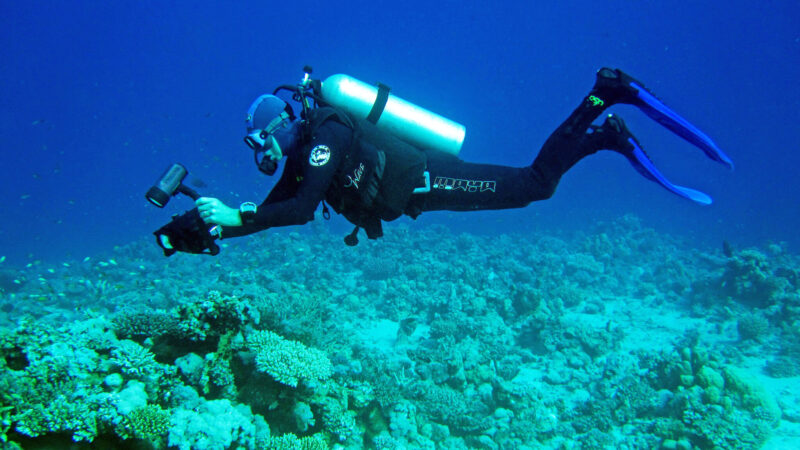
Although buoyancy control training is down to a dive instructor who will give all the advice and knowledge needed for safe and comfortable diving, I will explain what works for me. My buoyancy drill changes slightly depending on where I am and under what conditions I am filming. In normal circumstances I set my buoyancy in the standard way. If I breathe in deeply I slowly go up and if I exhale, I slowly go down. But if I know I am to be filming on the seabed in a current or surge, then I like to slightly over-weight myself so as to be able to stay on the bottom with minimum effort. I then make small adjustments to my buoyancy with my BCD and compensate as needed, making sure I let air out as I surface to control my rate of ascent.
If you have difficulty remaining horizontal, ask an instructor about trim weights that can be distributed in different parts of a BCD rather than carrying all of it around your waist on a belt.
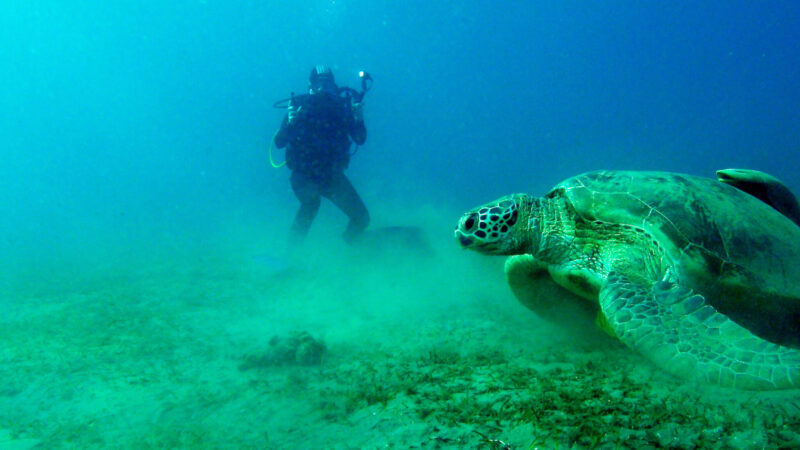
Being on the bottom is not always a good idea. Think about the silt or sand you may kick up and hence ruin the visibility. Other divers near you won’t be too pleased either.
NEXT WEEK:
Part 4 of 6 – Pre-Dive Equipment Checks
Action Camera Underwater Video Basics by Jeff Goodman is available now from DIVEDUP Publications:
https://www.divedup.com/shop/action-camera-underwater-video-basics-the-essential-guide-to-making-underwater-films/
About Jeff Goodman
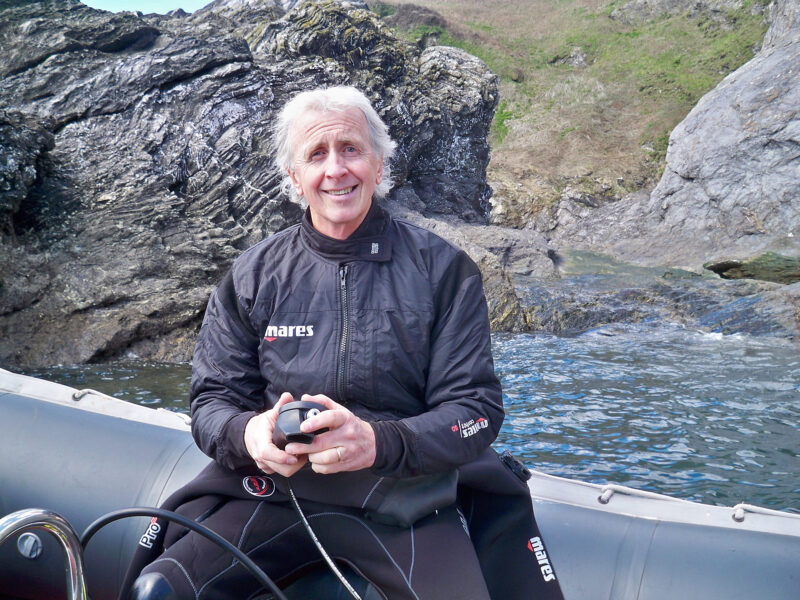
Jeff is a multiple award-winning freelance TV cameraman/filmmaker and author. Having made both terrestrial and marine films, it is the world’s oceans and their conservation that hold his passion, with over 10,000 dives in his career. Having filmed for international television companies around the world and as author of two books on underwater filming, Jeff is Author/Programme Specialist for the Underwater Action Camera course for the RAID training agency.
Jeff has experienced the rapid advances in technology for diving as well as camera equipment, and has also experienced much of our planet’s marine life. He has witnessed, first-hand, many of the changes that have occurred to the wildlife and environment during that time.
Jeff runs bespoke underwater video and editing workshops for the complete beginner up to the budding professional.