Future Focus: Rhonwen Hardy-Evans

In each instalment of Future Focus, we speak with past and present students of the Marine & Natural History Photography BA(Hons) course at Falmouth University about their experiences, challenges, and successes on the course.
 Rhonwen Hardy-Evans – Alumni
(Graduated Marine and Natural History Photography in the summer of 2025)
Gina: What were you doing before coming to Falmouth University, and how did you find out about this degree?
Rhonwen: Before coming to university, I was studying photography, art, English and biology at A-levels. I’ve always been more creative than academic and knew I wanted to continue studying photography. My art and photography teachers suggested looking at Falmouth University because of its strong creative courses, and when I discovered the Marine and Natural History Photography degree, it felt like the perfect fit.
Gina: Was there a particular part of the course that piqued your interest?
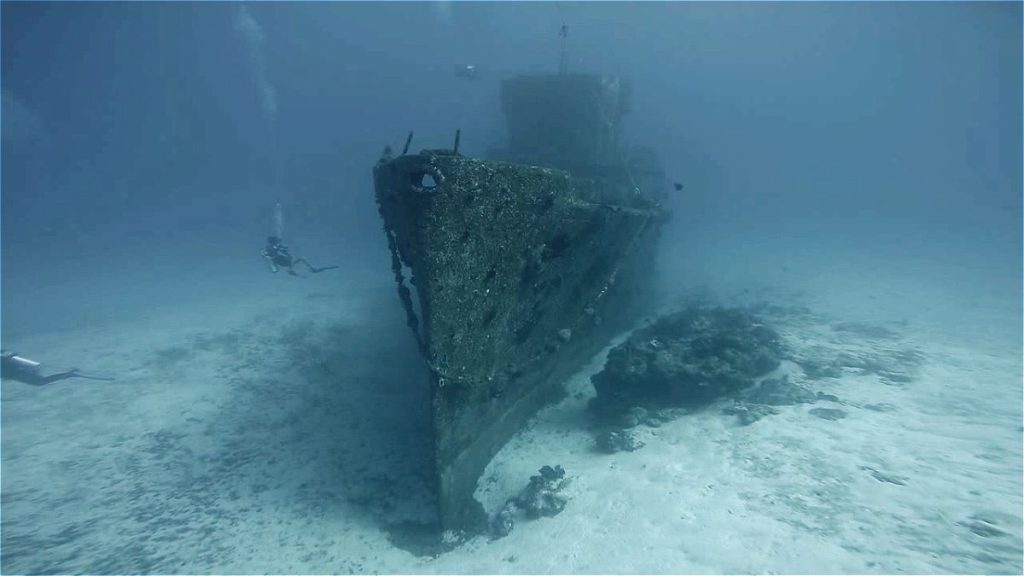
Rhonwen: Definitely the underwater photography module. I hadn’t seen any other university offer anything like it, and I was eager to give it a try! The dive trip to Egypt also seemed like an incredible opportunity to learn from the best and develop underwater photography skills.
Gina: Did you have any underwater photography experience before joining?
Rhonwen: No, I didn’t. I studied photography at GCSE and A-Level, and I grew up near the coast, spending all my spare time in or by the ocean. I really wanted to combine those two passions, and the MNHP course felt like the perfect choice!
Gina: What were your expectations from the underwater photography module?
Rhonwen: I can’t remember my exact expectations, but I knew it would be challenging and hard work. I was just really excited to be trying something so cool and unique. What I didn’t expect was how incredible diving in Cornwall would be. From kelp forests to seagrass meadows, and tiny anemones to catsharks, I was absolutely blown away from my very first dive.
Gina: So, you successfully joined the course. Were you apprehensive about anything initially?
Rhonwen: I grew up in a small village in North Devon, where my primary and secondary school classes were pretty small, so I was definitely nervous about being on a university campus with hundreds of new people. But I made an effort to put myself out there in the first few weeks and quickly formed a close group of friends. Everyone in the course shared similar interests and hobbies, so it didn’t take long to meet lots of lovely people.

Gina: Did you learn to dive specifically for the course?
Rhonwen: Yes – although I really wanted to learn to dive anyway! The summer before uni, I was lucky enough to travel to Costa Rica for four weeks with my sixth form. I had already finished my A-levels and left school, but the trip had been postponed the year before due to COVID-19. It focused on volunteer and conservation projects, but for one week, we completed our PADI Open Water certification. It was spectacular, and I couldn’t wait to keep developing my diving skills once I started the course. When I got back, I only had a few more weeks before the start of uni, so I quickly booked in my advanced and rescue diver courses.
Gina: How was your first cold-water dive?
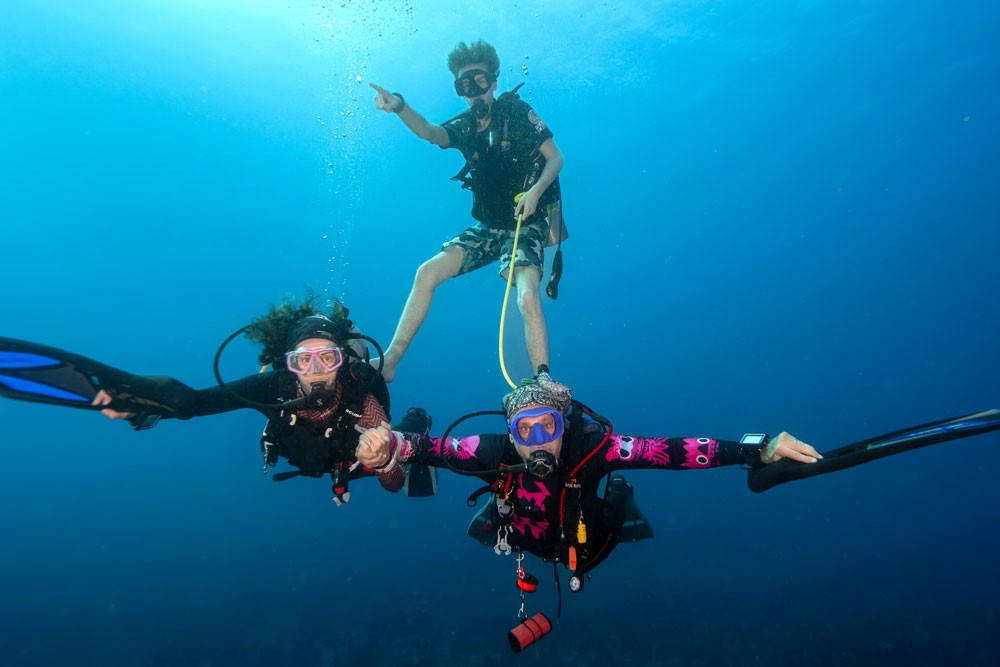
Rhonwen: I completed both my advanced and rescue dives in a quarry, so my first cold-water dive in the sea was with the MNHP dive team. It was pretty cold, and I think it was raining. But the dive site is such a positive place, and once we got in the water, it was honestly amazing. I saw a catshark on that first dive, and so many snakelocks anemones swaying on the kelp.


Gina: Did Falmouth support you adequately for that dive?
Rhonwen: Yes, they were very supportive. The team were all extremely helpful every step of the way. I was pretty nervous, but everyone is super friendly and makes you feel very safe.
Gina: Describe a typical week as an underwater photography student.
Rhonwen: Usually, we had a few lectures at the beginning of the week, followed by smaller tutorials where we could discuss our projects one-on-one with the module leaders. Each week, there were also various technical inductions you could book, which were really helpful if you wanted to use specific equipment or learn a new skill. Diving took place at the end of the week and was always something to look forward to.


Gina: Did lectures effectively prepare you?
Rhonwen: Yes, your underwater lectures always left me feeling prepared and confident to refine and perfect specific techniques or explore new ones. Having guest speakers was amazing too, like you, they shared so much experience and knowledge on the subject of underwater photography. I always felt motivated and inspired to push myself out of my comfort zone.
Gina: How are dives organized?
Rhonwen: After completing equipment inductions and a pool dive, we were assigned a few dives a week. This was organised around our main timetable, making sure we always had our normal lectures and tutorials.
On dive days, we would prepare our kit the evening before. We would go to the dive store, pick a camera and set it up there. This meant taking time to clean all the O-rings, visually inspecting the camera and housing, making sure all the batteries were charged and testing that everything was working once it was put together.
The morning of the dives, we could pick a buddy, and everyone would kit up together. Then there was the safety briefing and buddy checks, to ensure everyone is comfortable, happy and ready to dive. There was never any pressure to dive if you didn’t feel up to it, and everything could be done at your own pace.

Gina: What did you enjoy most about the underwater photography course?
Rhonwen: Witnessing for myself the wonderful marine life we have here in the UK. When I first got to dive in Cornwall, I was blown away by how brilliant the biodiversity is. I’ve been fortunate to dive in a few different tropical countries, and while it’s amazing, Cornwall is always up there with the best.
Gina: What does a typical dive day look like?
Rhonwen: We would start the morning by kitting up and chatting about what we wanted to try out with the cameras. Then we would dive for around an hour before taking a quick lunch and drink break. If you felt up for it, there was usually the chance to go back in for a second dive. At the end of the day, we could grab our SD cards and have a look at what we captured.

Gina: Describe the dive team at Falmouth.
Rhonwen: The dive team is amazing. Whatever you need, they are there to help, from kitting up the cameras to helping you try out new techniques. They are extremely knowledgeable and passionate about what they do. They were always encouraging and supportive if I wanted to try something new, offering tips and personal experiences.
Gina: How much has your work improved since starting?
Rhonwen: It’s crazy looking back at the work I produced in my first year and comparing it to now. It’s so challenging being under the water with a camera for the first time. I just wanted to take pictures of everything, but I soon learnt that sticking with one subject to perfect my lighting and composition is so valuable, even if I come away with hundreds of bad images.
Problem-solving is a big part of underwater photography. I noticed a big improvement in my images when I took the cameras out in my own time and practised what went wrong previously.
I learnt so much about underwater photography during my three years studying the course. It’s so rewarding to look at my first underwater images and compare them to the ones I took for my final major project.
Gina: What’s your proudest achievement?
Rhonwen: Definitely my Final Major Project ‘Hidden Beauty’. The project is a series of images which reveal the beautiful world of colour, texture and movement of anemones in Cornwall.

Gina: Tell us more about your rock pool project.
Rhonwen: I was really keen for my final project to be underwater-based, but because of the time of year, diving wasn’t reliable.. You encouraged me to visit the rockpools every day and find a story there – so that’s what I did. It didn’t take me long to realise that most of what I was photographing were anemones!
I have always found anemones fascinating, even from my first dive with uni. Watching them sway in the kelp was beautiful and mesmerising. I never realised how much variety there was within these awesome creatures until I spent every day for months observing and photographing them. I remember seeing a fact about anemones, something like – the largest and most varied occur in tropical waters. While it’s true, we certainly don’t have the largest in our waters, I couldn’t help but want to prove we do have some of the most varied, even if they are no bigger than a 5p. The variety of vibrant colours, even within individuals of the same species, was incredible.


I experimented with lots of different techniques to bring variety to my portfolio – from super macro to UV photography. I am always amazed by how something so tiny can have such intricate markings and colours. My main goal with this project was to share that hidden beauty with more people.
Gina: Were you surprised by the biodiversity?
Rhonwen: Yes. I’m a bit impatient and often moved from rockpool to rockpool if I couldn’t find anything. But once I started to really stop and look in every tiny crack and crevice, that’s when I started noticing how much life there can be in one tiny rock pool.
Gina: Do you feel prepared for a career in underwater photography?
Rhonwen: Yes, I do, the skills I learnt and perfected in my final year have definitely helped me feel more confident. My goal now is to start saving up and buy my own underwater setup so I can continue building my portfolio.

Gina: Advice for prospective students?
Rhonwen: If underwater photography is something you want to do, then this is 100% the course for you. It’s one of a kind and unique. The team are all so dedicated and passionate about what they do and teach us students. You’ll fall in love with underwater photography and diving in the UK.
Gina: Any advice for current students?
Rhonwen: Go out as much as you can, as you definitely get what you put in. I really saw an improvement in my underwater photography skills when I took the cameras out in my own time, asked for advice and mastered a technique before moving on to the next. Ask as many questions as you can, make use of the amazing equipment you have available and try new things.

Gina: Would you choose this degree again?
Rhonwen: Yes, definitely.
Click below for more details about Falmouth University’s Marine & Natural History Photography course:
https://www.falmouth.ac.uk/study/undergraduate/marine-natural-history-photography
Meet Gina Goodman and the rest of the team at Falmouth University shaping the next generation of underwater photographers here.