Excerpts from Jeff Goodman’s Book Action Camera Underwater Video Basics, Part 6 of 6: Ethics of Filming Wildlife

When filming on land, ethics seem pretty well clear-cut. It is obvious to an audience when animals are being made to suffer so that you can get interesting shots. But filming in the marine environment seems to be lacking in all those terrestrial cuddly sentiments. We don’t hear marine life scream or howl. Marine animals are still generally thought to be devoid of feeling or emotion. It’s an archaic point of view that we tend to use when disregarding the millions of marine species that have evolved in our underwater environments.
Often, ethical judgments are not clear-cut and have to be made by the individual. In doing this, the ill-defined parameters are broad indeed and can be very personal. For me, all life — marine and otherwise — does not need to be stressed, harmed, or displaced in order to get a pleasing image or sequence. The best shots, stills and video, are taken when animals are relaxed and/or unafraid of the cameraperson. Also consider and take care of their environment. If you harm or destroy it, then it could be gone forever.
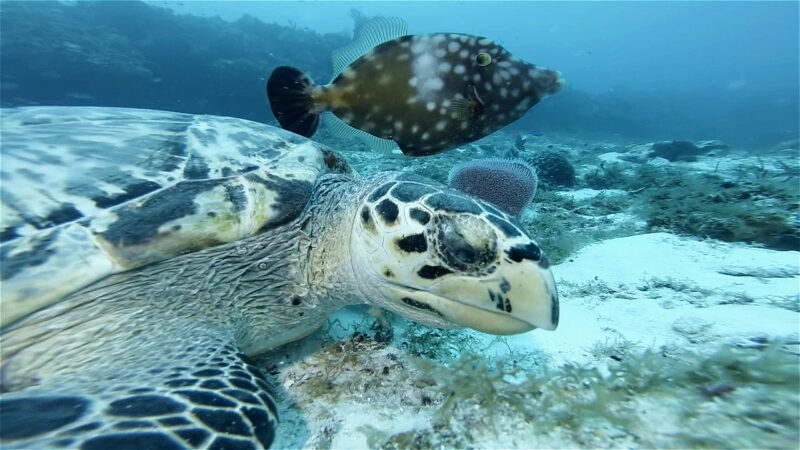
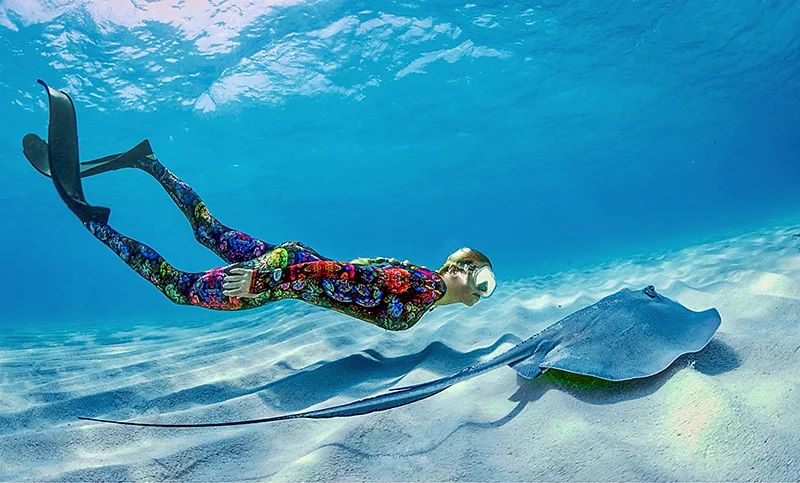
So how do you know when you are stressing a marine animal? It’s a hard one to quantify, but the more time you spend underwater, the greater your perception becomes. A general rule is: don’t chase animals. If they are trying to get away, then they don’t want to be near you and are quite likely afraid. This wouldn’t apply if, for example, a turtle is swimming along a reef and you fin hard to keep up with it. If the turtle were anxious, then it would drastically speed up and change direction to get away.
Take your time with animals underwater. Give them a chance to come to you. Breathe gently and rhythmically. Keep your body movements slow and deliberate. There are few greater feelings than when a wild animal accepts you in its presence and shows no fear. This is when you are most likely to get the best natural behaviour shots.
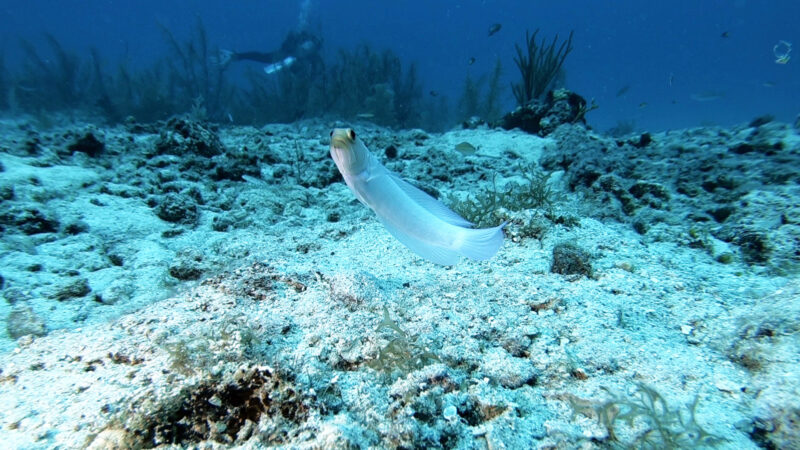
Protecting the marine habitat
It may seem to you that while you are diving, the direct effect you are having is quite minimal. Perhaps you touch some coral accidentally or totally ignore all the rules to get a close-up shot of a fish and actually rest your fins or arms on part of a reef. You think about it at the time and come to the conclusion that actually you don’t seem to have done much damage and it will grow back soon anyway. Now multiply your actions by a few thousand or more to cover all the divers who have had the same thought, perhaps only over the last year. It all adds up. Ultimately, with repeated mistreatment, the reef and habitat will suffer and eventually die.
One danger of shooting macro (in particular) is that you need to be close to the subject. This in itself raises issues of careful diving practices when on delicate ecosystems in both coral seas and temperate waters. Damaging marine life just to get a shot is a big no-no! There will be plenty of occasions when kneeling down on the seabed and doing no harm will be easy, such as on a sandy bottom at the edge of a coral reef or on a rocky sea floor next to a kelp bed.
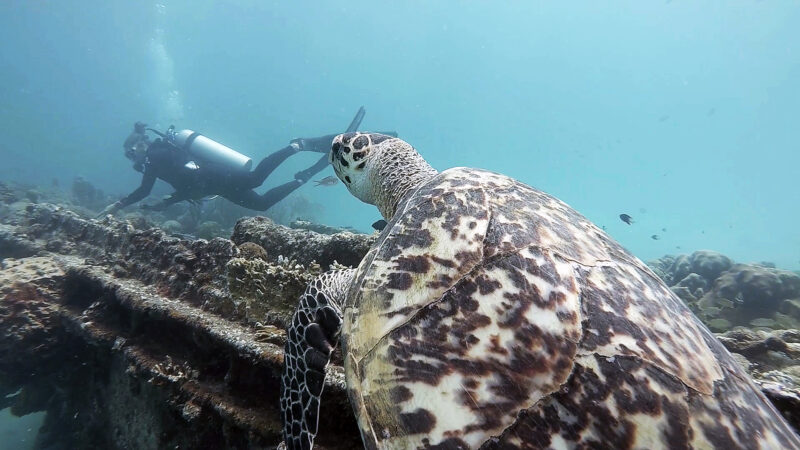
If trying to get a shot will cause damage, please don’t do it. Damage to reefs and other marine environments due to human activities is considerable and often permanent. I have no desire to be preachy about this, but do consider exactly what it is you are doing. You, as an underwater cameraperson, are representing and displaying the underwater world and all its incredible biodiversity to an audience — be it just family, your dive buddies, or globally online. You probably would not say in your film narration that, in order to get this wonderful close-up of an anemone or perhaps a cleaner fish going in and out of the gills of a grouper, you actually destroyed a great lump of coral or squashed an entire colony of fan worms. For me, being underwater is a privilege and not a right. I ask that you do your utmost to preserve what you see and share what you experience. If you are filming on top of a reef, then please make sure you are extremely competent with your buoyancy control.
Action Camera Underwater Video Basics by Jeff Goodman is available now from DIVEDUP Publications:
https://www.divedup.com/shop/action-camera-underwater-video-basics-the-essential-guide-to-making-underwater-films/
About Jeff Goodman
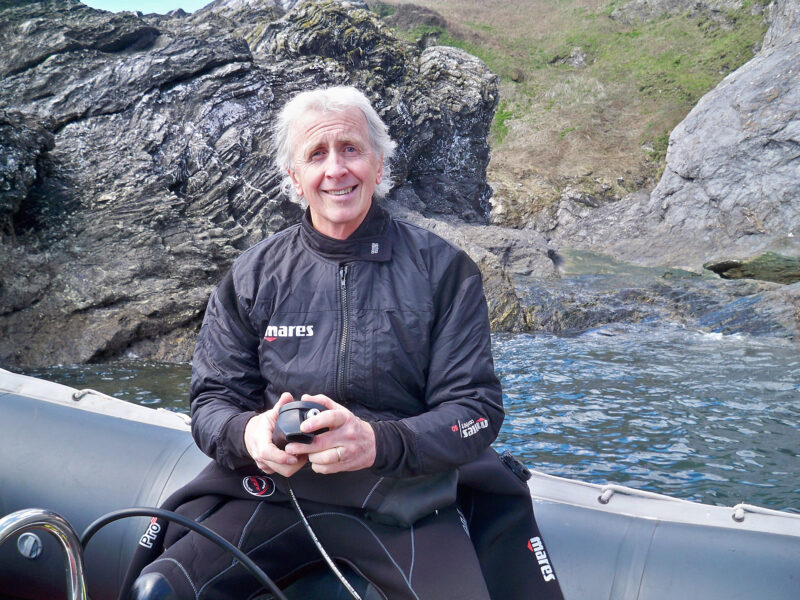
Jeff is a multiple award-winning freelance TV cameraman/filmmaker and author. Having made both terrestrial and marine films, it is the world’s oceans and their conservation that hold his passion, with over 10,000 dives in his career. Having filmed for international television companies around the world and as author of two books on underwater filming, Jeff is Author/Programme Specialist for the Underwater Action Camera course for the RAID training agency.
Jeff has experienced the rapid advances in technology for diving as well as camera equipment, and has also experienced much of our planet’s marine life. He has witnessed, first-hand, many of the changes that have occurred to the wildlife and environment during that time.
Jeff runs bespoke underwater video and editing workshops for the complete beginner up to the budding professional.