Does Size Really Matter: Trevor Rees

Many underwater photographers are moving away from large DSLR and mirrorless rigs in favour of smaller, lighter camera systems. Is this simply about convenience, or has downsizing changed the way they photograph underwater? We asked a selection of underwater photographers to share their experiences.
For the second instalment in our mini-series, Does Size Really Matter?, we talk to Trevor Rees.
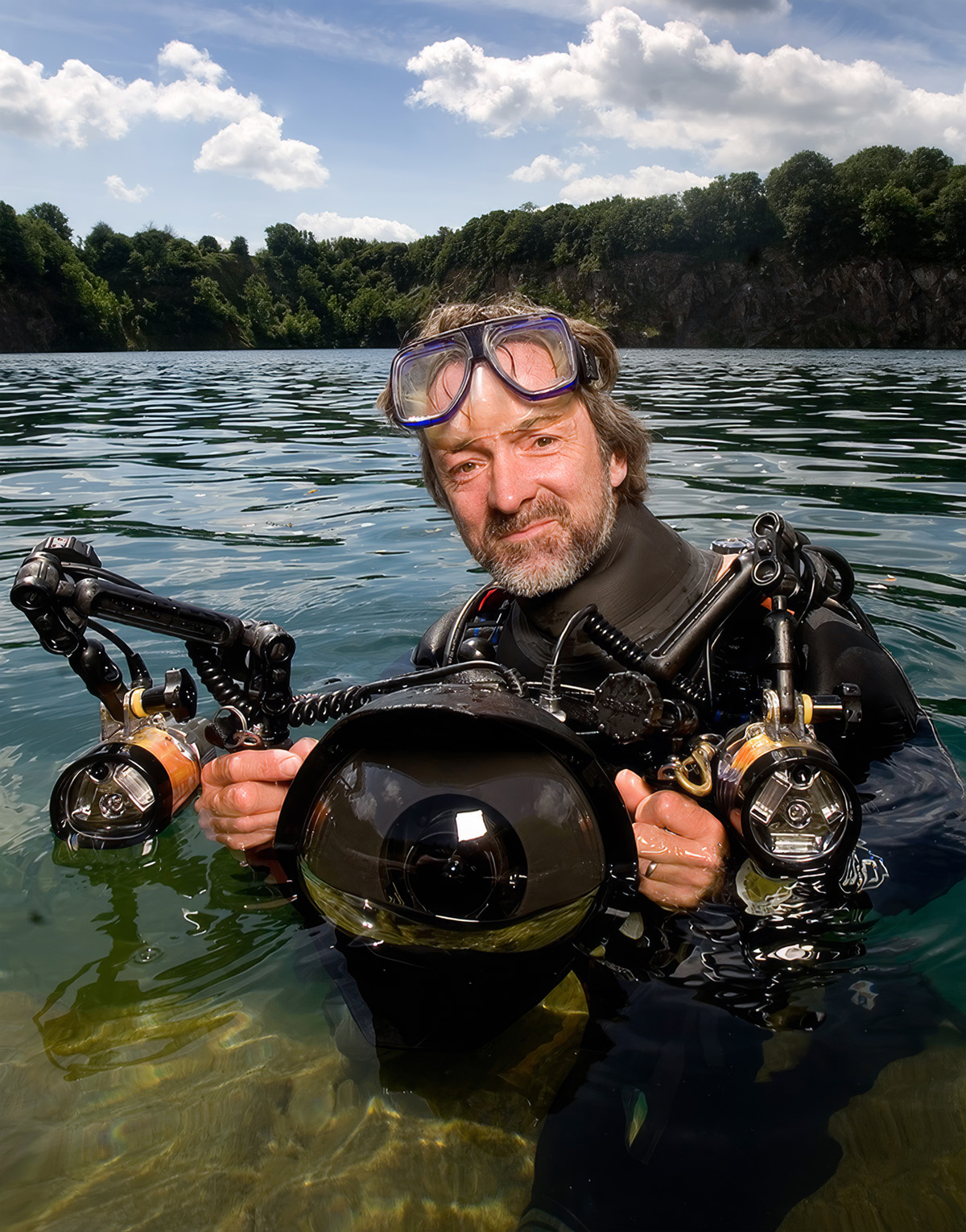
Trevor has dived all around the British coast, from the Isles of Scilly in the south to the Orkney Islands in the north, St Kilda in the west and the Farne Islands in the east. His nearest good diving is probably Plymouth on the south coast, but the sheltered sea lochs on the west coast of Scotland are, without doubt, his favourite area.
Trevor also enjoys diving at various freshwater sites that are often overlooked for their photographic potential. Many of Trevor’s images have been successful in competitions and published in diving and wildlife magazines.
What underwater camera system did you use previously, and what system are you using now?
I started my photography 45 years ago with a Nikonos 3 and film. I progressed to compact digital cameras before getting a series of Sea & Sea-housed Nikon APS-C cameras. I upgraded every few years until I got to a full-frame Nikon D850 in a Nauticam housing. In the last few years, I’ve been using a smaller Olympus OM-10 in a Nauticam housing. For all systems, I’ve always had macro lenses and fisheye lenses, and all the required ports. I’ve also owned and used some of Nauticam’s expensive optics, such as the WACP-1 and the EMWL +160-degree lens.
What prompted you to downsize?
Was it weight, travel restrictions, cost, ease of diving, changing photographic interests, or something else?
When I saw the demise of the Nikon F-mount was coming, I decided to offload and sell all my Nikon equipment. I already had a basic Olympus system, so thought I would stick with that to see how the camera market, and especially the Nikon Z-mount, would develop. The more I used my Olympus system, the more I realised it was all I needed. My pictures were never really any better using high-end equipment, and so a smaller and cheaper system seemed the place to stay.
What have been the biggest benefits?
What do you enjoy most about shooting with a smaller system?
Smaller, lighter and cheaper are the main benefits. In addition, a smaller-sensor camera is more forgiving with port/lens set-up. On occasions, lighting and strobe placement are also easier with small ports.
What have you sacrificed?
Are there any compromises in image quality, handling, battery life, ergonomics, or functionality?
Less accurate and slower autofocus, especially with a lower-end Olympus camera, is noticeable, but it is by no means a problem for my slow and deliberate style of photography, where I try to shoot common subjects as best I can. My Olympus has an older contrast-detect autofocus system rather than phase-detect, but I’ve learnt to get the best from it. Battery life is never an issue if I can change batteries after two dives.
Has downsizing changed the way you shoot?
Has it influenced the subjects you photograph, your composition, or your diving style?
None whatsoever. I take the same shots.
How does it compare underwater?
Do you find the smaller system easier to manage in currents, when entering and exiting the water, or on longer dives?
For shore diving, a big, heavy rig can be a pain to carry. Smaller and lighter helps. I found Nauticam’s WACP lens just too big and heavy, so I sold it.
Do you miss anything about your previous set-up?
Are there features or capabilities that you simply can’t replicate with a smaller system?
I can’t think of anything I miss apart from now having smaller and lower-resolution files to work with. The move from 46MP Nikon D850 files to 20MP Olympus OM-10 files gives a lot fewer pixels to work with in post-processing. I can’t crop my pictures as much now, and I really need to nail the exposure properly from the start. My Photoshop sliders don’t do as much on my Olympus files!

What about lenses?
Do you still have the same creative flexibility with lenses and ports, or do you find yourself working differently?
I pretty much have the same scope, with equivalent macro and wide-angle lenses enabling me to work in a very similar way. The beauty of the M43 system is that it has a very mature and complete lens choice available.
Looking back, would you make the same decision again?
Would you ever return to a larger camera system? Why or why not?
I have no plans to return to a larger system, as I doubt it will improve my photography. The only upgrade I would consider is a higher-end Olympus model in order to get better autofocus and a larger viewfinder. However, I’m in no rush, and there needs to be something new and improved to tempt me to upgrade. It may never happen!
Do you have any regrets?
If you could do it all again, is there anything you would do differently?
I’ve probably spent too much unnecessary money on kit. However, it has all been good experience and a lot of fun. I needed to own an expensive Nikon D850 to let me know I never really needed it.
What advice would you give someone buying their first underwater camera system?
Should beginners start small and upgrade later, or invest in a larger system from the outset?
I’m reluctant to advise, but still happy to talk camera kit all day long. If I sense someone has passion and is likely to be in the game for a while, I suggest getting the best you can afford. I would probably champion the smaller M43 sensor over full-frame from what I’ve learnt. I would also be keen to show what a basic iPhone can do, even though I don’t have many phone shots to show yet.
Finally… does size really matter?
In one sentence, tell us whether downsizing has made you a better underwater photographer.
It’s made no difference to me. I hope I can take a good picture irrespective of what camera I use. In a curious way, I actually like using basic equipment to see what I can do with it. As well as downsizing my camera, I have found smaller strobes preferable too. I now have a pair of AOI Q1 strobes and find they work just fine.
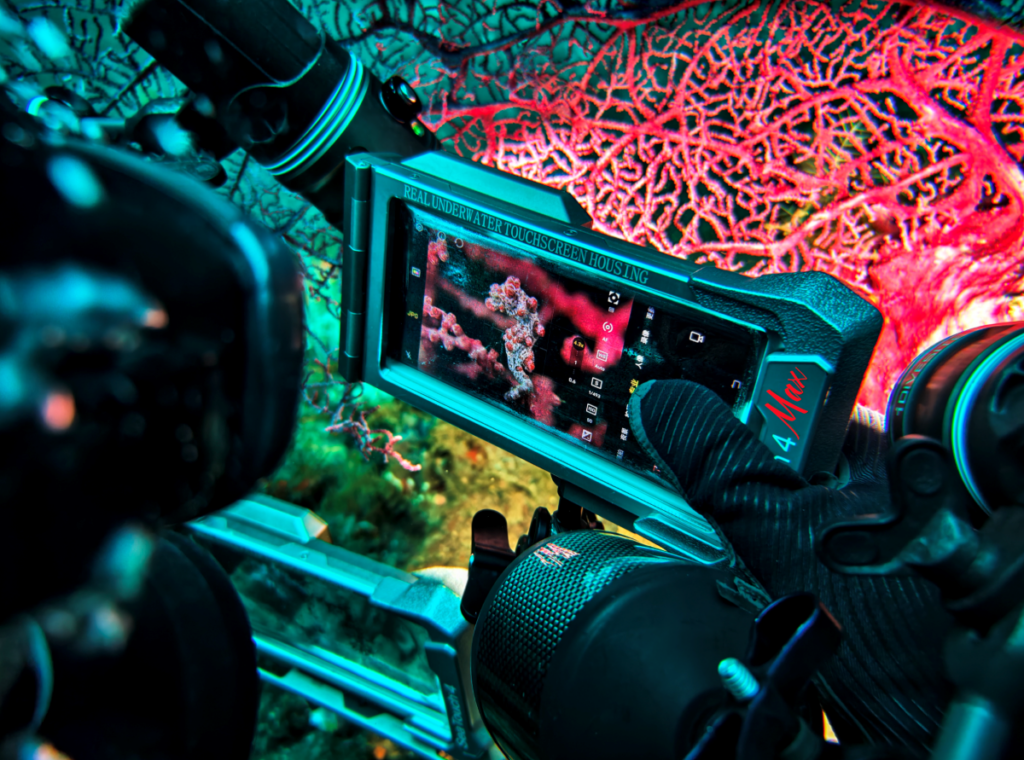
I’ve recently started playing with an iPhone in a Divevolk housing and am amazed at what is possible. I can’t trigger a strobe, so have to light with a continuous light source, but this works surprisingly well. Serious macro shooting of small stuff and serious wide-angle are missing from iPhone photography, but I could easily see a phone camera being the last camera I own and use.

Join us next week for the next instalment of Does Size Really Matter?, as we hear from another photographer who has made the move to a smaller system.