Does Size Really Matter: Libby Gawith

Many underwater photographers are moving away from large DSLR and mirrorless rigs in favour of smaller, lighter camera systems. Is this simply about convenience, or has downsizing changed the way they photograph underwater? We asked a selection of underwater photographers to share their experiences.
For the third instalment in our mini-series, Does Size Really Matter?, we talk to Libby Gawith.

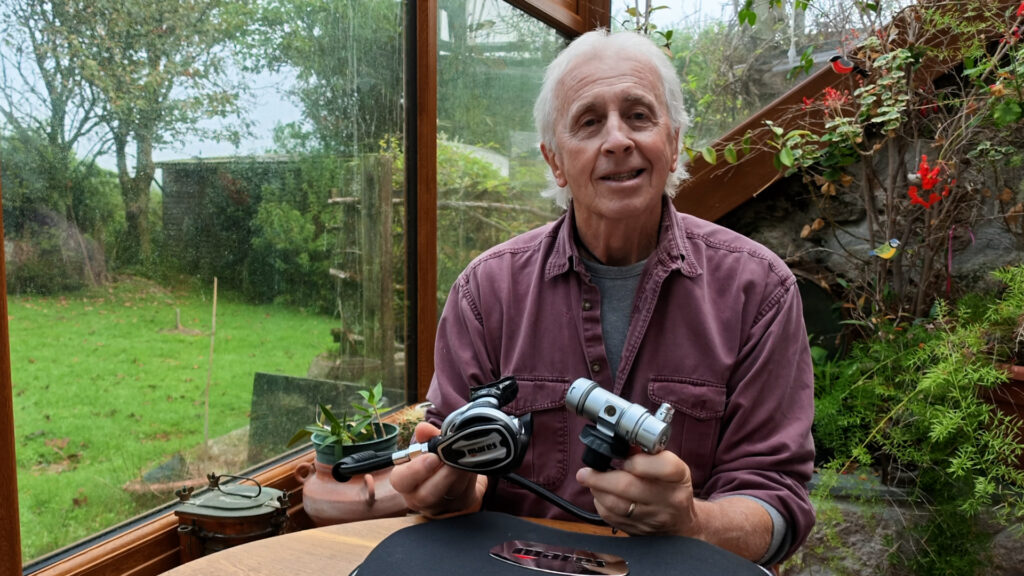
Libby Gawith is a keen diver, underwater photographer and passionate marine conservationist. She is Treasurer and Membership Secretary of East Cornwall Divers, an active BSAC club based in Torpoint, and is also a member of both BSoUP and the Bristol Underwater Photography Group.
Libby has been photographing beneath the surface for many years. The Isles of Scilly are a particular favourite, both photographically and environmentally, and her underwater imagery has been used by Environment Action Scilly in its campaign to protect the islands’ marine environment.
Combining her love of diving and photography with a strong commitment to conservation, Libby is rarely far from the water – or her camera.
Tell us about your camera journey.
What underwater camera system did you use previously, and what system are you using now?
I started diving with a Nikonos 2 and moved through compact cameras and then onto DSLRs. I had Canon compacts but switched to Nikon because I found the menu more logical. My last set-up was the Nikon D500 (DSLR cropped sensor) in a Nauticam housing with a 45-degree viewfinder and the WACP for wide angle.
I am now using an OM-1 (mirrorless) in a Nauticam housing. I still have the same flashguns, two Inons and a Backscatter Mini Flash with snoot for macro. I have a 45-degree viewfinder.
What prompted you to downsize?
Was it weight, travel restrictions, cost, ease of diving, changing photographic interests, or something else?
I loved my D500, but I’m getting older and it was heavy, particularly with the WACP. Friends were moving to lightweight mirrorless cameras and spoke highly of them. So, it was mainly the weight and difficulties with baggage allowances when we travel. I was very happy with the performance of the D500. I haven’t even sold it yet.
What have been the biggest benefits?
What do you enjoy most about shooting with a smaller system?
The camera body itself is not that much smaller, but the lenses and housing are much smaller, so I have achieved the weight-saving objective. There is a good variety of lenses available, and I was able to buy them second-hand, which helped with the cost of transition.
The electronic viewfinder (EVF) enables you to review photos through the viewfinder after taking a shot – i.e. without moving your head to look at the back screen. That’s probably the most positive aspect. I also like the ability to see in the viewfinder what the photos would look like on the current photo setting. This is very useful for wide-angle and natural-light photos, but it isn’t a benefit for macro because the image just looks dark (when you use flash to light the subject).


What have you sacrificed?
Are there any compromises in image quality, handling, battery life, ergonomics, or functionality?
Even after a year with this camera, I’m not getting the success rate that I achieved with the D500. This is particularly noticeable with the wide-angle lenses. I used to use the WACP, which was lovely underwater but a beast on land. I now have the WWL-C, which is a wet lens. That seems to be a backward step in quality, and I find the need to burp the lens irritating when entering the water.
The fisheye 8mm lens is very sharp, though the camera can’t deal with sunbeams and sunballs.
The macro lenses for the OM-1 are very good, and there is a good selection. However, macro brings other challenges because of the limitations of the electronic viewfinder. The electronic viewfinder works brilliantly on land, but underwater it’s more difficult to see the subject – particularly if you are aiming for a peak-action shot. There are options in the camera menu for using it as an optical viewfinder or night vision, but neither is as good as the DSLR viewfinder.
The camera is very clever and has changed its settings on its own. The menu is complicated, so when there is an issue underwater, it’s hard to find the menu settings to correct it.
Battery life is less than a DSLR, but it still lasts for a day’s diving, so it’s not an issue.
Has downsizing changed the way you shoot?
Has it influenced the subjects you photograph, your composition, or your diving style?
I am shooting much the same, but I’m not enjoying it as much. The issues with the electronic viewfinder are very frustrating. It worked well overseas in clear water, but in the UK I tend to use it on optical or night vision. I am now experimenting with a focus light on the subject. I haven’t tried it on blackwater/night diving yet, nor have I worked out how I will do backlighting.
I used to watch the subject through the viewfinder, waiting for the peak-action moment. I find that more difficult with the EVF. Other than that, my diving style hasn’t changed.
How does it compare underwater?
Do you find the smaller system easier to manage in currents, when entering and exiting the water, or on longer dives?
Yes, it’s much easier. I have always jumped in with my camera attached, so the smaller size is a benefit. Storage on the boat and general handling are good. I can get all my lenses in my hand luggage, which is excellent.

Do you miss anything about your previous set-up?
Are there features or capabilities that you simply can’t replicate with a smaller system?
I miss the optical viewfinder on the DSLR. I am sure it could be replicated, but the optical EVF isn’t as good on the OM-1 (when it’s used underwater).
I also miss the flip diopter for taking supplementary lenses. On the new rig, we have to remove them and put them in a pocket. However, that is a Nauticam matter and not related to the camera itself.
What about lenses?
Do you still have the same creative flexibility with lenses and ports, or do you find yourself working differently?
I am sure there is the same creative flexibility, apart from sunbeams. There are lots of lens options, so I am looking for a mid-range swim-around lens for when you don’t know what subjects will arrive. I had that facility on the DSLR but not on the OM-1 yet.
Looking back, would you make the same decision again?
Would you ever return to a larger camera system? Why or why not?
I wouldn’t return to a DSLR for the weight and size reasons. However, if I had known about the issues with the electronic viewfinder, I would probably have waited longer to make the switch or investigated another camera.
Do you have any regrets?
If you could do it all again, is there anything you would do differently?
I would have investigated other types of mirrorless cameras, particularly with regard to the electronic viewfinder. When I made my decision, I checked out weights and the variety of lenses. I hadn’t understood the limitations of the EVF underwater. The EVF on this camera is fine on land, so I’m not sure how I could have tested it out before buying, though.


What advice would you give someone buying their first underwater camera system?
Should beginners start small and upgrade later, or invest in a larger system from the outset?
Start small. I started with a Nikonos 2 (50 years ago), so I was shooting completely manual. I still only shoot on manual.
I think it’s better to learn the basics on a small camera before tackling the cost and complexity of a larger rig.
Finally… does size really matter?
In one sentence, tell us whether downsizing has made you a better underwater photographer.
Unfortunately, it hasn’t made me a better underwater photographer. However, it has enabled me to continue to enjoy the sport as I, like many others, am ageing.
Join us next week for the last instalment of Does Size Really Matter? as we hear from another photographer who has always had a preference for a smaller system.