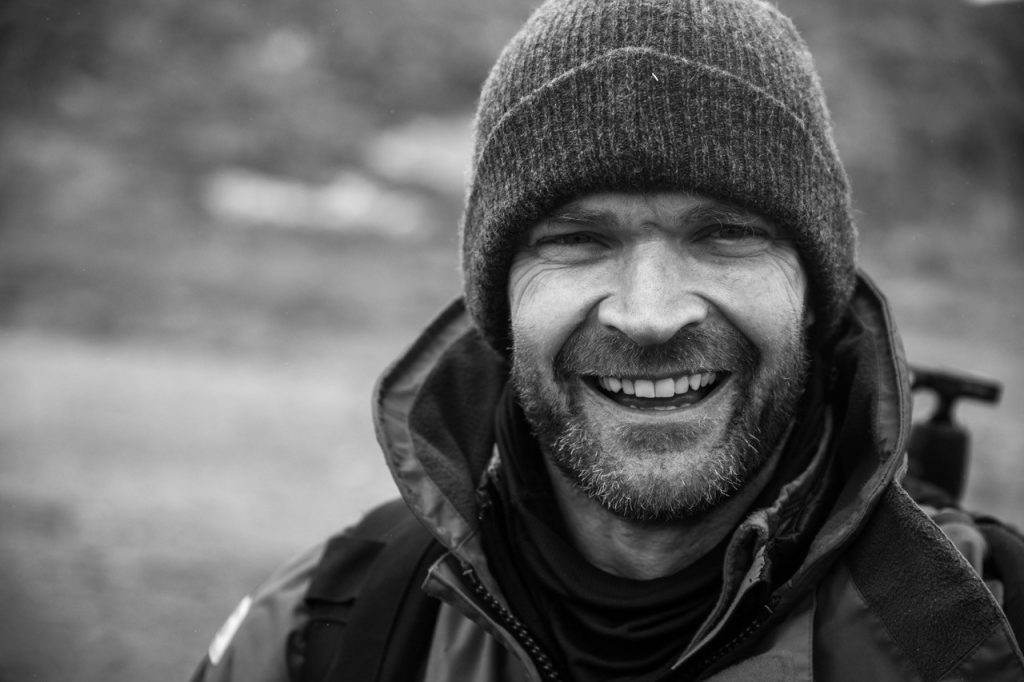
Back Yard to Bucket List: James Emery
Welcome to one of Scubaverse.com’s regular ongoing series, From Back Yard to Bucket List. Each month, we ask an underwater photographer to talk about their dives—local, favourite, and bucket list—and what makes them special.
Last month was incredibly busy in the UK diving industry. We had the Underwater Photographer of the Year awards and the UK dive show. This means we slipped slightly with our regular feature, but now we’re back on track. This week we feature the California-based British photographer, James Emery.
Most people see a pier; James sees a cathedral of light and shadow. Most people see mud; James sees a treasure hunt. From mastering the art of the “local dive” to fantasising about a specific, high-speed shot in the Southern Hemisphere, James explores the technical and emotional lengths we go to for the perfect image. If you’ve ever frozen your fingers off for the sake of a histogram, this one is for you.
Saeed
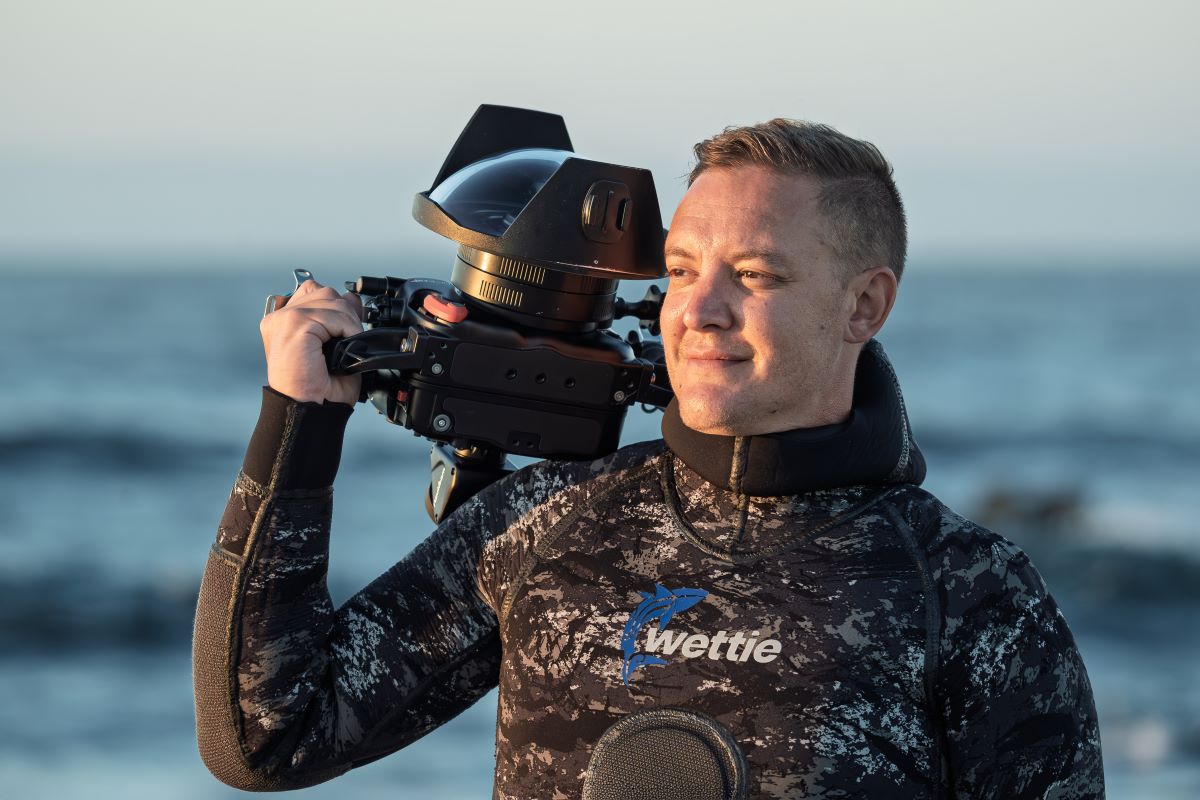 I’m James Emery, a UK expat currently living the dream in Monterey, California. I’m lucky enough to have the cold, nutrient-rich waters of the Pacific right on my doorstep. My weapon of choice is a Sony a7RV tucked safely inside a Nauticam housing. Lighting is everything, so I run a mix of Backscatter Mini Flash 3s, Atom, and Hybrid flashes. Glass-wise, I alternate between the razor-sharp Sony 90mm for the small stuff and the Canon 8-15mm fisheye for when I want to get close and wide.
If we were grabbing a pint and you asked about the dives that shaped my photography, I’d tell you about these three: the local faithful, the old stomping grounds, and the dream.
The Local Dive: Wharf 2, Monterey
Every photographer needs a “home base” to dial in settings without the pressure of an expensive flight. Mine is barely five minutes from my front door: Wharf 2.
Piers are photographic goldmines. In the open ocean, structure is rare, but here, the vertical pillars provide instant composition. They create strong leading lines, and if you shoot upwards, dramatic silhouettes against the sunbursts.
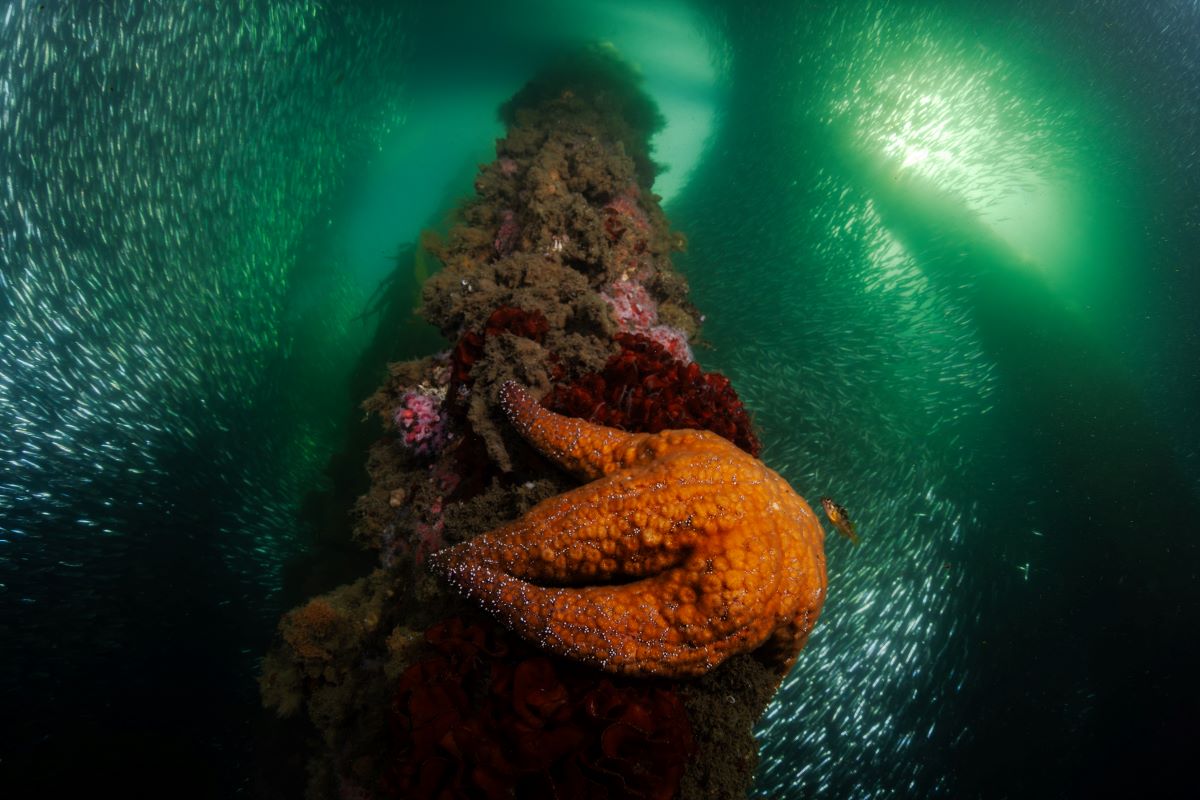
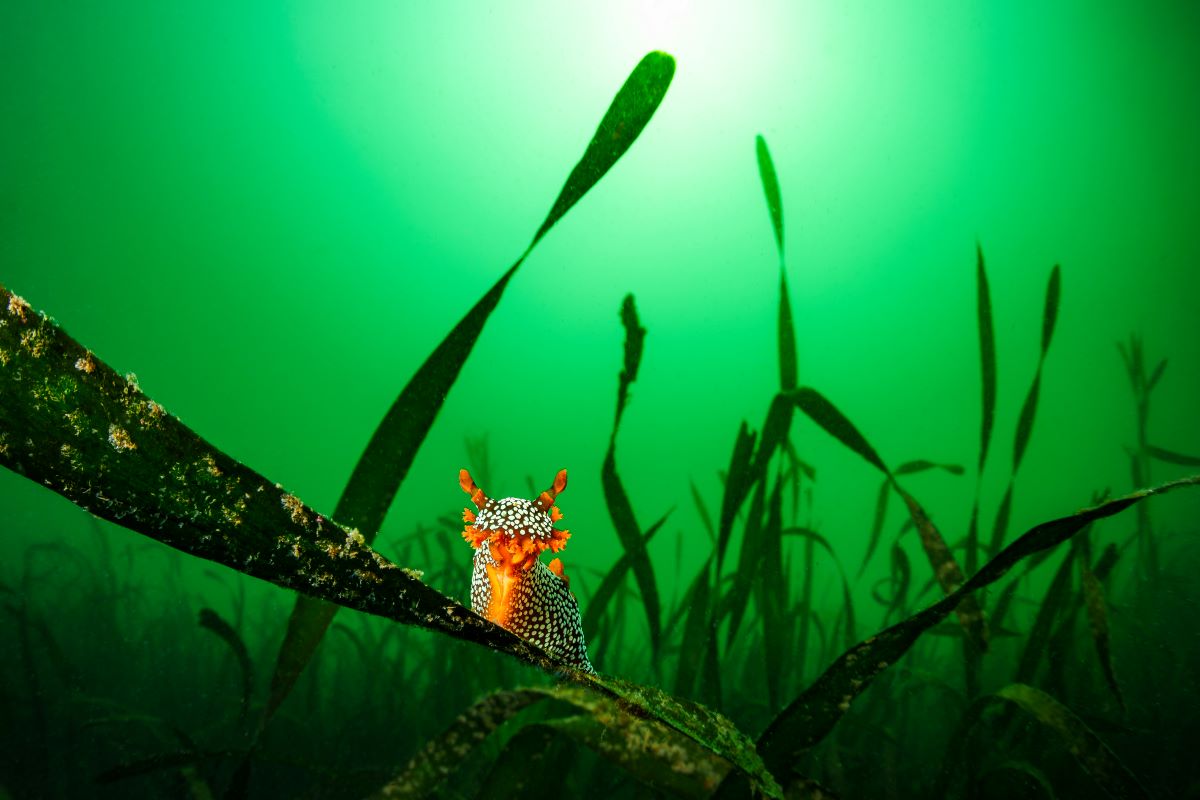
The site has many micro-habitats. You’ve got mucky bottom for macro, pillars covered in bryozoans and strawberry anemones, giant kelp, and swaying eelgrass. It allows for incredible Close Focus Wide Angle (CFWA) opportunities—getting the fisheye right up against a subject while capturing the moody, cathedral-like atmosphere of the pier behind.
But what truly keeps this site fresh is the seasons. Monterey diving is incredible because different times of year bring different spectacles. Sometimes it’s a swarm of jellyfish drifting through the bay; other times it’s a massive bait ball of anchovies.
On one memorable dive, we were engulfed by one of these bait balls. The school was so dense it blocked out the sun, turning a bright afternoon pitch black. I had to rapidly crank my ISO and drop my shutter speed just to see. Then, the chaos started. Sea lions torpedoed through the bait ball, smashing through the anchovies. Tracking fast-moving mammals in low light is the ultimate test of autofocus, but capturing that energy—bubbles, motion blur, scattered fish—is exhilarating. It felt like a scene straight out of a David Attenborough documentary, not a humble shore dive five minutes from my house.
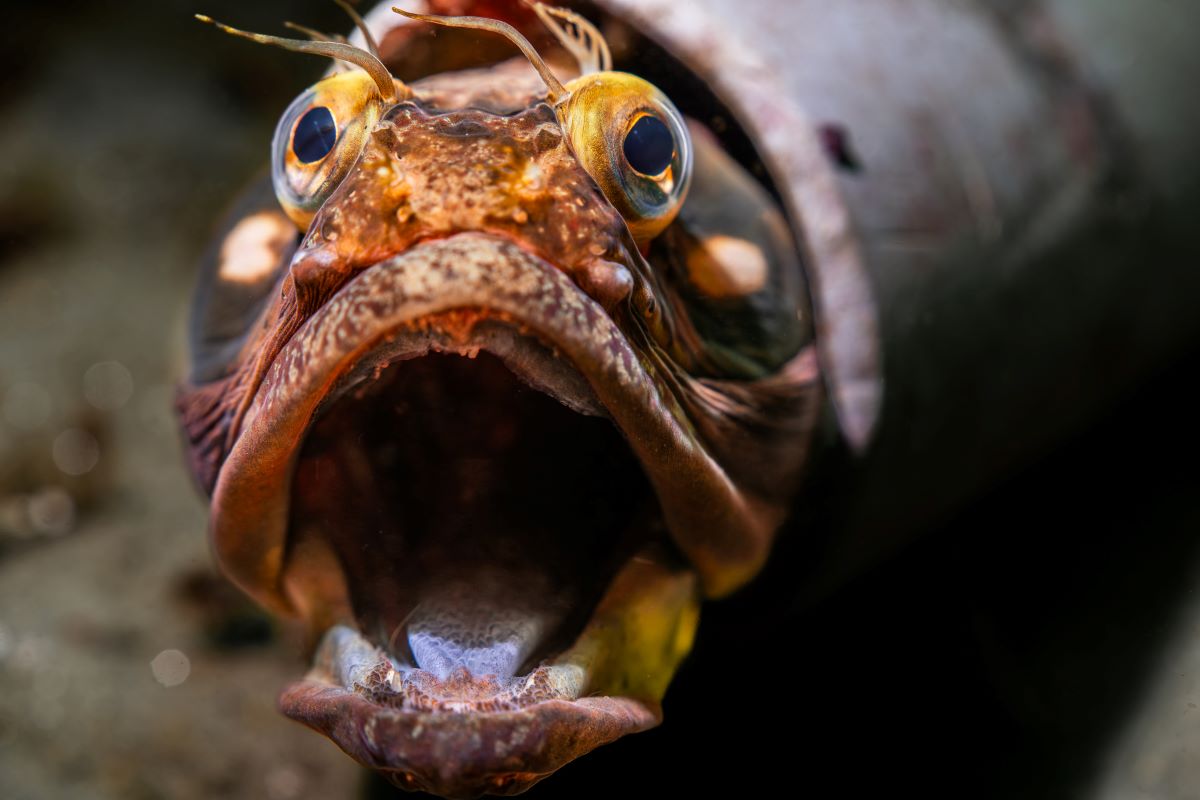
When the chaos settles, the residents keep me coming back. The site is absolutely teeming with life. On any given dive, we see tons of nudibranchs, octopus, and snailfish, alongside both Yellowfin and Sarcastic fringeheads.
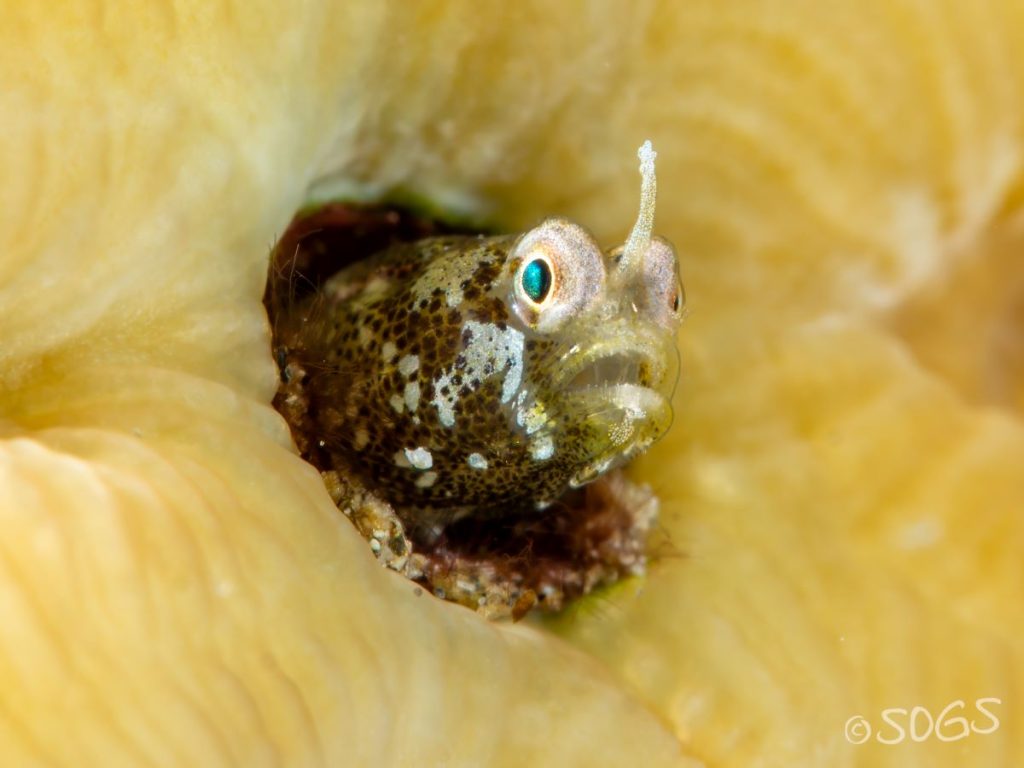
Speaking of Sarcastic Fringeheads, we have two residents living in a discarded PVC pipe. One is very chilled, whilst the other is grumpy; get too close and he will swim at you with his mouth wide open.
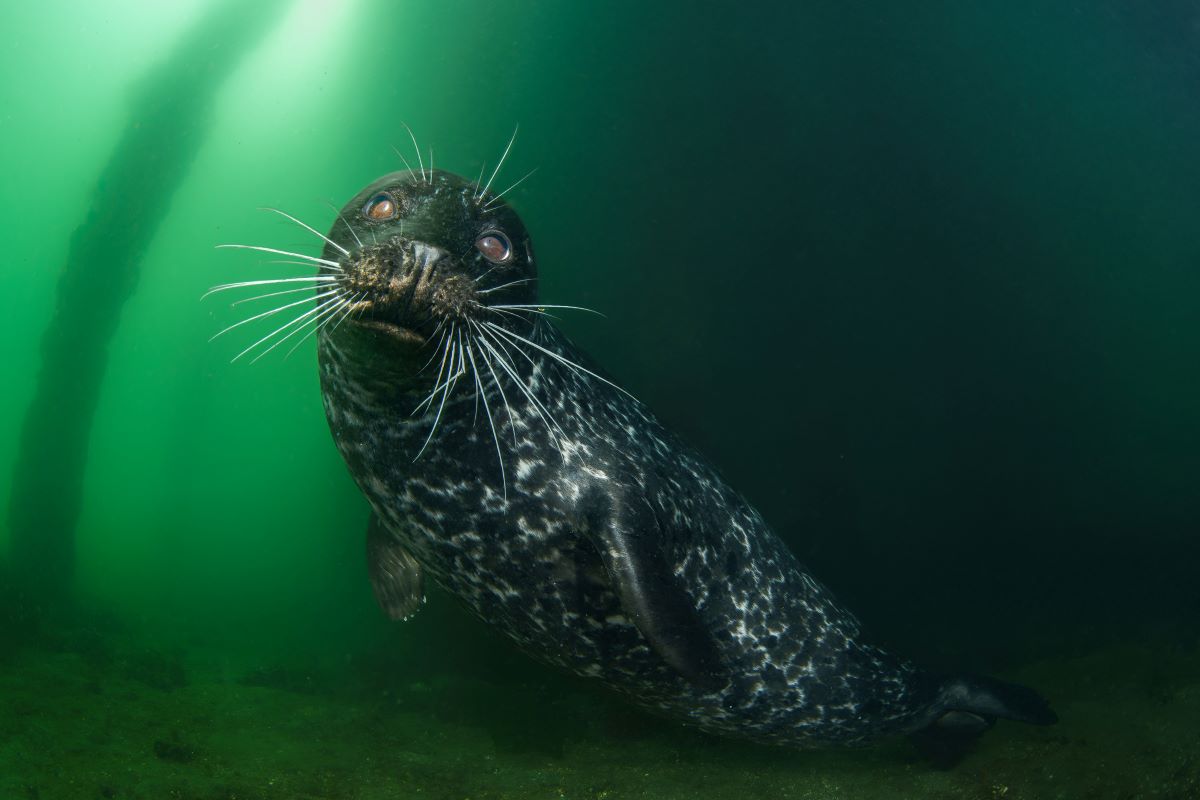
Sometimes, the wildlife gets too close. I remember a dive where I felt a sharp tug on my fin. Assuming it was my wife, I ignored it. When I finally rolled over, I found a curious harbour seal biting my fins. It stuck around for 30 minutes, posing and playing. That’s the magic of the Wharf: easy conditions, difficult subjects, and endless rewards.
The Old Stomping Grounds: The Lembeh Strait
Okay, I’m going to cheat a little here. I can’t name just one dive site in Lembeh because the whole strait is legendary. I used to live and work there, diving these black sand slopes daily. It’s known as the “Critter Capital of the World,” but for a photographer, it’s effectively the world’s best underwater studio.
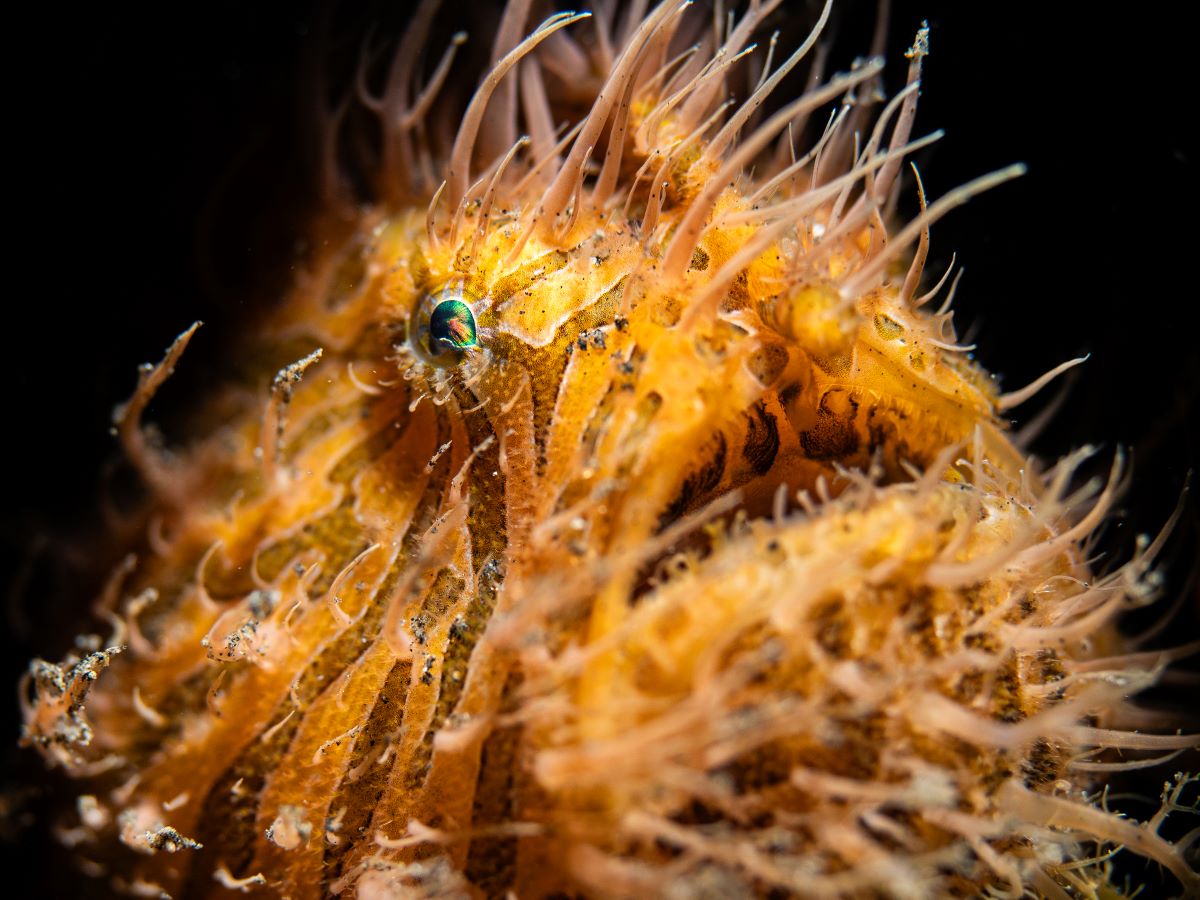
The density of rare critters here is staggering. You aren’t just looking for fish; you are hunting for monsters. On a single tank, you might tick off a Hairy Frogfish, a Wonderpus, a Rhinopias scorpionfish, and nudibranchs that look like neon hallucinations.
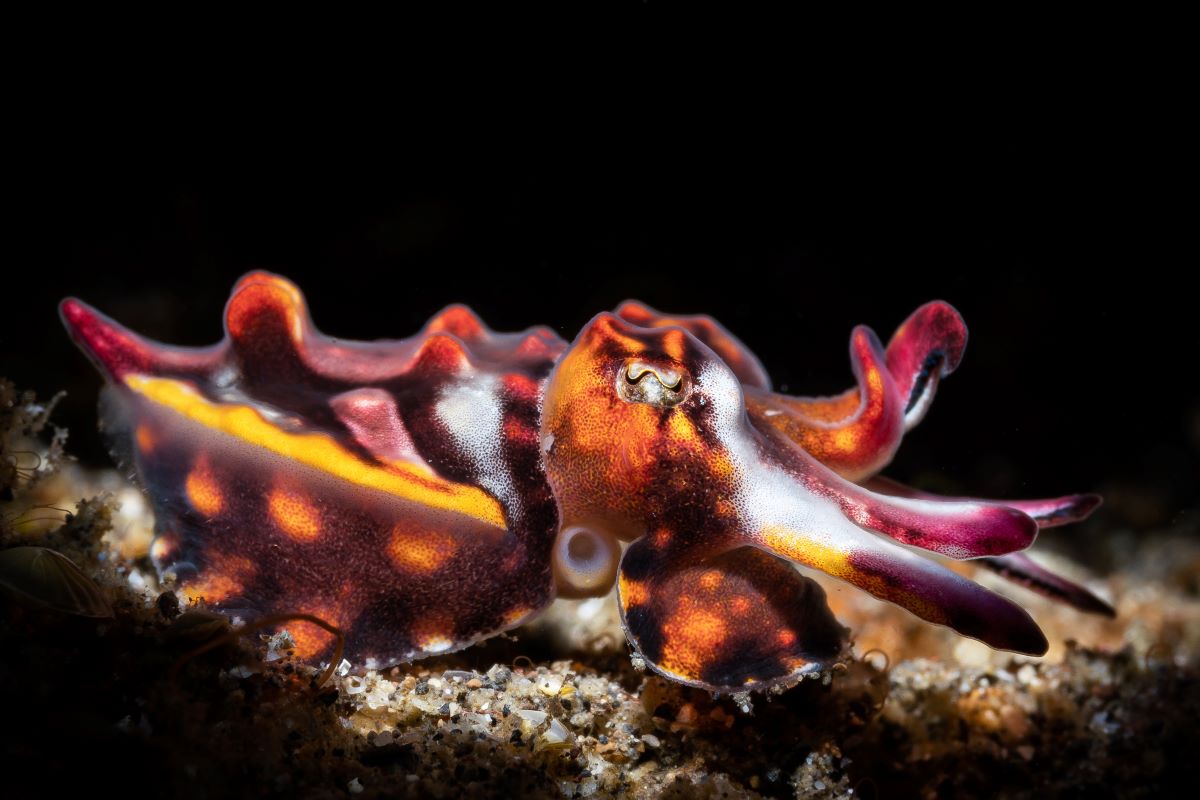
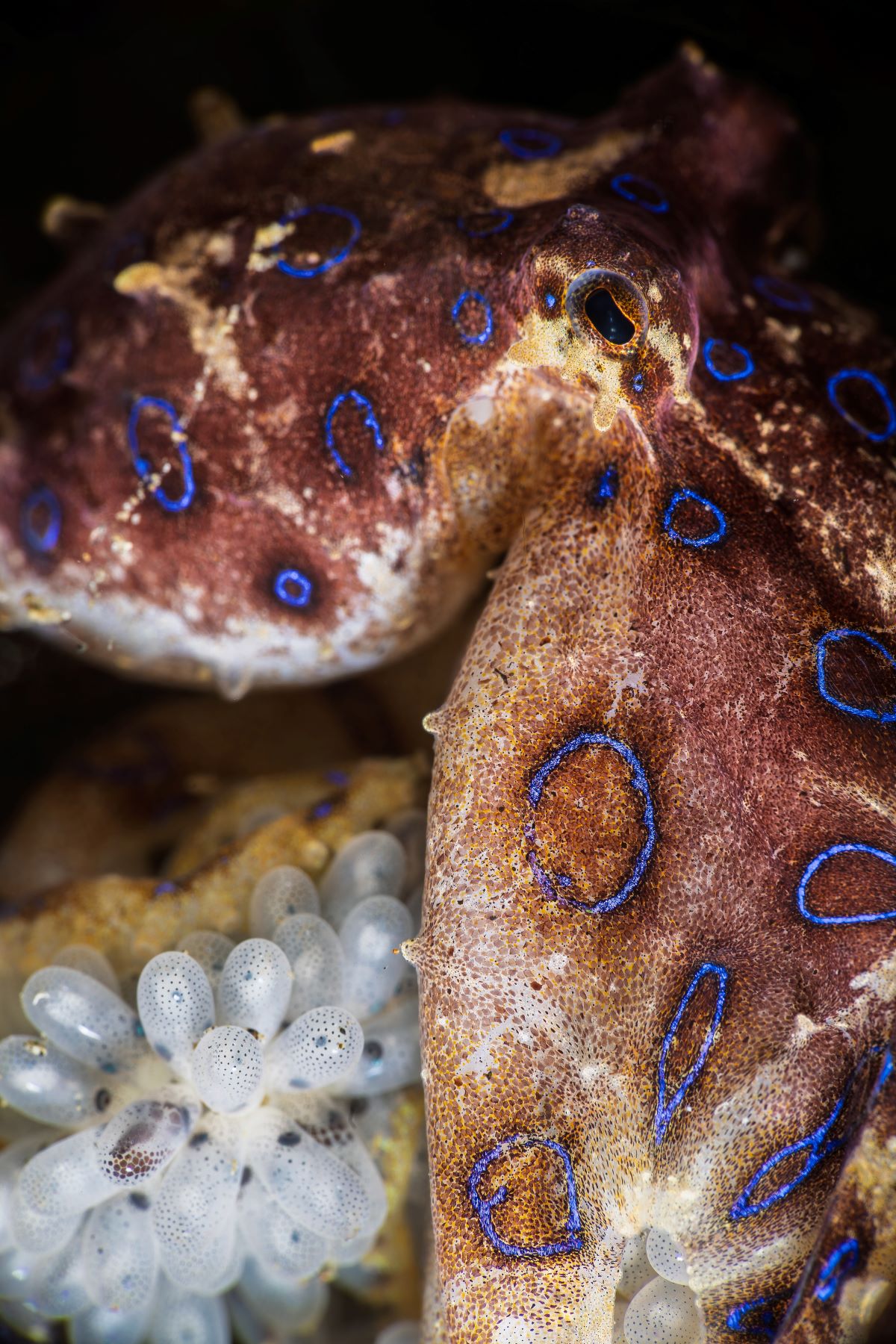
The secret sauce here is the dive guides. These guys have eyes like eagles, finding critters smaller than a grain of rice. It outsources the “hunting” so I can focus 100% on the “shooting.” However, a pro tip is not to be distracted by the sheer volume of weird things to see. Instead, slow down. The slow nature of muck diving allows you to study behaviour and work on a subject to get the best shot possible. I have been lucky enough to see Flamboyant Cuttlefish eggs hatching and even rarer Blue-ringed Octopus eggs hatching.
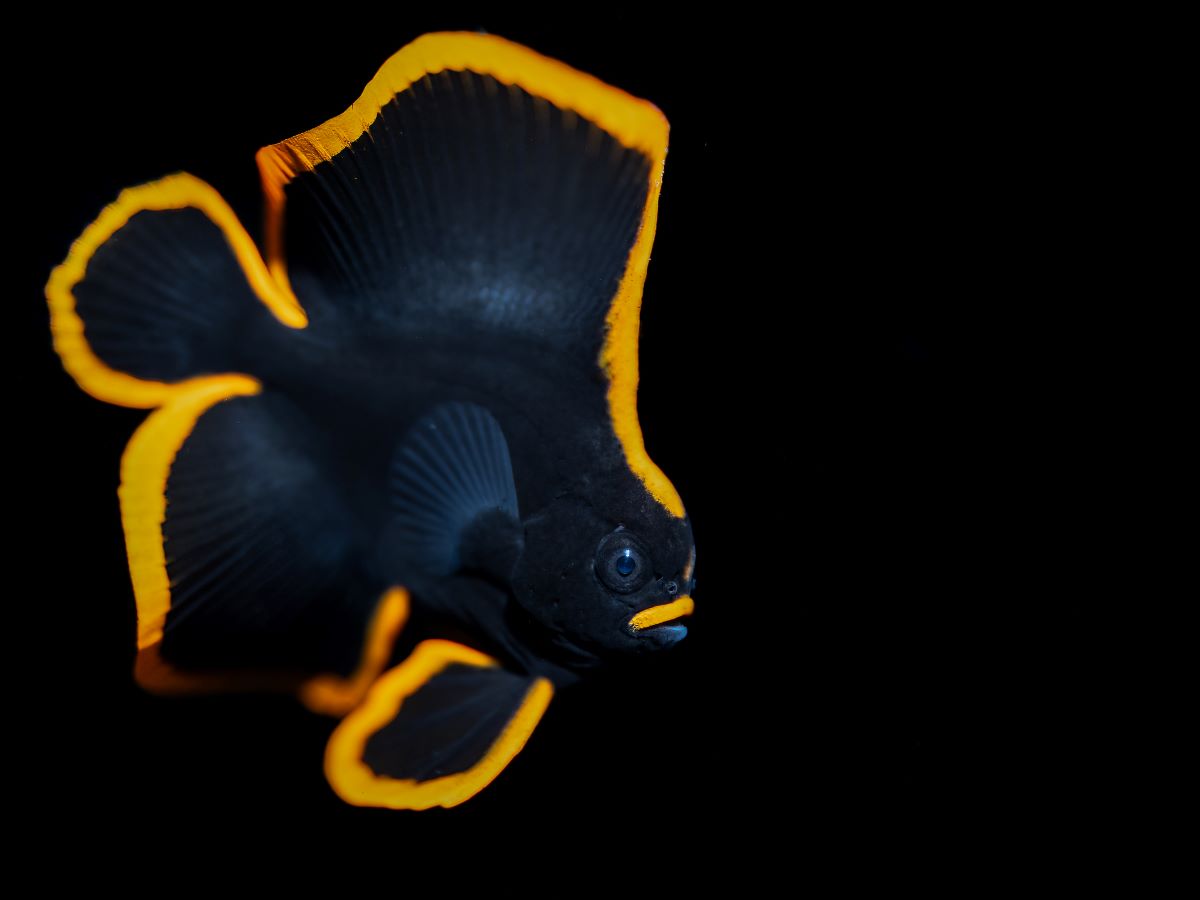
Mastering this environment requires technical precision. In these silty environments, backscatter is the enemy. That’s why I use a snoot on my Backscatter Mini Flash. A snoot restricts light to a pencil-thin beam, allowing me to selectively light only the subject, leaving the rest of the frame pitch black. It allows me to isolate a tiny subject from the muck and turn a chaotic scene into a fine-art portrait.
The Bucket List Dive: Falkland Islands
This is the one that keeps me up at night. The Falkland Islands.
It’s cold, remote, and rugged. But I have a specific image in my head: King penguins swimming through kelp forests.
We see photos of penguins on ice, but underwater, they transform into hydrodynamic torpedoes. The challenge is speed and dynamic range. I’d be pushing my ISO limits and relying on the Sony a7RV’s tracking autofocus to freeze a bird moving at 10 km/h.
But it’s the colour palette that drives this obsession. Most people picture penguins in a monochrome world of black, white, and blue ice. My vision is different. I want to capture that distinct contrast: the sleek black, white, and intense golden-orange of the King Penguin set against the murky, rhythmic emeralds and golds of the giant kelp.
Capturing that warm colour popping against the cold, green background, while tracking a bird moving at incredible speeds, would be the ultimate test of skill and gear. It’s a long way to go for a photo, but getting that one shot would be worth every mile.
Whether I’m five minutes from home dialling in my strobes at the Wharf, or dreaming of high-speed penguins in the South Atlantic, the goal is always the same: capture something cool, bring back a working camera, and have a good time doing it.
See you underwater.
Follow my dives on Instagram @je.photovideo
So, there you go, what did you think of his three locations? I’ve known James for several years, and he’s always been absolutely dedicated to crafting perfect images, but I think you’ve worked that out already. One of these days, I must get over and dive with him at Wharf 2. It sounds epic. I’ve never really considered diving the Falkland Islands, but I can picture the image that James wants to capture perfectly in my head, and now trying to work out how to get to the Falklands is going to keep me up at night as well, thanks James!!
If you want to feature here next time, please get in touch.
Until next then, safe bubbles!
Saeed