Future Focus: Nicolas Deeble

In each instalment of Future Focus, we speak with past and present students of the Marine & Natural History Photography BA(Hons) course at Falmouth University about their experiences, challenges, and successes on the course.
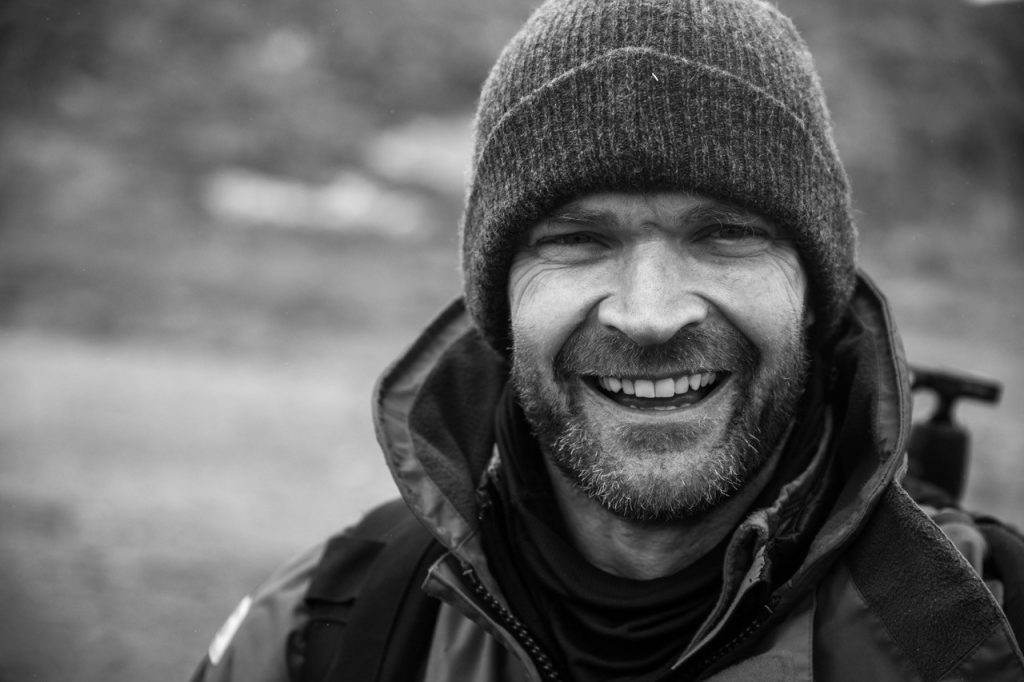
 Nicolas Deeble – Student
Gina: What first attracted you to the Marine & Natural History Photography course at Falmouth?
Nicolas: I was talking to you at the dive site ‘Silver Steps’ before I was a student and was working as a divemaster in a local dive centre. We got to chatting about the ocean and our shared passion for the marine life that lived in it. I mentioned that I was blown away by the work of the postgraduates I worked with in the dive centre, and you took the time to discuss the course in depth, the trips, the possibilities, and the things I loved most about diving in Cornwall. After our talk, I was left feeling filled with ambition and drive to practice underwater photography as much as possible, using any camera I could find, and create a portfolio that summer for my degree.
I hadn’t even applied to the course yet, and you took the time to talk to me about it. I felt that I would learn a great deal from your passion and support for the work I would produce. Qualities I believe are essential for a university lecturer.
Gina: How did the course align with your expectations when you first started?
Nicolas: It honestly exceeded my expectations; the stores had more cameras than I could imagine, ready for students to rent all-inclusive for the course, from Nikon, Sony, Canon, Fuji, and Hasselblad, as well as digital, mirrorless, and analogue forms of photography. The wide range of sign-ups run by the universities’ dedicated photography technicians was also a surprise to me. I learned to do microscopy and other camera-less forms of photography, like cyanotypes, within the first couple of weeks, which sparked innovation for future ambitions that I want to incorporate into marine photography.
Gina: Was there a part of the course that surprised you, either in a positive or challenging way?
Nicolas: I was surprised by the level of freedom we have as students to do almost anything on the course. I have seen people capture the sound of the sun in camera-less forms of photography and film microscopic water fleas giving birth. It is a real privilege to work alongside such fantastic students and be inspired by the work we are encouraged to create and learn from.
Gina: Can you describe a typical week as a student on this course, both in and out of the water?
Nicolas: A typical week starts with a few large lectures, followed by smaller tutorials where we discuss our individual projects directly with our module leaders. Throughout the week, I often spend two days diving for photography. The remaining days are focused on editing photos, planning future shoots, and reflecting on how to improve or what locations to explore next for capturing new images.
Gina: How have your photography skills developed since starting the degree?
Nicolas: Before starting my degree, I had never held a camera before; I had only taken photos on my phone. I had learned a great deal in the first year, as they brought everyone up to speed on how to use a camera and taught various photographic techniques. From the start, I stuck my camera to manual to engrain the exposure triangle in my mind. By the time we reached the underwater module in the second term of my first year, I felt more confident than ever, tackling the new challenges of exposure in an environment that does not invite much light and using strobes for the first time.
Despite still having much to learn, I feel more than prepared for any new challenges or styles of photography I want to try underwater, thanks to the foundational skills the course provided.
Diving in the UK
Gina: How did you find transitioning to diving in UK waters, especially if you had only dived abroad before?
Nicolas: I never noticed the transition between tropical and cold-water diving. I had only really gone diving in hot countries, but when I moved to Cornwall a couple of years before my degree, I completed my PADI Rescue Diver course. This was my first experience of cold-water diving, and I loved every moment of that course so much I didn’t even think much of the temperature! It was hard work. Over that week, I went diving in swells, with both good and bad visibility, and even ended up in a freezing quarry to do some exercises. After the course, I fell in love with UK diving so much that I started interning at that dive centre to build up my dives and start my PADI dive master training.

Gina: What was your first cold-water dive experience like?
Nicolas: I don’t remember the dive exactly, but I remember having to put on an awful lot of layers. I remember standing in a T-pose for the entire dive briefing because I wasn’t used to wearing a semidry. And when the dive was over, I asked someone to pull on the ends of my arms because I couldn’t take it off. Ironically, I still do this today. The dive itself took place in mid-February, during my PADI rescue course, so I didn’t spend much time fish spotting and was more focused on my training and staying warm between dives.
Gina: What’s the most memorable UK dive you’ve had during your time on the course?
Nicolas: The most memorable dive I have had during my time on the course was during the summer just gone. My girlfriend Rei and two other friends, Josh and Sophie, and I were on a dive at our local dive site ‘Silver Steps’, which we haven’t been to as much as we used to. We spent the entire dive searching for jellyfish, but were left disappointed towards the end, and started to head back to shore. In that moment, my friends Josh and Sophie spotted a huge barrel jellyfish. You wouldn’t get your arms around it if you tried to give it a hug; it was that large. They must have spent 5 minutes trying to get me to see it, and when I did, I couldn’t contain myself. Seeing a barrel Jellyfish has been a dream of mine for the last 5 years of living in Cornwall, and year after year, they never showed up. We stayed another 15-20 minutes watching and photographing this amazing marine creature before heading back. I think this marine encounter will make this one of my favourite dives to date!

Gina: Has diving in the UK changed the way you think about local marine life and conservation?
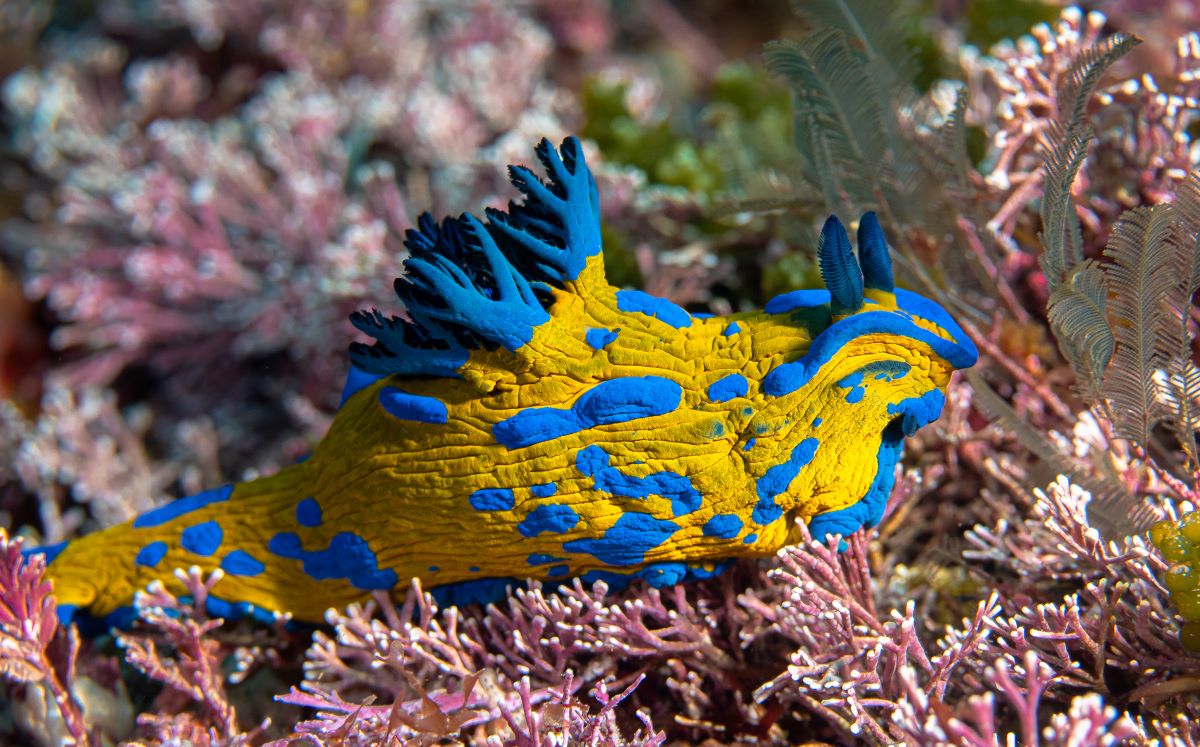
Nicolas: Having dived in the UK for the last five years, I have developed an understanding of the local marine life, and we are starting to see species in our waters that shouldn’t be there, but are an exciting find for recreational nature lovers to see. Things like rainbow sea slugs showing up more frequently on our shores. These slugs are vibrant and beautiful and the size of a grain of rice, which has encouraged more people to take to the shoreline and search through rockpools, which is fantastic to see. However, a more complex species that has potentially emerged with the warming seas is the Atlantic octopus. Each year, we are seeing more and more. They have even made national news for eating local fishermen’s lobsters and crabs out of their pots that they rely on for their livelihood. This has made me think about the ethics of our changing seas and what our next steps are for protecting these new species whilst supporting the local, often sustainable practices that are being affected by this change.
Marine Life & Projects
Gina: Have you had a favourite species encounter while diving in the UK?
Nicolas: My favourite species encounter in the UK would be the Atlantic octopus we have had in abundance this year. I have never seen an octopus diving before, so these were a treat for me. They were much larger than I anticipated, and I was amazed by how well they can camouflage in the reef. I remember spending 20 minutes photographing one octopus, and when I went to review the photos, I counted 3 or 4 more in the frame, camouflaged. I had no idea! Additionally, their curious nature was fascinating. When they became comfortable, they would reach out their tentacles and touch my camera to get a closer look. Having a moment with a marine creature like that can be hard to come by, and I am so grateful to have had the chance to learn more about them.

Gina: What has been the most surprising or unusual marine life you’ve photographed here?
Nicolas: I’m not sure if it is unusual, but it is definitely the most surprising marine life I have photographed, which was a species of jellyfish known as mauve stingers. A few mauve stingers may not sound very surprising, especially if you are a sea swimmer in Cornwall, you would be familiar with their sting. But weirdly, in mid-November of 2024, I arrived at the beach to a thick mauve stinger soup. There were hundreds of them packed side by side along the shoreline, with plenty more floating out at sea. It was a crazy phenomenon to see so many at once. I wrapped up head to toe in thick neoprene, leaving only my mouth exposed to access my snorkel, and waded through the jellyfish. Unfortunately, I didn’t take any photos that day due to the fear of getting stung by jellyfish and having chosen the wrong lens for the day. So, I went back the next day with a new lens and a more courageous attitude, swimming through the thick bank of jellies and cautiously sticking my head in the water, and started snapping away. After that day, the number of mauve stingers dropped off rapidly, and soon they were gone, but it was one of the best surprises the ocean had given me.
Gina: Which project or assignment has been the most rewarding for you so far?
Nicolas: My first underwater module assignment with you, I think the assignment was 10 images plus a written journal of everything we saw, photographed, and edited during our dives, as well as any research that followed. But this was where I first got my hands on an underwater housing. The module was built around learning how to control light underwater. The one rule was that we had to use strobes! It was essential that we knew how to use them before moving on to our own independent styles, and for good reason: strobes can be challenging at first and are easy to neglect when starting out. Additionally, my journal became a tool that I still refer to today. I would log my dives, including where I went, what marine creatures I saw, and the time of year. I’d then research those animals and try to find them again after learning about their behaviour. By the end of the term, I had a pretty good understanding of what was in our ocean and when/where I could find them. Learning about what is in the ocean is just as important as knowing how to photograph them; otherwise, how else do you find them?

Gina: How do you approach storytelling in your underwater photography?
Nicolas: Admittedly, this is something I am still trying to figure out, and it is probably my greatest challenge. I never had an issue creating stories with land photography, but when I am in the water, I seem to struggle with it, as I am always too excited to photograph anything I see. I have written stories in the past that incorporate both land and underwater photography. One was an article I wrote for an assignment about eco anxiety and how the ocean helps me cope and detach myself from those fears. In this context, I used stand-alone images underwater and tied them together for a bigger story. However, as I head into my third year of university and begin my final project, I am determined to create a visually pleasing and coherent story using underwater photography.
Teaching & Support
Gina: How have the teaching team and dive team supported your development?
Nicolas: Falmouth University has one of the most supportive educational teams I have ever experienced. If I came to the dive team, Jane, H, Elle, and you (Gina) with a new idea or a photographic problem, they would spend the time to help me bring my vision to life. The dive team’s attention to their students is amazing, and I honestly don’t think I could ever thank them enough for all the support and encouragement they give.
Gina: Do you feel the course has prepared you for working professionally as an underwater photographer?
Nicolas: Yes, with most modules, we are assessed on our “professionalism”. This includes meeting small deadlines, writing briefs, or delivering elevator-style pitches about our work, so that we feel comfortable approaching companies in the industry about our current projects. I find this incredibly useful.
Gina: What role has feedback and peer support played in shaping your work?
Nicolas: We have had several peer review sessions for all our modules; this has made me feel more comfortable sharing my work before it’s edited. I often share my work with a group of friends and photographers for their opinions on tedious aspects, such as small crop adjustments or lighting differences. Half the time, the change is hardly noticeable, yet their gut instincts on what edits they like are a huge help for me to move past my own opinions about my work. I often find there are photos I would not have touched if it weren’t for the peer support of my friends.

Personal Growth
Gina: What’s been your proudest achievement on the course so far?
Nicolas: Just this summer, I was a winner of the UNIDAYS Student Photographer of the Year 2025 for the category ‘The World Around Us’ with a photo of a snakelocks anemone. I took my second underwater module during my second year of university. I was incredibly honoured to see my work on a wall in Soho, London, alongside the other contestants, and had the chance to meet some incredible photographers and people, such as Matt Porteous and Tamsin Raine, co-founders of Ocean Culture Life. Without the education from the dive team at Falmouth University, I would never have taken that photo or had the skills to do so.

Gina: How has the course changed the way you approach diving and photography?
Nicolas: If anything, I am now more aware of how I behave around marine life. Ensuring I’m not chasing after a subject, I would never touch or disturb a subject, even if I were photographing it. Most of the time, if I lie still enough, they will come and check me out. The same applies to tour guides or attractions. As a photographer, I might need to rely on a tour company to help access a species or location. But for example, I cannot photograph a shark in good faith knowing it had been baited with food, or photograph a pod of dolphins that a wildlife tour had been chasing down in their boat. Practices like this can harm marine life, so it is essential to find sustainable and ethical marine tours or attractions when planning a shoot.
Gina: Have you developed any style or technical focus since joining?
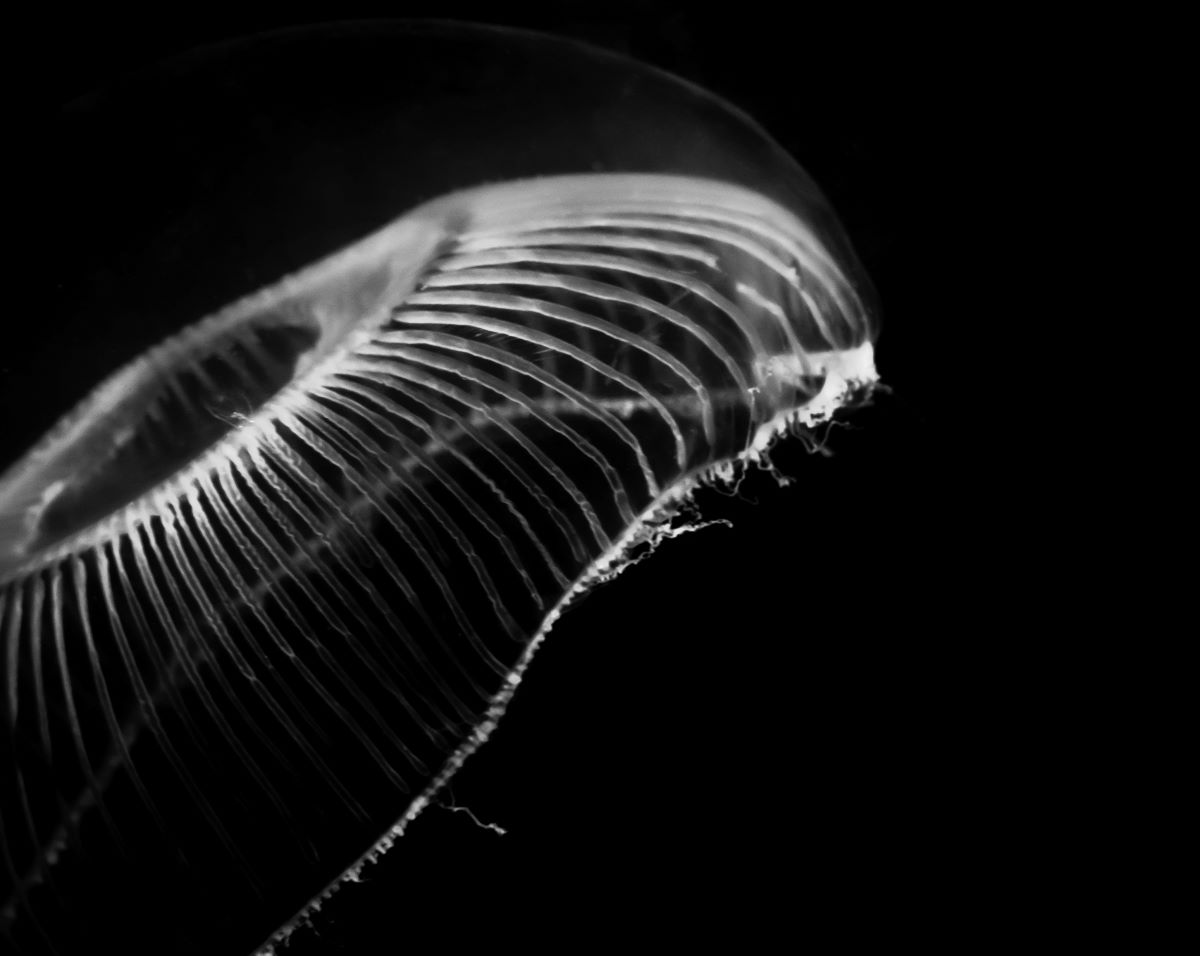
Nicolas: Over the last couple of years, I have been having a lot of fun with wide-angle photography, trying to capture how sunlight interacts with the reef or in most cases, jellyfish. If you look through my photos, you’ll see that many of them are of jellyfish. I’m absolutely obsessed with them because of their semi-translucency; sunlight bounces around them in a way I love. I have even photographed the refraction of sunlight through the body of a compass jellyfish and a mauve stinger, leaving a rainbow along the bell. I would like to incorporate the sun into as many of my underwater shots as possible.


Gina: What skills outside of photography (like dive planning, teamwork, or fieldwork) have you gained?
Nicolas: My ability to write risk assessments has definitely improved. I know that might sound boring, but this is a vital skill for the industry I hope to join. Through these risk assessments, I have learned to plan for dives, identify wind patterns, and determine ideal tide times for various snorkeling or diving activities. I must consider buddy pairings and their skill sets or focuses for the dive to ensure everyone can get what they need from the dive while staying safe. Even my dive briefings have improved through the knowledge and planning that went into the risk assessments before a dive.
Looking Ahead
Gina: How do you see this degree helping you in your future career?
Nicolas: The staff on Marine and Natural History Photography can assist you in making industry connections, where applicable, if you are enthusiastic and inquisitive enough. They can even point you in the right direction to make your own, which is useful as networking is a huge part of the photographic industry. Additionally, it has helped me turn my photos into stories, which keeps my opportunities open for future employment.
Gina: What advice would you give to new students thinking about joining the course?
Nicolas: Even if you haven’t picked up a camera before applying to the course, but love nature and stories like me, apply! They can teach you how to use a camera, but enthusiasm for nature must come from you. My passion for the ocean has driven me to learn as much as I can at this university to become a photographer. And when you get there, no matter how little experience you have, try everything the university offers. Sign up for every workshop teaching a new skill. Use every bit of kit in the stores, both land and marine. Ask the lecturers questions. Challenge the technicians to help you with a new idea that hasn’t been done before. Photograph every day! The opportunities available to you at the university are huge, larger than I can fathom. If you have a new idea for a photo but it doesn’t feel worth trying, do it anyway! Once the degree is over, all the help from the dedicated staff and the kit is gone. So, try every idea you have while you can.


Gina: What would you say to divers who might underestimate UK waters as a photographic subject?
Nicolas: I recently went on a dive trip to O’ahu, Hawai’i. The tropical waters were a pleasant change from the waters I am used to in the UK. Good visibility, and plentiful fish in large balls, and turtles at every beach. But as the week went on, I missed UK waters, and I couldn’t figure out why. I looked at old photos from the UK and realised the one difference. Hawaii has no seaweed, no plant life, no greens or reds or yellows filling up the ocean landscape. The reefs in Hawaii were often full of grey and purple corals, white sand, and blue waters. Not to downplay the incredible life that lived there. But the waters in the UK are filled with so much colour it’s hard not to get addicted to it. Additionally, the UK has some of the most incredible and unique marine life I have ever seen. Huge lobsters and crabs larger than your face. Seals silently darting behind you on a dive and nibbling on your fins. Jellyfish in all kinds of shapes and colours, every year, gracefully floating in the water. And something I experienced for the first time just yesterday, bioluminescence in the water. At night, the water was literally glowing, as if filled with fireflies; it was magical! The UK has so much to offer, and there is still so much I haven’t seen.
Click below for more details about Falmouth University’s Marine & Natural History Photography course:
https://www.falmouth.ac.uk/study/undergraduate/marine-natural-history-photography
Meet Gina Goodman and the rest of the team at Falmouth University shaping the next generation of underwater photographers here.