Western Ecology Tour Expedition Report – Pembrokeshire

 Whilst the team were in Pembrokeshire, we were supporting Neptune’s Army of Rubbish Cleaners, a charity run by divers who are passionate on keeping their local dive sites clean. They have been running clean ups since 2005 and were the first underwater clean up group. The team and I were guided by Lloyd Jones and David Kennard, who have been running the operation for several years now. NARC work alongside the local community as they help locate pollution and rubbish that needs to be cleared, a lot of these reports come from local fisherman who lose their gear and take a note of the location to tell the team later. NARC use equipment to aid their team and to maximise their efficiency, from cutting equipment, lift bags, and boat crews to help them in removing as much rubbish as possible. NARC also take a great stance on education and take the time to not only carry out these clean ups but to also educate the local community and public on the importance of clearing debris off our beaches and to pick up any trash you may see whilst diving.

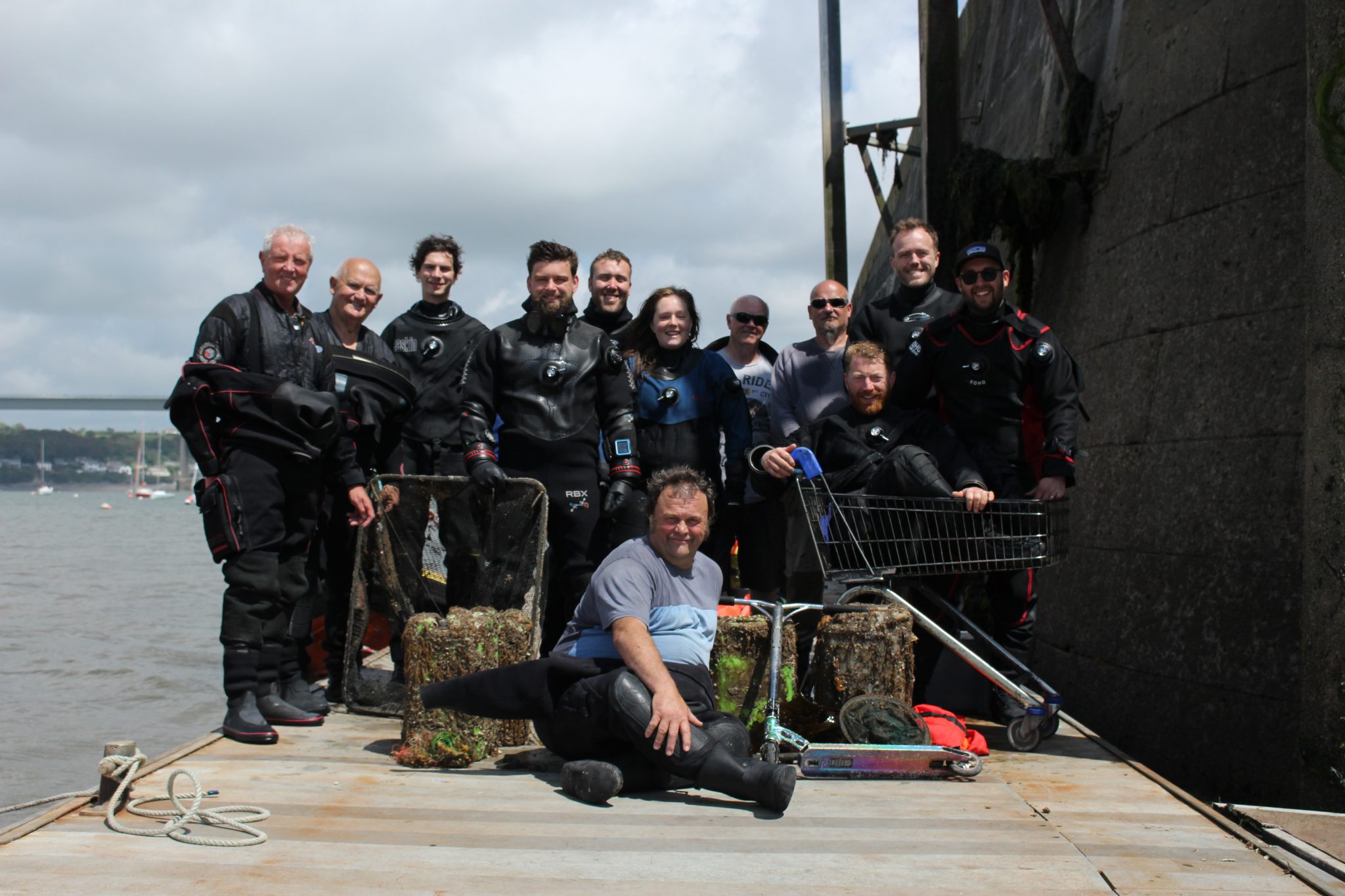
The first day was spent working with NARC and diving a local dive site in the evening. The first dive was at Hobbs Point, and we were given a full briefing about what to expect on the dive and the kinds of rubbish that needed to be lifted from the site. The team were told that there were 12 Oil Drums, Nets, fishing line and a whole assortment of other rubbish, on this dive we were all equipped with net bags for smaller chunks, as well as Lift Bags for lifting the bigger pieces. There were several RIBs on standby to pick up what came up on the Bags and who also waited for our team to surface and bring us back to the dock. We were only working mere feet from the dock, but this was an active shipping lane with a Ferry actually just in from Ireland, unloading no more than 300 metres down.
Dave gave the go ahead to descend and the visibility was no more than 0.5 metres with some of us struggling to see our own hands in front of our faces, let alone seeing our feet or even our buddies. Therefor the work was done through a combination of touch communication, very close signalling and using torches to keep people together. Andy descended and dropped straight into a shopping trolley which he sent up along with nets, other members such as Lloyd, descended onto the Oil Drums with four of the twelve being lifted. There was a lot of rubbish present at this site unfortunately, with it being as easy to find as simply putting your fingertips into the mud and pulling up handfuls of discarded fishing line and lead weights. In total we managed to lift Four Oil Drums, one Scooter, one Shopping Trolley, and four Nets with one of them containing three fish which were saved and released. We also managed to retrieve bags and handfuls of fishing line and lead weights. At this point the team at NARC were due back at this site five weeks later with their goal to retrieve the rest of the oil drums and other large pieces of debris.
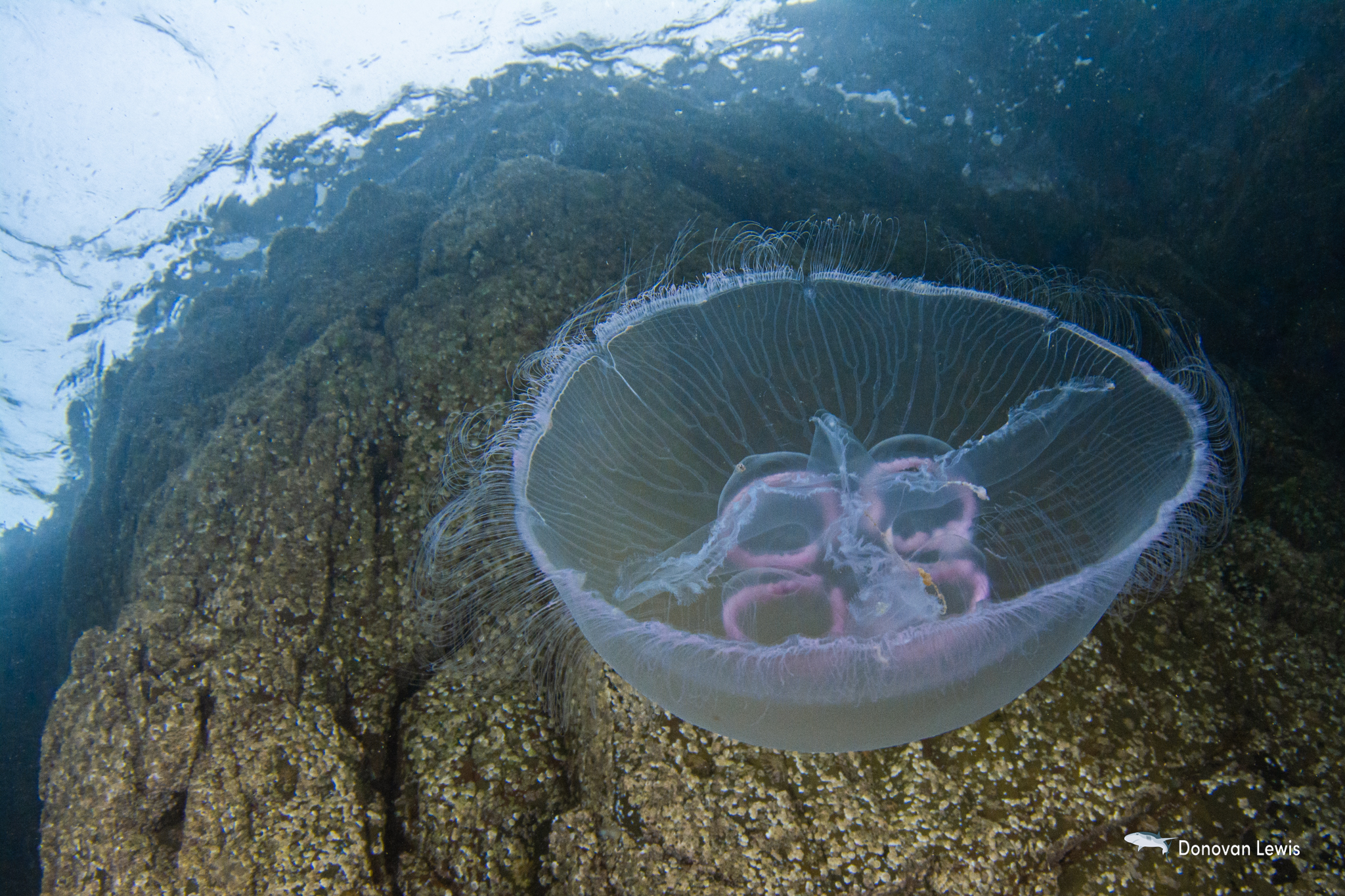
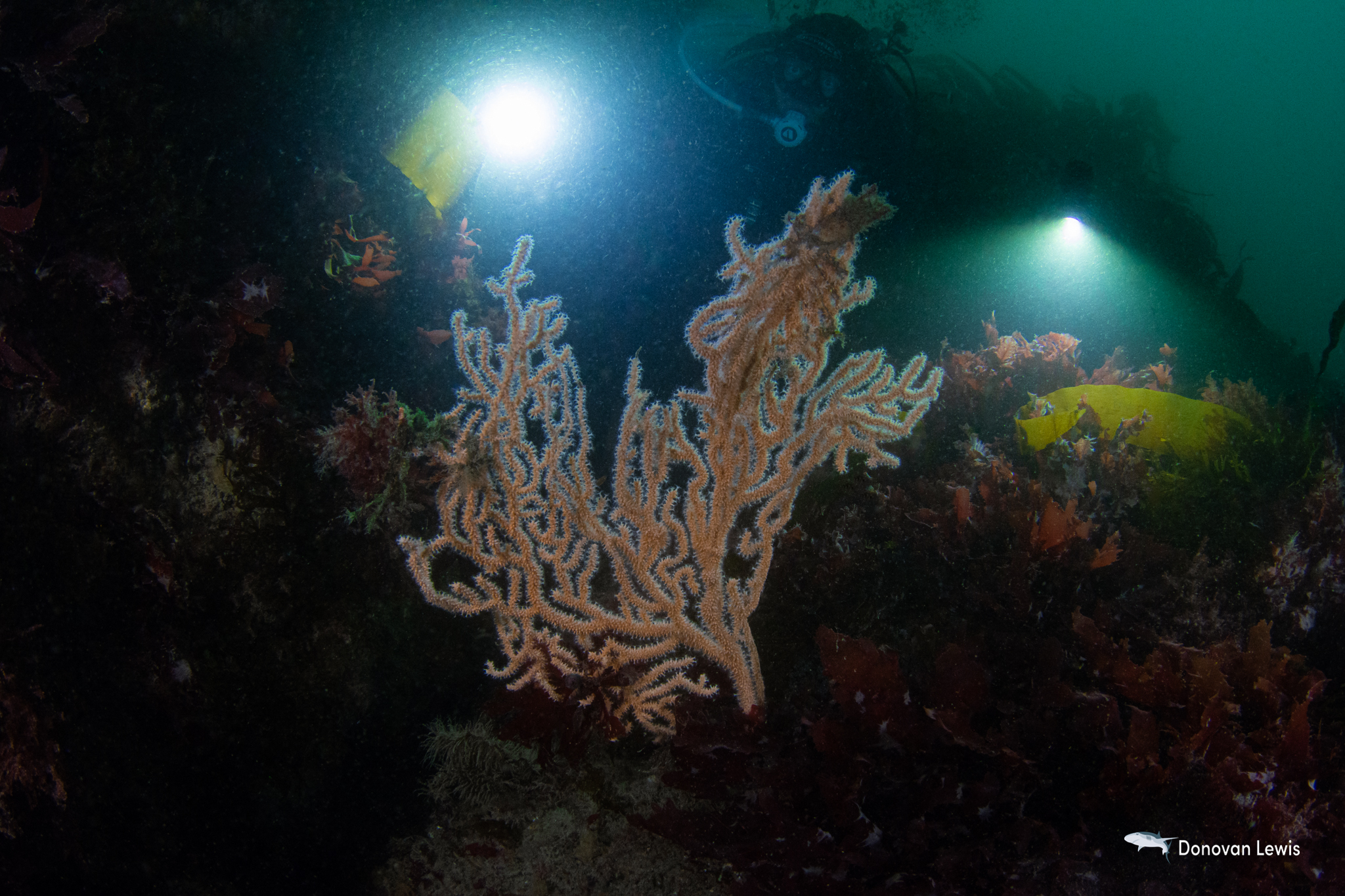
The second dive of day one was at Martins Haven, a dive site situated inside the Skomer Island Marine Reserve, during the briefing we were told about what to expect at the dive site and were also told that if we were to remove any Lobsters and Scallops at the site, it would incur huge fines along with the confiscation of our dive gear. The site was truly breathtaking, with large kelp beds that flattened out on to Sand flats that were covered in huge Scallops, some reaching 6 inches in width! There were large Spider Crabs who littered the bottom searching for food and a mate. The turning point of the dive was when the team came across a Pink Sea Fan, something that looked as if it belonged on one of the worlds tropical reefs rather than in the UK’s frigid waters. On the way back in we came across beautiful walls lined with kelp, anemones and barnacles, with copious amounts of Moon and Purple Jellyfish sitting in the surface water.
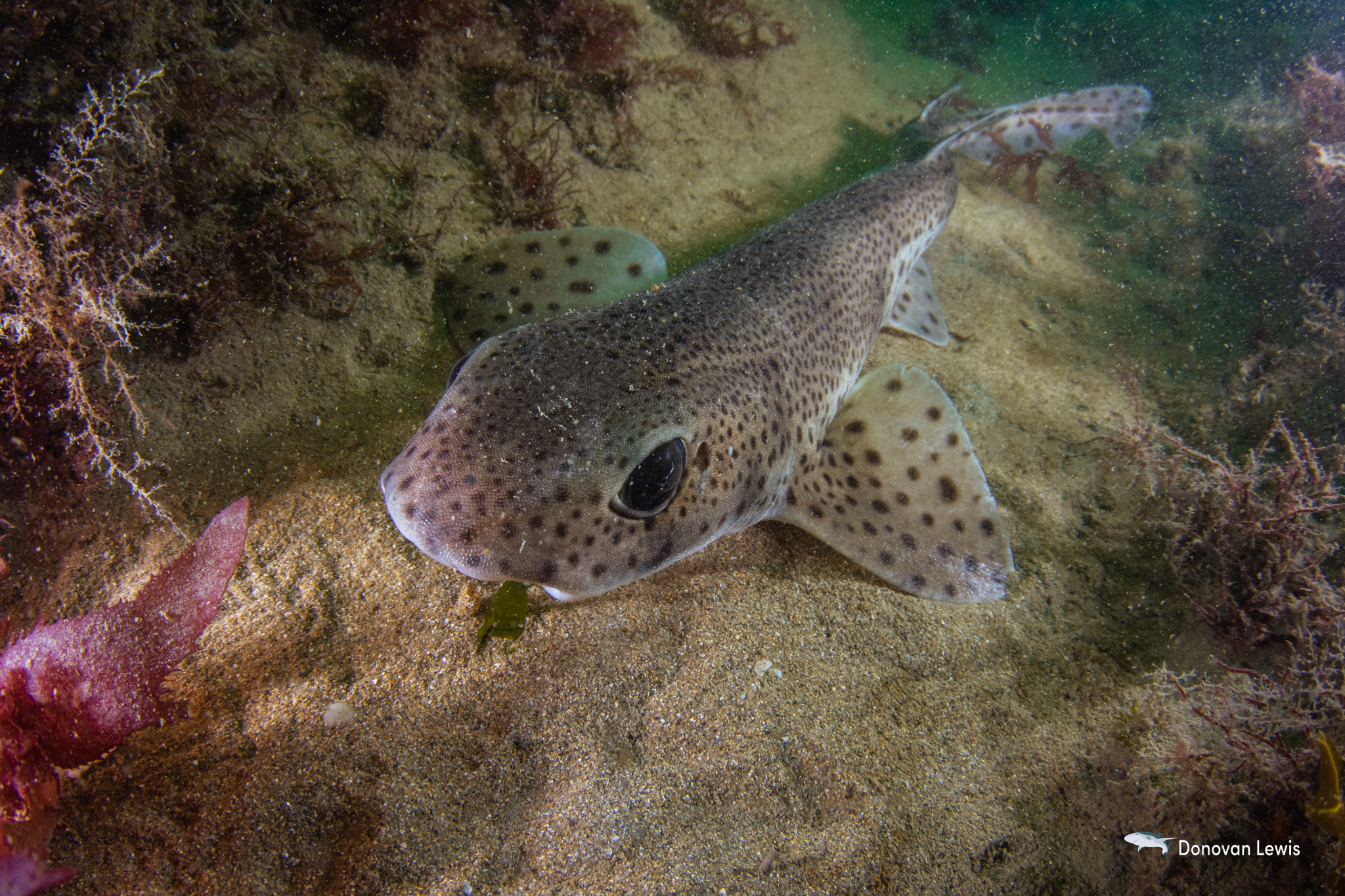
The final day of the expedition was a single dive at Stackpole Quay, a shallow site with easy access to the water. The crew parked at a National Trust Car Park and kitted up before walking 100m to the shore, some members of the team, including myself, were yet to see a single Catshark during the expedition and we were hoping to see some before the trip came to an end. This dive definitely didn’t disappoint, with many Small-spotted Catshark’s resting amongst the gulley’s and Kelp, some of us counted upwards of 15 Sharks on this single dive. Other sights on this dive were large shoals of Sand Eel and Sprat, young pollock and huge male Spider Crabs which had managed to gather up a number of females and whom fiercely protected them from those who came in to close to take photos. The visibility on this dive was around 3 metres so caution was took to keep close to one another and to ensure that none of us became separated.
After the dive was done, we returned to the campsite for a debrief, not only the final day, but also from the trip, along with a final meal at a local pub.
Surprisingly for some of us, the trip was not quite over as when we arrived in Pembrokeshire, we heard about spaces being available on one of Celtic Deep’s trips, namely their snorkeling trips, on this trip you get taken out to snorkel with Puffins, Razorbills and potentially Seals. There were 2 spaces available on the Saturday and Sunday with 4 of us taking up the opportunity to go out and experience another unseen story and finish the expedition with a bang.

The boat left shore at 9am but everyone had to arrive at 8:30am for briefing before disembarking, the briefing was led by Richard and Nicki of Celtic Deep. Everyone was told about how the trip is to be structured and how to effectively swim with the Puffins and how to get in close to take photos, after the briefing it was a 40-minute steam out to Skomer Island, once moored up we all jumped in off the back the boat and began to slowly approach large amounts of Puffins, Guillemot’s and Razorbills. The birds were a little shy and aired on the side of caution even if they are naturally curious, thankfully one person in each buddy group had a puffin decoy on a string, painted and donated to Celtic Deep by David Millard. These decoys were larger than an actual Puffin, so this of course peeked the Puffins interest, however as the birds approached and a camera appeared from under the water this of course scared the birds away. Nicki and Richard mentioned that the birds were unfortunately a little more skittish than usual and judging by some of their images it shows that the birds do indeed come much closer.
After spending 2.5 hours in the water with the birds it was time for us wll to get out and warm up for an hour before heading to the next site at Skokholm Island, here everyone was told that there was a chance to swim with Grey Seals or as the Skipper Fen calls them, “Maggots”, due to how they move when out of the water and how they look from a distance. Everyone jumped in and the rule of thumb to stick by was to allow the animals to get confident with us all being there and then allow them to come you, after around 2 hours in the water and the animals popping up to have a look at us all at distance it was time to head back to the boat to head back to port. As everyone was exiting a young seal came and approached the group and even grabbed onto cameras with her paws resulting in some truly close shots.
In total the trip with Celtic Deep was truly amazing with some breath-taking encounters and the opportunity to experience something truly wild, the team were professional and incredibly knowledgeable allowing us to truly enjoy a British wildlife encounter unlike anything else.
Expedition WET Summary
In conclusion the UK is almost a hidden gem of diving, many people would argue that going abroad is better. But as our team experienced during the trip, there is some truly breath-taking diving and wildlife encounters to be had, the UK has Sharks, Seals and Nudibranchs that rival that of those overseas. With a wealth of Charities carrying out hard work, experts who lead them, and life that is truly special, it’s difficult to say what the UK doesn’t have to offer for keen Divers and Photographers alike even if you must look that little bit harder to find it.
Not only is diving just as good as places abroad but it’s also easy to access with all the sites described in this report being accessed by simply walking off the beach and taking the plunge. Not only is it easy to access but it’s also better for the environment and our planet by diving local sites rather than only diving abroad. The team may have done a lot of driving during the expedition but in terms of our carbon footprint, it is a mere drop in the Ocean in comparison to getting a flight.
Keep an eye out soon for Expedition WET’s Film, which is currently in production with Ollie Putnam & Andy Clark. It will show more about the projects that were supported, the team, and life that was found during the expedition.